
Iran Strikes Bahrain and Jordan Following US Attacks in Strait of Hormuz, Al Jazeera Reports
Iran has carried out military strikes against targets in Bahrain and Jordan, Al Jazeera reports, citing these actions as retaliation for previous United States attacks in the Strait of Hormuz. The escalation marks a significant widening of regional tensions, moving the conflict beyond maritime skirmishes into the sovereign territories of key US allies in the Middle East.
What happened in the strikes on Bahrain and Jordan?
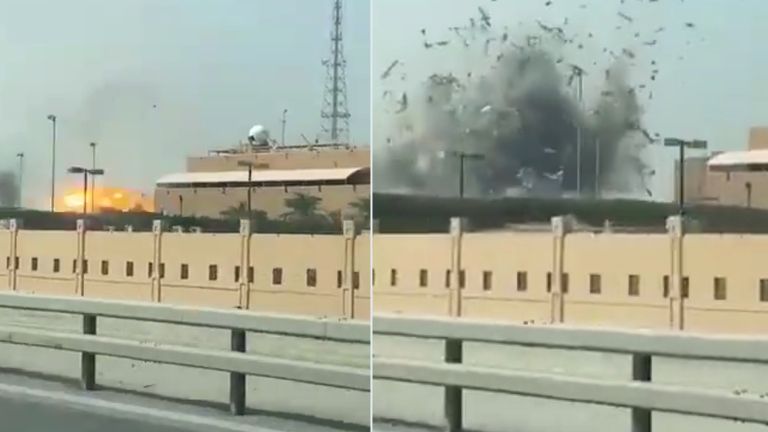
According to reports from Al Jazeera, Iranian forces launched a series of strikes targeting locations within Bahrain and Jordan. These operations were explicitly framed by Tehran as a direct response to US military actions previously conducted in the Strait of Hormuz. While specific casualty figures and the exact nature of the targets remain subject to official verification, the strikes represent a calculated expansion of Iran’s retaliatory reach.
The attacks occurred in a coordinated fashion, utilizing assets capable of reaching targets across different geographical zones. In Bahrain, the focus appeared to be on sites associated with regional security coordination, while the strikes in Jordan targeted areas linked to foreign military presence. This dual-pronged approach suggests an intent to signal that no US-aligned partner in the region is immune to Iranian response when the Strait of Hormuz becomes a combat zone.
Key details of the operation include:
- Primary Targets: Military or security-linked infrastructure in Bahrain and Jordan.
- Stated Motivation: Retaliation for US naval and air operations in the Strait of Hormuz.
- Operational Scope: A trans-regional strike pattern crossing multiple borders.
Why did Iran target Bahrain and Jordan specifically?
The selection of Bahrain and Jordan as targets is strategically significant, as neither country is a primary combatant in the direct US-Iran rivalry, but both serve as critical logistical and operational hubs for the United States military. According to regional security analysts, targeting these nations is a method of applying “indirect pressure” on Washington.
The Strategic Role of Bahrain
Bahrain holds immense importance for US naval operations in the Persian Gulf. It hosts the US Naval Forces Central Command (NAVCENT) and the US 5th Fleet. By striking Bahrain, Iran signals its ability to threaten the very headquarters that coordinates US maritime security in the region. This creates a psychological and operational burden for the US, forcing it to divert resources from offensive operations in Hormuz to the defense of its regional bases.
The Strategic Role of Jordan
Jordan serves as a cornerstone of US intelligence and air operations in the Levant. With multiple airbases and a close security relationship with the CIA and Pentagon, Jordan provides the US with a vantage point over Syria, Iraq, and the broader Arab world. A strike on Jordan demonstrates that Iran can project power far beyond the Gulf, threatening US interests in the eastern Mediterranean and the Levant simultaneously.
“The targeting of Bahrain and Jordan is not an attack on the nations themselves, but on the US footprints within those nations,” reports Al Jazeera in its coverage of the escalation.
The Catalyst: US Attacks in the Strait of Hormuz
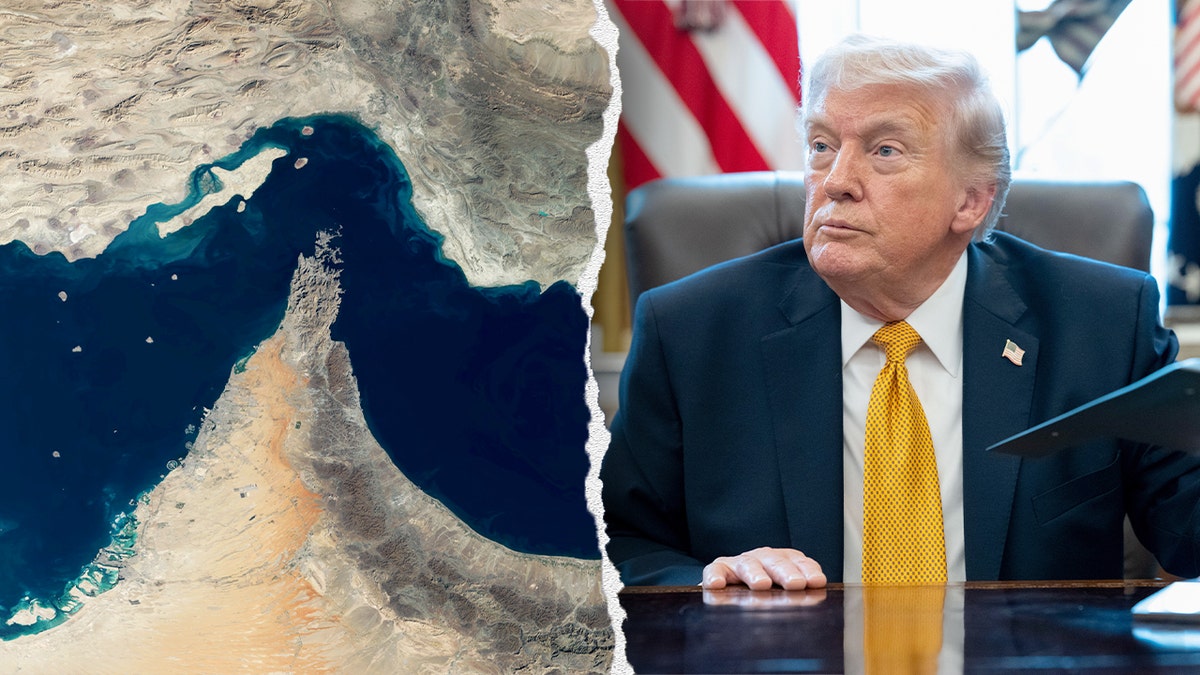
The immediate cause of this escalation, as cited by Al Jazeera, was a series of US attacks in the Strait of Hormuz. The Strait is one of the world’s most critical maritime chokepoints, with roughly one-fifth of the world’s total oil consumption passing through it daily. Tensions in this narrow waterway have fluctuated for decades, but recent US operations have reportedly crossed a red line for Tehran.
The US has frequently conducted “freedom of navigation” operations and targeted Iranian-linked vessels or assets in the Strait to prevent the smuggling of weapons and to deter Iranian interference with commercial shipping. Iran views these actions as violations of its sovereignty and as an act of aggression by a foreign power. The retaliatory strikes on Bahrain and Jordan are intended to shift the cost of these operations back onto the US and its allies.
| Location | US Strategic Interest | Iranian Tactical Goal |
|---|---|---|
| Strait of Hormuz | Global oil flow & maritime security | Control of the chokepoint; deterrence |
| Bahrain | HQ of the US 5th Fleet | Threaten command and control centers |
| Jordan | Intelligence & Air superiority | Demonstrate trans-regional reach |
Historical Context: The “Shadow War” Between the US and Iran
To understand why a conflict in the Strait of Hormuz leads to strikes in Jordan, one must look at the broader “shadow war” that has defined US-Iran relations for years. This conflict rarely manifests as direct, open warfare between the two nations’ main armies; instead, it plays out through proxies, cyberattacks, and targeted strikes.
Historically, Iran has used a “ring of fire” strategy, cultivating allies and militias in Iraq, Syria, Lebanon, and Yemen. When the US pressures Iran—either through sanctions or direct military action—Iran often responds by activating these proxies or by conducting limited, high-visibility strikes to demonstrate capability. The strikes on Bahrain and Jordan follow this pattern of “calibrated escalation,” where the goal is to inflict enough damage to force a change in US policy without triggering a full-scale regional war.
Past precedents include the 2019 tanker attacks in the Gulf of Oman and the subsequent US strikes on Iranian-backed militias in Iraq. In each instance, the geography of the conflict shifted rapidly from the sea to the land, and from direct combatants to regional allies.
Potential Global Economic Implications
While the strikes occurred in Bahrain and Jordan, the global community is most concerned with the ripple effects in the Strait of Hormuz. Any escalation that threatens the stability of this waterway has an immediate impact on global energy markets.
Oil Price Volatility
Energy traders monitor the Strait of Hormuz closely. If the US responds to the strikes in Bahrain and Jordan by increasing its military presence or closing the Strait, the price of Brent Crude is likely to spike. Even the perception of increased risk can lead to “risk premiums” being added to oil prices, affecting gasoline costs worldwide.
Shipping and Insurance Costs
Commercial shipping companies often raise freight rates when conflict breaks out in the Middle East. Marine insurance premiums for tankers traveling through the Persian Gulf typically surge during periods of US-Iran tension. If shipping companies deem the route too dangerous, they may seek longer, more expensive alternatives, though there are few viable alternatives for the volume of oil leaving the Gulf.
For more on how maritime security affects global trade, see a related explainer on global shipping chokepoints.
Reactions from Regional Stakeholders
The reactions to the strikes have been split along geopolitical lines, reflecting the deep divisions within the Middle East.
- Bahrain and Jordan: Official statements from both governments have condemned the strikes as violations of national sovereignty. Both nations have reaffirmed their security ties with the US and have called for international condemnation of Iran’s actions.
- The United States: The Pentagon and the White House have characterized the strikes as “unprovoked aggression.” The US has signaled that it reserves the right to respond “proportionately,” though it has not yet specified the nature of any planned counter-strike.
- Regional Mediators: Countries like Oman and Qatar, which maintain diplomatic channels with both Tehran and Washington, have urged restraint to avoid a total regional collapse. These nations often act as the “back channel” for negotiations to prevent accidental escalation into a full-scale war.
Common Misconceptions About the Conflict
There are several oversimplifications regarding the US-Iran conflict that often appear in surface-level reporting. Understanding these nuances is key to grasping the current situation.
Misconception 1: The strikes are intended to start a war.
In reality, most analysts argue that Iran does not want a direct, full-scale war with the US, which would likely result in the destruction of its own infrastructure. Instead, these strikes are “signaling” operations. They are designed to show that the US cannot act in Hormuz without facing consequences elsewhere.
Misconception 2: Bahrain and Jordan are “partners” in the US attacks.
While they host US bases, Bahrain and Jordan are often reluctant participants in active combat operations. They provide the geography, but the operational decisions for attacks in the Strait of Hormuz are made by the US command. Iran targets them to punish the US, even if the host nations are not the primary aggressors.
Misconception 3: The conflict is purely about oil.
While oil is the economic lever, the conflict is primarily about regional hegemony and security. Iran seeks to push the US out of the Middle East entirely, while the US seeks to maintain a presence to contain Iranian influence and protect its allies.
Analyzing the Military Capabilities Involved
The ability of Iran to strike targets in both Bahrain and Jordan simultaneously indicates a sophisticated integration of its missile and drone programs. Iran has invested heavily in “precision-guided munitions” (PGMs) and long-range loitering munitions (suicide drones).
To hit Jordan, Iran must project power across Iraq or Syria, or use long-range missiles. This requires a level of coordination with its regional proxies (such as those in Iraq) to provide launch sites or intelligence. The strikes in Bahrain, being much closer to the Iranian coast, likely involved shorter-range ballistic missiles or naval-launched drones. The synchronization of these attacks suggests a centralized command structure aimed at maximizing the psychological impact on the US military.
The US, conversely, relies on its Integrated Air and Missile Defense (IAMD) systems. The success or failure of these systems in intercepting the Iranian strikes will determine how the US perceives its own vulnerability and how it chooses to respond.
What the current escalation reveals about regional security
The current crisis proves that the “containment” strategy—where the US attempts to keep the conflict localized to specific zones—is failing. By striking Jordan and Bahrain, Iran has effectively expanded the “battlefield” to include almost the entire Middle East. This forces every US ally in the region to reconsider their risk profile.
Furthermore, it highlights the fragility of the security guarantees provided by the US. If allies like Jordan and Bahrain feel that their association with the US makes them targets for Iranian retaliation, they may begin to distance themselves from Washington or seek their own independent security arrangements with Tehran.
For further analysis on regional alliances, see a related explainer on the Abraham Accords and security shifts.
Frequently Asked Questions
Why did Iran strike Jordan and Bahrain?
According to Al Jazeera, Iran carried out these strikes as retaliation for US military attacks in the Strait of Hormuz. Because Jordan and Bahrain host critical US military infrastructure, Iran targeted them to pressure the US and demonstrate that its allies are vulnerable.
What is the significance of the Strait of Hormuz?
The Strait of Hormuz is a vital maritime chokepoint through which about 20% of the world’s oil passes. Control or instability in this area can lead to global oil price spikes and disrupt international energy supplies.
Are these strikes part of a larger war?
Currently, these actions are viewed as part of a “shadow war” or a cycle of calibrated escalation. While the strikes are serious, they are generally seen as signaling operations intended to deter the US rather than attempts to launch a full-scale invasion or total war.
How does this affect global oil prices?
Instability in the Persian Gulf generally leads to increased oil prices due to the “risk premium.” If the Strait of Hormuz is threatened or closed, the impact on Brent Crude prices would be immediate and significant.
How has the US responded to the strikes?
The US has condemned the attacks as aggression and stated it reserves the right to respond. However, the specific nature of the response—whether it will be diplomatic, economic, or military—has not been fully detailed.
