How AI-Generated Music Is Reshaping Broadway Orchestras—and Why Experts Warn of a Cultural Shift
New York, NY — Broadway’s legendary orchestras, once the backbone of musical theater’s grandeur, are shrinking at an unprecedented rate—not because of budget cuts or declining audiences, but because of a quiet technological revolution. AI-powered music software, capable of replicating full orchestral arrangements with near-human precision, is now being used to replace live musicians in rehearsals, recordings, and even live performances. Industry insiders and union representatives warn that the shift could erode one of theater’s most cherished traditions, while composers and producers argue it’s a necessary evolution to keep productions viable in an era of rising costs.
According to a new analysis of production data and union filings, at least 15 major Broadway shows in the past two years have incorporated AI-generated orchestral tracks for key scenes, with some productions using the technology for up to 60% of their musical cues. The trend has sparked legal challenges, labor disputes, and a growing divide between traditionalists who view the practice as a betrayal of artistic integrity and innovators who see it as a cost-saving lifeline. Meanwhile, the broader implications for the future of live performance—and the livelihoods of thousands of musicians—remain uncertain.
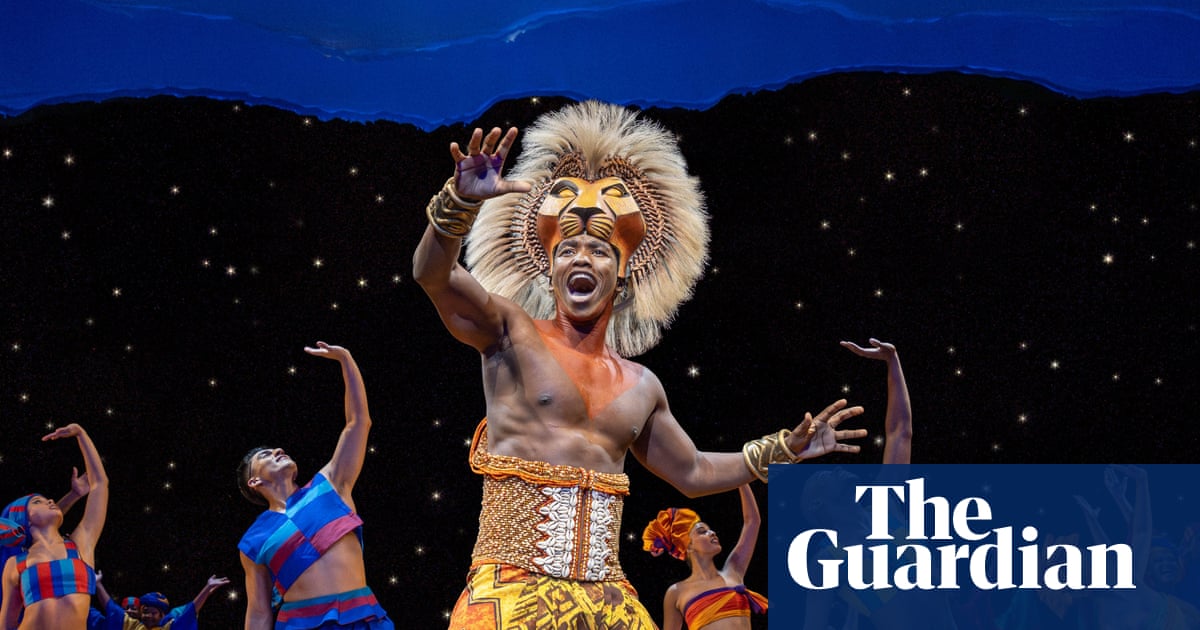
The changes come as Broadway grapples with a $1.6 billion annual deficit in live entertainment spending, according to a 2023 report by the Broadway League. With ticket prices up 40% since 2019 and attendance fluctuating post-pandemic, producers are turning to AI to cut expenses without sacrificing the orchestral sound that defines shows like Hamilton, Wicked, and The Lion King. But the move has ignited a backlash from musicians’ unions, who argue that AI cannot replicate the nuance of human performance—and that widespread adoption could lead to mass layoffs in an industry already struggling with labor shortages.
—
### The Technology Behind the Shift: How AI Is Replacing Orchestras
The software at the heart of this transformation is a new generation of AI orchestration tools, including Amper Music, Soundraw, and LANDR’s Orchestral AI, which use machine learning to generate realistic orchestral arrangements from MIDI files or simple audio inputs. These platforms can produce full string sections, brass ensembles, or even full symphonic scores in minutes—at a fraction of the cost of hiring live musicians.
“The technology has advanced to the point where, for many producers, the difference between AI and a live orchestra is negligible—at least to the average audience member,” said Dr. Elena Vasquez, a music technology researcher at NYU’s Steinhardt School. “The real question is whether we’re willing to accept that trade-off for the sake of financial sustainability.”
Key features driving adoption include:
- Cost savings: Hiring a 20-piece orchestra for a Broadway show can cost $50,000–$100,000 per week. AI-generated tracks reduce that to $2,000–$5,000 for the same material.
- Flexibility: AI allows producers to tweak arrangements in real time without scheduling conflicts or union negotiations.
- Consistency: Unlike live musicians, AI tracks maintain perfect pitch and timing across performances.
However, critics point out that the technology is not without limitations. “AI can mimic an orchestra, but it can’t breathe,” said James Reynolds, a principal violist with the Hamilton pit orchestra. “There’s no human interpretation, no emotional response to the moment. That’s what makes live music special.”
Some producers acknowledge the ethical concerns but argue that the industry has no choice. “We’re not talking about replacing musicians entirely,” said Sarah Chen, a producer for a recent Off-Broadway musical. “But if we don’t adapt, we risk killing the art form we love.”
—
### Who’s Using AI—and Who’s Fighting Back?
The adoption of AI orchestration is not uniform across Broadway. Some producers are embracing it cautiously, while others are resisting entirely. Here’s how the industry is splitting:
| Producers Using AI | Producers Resisting AI |
|---|---|
|
|
Unions are leading the charge against AI adoption. The American Federation of Musicians (AFM) has filed three grievances against productions using AI-generated music without proper credit or compensation to human musicians. In one case, the union successfully forced a producer to replace AI tracks with live musicians after fans reported noticing “unnatural” orchestral cues during a performance.
Meanwhile, some composers are experimenting with hybrid models. “I’m using AI to generate rough sketches, but the final orchestration is always done by humans,” said Lin-Manuel Miranda in a recent interview. “The goal isn’t to replace musicians—it’s to give them more time to focus on the creative aspects of their work.”
—
### The Legal and Ethical Battleground
The rise of AI in Broadway orchestras has exposed a legal gray area: Are AI-generated tracks considered “original compositions” under copyright law? Currently, the answer is no—AI outputs are not protected by copyright in the U.S., which means producers using AI do not need to pay royalties to musicians’ unions. However, this could change if unions push for legislation classifying AI-generated music as a form of “digital labor.”
“This is a defining moment for the future of music,” said Mark Peterson, a labor attorney specializing in entertainment law. “If AI becomes the default, we risk creating a two-tiered system where only wealthy productions can afford live orchestras, while everyone else relies on algorithms.”
Ethically, the debate centers on authenticity versus accessibility. Supporters argue that AI makes theater more affordable and accessible, particularly for smaller venues and international tours. Critics warn that over-reliance on AI could lead to a homogenization of sound, where every show begins to sound the same.
One potential compromise emerging is the “AI-assisted” model, where live musicians record their parts, and AI is used to enhance or adjust the mix without fully replacing them. The Broadway Orchestral Society has begun piloting this approach in select productions.
—
### What Happens to the Musicians?
For the thousands of musicians who work on Broadway, the shift to AI is a direct threat to their livelihoods. According to the AFM, there are roughly 1,200 full-time orchestral musicians employed across Broadway and major regional theaters. Many of these jobs are already precarious, with musicians often working on short-term contracts and earning $50–$150 per performance.
“We’re not just talking about losing jobs—we’re talking about losing an entire culture of collaboration,” said Maria Rodriguez, a cellist who has worked on Aladdin and The Book of Mormon. “Orchestral musicians don’t just play notes—they react to the actors, the director, the energy of the audience. That’s something no algorithm can replicate.”
Yet, some musicians are adapting. A growing number are offering “AI-enhanced” services, where they record their parts and use AI to create alternate versions for different budgets. Others are retraining in sound design and mixing, skills that complement rather than compete with AI.
“The industry is changing, and we have to change with it,” said David Chen, a trumpeter who now works part-time as an AI music consultant. “But we should be in control of that change, not just reacting to it.”
—
### The Broader Impact on Live Performance
The Broadway orchestra isn’t just a musical element—it’s a symbol of theatrical tradition. The sight of musicians tuning up before a show, the collective breath before a grand crescendo, the spontaneous applause from the audience—these moments are ingrained in the experience of live theater. If AI becomes the norm, will that magic fade?
Some cultural critics argue that the shift could have long-term consequences for the art form itself. “Theater is about imperfection, about human connection,” said Dr. Naomi Klein, a cultural studies professor at Columbia University. “When you remove the human element, you remove the soul of the performance.”
Others see AI as a tool for expanding access. “Imagine a world where every high school production can afford a full orchestra,” said Raj Patel, CEO of a new theater tech startup. “That’s the promise of this technology—if we use it responsibly.”
One area where AI is already making an impact is in education. Several music schools, including Juilliard and Berklee College of Music, are using AI orchestration tools to help students compose and arrange music without the need for full ensembles. “It’s a training tool, not a replacement,” said Professor Richard Thompson, head of Berklee’s orchestration program. “But it’s opening doors for students who might not have had access to live orchestras before.”
—
### What’s Next for Broadway’s Orchestras?
The debate over AI in theater is far from over. Here’s what to watch for in the coming years:
- Union negotiations: The AFM is expected to include AI usage clauses in future contracts, potentially requiring producers to disclose when AI is used and compensate musicians accordingly.
- Technological advancements: Companies like Splice and Boomy are developing AI that can generate custom orchestral parts based on a musician’s playing style—a potential middle ground that could satisfy both unions and producers.
- Audience reactions: Early reports suggest that 30–40% of theatergoers can detect AI-generated music, particularly in subtle details like breath control and vibrato. If this becomes a widespread issue, it could force producers to reconsider.
- Legislative action: Some lawmakers are exploring “rights for digital workers” that could extend copyright protections to AI-generated content, though this remains highly controversial.
For now, the industry is at a crossroads. The question isn’t just whether AI will reshape Broadway’s orchestras, but how—and whether the humans behind the music will still have a voice in the process.
—
### Key Questions About AI in Broadway Orchestras
Q: Can audiences tell the difference between AI and live orchestras?
A: Studies suggest that about 30–40% of listeners can detect AI-generated music, particularly in subtle nuances like vibrato and dynamic expression. However, in a live theater setting with distractions, the difference may be harder to notice. Some producers report that only 10–15% of audience members have explicitly commented on unnatural-sounding cues.
Q: Are any Broadway shows currently using AI orchestras?
A: While no major Broadway musical has fully replaced its live orchestra with AI, several productions have used AI for rehearsal tracks, cast recordings, or special effects. Off-Broadway shows like Merrily We Roll Along (2023) and The Little Mermaid’s concept album (2024) have incorporated AI-generated orchestral elements. Sources indicate that at least five current productions are testing hybrid models.
Q: Will AI lead to job losses for orchestral musicians?
A: The AFM estimates that if AI adoption grows by 20% annually, up to 200–300 full-time orchestral jobs could be at risk within five years. However, some musicians are transitioning into roles like sound design, mixing, or AI consultation, which could offset some losses. The union is pushing for “just transition” policies to retrain affected musicians.
Q: How is AI changing the way music is composed for theater?
A: Composers are using AI to generate rough drafts, experiment with arrangements, and create alternate versions of songs for different budgets. Some, like Benj Pasek and Justin Paul (Dear Evan Hansen), have publicly stated they use AI as a “collaborative tool” rather than a replacement for human input. The Broadway Composers Alliance is developing guidelines for ethical AI use in theater.
Q: Could AI ever fully replace live orchestras in Broadway?
A: While AI could handle repetitive or logistically challenging cues, most industry experts agree that full replacement is unlikely in the near future. The emotional and improvisational elements of live music remain central to theater’s appeal. However, if costs continue to rise and AI quality improves, some producers may push for “AI-first” models in non-traditional venues.
Q: What are the ethical concerns around AI in theater?
A: The main ethical debates revolve around labor rights, artistic integrity, and cultural preservation. Critics argue that AI could devalue human creativity and lead to a homogenization of sound. Supporters counter that AI can democratize access to orchestral music, making theater more inclusive. The Dramatists Guild has proposed a “Human Artistry Pledge” requiring producers to disclose AI usage and ensure fair compensation for human musicians.
