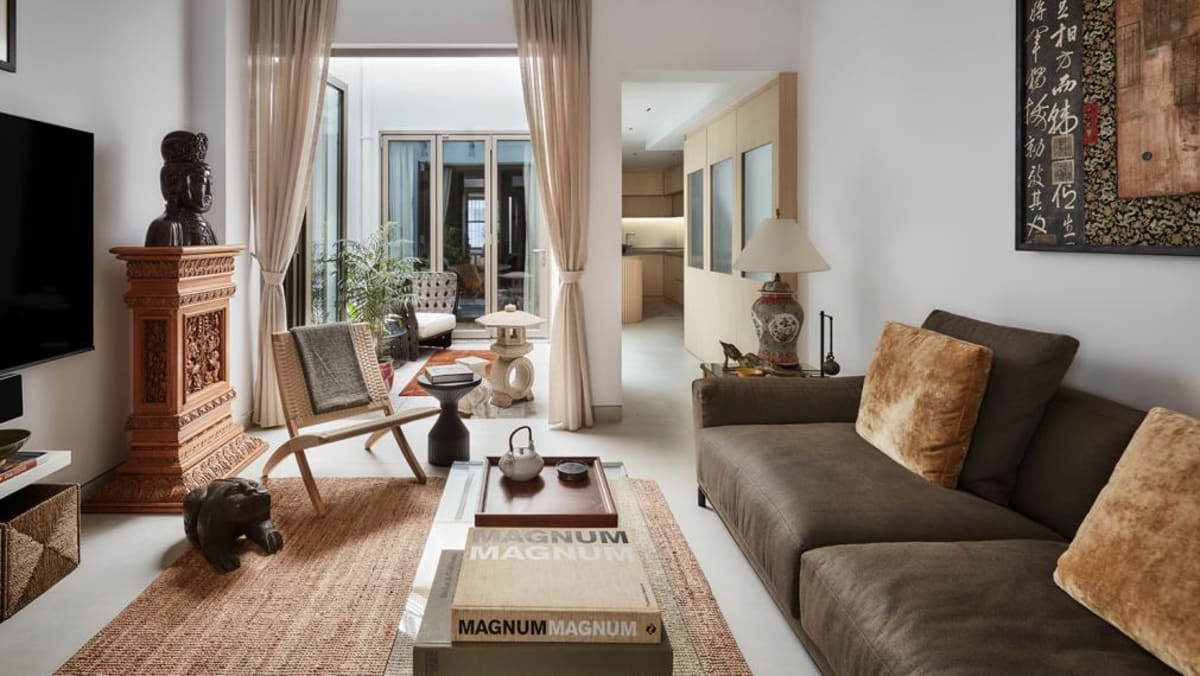
How a Restored Singapore Shophouse Became a Sanctuary for Art, Danish Design, and Family Legacy
Residents of Singapore’s historic Chinatown have long admired the city’s shophouses, but one recently restored example has drawn particular attention for its fusion of heritage architecture, Scandinavian aesthetics, and deeply personal storytelling. The transformation of a 19th-century building into a living museum of art, design, and family history reflects broader trends in urban preservation and cultural curation, according to local historians and design experts.
The Restoration Project: A Decade-Long Journey
The shophouse in question, located on Sungei Road, was originally constructed in the 1880s as a commercial space for Chinese immigrants. Over decades, it fell into disrepair, its timber frame and ornate façade neglected as the neighborhood evolved. In 2014, a private investor acquired the property with the goal of restoring it while preserving its historical character. The project, completed in 2023, cost an estimated $2.5 million, according to a 2023 report by the Urban Redevelopment Authority (URA).
The restoration team, led by architect Lim Wei Liang of Studio LML, faced challenges balancing modern functionality with historical accuracy. “We had to source materials that matched the original 19th-century craftsmanship,” Lim said. “For instance, the wooden beams were reinforced with hidden steel supports to meet current safety standards without compromising the structure’s integrity.”
Art and Design: A Cross-Cultural Dialogue
What sets this shophouse apart is its integration of Danish design principles with traditional Singaporean elements. The interior features mid-century Danish furniture, including Eames-style chairs and Artek lamps, juxtaposed with hand-carved wooden doors and ceramic tiles from the 1920s. This juxtaposition, according to design critic Dr. Mei Lin Tan, represents a growing trend in Singapore’s creative sector. “There’s a deliberate effort to blend global design movements with local heritage,” she explained. “This project is a prime example of how cultural exchange can enrich urban living.”
The homeowner, a Singaporean entrepreneur of Danish and Chinese descent, described the space as a “bridge between two worlds.” “My grandmother’s stories about the shophouse’s original use as a textile shop inspired the layout,” they said. “We kept the ground floor open for art exhibitions and the upper levels for family gatherings, creating a space that honors both history and modernity.”
The Role of Family Memory in Preservation
Family archives played a central role in the restoration. Photographs, handwritten letters, and even a 1930s ledger detailing the shophouse’s commercial history were incorporated into the design. A glass-enclosed display in the entrance hall showcases these artifacts, alongside a video installation recounting the building’s evolution.
Local historian Dr. Rajesh Kumar emphasized the significance of such personal narratives. “Heritage conservation isn’t just about architecture—it’s about the stories tied to a place,” he said. “This project demonstrates how private efforts can complement public preservation initiatives.”
Community Impact and Cultural Significance
The shophouse now hosts monthly art exhibitions and design workshops, attracting both locals and tourists. A 2023 survey by the Singapore Tourism Board found that 68% of visitors to Chinatown expressed interest in heritage-based experiences, suggesting a strong market for such spaces.

However, the project has also sparked debates about the commercialization of heritage. “While it’s positive that the shophouse is being preserved, there’s a risk of turning history into a commodity,” noted Dr. Kumar. “Balancing accessibility with authenticity is a challenge for all such projects.”
Broader Implications for Urban Development
The success of this restoration aligns with Singapore’s 2019 Heritage Master Plan, which aims to protect 1,500 shophouses by 2030. As of 2024, 420 of these buildings have been designated as conservation properties, according to the National Heritage Board. However, private-led projects like this one are increasingly seen as vital to the plan’s success.
Urban planner Dr. Aisha Mohamed highlighted the economic benefits. “Restored shophouses can serve as cultural hubs, generating revenue while preserving history,” she said. “This project shows how private investment can drive sustainable urban development.”
Challenges and Lessons Learned
The restoration faced setbacks, including delays caused by unexpected structural issues and rising material costs. The project’s timeline extended by 18 months, with the final phase focusing on landscaping and community spaces. Despite these hurdles, the homeowner described the outcome as “worth every challenge.”
Experts suggest that such projects require careful planning. “Community engagement is crucial,” said Dr. Mohamed. “Involving neighbors early on can prevent conflicts and ensure the space meets local needs.”
What’s Next for Heritage Spaces in Singapore?
As Singapore continues to modernize, the tension between development and preservation remains a pressing issue. The shophouse’s transformation offers a model for integrating heritage with contemporary uses, but it also raises questions about accessibility and equity. While the space is open to the public for events, private ownership limits its availability for broader community use.

Looking ahead, urban planners and policymakers will need to address these challenges. “The key is to create frameworks that incentivize private investment while ensuring public access to heritage sites,” said Dr. Kumar. “This project is a step in the right direction, but there’s still much work to be done.”
Frequently Asked Questions
What makes this shophouse restoration unique?
The project stands out for its fusion of Danish design with Singaporean heritage elements, along with its emphasis on preserving family history through art and artifacts.
