
How One Colombian Slum Defied Poverty Through Grassroots Innovation—and What the World Can Learn
Medellín’s Comuna 13 transformed from a violent stronghold into a thriving community—without government handouts. Its story offers lessons on resilience, urban planning and the power of collective action.
Deep in the hills of Medellín, Colombia, a neighborhood once synonymous with drug trafficking, armed gangs, and despair has become a global symbol of hope. Comuna 13—one of the city’s most notorious comunas—has not only escaped poverty but redefined what it means to rebuild from the ground up. Unlike traditional slum redevelopment projects, which often rely on top-down government funding or international aid, Comuna 13’s revival was driven entirely by its residents. Through street art, tourism, youth programs, and innovative social enterprises, the community has turned its struggles into a model for urban regeneration.
Today, Comuna 13 stands as proof that poverty isn’t just about lack of resources—it’s about lack of opportunity, trust, and vision. Its journey from fear to flourishing offers critical insights for cities worldwide grappling with inequality, gang violence, and the legacy of urban marginalization. But how did it happen? And what can other communities learn from its success?
— ### From War Zone to World Stage: The Unlikely Rise of Comuna 13 #### A Neighborhood Built on Blood and Concrete Comuna 13’s origins are as brutal as its transformation is inspiring. Carved into Medellín’s steep hillsides in the 1950s, the comuna was initially a makeshift settlement for displaced farmers fleeing Colombia’s violent land reforms. By the 1980s and 1990s, it had become a battleground for drug cartels, paramilitary groups, and the city’s police, earning notoriety as one of the most dangerous places on Earth.
Key figures:
- Population: Around 40,000 residents across 13 sectors (hence the name).
- Peak violence: The 1990s, when gang turf wars left dozens dead annually.
- Economic activity: Predominantly informal—street vending, small workshops, and, in its darkest days, drug-related economies.
- Infrastructure: Poor sanitation, limited electricity, and winding staircases that made police raids nearly impossible.
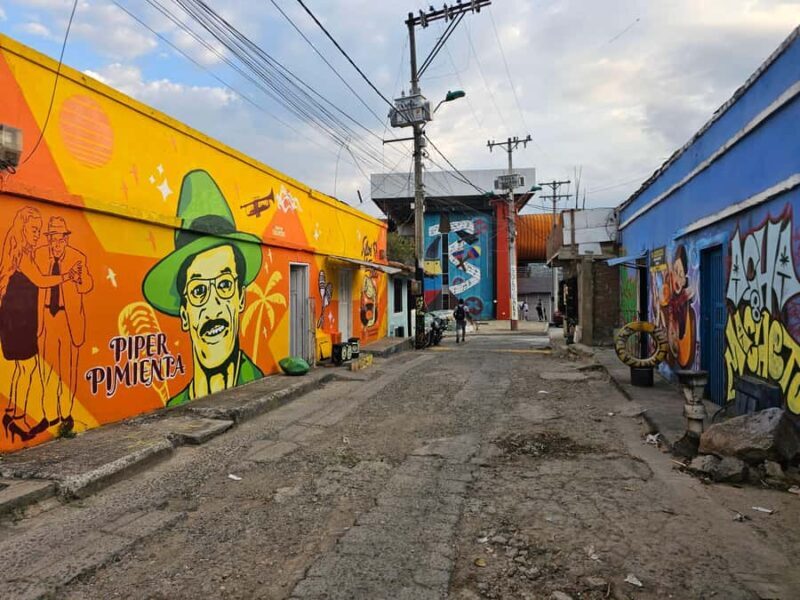
Yet beneath the violence, a different story was unfolding. Residents—many of them young, unemployed, and with few alternatives—began to organize. Graffiti, initially a tool of gang communication, evolved into a form of protest and self-expression. By the late 1990s, artists like Dante, Spray, and Kiko (collectively known as the Graffiti Kings) were painting the hillsides with vibrant murals that told the comuna’s history—and its aspirations.
“We didn’t have money, but we had walls,” said Dante, one of the movement’s founders, in a 2018 interview. “The gangs wanted to mark their territory with fear. We marked ours with color.”
— ### The Turning Point: When Art Became a Weapon Against Poverty #### Graffiti as a Catalyst for Change The shift began in 2001, when Medellín’s mayor, Luis Pérez, launched a controversial but ultimately transformative initiative: the Urban Art Program. Instead of erasing the graffiti—common practice in many cities—the program invited artists to collaborate with residents, turning illegal tags into legal, large-scale murals.
Why it worked:
- Legitimized creativity: Artists who once risked arrest for tagging were now paid to create.
- Reduced gang influence: Young people had a constructive outlet for their energy.
- Tourism boost: The comuna’s new aesthetic attracted visitors, creating jobs in guiding and souvenir sales.
By 2004, Comuna 13 had hosted its first Graffiti Tour, where visitors could climb the hillsides (via newly installed escalators) to see the murals and hear the stories behind them. What started as a public relations stunt became a cultural phenomenon—and a lifeline for the community.
Economic impact: Today, the Graffiti Tour generates an estimated $1.5–2 million annually, funding local businesses, schools, and social programs.
#### Beyond the Murals: Social Enterprises and Youth Empowerment Art was just the beginning. Recognizing that long-term change required more than aesthetics, Comuna 13’s leaders turned to social entrepreneurship. Key initiatives included:
- The Escalators of Social Inclusion (2011): A network of 3,500 escalators and staircases replaced the treacherous hillsides, making the comuna accessible to police, emergency services, and tourists—while also reducing crime by improving mobility.
- Community Libraries: Mobile libraries, funded by local businesses and NGOs, brought books and digital literacy to children who had little access to education.
- Youth Employment Programs: Partnerships with local companies trained young residents in tourism, digital marketing, and construction, giving them skills beyond informal work.
- The Comuna 13 Cultural Center: A hub for workshops, music, and theater, offering free classes in everything from breakdancing to coding.
Case Study: Juan Carlos, a former gang member turned tour guide, now earns enough to send his two children to private school. “I used to sell drugs here,” he said. “Now I show people the other side of Comuna 13—the side we didn’t want them to see.”
— ### The Role of Medellín’s “Urban Innovation” Model Comuna 13’s success didn’t happen in a vacuum. It was part of a broader shift in Medellín’s approach to urban poverty, led by mayors like Antanas Mockus (1995–1997, 2003–2007) and Alberto Pérez (2004–2007), who championed participatory urbanism.
Key policies that shaped Comuna 13’s revival:
- Public space redesign: Parks, libraries, and libraries replaced abandoned lots.
- Metrocable lines: Cable cars connected poor neighborhoods to the city center, reducing commute times and increasing economic opportunities.
- Community policing: Instead of militarized crackdowns, officers worked with residents to address crime.
- Education reforms: Programs like Bibliotecas Parque (Park Libraries) brought learning to marginalized areas.
Yet the critical difference in Comuna 13 was local ownership. Unlike many government-led projects that impose solutions from above, Medellín’s initiatives were co-designed with residents. “The people of Comuna 13 didn’t wait for the government to save them,” said Carolina Sánchez, a urban planner with the United Nations Human Settlements Programme (UN-Habitat). “They built their own path.”
— ### The Challenges: What Comuna 13 Still Faces Despite its progress, Comuna 13 is far from a finished story. Residents and experts warn that its model is fragile and faces ongoing threats:
- Gentrification risks: Rising tourism has driven up property values, pricing out long-time residents. Some worry the comuna could become a “poverty museum” rather than a living community.
- Youth unemployment: While programs like the Cultural Center help, many young people still lack stable jobs, leaving them vulnerable to recruitment by gangs or illegal economies.
- Drug trade persistence: Although violence has dropped, low-level drug dealing remains a shadow economy, complicating efforts to fully “clean up” the comuna.
- Replication struggles: Other Colombian neighborhoods have tried to emulate Comuna 13’s model, but without the same level of political will or artistic talent.
Expert Perspective:
“Comuna 13’s success is a testament to what happens when you combine top-down infrastructure with bottom-up creativity,” said Dr. Ana María Ibáñez, a sociologist at the University of Medellín. “But it’s not a magic formula. It required decades of trust-building, and even now, the city must stay vigilant.”
— ### Lessons for Other Cities: Can Comuna 13’s Model Work Elsewhere? Comuna 13’s story has sparked global interest, with cities from Rio de Janeiro to Detroit studying its approach. But experts caution that its success depends on specific conditions:
- Local leadership: Residents must drive the vision, not outsiders. Forced redevelopment (e.g., slum clearances) often backfires.
- Cultural identity: Comuna 13’s art and history are central to its appeal. Other neighborhoods need to identify their own unique strengths.
- Long-term investment: Medellín’s escalators and Metrocable weren’t cheap, but they paid off by improving quality of life.
- Balancing tourism and authenticity: Too much commercialization can erase the community’s voice. Comuna 13’s tours are run by locals, not corporations.
Comparative Example:
In Favelas in Rio, similar art programs (like Projeto Morar) have reduced violence, but without the same infrastructure investments, results are mixed. Meanwhile, Detroit’s urban farming initiatives show promise in revitalizing post-industrial neighborhoods—but lack the cultural cachet of Medellín’s graffiti.
— ### What’s Next for Comuna 13? Today, Comuna 13 is both a destination and a work in progress. New initiatives aim to deepen its impact:
- Digital inclusion: Free Wi-Fi zones and coding bootcamps to prepare youth for remote jobs.
- Women’s economic empowerment: Cooperatives for local artisans, reducing reliance on male-dominated industries.
- Climate resilience: Green spaces and rainwater harvesting to combat Medellín’s frequent landslides.
- Global partnerships: Collaborations with cities like Barcelona and Cape Town to share its model.
Yet the biggest question remains: Can Comuna 13’s model scale? If it can, it may offer the most powerful antidote yet to urban poverty—not charity, but agency.

— ### Frequently Asked Questions About Comuna 13’s Transformation
1. How did Comuna 13 go from being one of the most dangerous places in the world to a tourist attraction?
Through a combination of art as diplomacy, infrastructure upgrades (like escalators), and community-led tourism. The Graffiti Tour, launched in 2004, turned the comuna’s violent history into a cultural asset, while escalators improved safety and accessibility. Crucially, residents controlled the narrative—tourists see the art and stories they wanted shared.
2. Did the Colombian government fund Comuna 13’s revival, or was it entirely grassroots?
Both. While residents drove the vision, Medellín’s city government provided critical infrastructure (escalators, Metrocable) and policy support. However, the execution—like the Graffiti Tour and youth programs—was largely community-led. This public-private-community partnership was key to its success.
3. Are there other neighborhoods in Colombia (or globally) using a similar model?
Yes, but with varying results. In Bogotá, Ciudad Bolívar has used art and urban farming to reduce violence. In Brazil, Projeto Morar in Rio’s favelas replicates Medellín’s graffiti approach. However, scaling the model remains difficult without strong local leadership and long-term funding.
4. Has crime really decreased in Comuna 13, or is it just less visible?
Crime has dropped dramatically—homicides fell from over 300 annually in the 1990s to fewer than 10 in recent years. However, low-level drug dealing and petty theft still occur, particularly at night. The shift is more about organized gang control giving way to community policing and economic alternatives.
5. Could Comuna 13’s model work in a different country, like the U.S. Or Europe?
Parts of it, yes—but adaptations would be needed. For example:
- U.S. Cities: Detroit’s urban farming and Portland’s street art initiatives show potential, but would require stronger ties between residents and city government.
- Europe: Cities like Barcelona (with its superblocks) or Berlin (with its squat-turned-cultural-hub model) could blend Comuna 13’s grassroots approach with existing social programs.
The key is local ownership—imposing Medellín’s model wouldn’t work; it must be adapted.
6. What’s the biggest misconception about Comuna 13’s success?
The idea that it was a quick fix. Comuna 13’s transformation took decades, required millions in investment, and relied on unwavering community trust. Many assume the graffiti and tours solved all problems, but the real work was (and still is) in education, job creation, and preventing gentrification.
