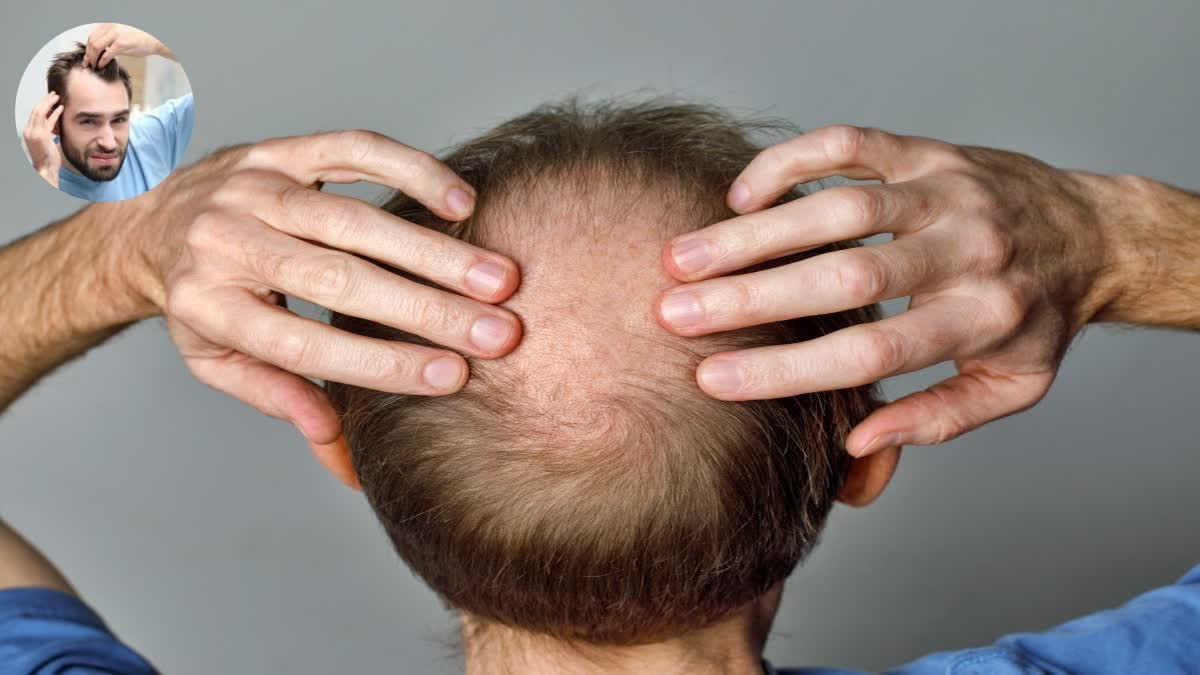
Weight Loss Drugs Linked to Men's Hair Loss
New academic studies from Penn Medicine and NYU Langone Health quantify the unlisted hair loss risks associated with blockbuster GLP-1 medications.

For years, patients taking blockbuster weight-loss and diabetes medications have shared anecdotal warnings in online forums and doctors' offices about an unlisted side effect: thinning hair. Now, two independent academic medical centers have moved past patient speculation, publishing separate studies within days of each other that pin down quantitative risks and point toward underlying biological culprits.
The findings arrive as roughly one in ten Americans use medications containing glucagon-like peptide-1 (GLP-1) receptor agonists, such as Ozempic, Wegovy, and Zepbound. While prescriptions have more than tripled since the U.S. Food and Drug Administration approved the first such drug in 2020, hair loss remains absent from official drug labels, leaving clinicians and patients to navigate aesthetic distress without clear guidance.
Related YouTube video


To evaluate the scale of the problem, researchers at Penn Medicine examined electronic health records from more than 50,000 adult patients treated for type 2 diabetes within the University of Pennsylvania Health System between January 2019 and September 2024. Senior author Yong Chen, a professor of biostatistics, noted that clinical trials were never structured to capture aesthetic complaints like shedding, prompting the team to conduct a systematic population-level analysis.
The Penn study compared GLP-1 users against patients prescribed alternative diabetes medications commonly introduced at similar treatment stages. According to findings published in the BMJ, patients taking GLP-1 receptor agonists were 37 percent more likely to report hair loss than those taking SGLT2 inhibitors like Jardiance. Compared with users of DPP4 inhibitors like Januvia, GLP-1 users faced a 68 percent higher reporting rate. This elevated pattern held consistently across both sexes and all age groups examined.
At the same time, researchers at NYU Langone Health approached the puzzle from a genetic angle, publishing their work in the Journal of Investigative Dermatology. Rather than tracking active drug users, the NYU team analyzed large public genetic repositories—including data from 31,684 mostly White men and women in the eQTLGen database and 205,327 mostly White men in the Complex Traits Genetics group database—to isolate the role of the GLP1R gene, which naturally controls the body's production of GLP-1 receptor proteins.
By treating naturally higher GLP1R gene activity as a genetic proxy for drug exposure, the researchers investigated whether individuals carrying these traits were more susceptible to androgenetic alopecia, the inherited form of male-pattern hair loss that progresses across the front and top of the scalp. The analysis revealed that men with a genetic predisposition to hair loss face a 7 percent added risk of losing their hair if they experience heightened GLP-1 activity.
Crucially, the NYU team adjusted their data to discount potential confounding variables, including hypertension, which can reduce blood flow to the scalp and harm follicle growth, as well as insulin resistance and lowered testosterone levels. Even after these adjustments, the 7 percent increased risk remained constant.
Medical experts remain divided on the exact mechanism driving the shedding, weighing whether the medications trigger hair loss directly or simply accelerate an indirect physiological reaction. George Cotsarelis, chair of Penn's Department of Dermatology and co-author of the Penn study, emphasized that rapid weight loss is a well-established driver of hair shedding. Many patients do find that hair growth resumes several months after their weight stabilizes.
Even so, Cotsarelis and other researchers acknowledge that rapid weight loss alone may not tell the whole story. The genetic overlap identified by the NYU team suggests a distinct biological pathway where GLP-1 activity directly weakens hair follicle growth.
Recognizing the distress caused by these unreported aesthetic side effects, researchers are already looking toward preventative clinical solutions. Lynn Petukhova, an assistant professor in dermatology and population health at NYU Grossman School of Medicine and senior investigator on the genetic study, suggested that future patients could undergo genetic screening and risk benchmarking before starting therapy. Such evaluations could pave the way for co-prescribing preventive hair loss treatments like minoxidil alongside GLP-1 medications.
Whether those screening protocols and preventative strategies will become standard clinical practice depends on upcoming findings. Petukhova stated that further research is required to pinpoint the precise biological mechanisms that weaken hair follicles, with immediate plans underway to investigate whether the genetic links observed in men also apply to women.
Clinical Comparisons and Database Methodology
The electronic health record evaluation conducted by Penn Medicine drew on two distinct comparative cohorts within the University of Pennsylvania Health System. According to Northeast Times, the GLP-1 versus SGLT2 inhibitor comparison analyzed data from more than 27,000 patients, while the evaluation measuring GLP-1 users against DPP4 inhibitor users examined records from more than 23,000 patients. To establish these comparisons, researchers categorized alternative diabetes treatments by their distinct physiological mechanisms. As outlined by PhillyVoice, SGLT2 inhibitors like Jardiance assist the body in eliminating excess sugar via urine, whereas DPP4 inhibitors like Januvia prompt the pancreas to release insulin through the blocking of a specific enzyme.
Parallel genetic investigations conducted by NYU Langone Health used extensive public repositories to map biological vulnerability. As reported by Mirage News, the research team accessed the eQTLGen database encompassing 31,684 mostly White men and women alongside the Complex Traits Genetics group database containing records for 205,327 mostly White men. Because male hair loss conditions are extensively documented compared to female hair loss, the analysts restricted their causal evaluation to male-pattern baldness, noting that androgenetic alopecia affects roughly half of White American males over the age of 50.
| Medication Class Evaluated | Comparison Group | Reported Risk Increase |
|---|---|---|
| GLP-1 Receptor Agonists | SGLT2 Inhibitors (e.g., Jardiance) | 37 percent higher reporting rate |
| GLP-1 Receptor Agonists | DPP4 Inhibitors (e.g., Januvia) | 68 percent higher reporting rate |
| GLP-1 Pathway Activity (Genetic Proxy) | Men with Androgenetic Alopecia | 7 percent added risk of hair loss |
The convergence of these real-world health record data and genetic models provides clinicians with new metrics for evaluating patient complaints that were previously dismissed as isolated anecdotes. While the exact biological mechanisms weakening hair follicles require further laboratory analysis, the next step involves expanding the genetic investigation to determine whether the hormone receptor links identified in male patients apply equally to women.
Archypedia is dedicated to independent, evidence-backed reporting. This briefing was synthesized from primary source reporting, corroborated across independent newsrooms, and verified against our Editorial Standards.
Transparency record
Evidence behind this report
This report synthesizes 6 distinct sources. Open the source ledger below to compare the underlying coverage.
Prepared under the Archypedia Editorial Policy by the Lina Park editorial desk profile. AI-assisted tools may support drafting and verification; public accountability remains with Archypedia. Report an error.