Auditory cortical-striatal circuit supports sound-triggered timing-prediction
A study in PLOS Biology reveals that the auditory cortex plays a causal role in interval-based timing by communicating with the posterior striatum. This discovery shifts our understanding of how sensory input is converted into precisely timed motor actions.
The ability to anticipate future events based on sound cues is a fundamental aspect of animal behavior, enabling organisms to time their actions for survival — from hunting prey to simply waiting for a crosswalk signal. Traditionally, scientists favored a centralized clock
model, positing that timing is managed by a single, amodal brain region. However, new research challenges this view, providing evidence for a distributed mechanism where sensory cortices and striatal regions work in tandem to predict time and refine behavior.
The Auditory Cortical-Striatal Circuit
Work published June 2, 2025, in PLOS Biology by Suri et al. Identifies an auditory cortical-striatal circuit that supports sound-triggered timing-prediction. By studying head-fixed mice trained to lick for a water reward after specific sound cues, researchers found that the auditory cortex (AC) is not merely a passive relay station. Instead, it plays a causal role in timing delayed actions.
Related media
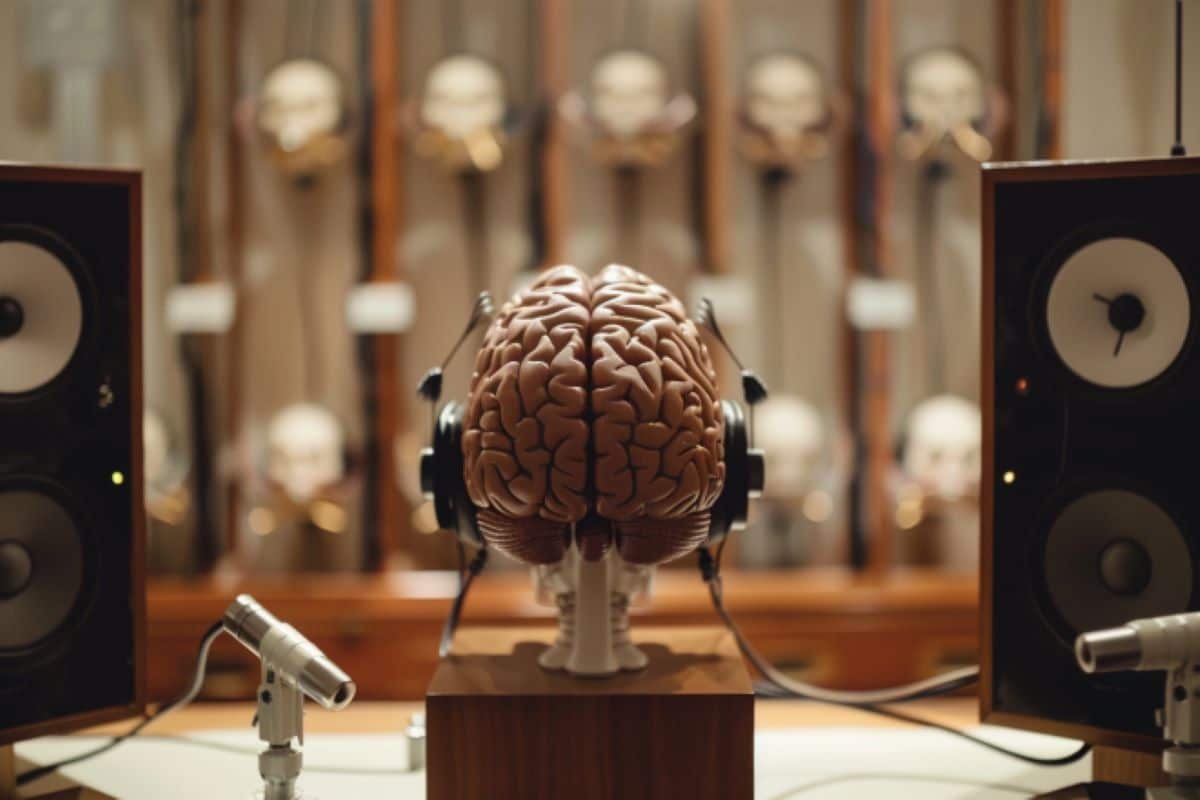

Mice trained on the task reliably estimated the time interval between a sound and a reward, ranging from 0.5 to 5 seconds. Neural recordings revealed that the magnitude of auditory cortical responses to a sound prospectively encoded the duration of the anticipated interval. When researchers inactivated the AC using muscimol, the mice lost the ability to accurately time their movements for delayed rewards. Importantly, the mice remained able to perform actions immediately following a sound, suggesting that the AC-to-posterior striatum pathway is specifically dedicated to interval-based prediction rather than basic sound-to-action reflexes.
Sensory and Motor Interplay
This discovery complements research into how the brain’s cortex manages the conversion of perception into action. In a study published in Current Biology, researchers at the Champalimaud Foundation investigated how sensory and choice-related signals coexist within the cortex. Lead author Raphael Steinfeld and senior author Alfonso Renart utilized a frequency-discrimination task where mice decided between two actions, separated by a half-second delay to isolate brain activity related to the stimulus from that related to the response.
The study found that sensory signals related to sound detection faded quickly, vanishing around 400 milliseconds after sound presentation, and were distributed broadly across cortical layers. In contrast, signals related to future actions — indicating the movement the mouse was about to make, emerged later and were concentrated in the deeper layers of the auditory cortex. Renart noted,
"the early sensory signals in the auditory cortex don’t seem to predict the mice’s eventual choice, and the choice signals emerge significantly later. This suggests that the sensory signals in the auditory cortex don’t directly cause the mice’s actions, and that the choice signals we observe are likely computed elsewhere in higher brain regions involved in planning or executing movements, which then send their feedback to the auditory cortex."
Circuit Complexity and Evolution
The functional role of these late-emerging signals remains a subject of investigation. Researchers hypothesize that they might serve to integrate information, adjust perception to align with an unfolding decision, or prime the brain for the sensory consequences of a planned movement. Furthermore, the connections from the deeper layers of the auditory cortex to the posterior striatum remain a focal point for understanding the transition from perception to habit-driven action.
What to Watch Next
- Circuit Origins: Further research will focus on identifying the specific higher-order brain regions that send feedback signals to the auditory cortex.
- Causal Verification: Future studies are expected to determine if the choice-related signals observed in the deep layers of the AC are causal to motor output.
- Clinical Implications: Researchers aim to study these circuit mechanisms in the context of neurodevelopmental and neuropsychiatric conditions to better understand their impact on behavior and cognitive function.
Archypedia is dedicated to independent, evidence-backed reporting. This briefing was synthesized from primary source reporting, corroborated across independent newsrooms, and verified against our Editorial Standards.
Transparency record
Evidence behind this report
This report synthesizes 6 distinct sources. Open the source ledger below to compare the underlying coverage.
- journals.plos.org
- neurosciencenews.com
- news.harvard.edu
- genengnews.com
- today.duke.edu
- fchampalimaud.org
Prepared under the Archypedia Editorial Policy by the Lina Park editorial desk profile. AI-assisted tools may support drafting and verification; public accountability remains with Archypedia. Report an error.