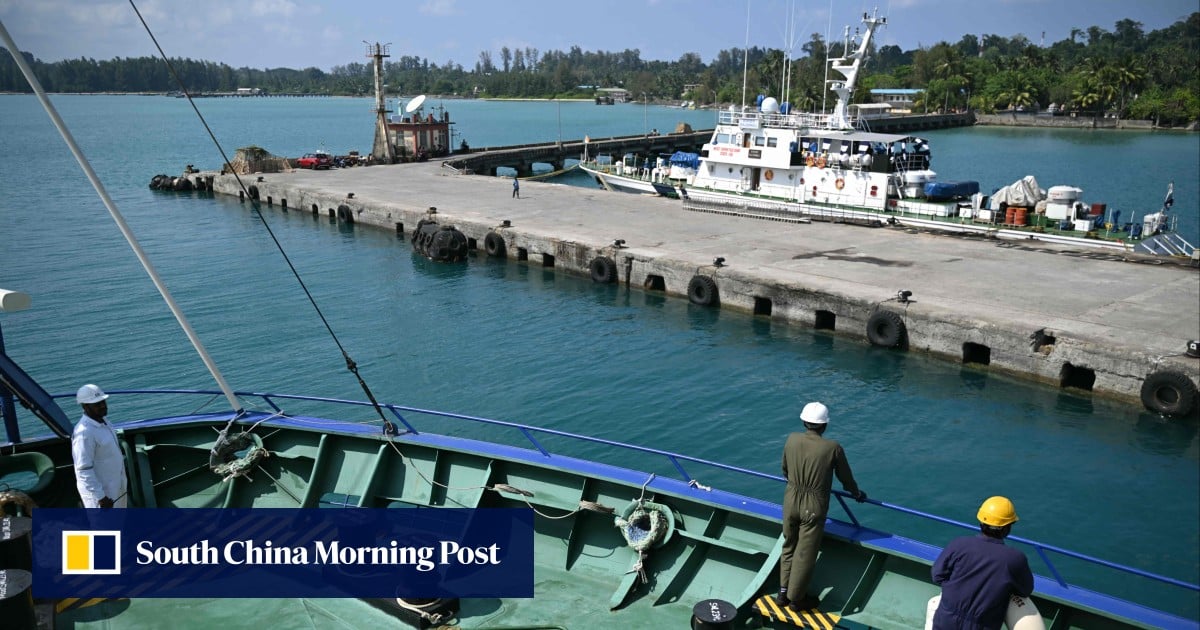
The Strategic Pivot: What India’s ‘Unsinkable Aircraft Carrier’ Near Malacca Means for Its China Ties
In the high-stakes game of Indo-Pacific geopolitics, geography is often destiny. For New Delhi, the remote archipelago of the Nicobar Islands is no longer just a distant outpost of the Indian Union; It’s being transformed into a critical strategic asset. The ambitious development of Great Nicobar—often described in geopolitical circles as an “unsinkable aircraft carrier”—represents a fundamental shift in India’s maritime strategy. By enhancing its footprint near the Malacca Strait, India is not merely developing infrastructure; it is positioning itself to manage one of the world’s most vital maritime choke points, directly impacting its complex and often volatile relationship with China.
The scale of the vision is immense. At the heart of this transformation is the Galathea Bay project, a massive undertaking involving an international container transshipment terminal, a greenfield international airport and a power plant. With an estimated investment of approximately Rs 48,862 crore, the project is designed to project Indian power far beyond its mainland shores. However, this strategic leap forward is not without its frictions, as the Indian government balances national security imperatives against severe environmental concerns and the rights of indigenous tribal populations.
The Geography of Power: Why the Nicobars Matter
To understand why the term “unsinkable aircraft carrier” is applied to the Nicobar Islands, one must look at the map of global trade. The Malacca Strait is the primary artery connecting the Indian Ocean to the Pacific Ocean. It is the shortest sea route between Middle Eastern oil fields and the industrial hubs of East Asia, including China, Japan, and South Korea.
For China, this creates what strategists call the “Malacca Dilemma.” A vast majority of China’s energy imports pass through this narrow corridor. In the event of a naval blockade or a conflict, an adversary with significant presence in the Nicobars could effectively “turn off the tap” of China’s energy supply. By upgrading its facilities in Great Nicobar, India is effectively establishing a permanent, fortified presence at the mouth of this strait.
Unlike a floating aircraft carrier, which must be rotated and refueled, a developed island base provides:
- Permanent Surveillance: 24/7 monitoring of vessel movements entering and exiting the Malacca Strait.
- Logistical Depth: The ability to station large numbers of troops, aircraft, and naval assets without relying on distant mainland bases.
- Rapid Response: A drastically reduced reaction time for intercepting threats or providing security for allied shipping.
- Deterrence: The mere existence of a high-capacity port and airfield serves as a psychological and strategic deterrent to any power seeking to dominate the region.
The Galathea Project: Infrastructure as Strategy
The centerpiece of this strategic pivot is the development of Galathea Bay. This is not a standard commercial port project; it is a dual-use infrastructure play where economic utility masks a deeper security purpose. The proposed transshipment terminal is designed to capture a share of the global shipping traffic that currently bypasses India, but its strategic value lies in its ability to host large naval vessels and facilitate rapid deployment.
The financial architecture of the project is as complex as its strategic goals. Reports indicate that the Centre may need to adjust Viability Gap Funding (VGF) rules to ensure the Rs 48,862-crore project remains attractive to investors. VGF is a mechanism where the government provides a grant to make a project commercially viable when it is socially or strategically necessary but not immediately profitable. The willingness to tweak these rules underscores the government’s view that the Galathea port is a “must-have” for national security, regardless of the immediate balance sheet.
| Project Component | Primary Economic Goal | Strategic/Military Utility |
|---|---|---|
| International Transshipment Port | Capturing global shipping revenue | Naval docking and logistics hub |
| Greenfield International Airport | Boosting tourism and connectivity | Rapid deployment of air assets/surveillance |
| Power Plant & Infrastructure | Local energy security | Sustaining long-term military presence |
| Urban Development/Township | Regional economic growth | Housing for strategic personnel |
The ‘Malacca Dilemma’ and the China Factor
The relationship between India and China has been strained since the 2020 Galwan Valley clashes, leading New Delhi to rethink its security posture across all fronts. While the border in the Himalayas remains a flashpoint, the maritime domain is where the long-term struggle for hegemony will be decided. China’s “String of Pearls” strategy—developing ports in Pakistan, Sri Lanka, and Myanmar—aims to encircle India. The development of Great Nicobar is India’s answer: a “Necklace of Diamonds” strategy.
By strengthening its hold on the Nicobars, India creates a counter-weight to Chinese expansionism. If China attempts to assert dominance in the South China Sea or pressure neighbors in Southeast Asia, India now possesses the geographic leverage to influence the flow of goods and energy. This doesn’t necessarily mean India intends to block the strait—which would be a drastic move with global economic repercussions—but the capability to do so provides India with significant bargaining power in diplomatic negotiations with Beijing.
this move aligns India more closely with the Quad (the United States, Japan, Australia, and India). A robust Indian presence in the Nicobars complements the US “Free and Open Indo-Pacific” vision, creating a networked security architecture that prevents any single power from dominating the region’s sea lanes.
The Domestic Cost: Tribal Rights and Environmental Alarm
While the strategic benefits are clear at the ministerial level, the project has sparked intense domestic controversy. The Great Nicobar project is not being built on empty land; it is occurring in one of the most ecologically sensitive zones on Earth, home to the Shompen and Nicobarese tribes.
Critics and political opposition figures have raised alarms over the implementation of the Forest Rights Act (FRA). There are concerns that the project will lead to the displacement of indigenous people and the destruction of irreplaceable rainforests. The tension is palpable in the legal and political spheres, with calls for the government to take a firmer stand on FRA implementation in the Calcutta High Court. The argument is that strategic security should not come at the cost of the fundamental rights of India’s most vulnerable citizens.
“The pursuit of geopolitical leverage must not result in the erasure of indigenous cultures or the permanent destruction of critical biodiversity. A strategic victory that destroys the environment and violates tribal rights is a pyrrhic victory.”
The debate centers on several key points of contention:
- Deforestation: The clearing of thousands of hectares of primary forest to make way for the port and airport.
- Biodiversity Loss: The threat to the Giant Leatherback turtle nesting sites and various endemic species.
- Tribal Sovereignty: The risk of introducing “mainland” influences and diseases to isolated tribes, potentially devastating their societal structures.
- Legal Oversight: Accusations that environmental clearances were fast-tracked without adequate consultation with local stakeholders.
Comparing Strategic Approaches: India vs. China
To understand the nuance of this development, it is helpful to compare how India and China approach maritime strategy. China’s approach has largely been “outward-in,” building ports in other countries to project power. India’s approach in the Nicobars is “inward-out,” utilizing its own sovereign territory to create a fortress-like vantage point.
This difference is crucial. While China’s ports in places like Hambantota (Sri Lanka) can be subject to the political whims of the host country, the Nicobars are Indian soil. This provides New Delhi with absolute control over the infrastructure, making it a more reliable and permanent strategic asset than any overseas base could ever be.
However, India faces a challenge China rarely does: a vibrant, litigious democracy. The internal pushback from environmentalists and human rights advocates means that India’s strategic build-up is slower and more contested. This creates a paradox where democratic values, which India promotes as a contrast to China’s authoritarianism, actually unhurried down the very strategic developments needed to counter that authoritarianism.
The Broader Geopolitical Implications
What does this mean for the future of India-China ties? In the short term, it is likely to increase suspicion. Beijing views any move to restrict its access to the Malacca Strait as a hostile act. We may see China respond by further developing its “Belt and Road” alternatives, such as pipelines through Myanmar or corridors through Pakistan, to bypass the strait entirely.
In the long term, however, the “unsinkable aircraft carrier” transforms India from a regional power into a pivotal maritime state. It signals to the world that India is no longer content to be a passive observer of Indo-Pacific dynamics. By controlling the gateway to the East, India becomes an indispensable partner for any nation—be it the US, Japan, or an ASEAN member—that seeks to maintain a balance of power in Asia.
For more context on regional security, you may find a related explainer on the Quad’s maritime strategy useful in understanding how these individual assets fit into a larger alliance.
Frequently Asked Questions
What is the “Malacca Dilemma”?
The Malacca Dilemma refers to China’s strategic vulnerability due to its heavy reliance on the narrow Malacca Strait for its energy imports. Because the strait is a choke point, it could be easily blocked by a hostile naval power, potentially crippling the Chinese economy.
Why is the Great Nicobar project called an “unsinkable aircraft carrier”?
This term is used because the islands provide a permanent, land-based platform for air and naval operations. Unlike a ship, an island cannot be sunk, and it provides far more space for fuel, ammunition, and personnel, allowing for a sustained military presence in a critical location.

How much is being invested in the Galathea port?
The estimated cost of the strategic development in Great Nicobar, including the port and airport, is approximately Rs 48,862 crore.
What are the main criticisms of the Great Nicobar project?
The primary criticisms involve the massive deforestation of rainforests, the threat to endangered wildlife (like the Leatherback turtle), and the potential violation of the rights of indigenous tribes, such as the Shompen, under the Forest Rights Act.
How does this affect the relationship between India and China?
It increases strategic tension by giving India the ability to monitor and potentially disrupt Chinese shipping. However, it also provides India with significant diplomatic leverage and strengthens its position within the Quad alliance.
As the concrete begins to pour in Galathea Bay, the world is watching. The transformation of the Nicobars is more than a construction project; it is a statement of intent. India is signaling that it is ready to assume the role of a primary security provider in the Indian Ocean. The success of this gamble will depend on whether New Delhi can reconcile its high-level strategic ambitions with its domestic commitments to environmental sustainability and human rights. The result will determine not only the fate of the Nicobar Islands but the balance of power in Asia for decades to come.
