Sinner’s Road to Roland Garros Redemption Could End with Career Grand Slam – ATP Tour
The landscape of men’s professional tennis is undergoing a seismic shift. For nearly two decades, the sport was defined by a triumvirate of dominance—Roger Federer, Rafael Nadal, and Novak Djokovic—who pushed the boundaries of what was humanly possible on a tennis court. As that era transitions into history, a new protagonist has emerged to claim the mantle of leadership. Jannik Sinner, the Italian powerhouse, has ascended to the pinnacle of the ATP Tour, but one significant ghost remains in his closet: the red clay of Paris.
For Sinner, the quest is no longer just about maintaining a world number one ranking or adding another trophy to his cabinet. It has become a narrative of psychological and technical conquest. Sinner’s road to Roland Garros redemption could end with Career Grand Slam – ATP Tour status, a feat that would solidify his place not just as a champion of his era, but as an all-time great. To achieve this, he must conquer the most grueling surface in the sport at the most prestigious clay-court venue in the world.
The Weight of the Career Grand Slam
In the lexicon of tennis, few achievements carry as much prestige as the Career Grand Slam. This occurs when a player wins all four major championships—the Australian Open, Roland Garros, Wimbledon, and the US Open—at least once during their career. It’s the ultimate litmus test for a player’s versatility, proving they can master the lightning-fast grass of London, the punishing hard courts of New York and Melbourne, and the slow, grinding attrition of the Parisian clay.
While the “Big Three” made this achievement look routine, for the rest of the field, it remains an elusive peak. Sinner has already proven his mastery of hard courts, showcasing a lethal combination of baseline aggression and mental fortitude. However, the red clay of Roland Garros represents a different beast entirely. For Sinner, “redemption” refers to the gap between his undeniable talent and his historical struggle to dominate the clay season with the same inevitability he displays elsewhere.
“Winning on clay is not about power; it is about patience, movement, and the ability to suffer. For a player like Sinner, who thrives on timing and precision, Roland Garros is the final frontier.”
Current Major Status: The Sinner Checklist
To understand the stakes, one must look at Sinner’s trajectory across the four majors. His rise has been meteoric, characterized by a steady increase in maturity and a refinement of his tactical approach.
| Grand Slam | Surface | Status | Key Challenge for Sinner |
|---|---|---|---|
| Australian Open | Hard | Champion | Maintaining peak heat tolerance |
| US Open | Hard | Champion | Managing New York pressure |
| Wimbledon | Grass | Contender | Adapting slice and low-bounce play |
| Roland Garros | Clay | The Target | Endurance and point construction |
Analyzing the “Redemption” Arc at Roland Garros
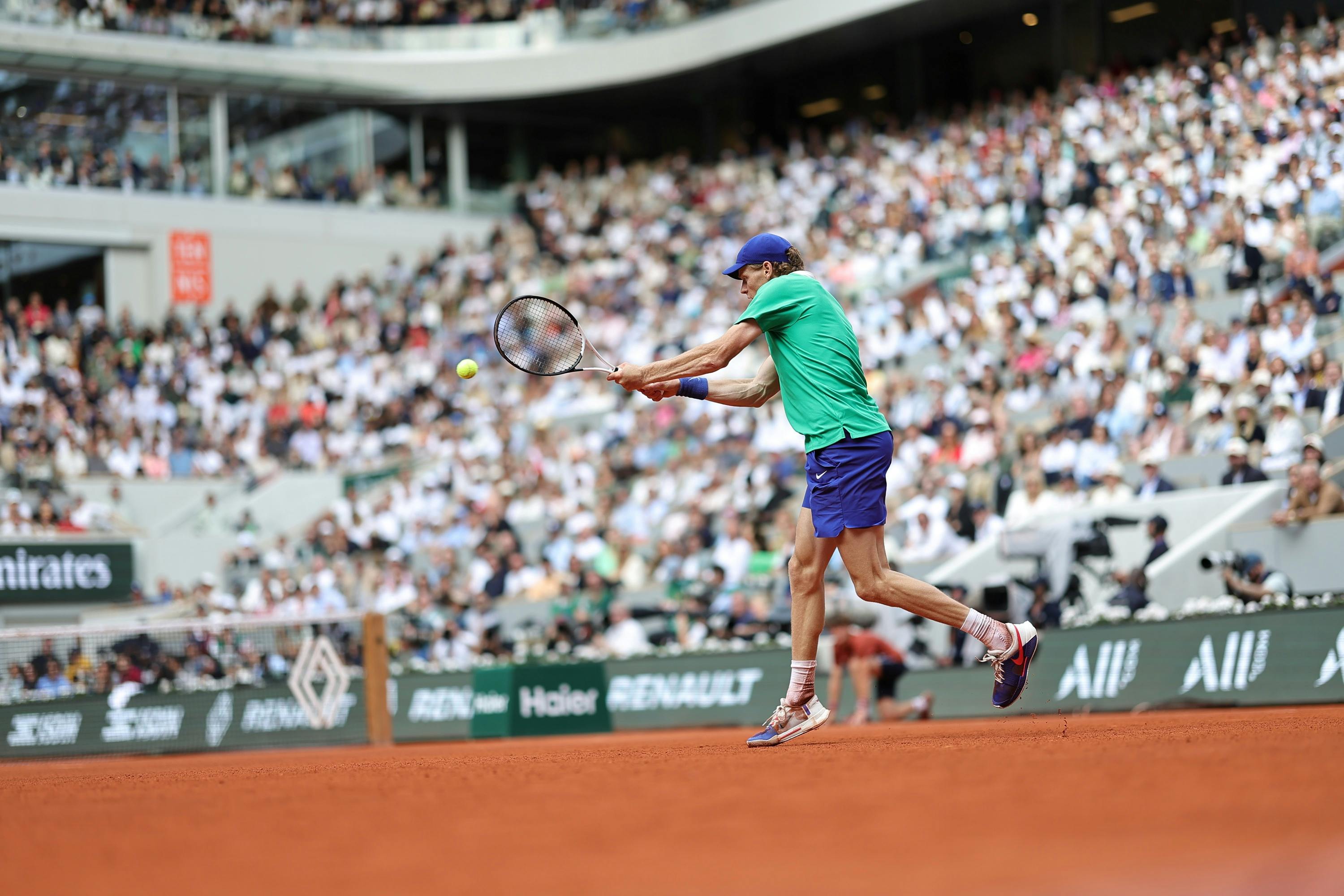
Why is the term “redemption” so central to Sinner’s current journey? To the casual observer, Sinner has always been a strong player. To the analyst, however, his relationship with clay has been a complex evolution. In his early years on the ATP Tour, Sinner’s game was built for speed. His flat, penetrating groundstrokes were weapons of mass destruction on hard courts but often flew long or lacked the “bite” necessary to push opponents back on the slower clay of Paris.
Redemption, is about overcoming the perceived limitation that he is a “hard-court specialist.” The psychological hurdle of Roland Garros is often higher than the physical one. The clay demands a different rhythm—a willingness to play twenty-shot rallies and the patience to wait for the right short ball rather than forcing a winner too early.
The Technical Evolution: From Power to Precision
Sinner’s transition toward clay-court mastery has been a calculated process. Under the guidance of his coaching team, he has made several critical adjustments to his game that make the prospect of a Career Grand Slam a tangible reality:
- Increased Topspin: Sinner has worked extensively on adding more “RPMs” to his forehand. By brushing up on the ball, he creates a higher arc, ensuring the ball dips into the court and bounces higher, pushing his opponents behind the baseline.
- The “Sinner Slide”: Movement on clay is an art form. Sinner has refined his sliding technique, allowing him to recover to the center of the court more efficiently and maintain balance while hitting on the run.
- Point Construction: Rather than relying on raw power, Sinner is now utilizing the “heavy” ball to neutralize opponents, using depth and angle to create openings rather than trying to hit through the court.
These changes suggest that the version of Jannik Sinner arriving at the next Roland Garros is fundamentally different from the one who struggled in previous editions. He is no longer fighting the surface; he is learning to dance with it.
The Rivalry Landscape: Sinner vs. Alcaraz
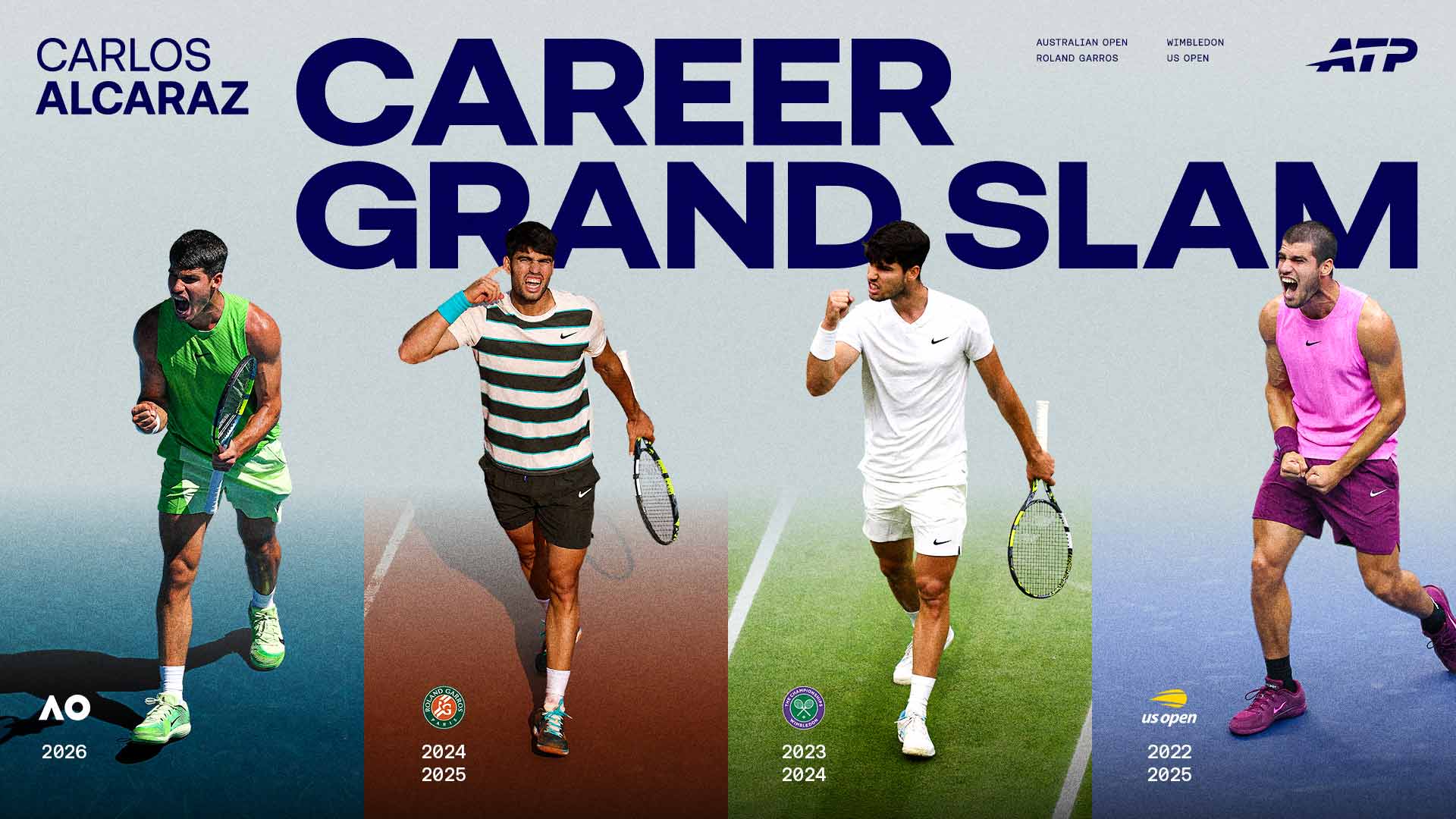
No discussion of Sinner’s road to Roland Garros redemption could end with Career Grand Slam – ATP Tour success is complete without mentioning Carlos Alcaraz. If Sinner is the protagonist of this story, Alcaraz is the formidable antagonist (and fellow visionary) of the new era. Alcaraz has already mastered the clay, possessing a natural fluidity and a variety of shots—including the drop shot—that make him a nightmare opponent in Paris.
The rivalry between Sinner and Alcaraz is the defining narrative of modern tennis. While Sinner often holds the edge on fast hard courts, Alcaraz has historically owned the clay. For Sinner to achieve the Career Grand Slam, he will likely have to go through Alcaraz, or at the remarkably least, outlast him in a war of attrition.
The Tactical Clash on Clay
When these two meet on the red dirt, it becomes a clash of philosophies. Alcaraz plays with a creative, almost improvisational style, using the entire court to disrupt his opponent. Sinner, conversely, represents the pinnacle of modern baseline efficiency. The key to Sinner’s redemption lies in his ability to disrupt Alcaraz’s rhythm—using his improved topspin to keep the Spaniard pinned back and preventing him from stepping inside the baseline to dictate play.
This rivalry serves as a catalyst for Sinner’s growth. To beat the best clay-courter of the new generation, Sinner is forced to elevate his own game to a level that transcends surface specialization.
The Broader Context: Chasing the Ghosts of the Big Three
For nearly two decades, the conversation around the Career Grand Slam was dominated by the “Big Three.” Roger Federer’s elegance, Rafael Nadal’s clay-court hegemony, and Novak Djokovic’s clinical perfection set a bar that seemed unreachable for anyone else. However, the vacuum left by their gradual exit from peak dominance has created a window of opportunity.
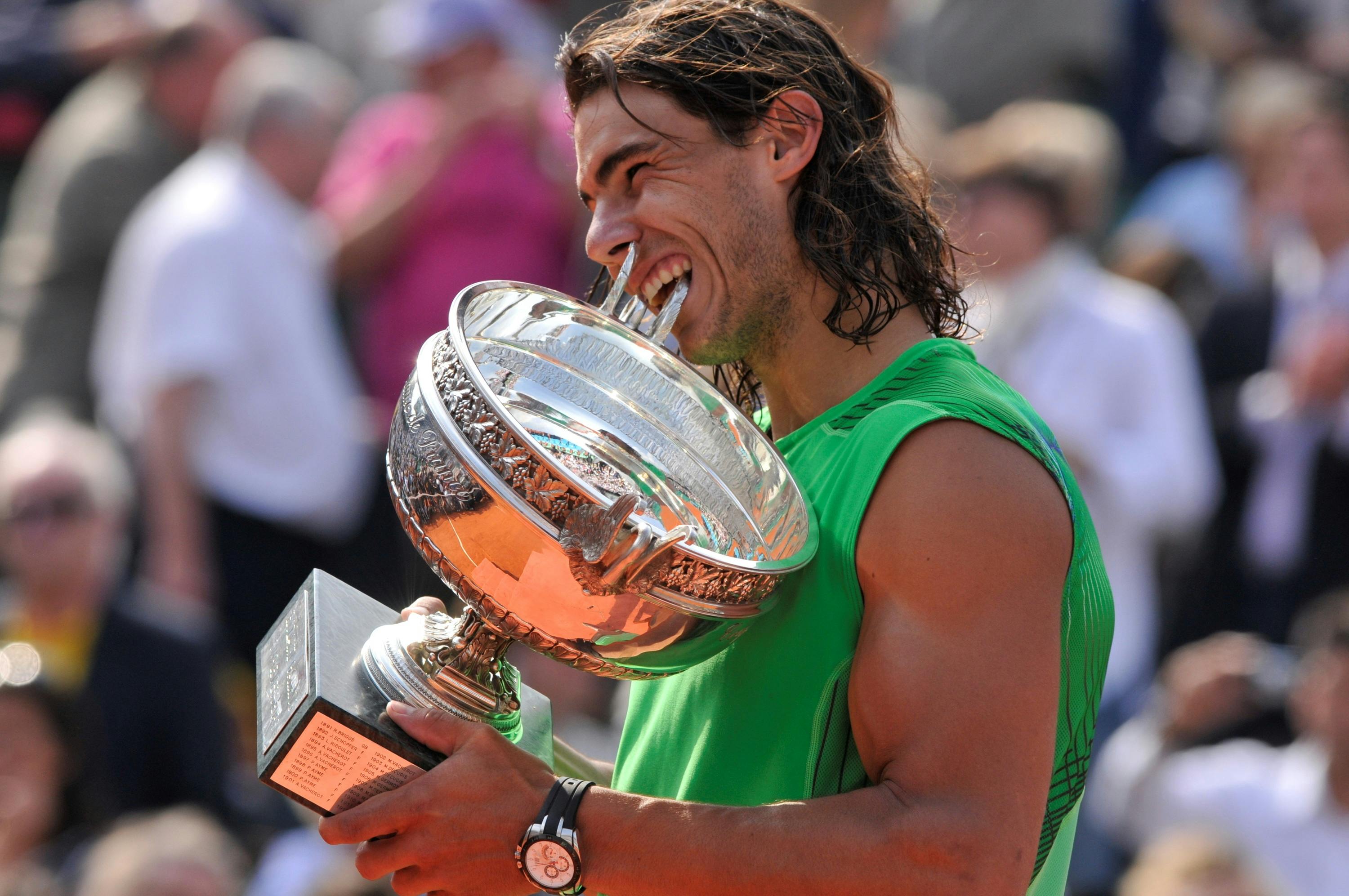
Sinner is not merely trying to win trophies; he is trying to validate the transition of power. If he can secure the French Open title, he proves that the new generation possesses the same versatility as the legends. It is a quest for legitimacy. While Federer and Djokovic were all-court masters, Nadal was the “King of Clay.” Sinner doesn’t need to be the King of Clay, but he must be the Master of the Moment in Paris to complete his collection.
Key Milestones on the Path to Paris
The road to Roland Garros is paved with the clay-court swing. Sinner’s performance in the lead-up tournaments is a critical indicator of his readiness:
- Monte Carlo Masters: The primary test of confidence and early-season rhythm.
- Madrid Open: A test of altitude and speed, where the ball flies faster.
- Rome Masters: The closest simulation to the conditions found at Roland Garros.
Success in these events provides the “match toughness” required to survive a two-week marathon in Paris. For Sinner, these tournaments are not just about points; they are laboratories where he tests his new tactical adjustments.
Common Misconceptions About Sinner’s Clay Game
There is a recurring narrative in tennis media that Sinner is “too flat” for clay. This is a simplification that ignores the evolution of the modern game. While it is true that he doesn’t produce the looping, extreme topspin of a prime Rafael Nadal, Sinner’s “heavy” flat hitting can be just as effective if placed correctly. On clay, a flat shot that stays low can be harder to return than a high-bouncing ball, provided the player has the accuracy to hit the lines.
Another misconception is that Sinner lacks the stamina for five-set clay battles. On the contrary, Sinner’s physical conditioning is among the best on the ATP Tour. His struggles in the past were more about how to win the point rather than the physical ability to sustain the effort. With his improved movement and point construction, the endurance factor is now an asset rather than a liability.
Quick Summary: Why Sinner is Primed for Redemption
- Technical Shift: Transitioned from pure power to a blend of topspin and precision.
- Ranking Momentum: Holding the World No. 1 spot provides a psychological edge and favorable seeding.
- Mental Maturity: Has developed the “champion’s mindset” through multiple hard-court Slam victories.
- Rivalry Push: The pressure of competing with Carlos Alcaraz is accelerating his clay-court development.
The Implications of a Career Grand Slam
Should Sinner’s road to Roland Garros redemption could end with Career Grand Slam – ATP Tour success, the implications for the sport would be profound. First, it would officially end the “specialist” era, where players were pigeonholed into certain surfaces. Sinner would become the blueprint for the modern player: a hybrid athlete capable of dominating any environment.
it would shift the gravity of tennis toward Italy. While Italy has a rich tennis history, it has rarely produced a dominant, all-court global superstar of this magnitude. Sinner’s success would likely trigger a surge in tennis participation and investment across Southern Europe, mirroring the “Federer effect” in Switzerland or the “Nadal effect” in Spain.
From a commercial and branding perspective, a Career Grand Slam elevates a player from a “star” to an “icon.” It opens doors to legendary status and ensures that Sinner’s name will be mentioned in the same breath as the greats for decades to come.
Frequently Asked Questions
What is a Career Grand Slam in tennis?
A Career Grand Slam is achieved when a player wins all four major tournaments—the Australian Open, Roland Garros (French Open), Wimbledon, and the US Open—at least once throughout their professional career.
Why is Roland Garros considered “redemption” for Jannik Sinner?
While Sinner has dominated hard courts, the red clay of Paris has historically been his most challenging surface. Achieving success there represents a technical and psychological overcoming of his greatest professional hurdle.
How does Sinner’s game differ on clay compared to hard courts?
On hard courts, Sinner relies on explosive power and flat hitting. On clay, he utilizes more topspin, emphasizes patience in point construction, and employs a sliding movement technique to handle the slower surface.
Who is Sinner’s biggest obstacle at the French Open?
Carlos Alcaraz is widely considered his primary rival on clay due to Alcaraz’s exceptional movement and prior success at Roland Garros. However, other clay specialists and emerging talents also pose a threat.
Has any other modern player achieved the Career Grand Slam recently?
The “Big Three” (Djokovic, Nadal, and Federer) all achieved this feat. Sinner is currently the most prominent player in the new generation attempting to join this exclusive club.
The trajectory of Jannik Sinner is one of relentless improvement. He has dismantled the hard-court game and is now systematically dismantling the myths surrounding his clay-court capabilities. As the ATP Tour moves closer to the Parisian spring, the world will be watching to see if the Italian can complete the puzzle. The road to redemption is long and grueling, but for a player with Sinner’s discipline and vision, the destination—a Career Grand Slam—is well within reach. The red clay of Roland Garros is no longer a barrier; it is the final stage for his coronation.
