
Thai Premier, World Icons Honor PHL Independence – BusinessMirror: Global Tributes Mark 128th Anniversary
The Thai Prime Minister and various international figures joined global celebrations for the 128th Philippine Independence Day. Tributes included the lighting of major New York City landmarks in the colors of the Philippine flag and official flag-raising ceremonies at the Philippine Center in New York, according to reports from BusinessMirror and INQUIRER.net USA.
How the Thai Premier and World Icons Honored Philippine Independence
Diplomatic recognition of the Philippines’ 128th Independence Day extended across Southeast Asia and the West, with the Thai Premier among the high-profile leaders offering tributes. According to BusinessMirror, these honors from the Thai leadership and other “world icons” signal a continued commitment to bilateral relations and mutual respect for Philippine sovereignty.
These gestures often take the form of official statements, diplomatic cables, and ceremonial acknowledgments. In the context of ASEAN diplomacy, such honors serve as more than mere formality; they reinforce regional stability and shared democratic values. The recognition by the Thai premier highlights the strategic importance of the Philippines within the regional bloc.
Key elements of these honors include:
- Official congratulatory messages sent to the Philippine government.
- Diplomatic receptions hosted by embassies and consulates.
- Public acknowledgments of the historical significance of June 12.
What Happened During the New York City Celebrations?
New York City served as a primary hub for international commemorations, blending official government acts with large-scale public displays. Reports from INQUIRER.net USA confirm that several iconic New York landmarks were illuminated in the red, white, and blue of the Philippine national flag. This visual tribute is a recognized diplomatic tool used by the city to honor the national days of its allied partners.
Parallel to the landmark lighting, the Philippine Center in New York organized a formal flag-raising ceremony. According to newyorkpcg.org, this event marked the 128th anniversary of the nation’s independence, gathering diplomats, community leaders, and members of the Filipino diaspora in Manhattan. The ceremony centered on the hoisting of the national colors, symbolizing the enduring spirit of independence and the contributions of Filipinos living abroad.
The festivities in New York were not limited to official centers. Public celebrations extended into the streets, where the community displayed national symbols and hosted gatherings to mark the historic date.
| Event Location | Type of Honor/Activity | Primary Source |
|---|---|---|
| New York City Landmarks | Flag-colored lighting displays | INQUIRER.net USA |
| Philippine Center, NY | Official Flag Raising Ceremony | newyorkpcg.org |
| Thailand | Diplomatic honors from Thai Premier | BusinessMirror |
| Various US Cities | Independence Day Parades | goSkagit |
Why the 128th Independence Day Matters Globally
The 128th anniversary of Philippine Independence is not merely a domestic holiday but a global event due to the size and influence of the Filipino diaspora. The celebrations reported by goSkagit, including local parades, demonstrate how the holiday transcends national borders to become a cultural touchstone for millions of overseas Filipinos.
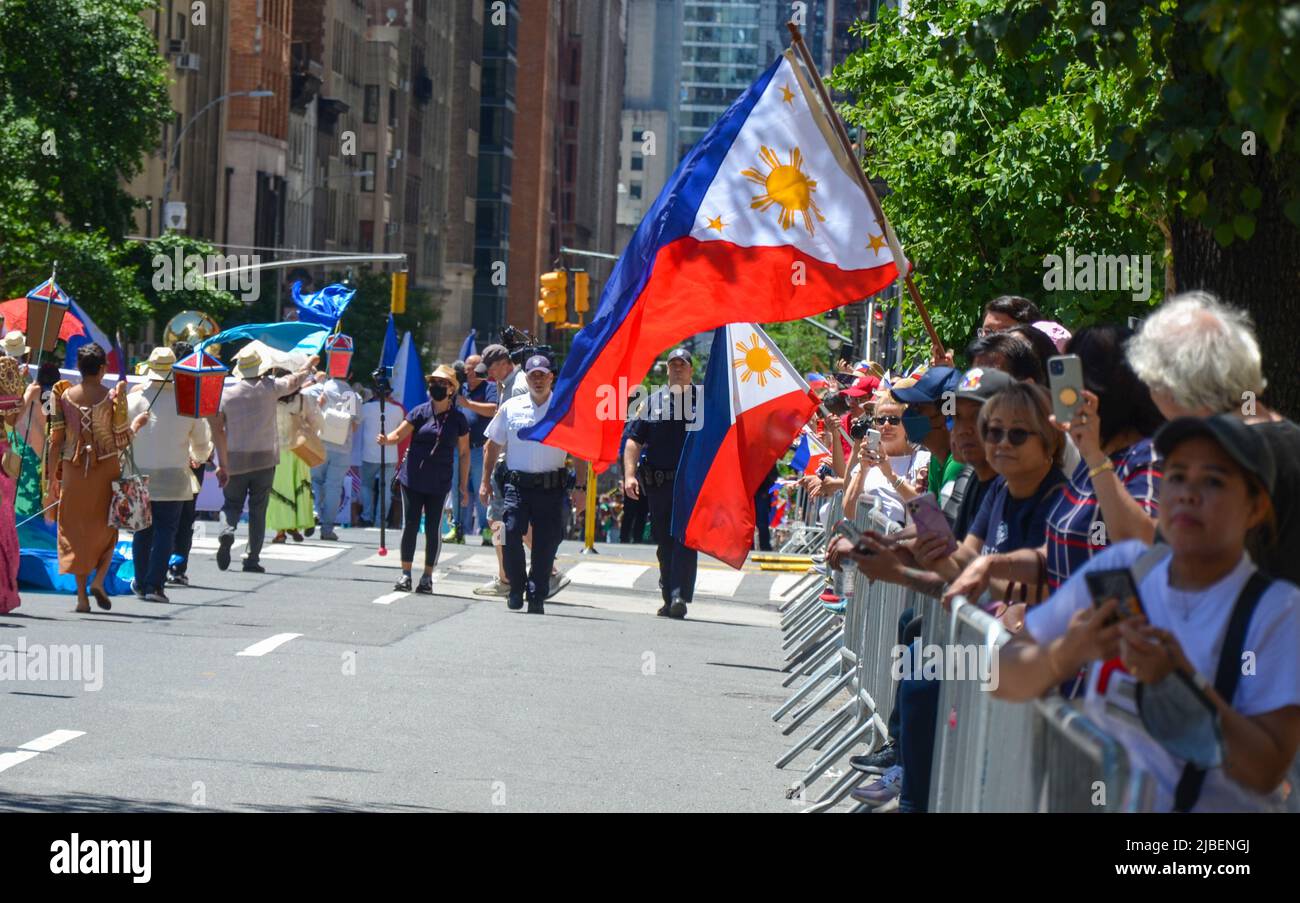
The historical significance of June 12 dates back to 1898, when the Philippines declared independence from Spanish colonial rule. Celebrating this date internationally serves several purposes:
- Cultural Preservation: Parades and ceremonies help second- and third-generation Filipinos maintain a connection to their ancestral heritage.
- Diplomatic Visibility: When world icons and foreign leaders, such as the Thai Premier, recognize the date, it elevates the Philippines’ profile on the global stage.
- Diaspora Unity: Events in Manhattan and other US cities provide a focal point for community organizing and networking among Filipino professionals and workers.
The transition from colonial rule to a sovereign republic is a narrative that resonates with other post-colonial nations, making the Philippine Independence Day a symbol of self-determination that attracts attention from international diplomatic circles.
The Role of the Philippine Diaspora in International Tributes
The scale of the celebrations in the United States, particularly the events in Manhattan and the parades mentioned by goSkagit, highlights the “soft power” of the Filipino community. The ability to coordinate the lighting of major city landmarks requires significant diplomatic coordination between the Philippine Consulate and city officials.
“The presence of the Filipino community in key global cities transforms a national holiday into an international event, utilizing public spaces to assert cultural identity and national pride.”
In New York, the Philippine Center acts as more than an administrative office; it serves as a cultural embassy. The flag-raising ceremony reported by newyorkpcg.org is a recurring tradition that reinforces the legal and emotional ties between the Philippine state and its citizens abroad. These events often attract non-Filipino attendees, spreading awareness of Philippine history and current affairs to a wider audience.
Comparatively, while the Thai Premier’s honor is a “top-down” diplomatic gesture, the parades and landmark lightings are “bottom-up” expressions of identity fueled by the diaspora. Together, they create a comprehensive layer of international recognition.
Comparing Diplomatic Honors vs. Community Celebrations
There is a distinct difference in how the 128th Independence Day was marked by state actors versus community organizations. State-level honors, such as those from the Thai government, focus on geopolitical alignment and formal friendship. These are often conducted through official channels and are intended for government-to-government consumption.
In contrast, the community events in New York and the parades in other regions are designed for public visibility. The lighting of landmarks is a hybrid event—it requires government approval but is intended for the public to see. This creates a visual bridge between official diplomacy and grassroots celebration.
The following points contrast these two approaches:
- State Honors: Formal, textual, high-level, focused on bilateral treaties and regional stability.
- Community Events: Visual, participatory, cultural, focused on heritage and ethnic solidarity.
For more information on how these events impact international relations, see a related explainer on diplomatic soft power.
Common Misconceptions About Philippine Independence Day
A frequent point of confusion regarding the date of Philippine Independence is the distinction between June 12 and July 4. For many years, the United States recognized July 4 as the date of Philippine independence, marking the day the U.S. granted independence in 1946. However, the Philippine government officially moved the celebration to June 12 to honor the 1898 declaration of independence from Spain.
The global celebrations reported by BusinessMirror and INQUIRER.net USA specifically honor the June 12 date, emphasizing the internal drive for sovereignty rather than the external granting of it. By focusing on the 1898 declaration, the current celebrations underscore a narrative of Filipino agency and revolutionary struggle.
Another misconception is that these celebrations are purely social. In reality, the flag-raising ceremonies and diplomatic honors are strictly protocol-driven events that adhere to international standards of diplomatic etiquette, reflecting the formal status of the Philippine Republic in the eyes of the world.
Impact of International Recognition on Philippine Diplomacy
When the Thai Premier and other world icons honor the Philippines, it provides a psychological and political boost to the nation’s standing. In a period of shifting geopolitical tensions in the Indo-Pacific, these gestures of solidarity are significant. They signal that the Philippines remains a respected and integrated member of the international community.
The visual impact of New York landmarks lighting up in the national colors serves as a powerful branding exercise. It associates the Philippine flag with the prestige of one of the world’s most influential cities, projecting an image of a nation that is globally connected and culturally vibrant.
The long-term implications of these annual tributes include:
- Strengthened ties with ASEAN neighbors, particularly Thailand.
- Enhanced cultural diplomacy within the United States.
- Increased visibility for Philippine trade and tourism through high-profile public events.
These celebrations ensure that the history of the Philippine struggle for independence is not forgotten and is instead integrated into the global consciousness of human rights and national sovereignty.
Frequently Asked Questions
Who honored the Philippine Independence Day according to recent reports?
The Thai Prime Minister, various world icons, and the Filipino diaspora in cities like New York honored the occasion. These tributes ranged from official diplomatic messages to public celebrations and landmark lighting.

Where were the major celebrations held outside the Philippines?
Significant events took place in New York City, including flag-raising ceremonies at the Philippine Center in Manhattan and the lighting of city landmarks in the colors of the Philippine flag. Parades were also held in various other locations, as noted by goSkagit.
What is the significance of the 128th anniversary?
The 128th anniversary marks the time since the Philippines declared its independence from Spanish colonial rule on June 12, 1898. It is a celebration of national sovereignty and the enduring spirit of the Filipino people.
Why are New York landmarks lit up for this event?
Landmark lighting is a form of diplomatic tribute used to recognize the national holidays of allied nations. It serves as a visual symbol of friendship and respect between the United States and the Philippines.
How does the Thai Premier’s recognition differ from a parade?
The Thai Premier’s honor is a formal diplomatic gesture between two heads of state, focusing on government-to-government relations. A parade is a community-led cultural event focusing on heritage and public celebration.
