Giant Golf Ball Crashes Into Amsterdam Centraal As Solheim Cup Marks 100-Day Countdown – LPGA
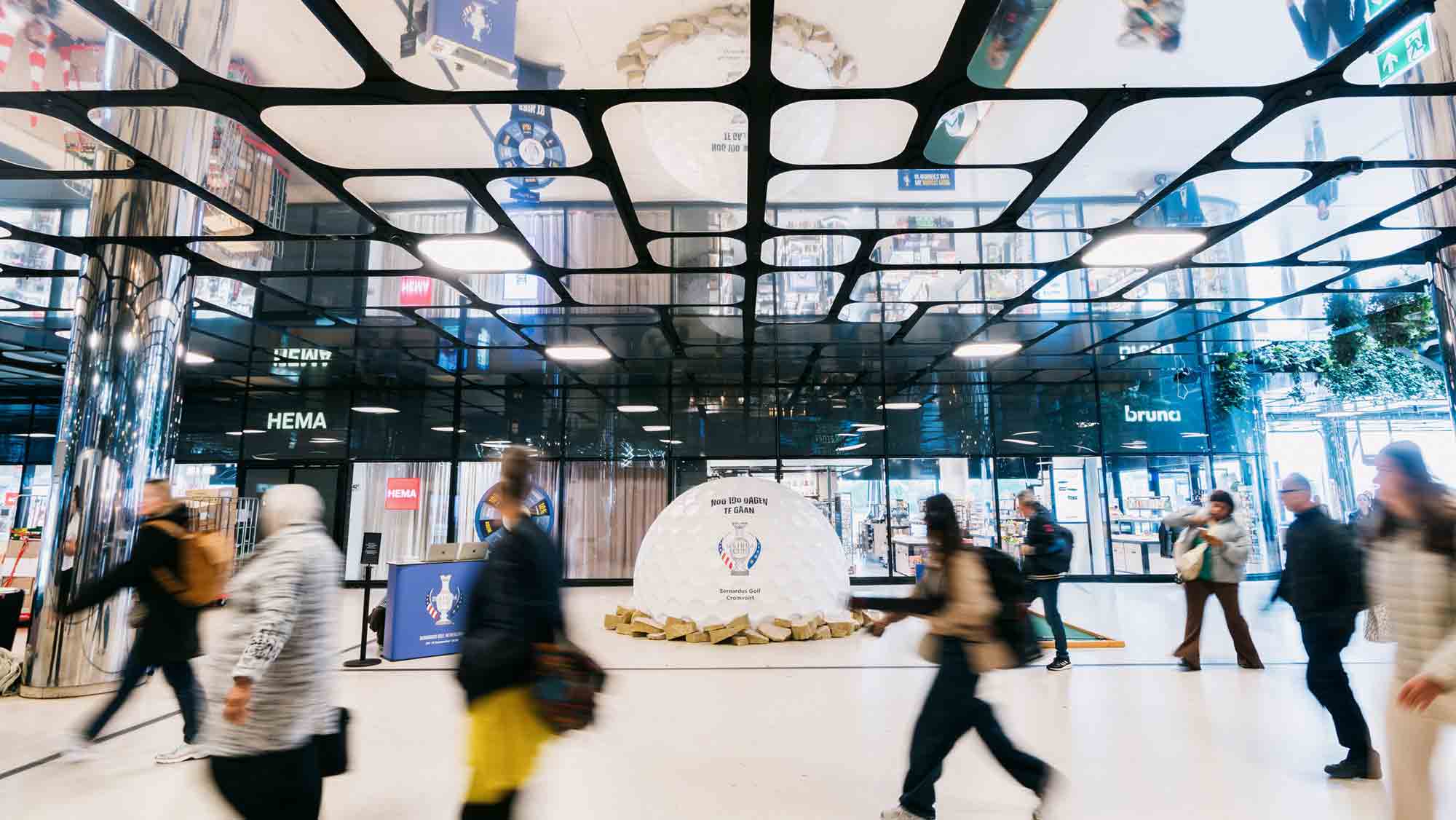
Commuters and tourists at one of Europe’s busiest transport hubs were met with a surreal sight this week as a massive, oversized golf ball appeared to have “crashed” into the architecture of Amsterdam Centraal. The striking installation is not a random piece of public art, but a high-impact marketing maneuver signaling that the Giant Golf Ball Crashes Into Amsterdam Centraal As Solheim Cup Marks 100-Day Countdown – LPGA campaign has officially begun. This bold visual stunt serves as the ticking clock for one of the most prestigious events in professional sports: the Solheim Cup.
The arrival of this monolithic sporting symbol in the heart of the Netherlands is designed to do more than just attract Instagram photos. It represents a strategic push by the LPGA and tournament organizers to elevate the profile of women’s professional golf, bridging the gap between elite athletic competition and mainstream public awareness. By placing a symbol of the game in a high-traffic urban center, the Solheim Cup is moving out of the quiet confines of the fairway and into the chaotic energy of the city, demanding attention from a diverse global audience.
The Spectacle at Amsterdam Centraal: More Than Just a Stunt
Amsterdam Centraal is more than just a railway station; it is the gateway to the city. By choosing this location for the “crash” installation, the LPGA has ensured maximum visibility. The installation mimics a golf ball that has been driven with such immense power that it has embedded itself into the urban landscape, creating a juxtaposition between the serene, disciplined nature of golf and the frantic pace of metropolitan travel.
This installation serves as a physical manifestation of the 100-day countdown. In the world of sports marketing, the “countdown phase” is critical for building tension and anticipation. For the Solheim Cup, this period is used to mobilize fans, drive ticket sales and ignite the rivalry between the United States and European teams. The sheer scale of the golf ball reflects the scale of the ambition behind this year’s event—to make it the most-watched and most-discussed iteration of the tournament to date.
“The goal is to create a ‘stop-and-stare’ moment. When you place an object of this scale in a place like Amsterdam Centraal, you aren’t just advertising a tournament; you are creating a cultural moment that sparks curiosity among people who may have never watched a single round of women’s golf.”
Why Amsterdam? The Strategic Choice of Location
While the Solheim Cup is hosted at specific golf courses, the decision to bring the countdown to Amsterdam is a calculated move toward “sport democratization.” Golf is often perceived as an exclusive or gated sport. By bringing the imagery to a public transit hub, the LPGA is signaling that the Solheim Cup is an event for everyone, regardless of whether they have a club membership or have ever stepped foot on a green.
- High Foot Traffic: Thousands of international travelers pass through the station daily, giving the event global reach.
- Cultural Synergy: Amsterdam’s reputation for innovation and bold art makes it the perfect backdrop for an avant-garde marketing installation.
- European Unity: As a hub for European travel, the city symbolizes the collective effort of the European team, which draws players from across the continent.
Understanding the Solheim Cup: The Pinnacle of Women’s Team Golf
For those unfamiliar with the prestige of the event, the Solheim Cup is effectively the women’s equivalent of the Ryder Cup. It is a biennial competition where the best female golfers from Europe take on the best from the United States. Unlike standard LPGA Tour events, where players compete for individual trophies and prize money, the Solheim Cup is about national and continental pride.
The intensity of the rivalry is legendary. Because the event is a team format, players often find a second wind, performing far above their usual rankings due to the pressure and the desire to support their teammates. This emotional weight is what makes the Solheim Cup a unique product in the sporting world, blending individual excellence with collective desperation for victory.
The Format and the Stakes
The tournament utilizes a mix of four-ball, foursomes, and singles matches. This variety tests different aspects of a player’s game—their ability to collaborate, their strategic adaptability, and their raw nerve in one-on-one combat. The stakes are not just the trophy, but the legacy of dominance over the opposing continent.
| Feature | Standard LPGA Event | The Solheim Cup |
|---|---|---|
| Competition Type | Individual Stroke Play | Team Match Play |
| Primary Goal | Lowest Score / Purse | Most Points / Continental Pride |
| Player Selection | Open Entry/Ranking | Captain’s Picks & Qualifying Points |
| Atmosphere | Quiet, Respectful | High-Energy, Crowd-Driven |
The 100-Day Countdown: Building the Narrative
The 100-day mark is a psychological threshold in sports. It is the point where preparation shifts from the theoretical to the practical. For the players, it marks the beginning of intense physical and mental peaking. For the fans, it is the start of the “hype cycle.”
The Giant Golf Ball Crashes Into Amsterdam Centraal As Solheim Cup Marks 100-Day Countdown – LPGA initiative is the first in a series of planned activations. You can expect to see further “disruptions” in major cities, leveraging the same philosophy of taking golf to the people. This strategy is designed to combat the “invisible” nature of women’s sports, ensuring that the Solheim Cup is not just a footnote in the sports calendar, but a headline event.
Key Milestones in the Countdown Phase
- The Visual Launch: The Amsterdam installation serves as the “big bang” of the countdown.
- Roster Announcements: As the date nears, the reveal of the US and European teams creates a surge of interest and debate among analysts.
- Digital Engagement: A heavy push across social media platforms to engage younger demographics who consume sports via highlights and short-form video.
- Ticket Sell-outs: Using the momentum of the countdown to ensure a capacity crowd, which is essential for the electric atmosphere the Solheim Cup is known for.
The Competitive Landscape: USA vs. Europe
To understand why a giant golf ball in Amsterdam is significant, one must understand the current state of the rivalry. The United States has historically held a strong grip on the trophy, boasting a deep pool of talent and a highly aggressive approach to the game. However, Europe has seen a resurgence in recent years, driven by a new generation of stars who are fearless and tactically astute.

The tension is palpable. The US team often relies on powerhouse hitters and a “win-at-all-costs” mentality. Europe, conversely, often excels in the strategic nuances of match play, using the home-field advantage (when applicable) and a cohesive team spirit to bridge the gap in raw power.
Factors That Could Swing the Result
- Mental Fortitude: Match play is as much about psychology as it is about swing mechanics. The ability to bounce back from a lost hole is paramount.
- Course Familiarity: How the specific layout of the host course favors certain styles of play (e.g., accuracy over distance).
- Captaincy: The strategic pairing of players in four-ball and foursomes can win or lose the tournament before a single ball is struck.
The Broader Impact on Women’s Professional Sports
The audacity of the Amsterdam installation speaks to a wider trend in the sports industry: the aggressive pursuit of visibility for women’s athletics. For decades, women’s golf was marketed as a “softer” version of the men’s game. The LPGA is actively dismantling this narrative.
By using words like “crash” and creating “disruptive” art, the organization is rebranding the Solheim Cup as an event of power, impact, and intensity. This is a shift from passive promotion to active disruption. When a giant golf ball “crashes” into a city center, it mirrors the way women’s sports are currently crashing into the mainstream consciousness—unapologetically and with significant force.
This movement is supported by a global increase in viewership and sponsorship. Brands are realizing that the female sporting audience is not only growing but is exceptionally loyal. The Solheim Cup, with its high-stakes team format, is the perfect vehicle to showcase this growth.
Correcting Common Misconceptions
There is a lingering misconception that the Solheim Cup is merely an exhibition match. In reality, it is one of the most stressful environments a professional golfer can face. The pressure of letting down a teammate and an entire continent creates a psychological burden that far exceeds that of a standard tournament. The “exhibition” label ignores the rigorous qualifying process that players must endure to earn their spot on the team.
Logistics, Tourism, and the “Sporting City” Effect
The intersection of the Solheim Cup and Amsterdam’s urban center highlights the concept of “Sports Tourism.” When a major event is promoted in a city, it creates a halo effect that benefits local businesses, hotels, and transport services. While the tournament itself may be held on a course outside the city center, the promotional activities in Amsterdam Centraal draw the eyes of the world toward the region.
This synergy between the LPGA and the city of Amsterdam demonstrates how sports can be used as a tool for urban branding. The city is seen as a supporter of women’s empowerment and elite athletics, while the LPGA gains access to a sophisticated, international demographic.
For travelers, the giant golf ball becomes a landmark, a conversation starter, and a reminder that the city is a hub for global events. This integration of sport into the daily commute transforms the city into a living billboard for the Solheim Cup.
Frequently Asked Questions
What is the significance of the giant golf ball in Amsterdam Centraal?
The giant golf ball is a promotional installation marking the 100-day countdown to the Solheim Cup. It is designed to create public awareness and excitement for the event by bringing the imagery of golf into a high-traffic, urban environment.
What exactly is the Solheim Cup?
The Solheim Cup is a biennial women’s golf competition where a team representing the United States competes against a team representing Europe. It is played in a match-play format and is considered the most prestigious team event in women’s professional golf.
Who organizes the Solheim Cup?
The event is a collaboration between the LPGA (Ladies Professional Golf Association) and the European Ladies Golf Association, ensuring that the best talent from both sides of the Atlantic is represented.
Why is the 100-day mark important?
In sports marketing, the 100-day mark serves as the official start of the “hype phase.” It is the period where ticket sales peak, team selections are finalized, and promotional campaigns—like the one in Amsterdam—are launched to maximize viewership.
Is the Solheim Cup similar to the Ryder Cup?
Yes, it is very similar. Both are biennial team competitions between the USA and Europe using a match-play format. The Solheim Cup is the women’s equivalent of the men’s Ryder Cup.
The Road to the First Tee
As the 100-day clock continues to tick, the anticipation surrounding the Solheim Cup will only intensify. The giant golf ball at Amsterdam Centraal is merely the opening salvo in a campaign designed to capture the imagination of the public. From the strategic pairings of the captains to the raw emotion of the final singles matches, the event promises to be a showcase of athletic brilliance and continental rivalry.
For the LPGA, this is more than just a tournament; it is a statement of intent. By disrupting the daily routine of thousands of people in Amsterdam, they are reminding the world that women’s golf is not just a game of precision and patience—it is a game of power, passion, and high-stakes drama. As the countdown progresses, all eyes will shift from the urban installations of the city to the manicured greens of the course, where the battle for the Solheim Cup will finally be decided.
