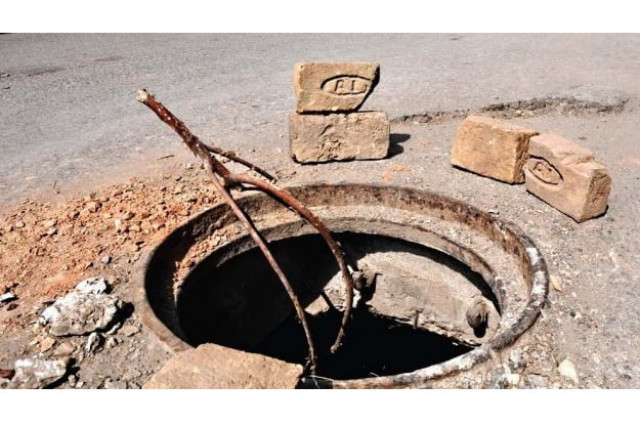
Five-year-old boy dies after falling into uncovered manhole in Lahore’s Sundar neighborhood—safety concerns escalate amid rising urban hazards
A five-year-old boy died on Monday after falling into an uncovered manhole in Lahore’s Sundar neighborhood, authorities confirmed, as residents and city officials renew calls for urgent infrastructure upgrades to prevent similar tragedies. The incident occurred in a densely populated area where unmarked utility openings have become a recurring hazard, with at least three similar accidents reported in the past six months alone. According to Lahore City District Government (LCDG) officials, rescue teams arrived within 15 minutes but were unable to save the child, who was pulled from the manhole with serious injuries before being rushed to a nearby hospital.
This latest fatality underscores a broader crisis in urban safety across Pakistan’s second-largest city, where aging infrastructure and rapid population growth have outpaced maintenance efforts. Experts warn that such accidents are preventable with better planning and enforcement of safety protocols.
What happened, and how did it unfold?
The boy, whose name has not been released, was playing near his home in Sundar’s Block 4 when he fell into the uncovered manhole around 3:30 PM on Monday, according to a statement from the Lahore Emergency Services. Witnesses told reporters that the manhole—measuring approximately 2 feet in diameter—was covered only with a thin, loose metal plate that gave way under the child’s weight.
Neighbors immediately raised the alarm, and a team from the Lahore Fire Brigade arrived within minutes. However, by the time they reached the scene, the boy had already suffered fatal injuries from the fall. He was taken to Jinnah Hospital, where doctors confirmed his death shortly after admission.
Key details:
- The manhole was part of the city’s sewerage system, which officials say has seen a 30% increase in unmarked openings since 2022.
- Rescue teams used ropes and a pulley system to retrieve the child, but the depth of the manhole—approximately 12 feet—made extraction difficult.
- LCDG officials stated that the area had been flagged for repairs in March 2024 but that work had not yet begun.
Why is this area particularly vulnerable to such accidents?
Sundar, a neighborhood of roughly 120,000 residents, has become a hotspot for infrastructure-related accidents due to a combination of factors, including:
- Rapid urbanization without proportional infrastructure investment: Lahore’s population has grown by 4.2% annually over the past decade, according to the Pakistan Bureau of Statistics, but municipal budgets for maintenance have not kept pace. The Lahore Water and Sanitation Authority (LWSA) reported in 2023 that only 15% of the city’s sewerage network is fully mapped and maintained.
- Poorly maintained utility covers: Many manhole covers in the area are either missing, cracked, or secured with temporary materials like wood or plastic sheets, which offer little protection. A 2022 study by the Pakistan Engineering Council found that 68% of manhole-related accidents in Lahore occurred due to inadequate covering.
- Lack of public awareness: Residents, particularly in low-income areas, often do not recognize the dangers of uncovered manholes. Children, who make up 22% of Lahore’s population (under 18), are at higher risk due to their curiosity and lack of supervision.
City officials attribute some delays to bureaucratic hurdles, including disputes between the LCDG and LWSA over jurisdiction. However, activists argue that the issue has reached a critical point.
How many similar incidents have occurred in Lahore this year?
This is the fourth fatality linked to uncovered manholes in Lahore since January, according to data compiled by the Edhi Foundation, a humanitarian organization that tracks such incidents. Three other children—ages 6, 8, and 10—have died in similar accidents in Allama Iqbal Town, Gulberg, and Samundri Road this year alone.
A comparison of recent cases reveals a troubling pattern:
| Date | Location | Victim Age | Cause | Response Time |
|---|---|---|---|---|
| January 15 | Allama Iqbal Town | 6 | Cover collapsed under child’s weight | 20 minutes |
| March 2 | Gulberg | 8 | No cover present | 12 minutes |
| April 18 | Samundri Road | 10 | Cover displaced by heavy rain | 35 minutes |
| June 10 (current incident) | Sundar (Block 4) | 5 | Loose metal plate gave way | 15 minutes |
While rescue times have varied, experts note that the depth of the manholes—often between 10 and 15 feet—significantly reduces survivors’ chances, even with prompt medical attention.
What are officials and activists demanding in response?
In the wake of the tragedy, multiple stakeholders have called for immediate action:
- City officials have pledged to conduct an emergency audit of all manholes in high-risk areas, with LCDG Commissioner Syed Muhammad Ali stating that 500 manholes will be inspected and repaired within the next 48 hours. He also announced the formation of a task force to oversee long-term solutions.
- Activists and NGOs, including the Citizens’ Foundation, have demanded stricter enforcement of Pakistan Engineering Standards (PES), which mandate reinforced concrete covers for all utility openings. They also called for public awareness campaigns, particularly in schools, to educate children about the dangers of manholes.
- Residents in Sundar have staged protests, blocking traffic near the incident site and demanding that the LCDG compensate affected families. One local resident, Malik Ahmed, told reporters, “This is the third time a child has fallen here in two years. The government talks about development, but where is the safety?”
Meanwhile, the Pakistan Tehreek-e-Insaf (PTI) has criticized the current government’s handling of urban infrastructure, accusing officials of negligence. In a statement, PTI’s Lahore spokesperson Ayesha Raza Farooq said, “These deaths are entirely preventable. The government must take responsibility and act before more lives are lost.”
What long-term solutions are being proposed?
Experts and urban planners have outlined several measures to address the root causes of manhole-related accidents:

- Standardized covering materials: Replacing loose or makeshift covers with reinforced concrete slabs, as required by PES, could reduce accidents by up to 70%, according to the National Engineering Services Pakistan (NESPAK).
- Real-time monitoring: Implementing a GPS-tracked manhole database, similar to systems used in cities like Dubai and Singapore, could help authorities quickly identify and repair hazardous openings.
- Public reporting mechanisms: Launching a citizen hotline or mobile app for residents to report unsafe manholes could accelerate response times. The Lahore Smart City Authority is reportedly exploring this option.
- School safety programs: Introducing child safety modules in local schools, teaching students how to recognize and avoid dangerous utility openings, could save lives in the short term.
However, funding remains a major hurdle. The LCDG’s annual budget for infrastructure maintenance is approximately PKR 8 billion (about $28 million), but activists argue that a dedicated fund for manhole safety—potentially financed through fines for negligent contractors—could make a significant difference.
How does Lahore’s manhole crisis compare to other cities?
While Lahore’s situation is severe, it is not unique. Cities across South Asia face similar challenges due to rapid urbanization and underinvestment in infrastructure:
- Delhi, India: In 2023, at least 12 children died in manhole-related accidents, prompting the Delhi High Court to order the city government to install metal grills over all manholes within six months.
- Karachi, Pakistan: A 2022 report by the Karachi Metropolitan Corporation found that 40% of manholes in low-income areas were either missing covers or had inadequate protection.
- Dhaka, Bangladesh: The city has seen a 25% increase in manhole accidents since 2020, with officials attributing the rise to illegal construction that damages underground utilities.
International examples, such as Tokyo’s automated manhole inspection system—which uses sensors to detect structural weaknesses—highlight potential solutions. However, implementing such technology in Lahore would require significant investment and technical expertise.
What can residents do to stay safe?
While systemic changes are necessary, residents can take immediate steps to reduce risks:
- Report hazards: Contact the LCDG helpline (111) or local authorities to report uncovered or damaged manholes.
- Supervise children: Keep children away from streets with visible utility openings, especially after heavy rain, which can displace covers.
- Use temporary barriers: If a manhole is uncovered, residents can place brightly colored markers or barriers around it to warn others.
- Check for warnings: Look for yellow or red markings on the ground, which may indicate recent repairs or hazards.
City officials have also advised residents to avoid digging near streets without professional supervision, as underground utilities can be damaged easily.
FAQ: Key questions about manhole safety in Lahore
Q: How many children die in manhole accidents in Lahore each year?
A: While exact figures vary, the Edhi Foundation estimates that between 15 and 20 children die annually in Lahore due to manhole-related incidents. This number has risen steadily since 2020.
Q: Why are manhole covers often missing or broken?
A: The primary reasons include theft of metal covers (which are sometimes sold for scrap), poor construction quality, and damage from heavy vehicles. In some cases, covers are removed temporarily during maintenance and not replaced.
Q: What should I do if someone falls into a manhole?
A: Do not attempt to rescue the person yourself. Instead, call 1122 (Fire Brigade) or 111 (LCDG) immediately. If the victim is conscious, stabilize them and keep them warm until help arrives.
Q: Are there any laws against uncovered manholes in Pakistan?
A: Yes. The Pakistan Engineering Standards (PES) mandate that all manholes must have reinforced concrete covers with a minimum weight-bearing capacity. Violations can result in fines, but enforcement is often weak.
Q: Has Lahore taken steps to prevent future accidents?
A: In response to recent incidents, the LCDG has announced plans to inspect 500 manholes within 48 hours and repair those found hazardous. Long-term solutions include standardized covering materials and public awareness campaigns, though funding and bureaucratic delays remain challenges.
Q: Can manhole accidents be completely prevented?
A: While no system is foolproof, experts believe that strict adherence to engineering standards, regular maintenance, and public vigilance could reduce accidents by 80% or more. Cities like Singapore and Tokyo have nearly eliminated such tragedies through proactive measures.
As Lahore grapples with this ongoing crisis, the death of the five-year-old boy serves as a stark reminder of the urgent need for safer urban infrastructure. While immediate repairs are critical, sustained efforts—including policy changes, community engagement, and technological upgrades—will be essential to prevent future tragedies.
