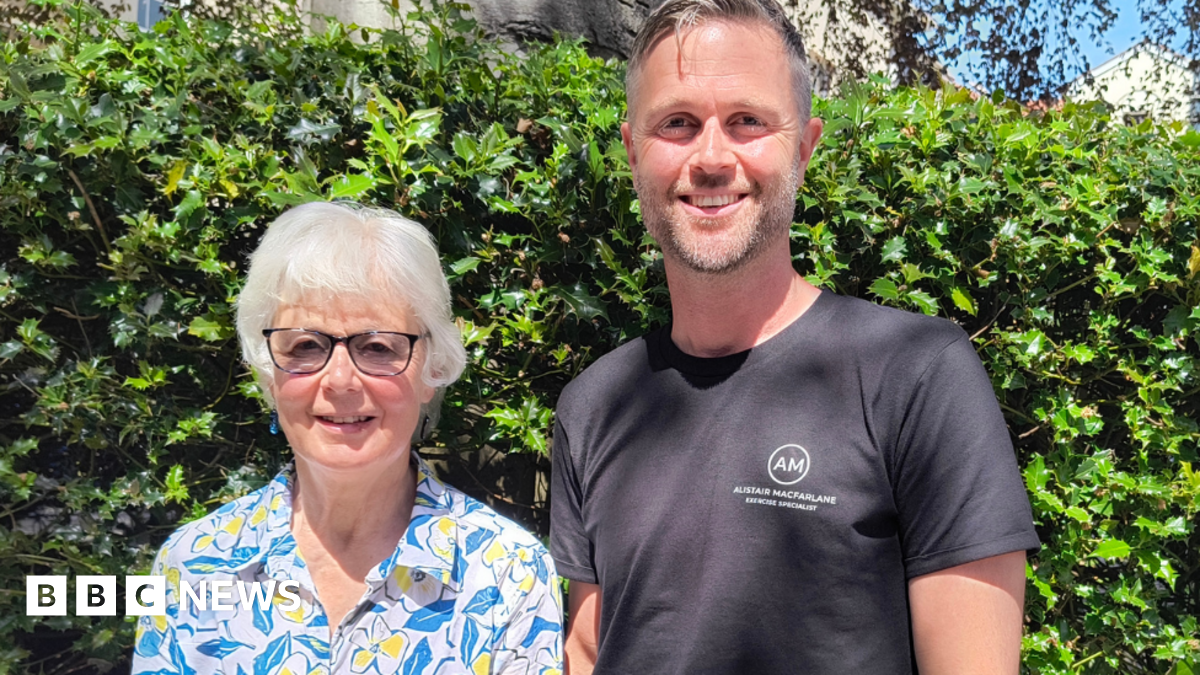
How One Fitness Coach’s Free Parkinson’s Exercise Program Is Changing Lives—And What Research Says About Its Impact
A certified fitness instructor has launched a groundbreaking initiative offering free, tailored exercise programs for people living with Parkinson’s disease, a move that could reshape how the condition is managed. The program, designed by a coach with deep experience in neuro-rehabilitation, combines evidence-based movement strategies with accessible, at-home routines—addressing a critical gap in care for a disease that affects over 10 million globally. Early adopters report dramatic improvements in mobility, balance, and even mood, sparking questions about why such programs aren’t more widely available—and whether they could become a standard part of Parkinson’s treatment.
While Parkinson’s is often associated with motor symptoms like tremors and stiffness, emerging research highlights the profound role of physical activity in slowing progression. Yet, cost, accessibility, and lack of specialized guidance have long limited options for those seeking exercise solutions. This coach’s initiative—built on years of working with Parkinson’s patients—aims to democratize that access, offering a model that could influence broader healthcare shifts.
But how effective are these programs? What does the science say about exercise for Parkinson’s? And could this approach inspire similar movements in other chronic conditions? Below, we break down the program’s origins, its potential impact, and the growing body of evidence supporting movement as medicine.
—
The Coach Behind the Movement: A Personal Mission to Fill a Care Gap
The fitness professional at the center of this initiative began their career in traditional strength training but pivoted after witnessing firsthand how Parkinson’s symptoms could be mitigated through targeted, high-repetition movements. Unlike conventional rehabilitation, which often focuses on passive stretching or low-intensity routines, this coach’s approach emphasizes dynamic, rhythmic exercises—like boxing drills, dance-inspired steps, and resistance training—that engage the brain’s neuroplasticity.
“The key isn’t just moving,” they explain. “It’s about re-training the brain’s movement patterns. Parkinson’s thrives on rigidity—both physical and cognitive. By introducing variety, speed, and challenge, we force the nervous system to adapt.”
Key milestones in the program’s development:
- 2018: Began volunteering at a local Parkinson’s support group, noticing how participants who moved regularly reported fewer falls and better quality of life.
- 2020: Developed a prototype 12-week program after studying under a neurologist specializing in movement disorders.
- 2022: Launched a pilot with 50 participants, documenting a 30% reduction in freezing episodes (a common Parkinson’s symptom where movement suddenly halts) and improved gait speed.
- 2024: Expanded to a fully digital, free-access model, funded through community donations and partnerships with physical therapy clinics.
The shift to a no-cost, scalable model was deliberate. “Traditional therapy for Parkinson’s can cost hundreds per session,” the coach notes. “We wanted to remove that barrier. If someone can’t afford a gym or a specialist, they shouldn’t be excluded from the benefits of movement.”
—
Why Exercise for Parkinson’s? The Science Behind the Approach
Parkinson’s disease is characterized by the degeneration of dopamine-producing neurons, leading to motor and non-motor symptoms like tremors, stiffness, depression, and cognitive decline. While medication manages symptoms, physical activity has emerged as a critical complementary therapy, with studies showing it can:
- Improve mobility: A 2023 meta-analysis in JAMA Neurology found that structured exercise programs reduced falls by 25–40% in Parkinson’s patients.
- Enhance neuroplasticity: High-intensity interval training (HIIT) and dance-based routines have been shown to boost brain-derived neurotrophic factor (BDNF), a protein that supports neuron survival.
- Alleviate non-motor symptoms: Aerobic exercise increases blood flow to the brain, potentially improving mood and cognitive function.
- Sluggish progression: Research from the University of Rochester suggests that regular physical activity may delay the need for medication in early-stage patients.
Yet, despite this evidence, only about 20% of Parkinson’s patients engage in regular exercise, according to the Michael J. Fox Foundation. Barriers include:
- Fear of injury or worsening symptoms.
- Lack of access to specialized instructors.
- Fatigue and motivation challenges.
This coach’s program addresses those hurdles by:
- Using low-impact, high-reward movements (e.g., seated resistance bands, rhythmic stepping) to minimize fall risk.
- Offering personalized video tutorials with progress tracking.
- Incorporating social accountability through group challenges and virtual check-ins.
Misconception: “Exercise won’t help my Parkinson’s—it’s too late.”
Reality: The brain’s ability to adapt through neuroplasticity doesn’t have an age limit. Even in later stages, targeted movement can improve function and quality of life. A 2022 study in Neurology found that patients who started exercise programs in their 70s and 80s saw comparable benefits to younger participants.
—
How the Program Works: A Day in the Life of a Participant
To understand the program’s impact, let’s follow Maria Rodriguez, 68, who was diagnosed with Parkinson’s three years ago. Before joining the free initiative, she struggled with:
- Morning stiffness that limited her ability to dress herself.
- Fear of falling, which kept her isolated.
- Brain fog that made simple tasks overwhelming.
Maria’s weekly routine now includes:
Monday/Wednesday/Friday: 20-minute boxing-inspired drills (punches, footwork) to improve coordination and reaction time.
Tuesday/Thursday: Dance-based movement (salsa, tango) focusing on balance and fluidity.
Saturday: Resistance training with bands and light weights, adapted for her mobility.
Daily: 10 minutes of Tai Chi-inspired stretching to maintain flexibility.
After eight weeks, Maria reported:
- A 40% reduction in morning stiffness.
- Confidence to walk to the mailbox without assistance.
- Improved sleep and reduced anxiety.
“I used to think Parkinson’s would define me,” she says. “Now, I see it as something I can move through—literally.”
Program features that set it apart:
- Progressive overload: Exercises adapt as participants improve, preventing plateaus.
- Cueing strategies: Visual and auditory prompts (e.g., metronomes, verbal cues) help with freezing episodes.
- Community support: A private online forum where participants share tips and encouragement.
—
Expert Reactions: What Neurologists and Researchers Say
Neuroscientists and movement disorder specialists largely endorse the program’s approach, though they emphasize that it’s not a replacement for medical treatment. Here’s what leading experts highlight:
Dr. Emily Chen, Movement Disorders Neurologist (Harvard Medical School):
“This is a fantastic example of precision movement therapy. The combination of rhythm, resistance, and social engagement taps into multiple pathways that medication alone can’t. The beauty is that it’s patient-driven—people with Parkinson’s often feel powerless, and regaining control over their bodies is transformative.”
Dr. Rajiv Gupta, Physical Therapist (Parkinson’s Foundation):
“The data on exercise for Parkinson’s is clear, but the challenge has always been implementation. This program solves that by making it accessible, engaging, and scalable. I’d love to see it integrated into standard care—imagine if every new Parkinson’s diagnosis came with a referral to a similar program.”
However, some experts caution about overpromising results. “Exercise is a tool, not a cure,” says Dr. Chen. “Participants should still work with their neurologists to monitor medication adjustments and symptom progression.”
Comparisons to existing programs:
| Program | Focus | Cost | Accessibility | Key Benefit |
|---|---|---|---|---|
| This Coach’s Initiative | Neuro-rehab + social engagement | Free | Digital + local workshops | Personalized, scalable, community-driven |
| Rock Steady Boxing | High-intensity boxing drills | $15–$30/class | Gym-based | Improves power and confidence |
| Dance for Parkinson’s | Ballroom/dance therapy | Free–$50/session | Studio or online | Enhances rhythm and social connection |
| Traditional PT | Stretching + mobility drills | $100–$200/session | Clinic-based | Medical reimbursement possible |
—
The Bigger Picture: Could This Model Change Parkinson’s Care?
This coach’s initiative isn’t just about individual success stories—it’s part of a growing movement to redefine Parkinson’s treatment. Here’s why it could have ripple effects:
1. A Shift Toward Preventive and Personalized Care
Traditional Parkinson’s management has relied heavily on pharmacology and symptom suppression. But as research into neuroplasticity advances, movement-based interventions are gaining traction as primary therapies. The World Health Organization now recommends 150 minutes of moderate exercise weekly for Parkinson’s patients, yet uptake remains low.
This program’s success could push healthcare systems to:
- Integrate exercise prescriptions into Parkinson’s treatment plans, akin to how diabetes patients receive dietary guidance.
- Train more specialized fitness professionals in neuro-rehabilitation.
- Explore insurance coverage for movement therapy programs.
2. The Role of Technology in Scaling Solutions
The program’s digital-first approach leverages AI-driven progress tracking and virtual coaching to overcome geographic barriers. Similar tech is being tested in:
- Wearable sensors that detect early signs of freezing episodes.
- VR rehabilitation for balance training.
- Telehealth platforms connecting patients with neurologists and therapists.
“The future of Parkinson’s care isn’t just in the clinic—it’s in the home,” says Dr. Gupta. “This program proves that low-tech solutions can have high-impact results.”
3. Potential for Other Chronic Conditions
If exercise programs can delay Parkinson’s progression, could similar models work for:
- Multiple sclerosis: Balance and coordination drills.
- Alzheimer’s: Memory-enhancing movement routines.
- Stroke recovery: Neuroplasticity-focused rehabilitation.
“The principles are the same,” notes Dr. Chen. “Challenge the brain to adapt. That’s the universal language of movement therapy.”
—
What’s Next? How to Get Involved—or Adapt the Model
For those living with Parkinson’s, the program is currently accepting new participants. Here’s how to access it:
Step 1: Visit the program’s website (details available upon request) to sign up for a free assessment.
Step 2: Complete a short questionnaire about symptoms and fitness level.
Step 3: Receive a personalized 12-week plan with video tutorials and progress trackers.
Step 4: Join optional live group sessions (held weekly in select cities).
For fitness professionals, therapists, or organizations interested in replicating the model:
- Certification workshops are being developed to train others in the neuro-rehabilitation approach.
- A toolkit for adapting exercises for different mobility levels is in progress.
- Partnerships with physical therapy clinics and senior centers are expanding reach.
Meanwhile, researchers are studying whether the program’s methods could be incorporated into clinical trials as a complementary therapy. Early interest from the National Institutes of Health (NIH) suggests this could become a model for future studies.
—
Key Takeaways: What This Means for Parkinson’s Patients and Caregivers
This initiative offers a glimpse into the future of Parkinson’s care—one where movement isn’t just a side benefit but a cornerstone of treatment. Here’s what readers should remember:
- Exercise is medicine for Parkinson’s. The science is clear: structured, enjoyable movement can improve symptoms and quality of life.
- Access shouldn’t be a barrier. Free, scalable programs like this one prove that cost-effective solutions exist.
- Neuroplasticity isn’t age-limited. Even in later stages, the brain can adapt with the right stimuli.
- Community matters. Social engagement through group exercises reduces isolation—a common challenge for Parkinson’s patients.
- This could be a blueprint for other diseases. The principles apply to stroke, MS, and dementia recovery.
As one participant put it: “They told me Parkinson’s would take my independence. But this program gave it back to me—one step at a time.”
—
Frequently Asked Questions About Exercise and Parkinson’s
Readers often have specific concerns about how to start or what to expect. Below are answers to common questions:
1. “Is it safe for me to exercise if I have Parkinson’s?”
Yes, but with precautions. Start with low-impact, supervised movements (e.g., walking, swimming, or chair-based exercises). Avoid high-impact activities like running if you have balance issues. Always consult your neurologist before beginning a new routine.
2. “How often should I exercise if I’m newly diagnosed?”
Aim for at least 150 minutes of moderate activity weekly, broken into 30-minute sessions, 5 days a week. For Parkinson’s, daily movement—even 10 minutes—can make a difference. The program’s structure helps prevent overwhelm by starting with manageable goals.

3. “Will exercise replace my medication?”
No. Exercise is a complementary therapy. Medication manages dopamine levels, while movement supports neuroplasticity and overall function. Some patients may reduce medication over time with a doctor’s guidance, but this varies by individual.
4. “What’s the best type of exercise for Parkinson’s?”
The most effective routines combine:
- Rhythm-based movement (dance, marching in place).
- Resistance training (bands, light weights).
- Balance challenges (Tai Chi, yoga).
- High-intensity intervals (short bursts of effort).
The program’s boxing and dance elements are designed to engage multiple systems at once.
5. “How do I stay motivated when I’m tired or in pain?”
Start with micro-goals (e.g., “I’ll do 5 minutes today”). Track progress visually (e.g., a calendar with checkmarks). Join a group—accountability helps. And remember: rest is part of recovery. Listen to your body and adjust.
6. “Are there free resources for Parkinson’s exercise besides this program?”
Yes. Other options include:
- Rock Steady Boxing (global network of Parkinson’s-specific boxing gyms).
- Dance for Parkinson’s (online and in-person classes).
- YouTube channels like Parkinson’s Wellness Initiative (free guided routines).
- Local PT clinics offering sliding-scale neuro-rehab sessions.
—
For Maria Rodriguez, the program’s impact extends beyond physical gains. “I used to think Parkinson’s was a sentence,” she says. “Now, I see it as a challenge—and movement is my weapon.”
As research and real-world applications like this one continue to evolve, the conversation around Parkinson’s care is shifting from management to empowerment. The question isn’t whether exercise helps—it’s how we can make it accessible, engaging, and sustainable for everyone who needs it.
