
The Google Fitbit Air is here: What do the reviews say? – Mashable
The wearable technology landscape has shifted significantly with the arrival of the Google Fitbit Air, a device that represents a bold departure from the screen-heavy philosophy of the modern smartwatch. As early adopters and tech critics begin to weigh in, the central question emerging across the industry is whether a screenless experience is the future of health tracking or a step backward in utility. For those asking, “The Google Fitbit Air is here: What do the reviews say? – Mashable” and other major outlets, the consensus points toward a device that excels in hardware minimalism but continues to grapple with the complexities of AI-driven wellness guidance.
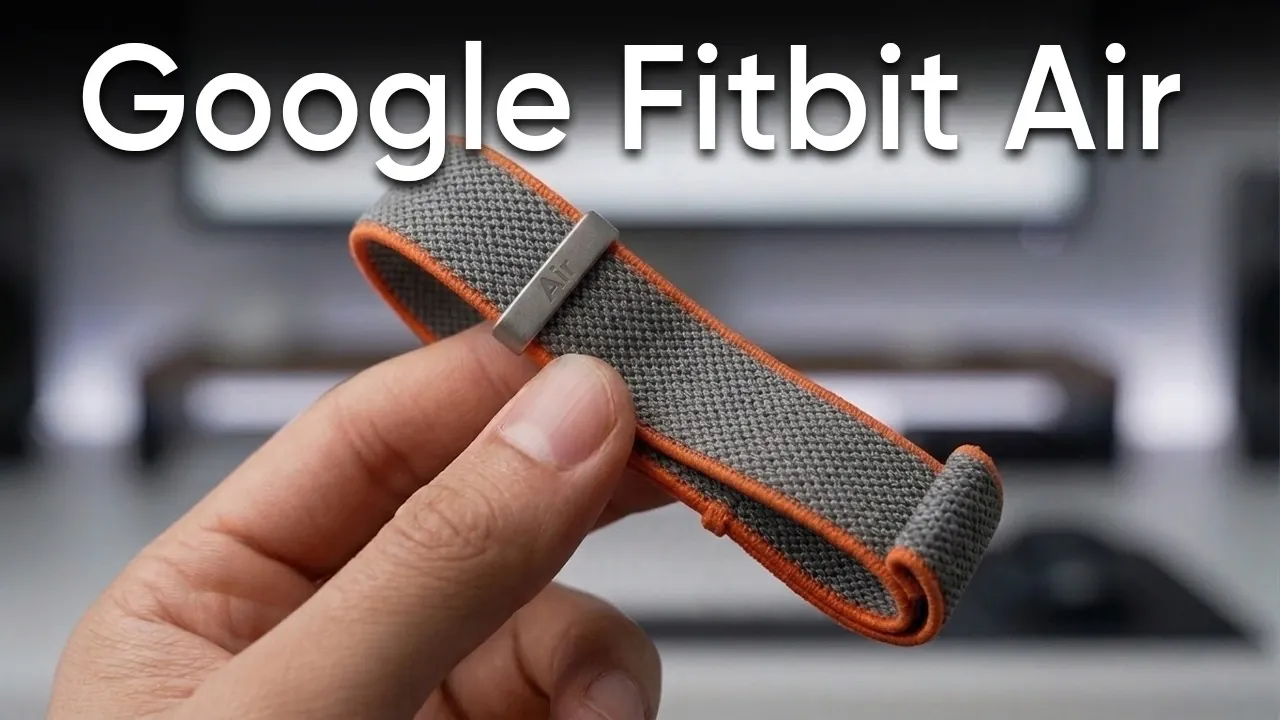
By stripping away the display, Google has positioned the Fitbit Air not as a watch, but as a dedicated biometric sensor. This strategic move places it in direct competition with specialized recovery trackers, most notably Whoop, while leveraging Google’s massive data ecosystem. The result is a piece of hardware that aims to disappear into the user’s daily life, focusing entirely on the collection of data rather than the immediate consumption of notifications.
A New Direction in Wearable Design: The Screenless Approach
The most striking feature of the Fitbit Air is the total absence of a screen. In an era where manufacturers are fighting to cram larger, brighter OLED displays onto wrists, Google has opted for the opposite. This design choice is not merely aesthetic; it is a fundamental shift in how the user interacts with their health data.
Reviewers have noted that the screenless nature of the Air transforms the device into a “passive” tracker. Without a display to distract the user with emails, texts, or app alerts, the Fitbit Air encourages a more mindful relationship with technology. The device relies entirely on a companion app to deliver insights, meaning the wrist-worn component serves solely as the data gateway.
This approach addresses several long-standing pain points in the wearable market:
- Battery Longevity: By removing the most power-hungry component—the screen—the Fitbit Air can potentially offer significantly longer intervals between charges compared to the Pixel Watch or traditional Fitbit Sense models.
- Physical Footprint: The device is lighter and less obtrusive, making it more suitable for 24/7 wear, including during sleep and high-intensity athletic activities where a bulky watch might be cumbersome.
- Reduced Digital Noise: It eliminates the “notification anxiety” associated with smartwatches, allowing users to stay connected to their health metrics without being tethered to their inbox.
The transition to a screenless form factor signals Google’s intent to move Fitbit away from the “smartwatch” category and deeper into the “health intelligence” category, where the value lies in the analysis of the data rather than the interface used to view it.
The AI Health Coach: High Ambition, Mixed Results
While the hardware is being praised for its simplicity, the software—specifically the integrated AI Health Coach—has become a primary point of contention in early reviews. Google has integrated advanced AI to move beyond simple step-counting and sleep-tracking, attempting to provide personalized, actionable advice based on the user’s biometric trends.
The goal of the AI Health Coach is to act as a virtual nutritionist, trainer, and sleep specialist rolled into one. Instead of just telling a user they slept six hours, the AI is designed to explain why that sleep was poor and suggest specific lifestyle adjustments for the following day.
However, critics have described the AI Health Coach as “imperfect.” The primary issues cited include:
- Generic Advice: Some users report that the AI occasionally provides surface-level suggestions (e.g., “drink more water” or “try to relax”) that lack the depth expected from a high-end health tool.
- Contextual Gaps: Like many AI systems, the coach sometimes struggles to account for external variables—such as a sudden change in work schedule or a temporary illness—leading to recommendations that feel out of touch with the user’s actual reality.
- Consistency: There are reports of varying quality in the AI’s responses, where some insights are profoundly helpful while others feel like automated templates.
Despite these flaws, the consensus is that the potential is there. The Fitbit Air is essentially a laboratory for Google’s health AI, and the “near-perfect” hardware provides the ideal vessel for this software to evolve through iterative updates.
Market Positioning: A True Whoop Competitor?
The most frequent comparison appearing in reviews is between the Fitbit Air and the Whoop strap. For years, Whoop has dominated the niche of screenless, recovery-focused tracking, catering largely to elite athletes and data enthusiasts who prioritize strain and recovery metrics over time-telling.
The Fitbit Air enters this arena with a highly aggressive pricing strategy. With a price point of approximately $99 USD (or $129 CAD), Google is attempting to undercut the competition and lower the barrier to entry for screenless tracking.
| Feature | Google Fitbit Air | Whoop (Typical) |
|---|---|---|
| Display | None (Screenless) | None (Screenless) |
| Pricing Model | Upfront Purchase ($99 USD / $129 CAD) | Subscription-based |
| Primary Focus | General Wellness & AI Coaching | Strain, Recovery & Performance |
| Ecosystem | Google / Fitbit App | Whoop Proprietary App |
The key differentiator here is the financial model. While Whoop typically relies on a subscription service to access data, the Fitbit Air’s lower upfront cost makes it an attractive alternative for users who are weary of “subscription fatigue.” By offering a high-quality sensor at a sub-$100 price point, Google is positioning the Air as the democratic version of the recovery tracker.
Real-World Testing: The First Week Experience
Early testers who spent a week with the Fitbit Air have highlighted three recurring themes regarding the user experience. These insights provide a glimpse into how the device functions outside of a controlled lab environment.
1. The Adaptation Period
Users initially feel a “phantom limb” sensation when moving from a smartwatch to a screenless tracker. The habit of glancing at the wrist to check the time or a notification is quickly replaced by a reliance on the smartphone. However, most testers report that after three to four days, this becomes a relief, reducing the frequency of “phone checks” because the wrist is no longer a trigger for digital distraction.

2. Data Accuracy and Reliability
The biometric sensors in the Fitbit Air are receiving high marks. Because the device is smaller and fits more snugly against the skin than a traditional watch, reviewers have noted a high level of consistency in heart rate tracking and sleep stage analysis. The lack of a screen allows the sensors to be positioned more effectively on the wrist, potentially reducing the “noise” that often plagues larger wearables.
3. The App-Centric Workflow
Because the device is screenless, the Fitbit app becomes the center of the universe. The experience is described as a “deep dive” rather than a “quick glance.” Users find themselves spending more time analyzing their data in the app, which is where the AI Health Coach resides. This shifts the user’s behavior from real-time monitoring to retrospective analysis.
Industry Implications: Why the Fitbit Air Matters
The launch of the Fitbit Air is more than just a new product release; it is a signal of where the wearable industry is heading. For a decade, the trend was “convergence”—making the watch do everything (pay for coffee, take calls, track steps). The Fitbit Air represents a move toward “specialization.”
Google is recognizing that there is a significant market segment that does not want another screen in their life but still wants the benefits of high-fidelity health data. This “invisible tech” trend suggests that the future of wearables may be split into two distinct paths:
- The Hub: High-function smartwatches (like the Pixel Watch) for communication and productivity.
- The Sensor: Minimalist trackers (like the Fitbit Air) for health, longevity, and recovery.
the integration of an AI Health Coach suggests that Google is betting on “insight” over “information.” Raw data (e.g., “Your resting heart rate is 62”) is information. Telling a user “Your resting heart rate is slightly elevated today, which may be due to the late-night meal you logged; we suggest a 20-minute light walk” is an insight. The Fitbit Air is the first major attempt to scale this level of personalized coaching to the general public.
Common Misconceptions About the Fitbit Air
As with any disruptive product, several misconceptions have surfaced in early discussions. It is important to clarify these points for potential buyers.
Misconception: The Fitbit Air is just a “basic” tracker.
Some assume that because it lacks a screen, it lacks features. In reality, the Fitbit Air often contains more sophisticated biometric sensors than entry-level screened trackers. The “simplicity” is in the interface, not the technology.
Misconception: You can’t track workouts in real-time.
While you cannot see your pace or heart rate on your wrist during a run, the device still records all data with high precision. Users who want real-time feedback can still pair the device with a smartphone or a compatible chest strap, but the Air is designed for those who prefer to focus on the activity rather than the metrics during the exercise itself.
Misconception: The AI Coach replaces a doctor.
While the AI Health Coach is ambitious, it is a wellness tool, not a medical device. Reviews emphasize that the “imperfect” nature of the AI means it should be used for general guidance and motivation, not for diagnosing medical conditions or managing chronic illnesses.
Frequently Asked Questions
Is the Google Fitbit Air compatible with Android and iOS?
Yes, the Fitbit Air is designed to work across both major platforms via the Fitbit app, ensuring that users are not locked into a specific smartphone ecosystem to access their health data.
How does the battery life compare to a standard smartwatch?
While exact figures vary by user activity, the absence of a screen significantly reduces power consumption. Users can expect a substantially longer battery life than that of the Pixel Watch or other OLED-equipped wearables.
Does the Fitbit Air require a monthly subscription?
The device is sold as an upfront purchase ($99 USD / $129 CAD). While some advanced Fitbit Premium features may still require a subscription, the core tracking and basic AI coaching are integrated into the base experience, making it a more affordable alternative to subscription-only trackers like Whoop.
Can I wear the Fitbit Air in the shower or while swimming?
The device is built for 24/7 wear and is water-resistant, making it suitable for swimming and showering, which is essential for its goal of providing uninterrupted biometric data.
Why would I choose a screenless tracker over a smartwatch?
The primary reasons are reduced digital distraction, improved battery life, a more comfortable and discreet fit, and a focus on long-term health trends rather than immediate notifications.
For those interested in how this fits into the broader ecosystem, you might find a related explainer on Google’s health AI strategy useful to understand the long-term roadmap for these devices.
