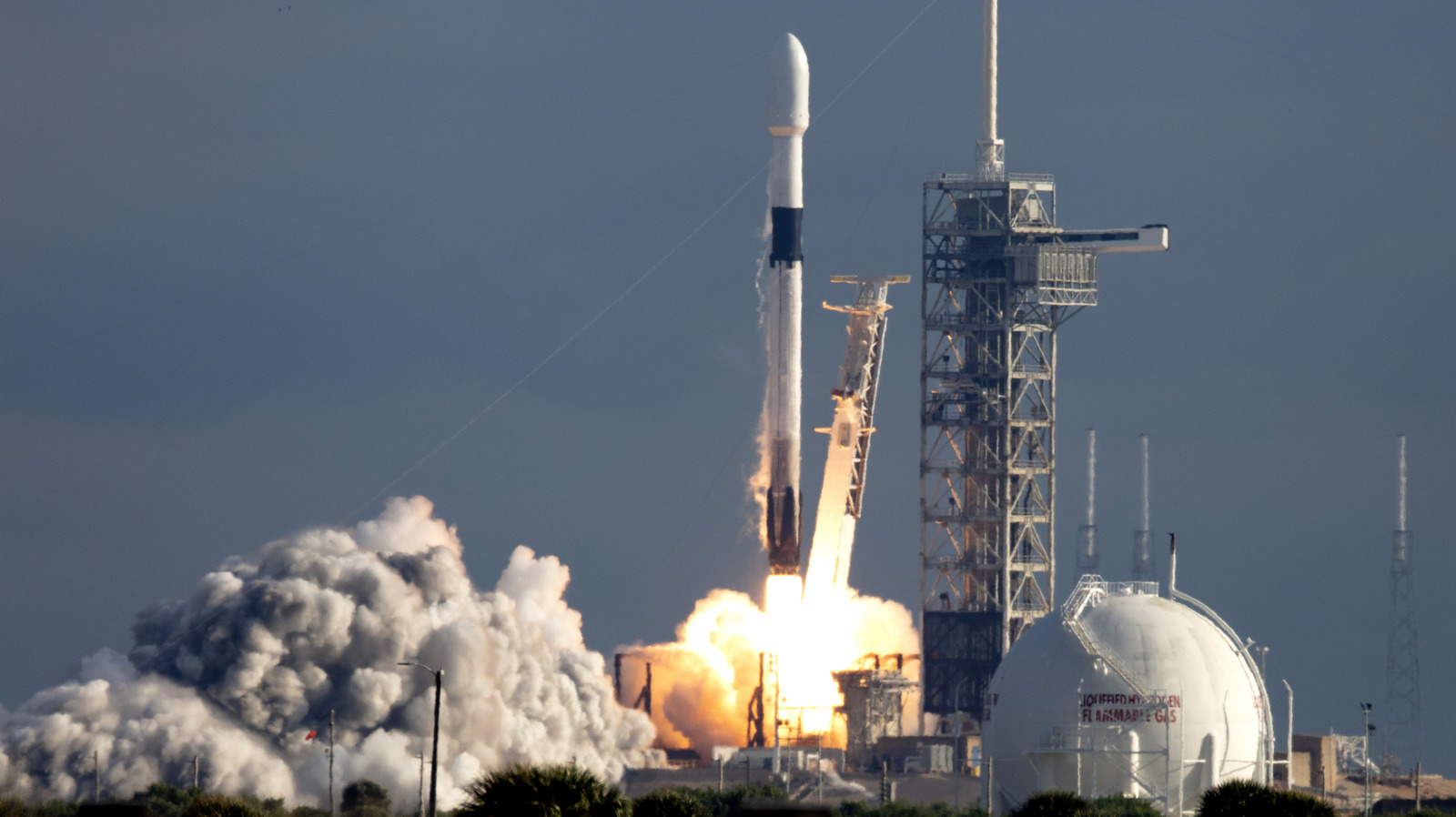
SpaceX’s Falcon 9 Rocket Just Had Its Invisible Pollution Studied For The First Time Ever
Researchers have completed the first comprehensive study of “invisible” atmospheric pollution generated by SpaceX’s Falcon 9 rockets, according to data analyzing the impact of alumina particles and soot in the upper atmosphere. The findings suggest that the high frequency of commercial launches may introduce pollutants into the stratosphere and mesosphere that persist longer than ground-level emissions, potentially affecting the ozone layer and global temperatures.
What is “Invisible Pollution” in Rocket Launches?
Unlike the visible plumes of smoke and fire seen during a liftoff, invisible pollution refers to microscopic particulates and chemical compounds that remain suspended in the upper reaches of Earth’s atmosphere. According to the research, these primary pollutants include alumina (aluminum oxide) and black carbon, commonly known as soot.
The Falcon 9 utilizes a combination of RP-1 (a highly refined form of kerosene) and liquid oxygen (LOX). While this propellant is efficient for lifting heavy payloads, the combustion process releases carbon dioxide, water vapor, and particulate matter. Because these rockets travel through the stratosphere—the layer of the atmosphere extending from about 10 to 50 kilometers above the surface—these particles are deposited directly into a region where there is no weather or rain to “wash” them away.
Key characteristics of these pollutants include:
- Alumina Particles: Tiny solid particles that reflect sunlight and provide a surface for chemical reactions.
- Black Carbon (Soot): Dark particles that absorb solar radiation, heating the surrounding air.
- Persistence: Because the stratosphere is stable, these particles can remain for several years, unlike tropospheric pollution which clears in days or weeks.
How the Falcon 9 Study Was Conducted
The study focused on the specific chemical signature of Falcon 9 emissions. Researchers utilized atmospheric modeling and observational data to track how particulates behave after the rocket’s first and second stages ignite. By simulating the trajectory and the volume of fuel burned, the team could estimate the mass of alumina and soot injected into various atmospheric layers.
The research team analyzed the “radiative forcing” of these particles—a measure of how much they change the energy balance of the atmosphere. They found that while some particles reflect sunlight (cooling the planet), others absorb it (warming the planet). The net effect depends on the altitude of the emission and the concentration of the particles.
The study highlights a critical gap in previous aerospace environmental assessments: the failure to account for the cumulative effect of high-cadence launch schedules on the fragile chemistry of the stratosphere.
Impact on the Ozone Layer and Atmospheric Chemistry
One of the most significant concerns raised by the study is the potential for ozone depletion. The ozone layer protects Earth from harmful ultraviolet (UV) radiation, but it is susceptible to chemical catalysts.
According to the researchers, alumina particles act as “surfaces” for heterogeneous chemical reactions. These reactions can convert inactive chlorine compounds into active forms that destroy ozone molecules. This process is similar to how polar stratospheric clouds contribute to the “ozone hole” over Antarctica, though the mechanism here is driven by rocket exhaust rather than natural weather patterns.
The study suggests that as the number of launches increases, the concentration of these particles could reach a threshold where the rate of ozone destruction exceeds the rate of natural recovery. This would increase the amount of UV radiation reaching the Earth’s surface, potentially leading to higher rates of skin cancer and damage to marine ecosystems.
| Pollutant | Primary Source | Atmospheric Effect | Duration of Impact |
|---|---|---|---|
| Alumina | Solid rocket boosters/Combustion | Ozone depletion / Solar reflection | Years |
| Black Carbon | RP-1 (Kerosene) combustion | Atmospheric warming | Months to Years |
| Water Vapor | Combustion byproduct | Cloud formation / Greenhouse effect | Variable |
Comparing Falcon 9 Emissions to Other Propulsion Systems
The environmental footprint of the Falcon 9 differs significantly from other rocket types. To understand the broader context, it is helpful to compare kerosene-based engines with hydrogen-based or solid-fuel systems.
RP-1 (Kerosene) vs. Liquid Hydrogen (LH2)
Rockets like the Space Shuttle’s main engines or the SLS use liquid hydrogen, which primarily emits water vapor. While water vapor is a greenhouse gas in the upper atmosphere, it does not produce the black carbon (soot) associated with Falcon 9’s RP-1 engines. However, hydrogen rockets are often more expensive and complex to handle.
Solid Rocket Boosters (SRBs)
Solid fuels, often used in the first stage of many government rockets, are typically the largest contributors of alumina. While the Falcon 9’s Merlin engines are liquid-fueled, the study examines the broader category of “invisible pollution” that includes the alumina produced by various combustion processes and the atmospheric interaction of kerosene exhaust.
The primary difference for SpaceX is the volume of launches. While a single launch has a negligible impact, the company’s goal of launching thousands of Starlink satellites creates a cumulative effect that has never been seen in the history of spaceflight.
The “Starlink Effect” and Launch Cadence
The shift from occasional government missions to a commercial “launch-on-demand” model has changed the atmospheric equation. SpaceX currently launches more frequently than any other entity in history. This high cadence means that the “invisible pollution” is being injected into the stratosphere at a constant rate.
Industry analysts note that the Starlink constellation requires a continuous stream of launches to replace decaying satellites. This creates a permanent presence of rocket exhaust in the upper atmosphere. The study suggests that if this trend continues or is adopted by other companies (such as Blue Origin or Amazon’s Project Kuiper), the total mass of alumina and soot in the stratosphere could increase by orders of magnitude.
Related analysis on the growth of satellite mega-constellations suggests that the environmental impact extends beyond the atmosphere to include “space junk” or orbital debris, but the atmospheric chemistry remains the most immediate biological concern.
Climate Implications: Cooling vs. Warming
The study reveals a complex tug-of-war regarding global temperatures. The “invisible pollution” from Falcon 9 creates two opposing effects:
- The Albedo Effect (Cooling): Alumina particles reflect incoming sunlight back into space. This is similar to the effect of volcanic eruptions, which can cool the Earth’s surface for several years after a major blast.
- Radiative Forcing (Warming): Black carbon absorbs solar energy and re-radiates it as heat, warming the stratosphere.
Current data indicates that the warming effect of soot may outweigh the cooling effect of alumina in certain layers of the atmosphere. Furthermore, the heating of the stratosphere can alter the jet stream and other global weather patterns, potentially shifting rainfall and temperature zones on the ground.
Industry Reactions and Regulatory Gaps
Currently, there are very few international regulations governing the emissions of rockets in the stratosphere. Most environmental laws focus on the troposphere (where we live) or on the ground-level impact of launch sites (such as noise and local wildlife disruption).
The study on SpaceX’s Falcon 9 highlights a regulatory vacuum. International bodies like the International Civil Aviation Organization (ICAO) regulate aircraft, but spaceflight exists in a legal gray area. Experts suggest that a new framework may be needed to limit the total amount of soot and alumina that can be legally injected into the stratosphere annually.
SpaceX has not historically provided detailed public data on the atmospheric chemical impact of its fleet, focusing instead on the reusability of the rockets as a means of reducing waste. However, the study argues that reusability reduces ground-based manufacturing waste but does not eliminate the atmospheric pollution generated during the ascent phase.
Correcting Common Misconceptions
There are several common misunderstandings regarding rocket pollution that the study helps clarify:
- “Rockets are too few to matter”: While true in the 1990s, the current launch cadence of SpaceX and other commercial firms has moved rocket emissions from a “negligible” category to a “measurable” one.
- “The pollution just disappears”: In the lower atmosphere, rain and wind clear pollutants. In the stratosphere, there is no such mechanism, meaning the pollution “stacks” over time.
- “Only solid rockets are bad”: While solid rockets produce more alumina, the soot from kerosene engines (like the Merlin) is a potent warming agent that is often overlooked.
Future Outlook for Space Propulsion
To mitigate these effects, the aerospace industry is exploring “greener” propellants. The development of the SpaceX Starship, for example, utilizes liquid methane (Methalox) instead of RP-1. Methane burns cleaner than kerosene, producing significantly less soot.
However, methane is itself a potent greenhouse gas. If methane leaks occur during fueling or flight, the environmental trade-off may shift from “soot pollution” to “greenhouse gas emission.” This underscores the need for the kind of independent study recently conducted on the Falcon 9, as it provides a baseline for evaluating new technologies.
Researchers believe that the next step is to implement real-time atmospheric monitoring using high-altitude balloons or specialized satellites to track the plumes of launches as they happen, rather than relying on models.
Frequently Asked Questions
Does the Falcon 9 pollution cause immediate harm to people?
No. The pollution occurs in the stratosphere and mesosphere, far above where humans breathe. The concern is not direct toxicity, but the long-term degradation of the ozone layer and changes to the global climate, which could indirectly affect human health via increased UV radiation.
Is SpaceX the only company causing this pollution?
No, but SpaceX’s launch frequency is currently the highest in the world. All rockets using solid fuels or kerosene-based propellants contribute to these atmospheric changes. The study focused on Falcon 9 because its high volume of flights provides the most significant data set for cumulative impact.
Will this lead to a ban on rocket launches?
It is unlikely that launches will be banned, as they are critical for global communications, GPS, and scientific research. Instead, this data is expected to drive the development of cleaner fuels and potentially lead to “emission quotas” for the space industry.
How does rocket pollution compare to airplane pollution?
Airplanes fly in the troposphere and lower stratosphere and launch in far greater numbers. However, rockets inject pollutants much higher into the atmosphere, where they last significantly longer. A single rocket launch may have a smaller immediate impact than a fleet of planes, but its “invisible” footprint persists for years.
Can the “invisible pollution” be cleaned up?
No. There is currently no technology capable of removing alumina particles or soot from the stratosphere. The only way to reduce the pollution is to reduce the frequency of launches or switch to propellants that do not produce these specific particulates.
