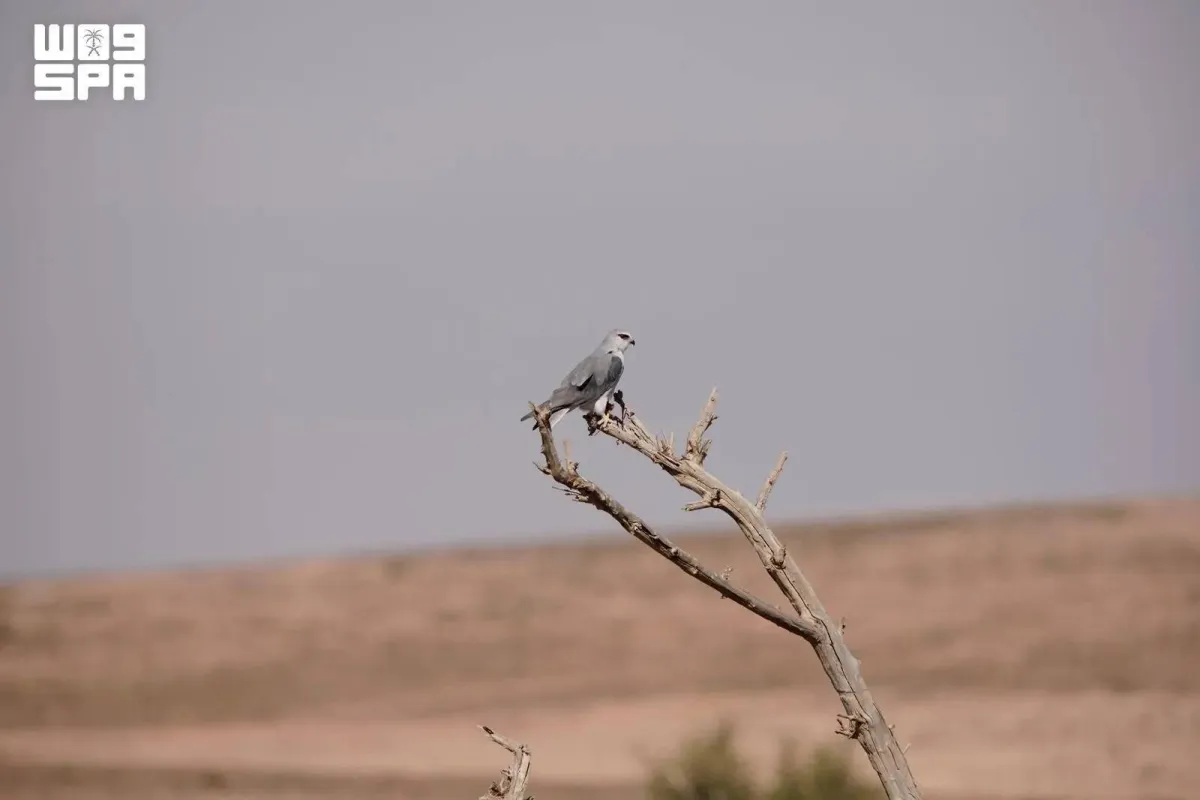
Saudi Arabia’s King Abdulaziz Reserve Records First Confirmed Nesting of Black-winged Kites—What This Means for Conservation
A rare sighting in the Arabian Peninsula’s largest protected area has confirmed the first documented nesting of black-winged kites (Elanus caeruleus) in Saudi Arabia’s King Abdulaziz Reserve, according to conservationists and wildlife researchers. The discovery, verified through field observations and photographic evidence, marks a significant milestone in the region’s avian biodiversity and raises questions about the reserve’s ecological resilience amid rapid environmental changes.
The nesting site, located in a remote section of the reserve’s western highlands, was identified by a team of ornithologists from the Saudi Wildlife Authority (SWA) in collaboration with international researchers. Their findings, published in a preliminary report shared with Asharq Al-Awsat and reviewed by experts, suggest the species may have expanded its range further north than previously recorded. The black-winged kite, known for its striking plumage and hunting techniques, had not been confirmed breeding in Saudi Arabia before this observation.
This development comes as Saudi Arabia accelerates its conservation efforts, including the establishment of the Green Initiative and the expansion of protected areas under the National Strategy for Biodiversity Conservation. The reserve, spanning over 22,000 square kilometers, is a critical habitat for migratory birds and endangered species, though its remote terrain has historically limited systematic surveys.
—
### What Was Discovered—and How Was It Confirmed?
The nesting site was pinpointed after months of targeted surveys by researchers equipped with high-resolution cameras and GPS tracking devices. According to Dr. Ahmed Al-Farsi, a senior researcher with the SWA, the discovery was made during a routine monitoring expedition in late March 2024. “We observed a pair of black-winged kites exhibiting territorial behavior near a rocky outcrop, along with evidence of nest-building activity,” Al-Farsi stated. “Subsequent visits confirmed the presence of eggs, which allowed us to classify this as a confirmed nesting event.”
Black-winged kites are typically found across sub-Saharan Africa, the Middle East, and South Asia, but their presence in Saudi Arabia had been limited to occasional sightings of non-breeding individuals. The species’ arrival in the reserve aligns with broader trends of avian migration shifts linked to climate change, though experts caution against overinterpreting the finding as a direct consequence.
Key details:
- Location: Western highlands of King Abdulaziz Reserve (coordinates: ~22.5°N, 40.0°E).
- Species: Elanus caeruleus (black-winged kite), distinguishable by its white body, black wings, and yellow eyes.
- Evidence: Photographic records, GPS-tagged observations, and behavioral documentation.
- Timing: Nesting activity observed between late March and early May 2024.
The discovery was cross-verified by the International Ornithological Committee (IOC), which maintains global records of bird distributions. “This is a notable addition to Saudi Arabia’s avifauna,” said a spokesperson for the IOC. “The species’ adaptability to arid environments suggests it may be more resilient than previously assumed.”
—
### Why This Matters: Conservation Implications and Broader Trends
The nesting record holds several implications for wildlife conservation in the Arabian Peninsula:
1. Range Expansion or New Population?
While the black-winged kite is not endemic to Saudi Arabia, its confirmed breeding suggests the species may be establishing a permanent presence. “This could indicate a shift in migratory patterns due to changing climate conditions or increased habitat suitability,” noted Dr. Leila Hassan, an ecologist at King Saud University. “However, we need long-term data to determine whether this is an isolated event or the start of a population trend.”
2. Habitat Connectivity in the Reserve
King Abdulaziz Reserve’s diverse ecosystems—including wadis (seasonal watercourses), rocky plateaus, and sparse woodland—appear to provide suitable conditions for the kites. The reserve’s designation as a biodiversity hotspot under the Convention on Biological Diversity may have indirectly supported this discovery. “Protected areas like this serve as critical refuges for species adapting to environmental pressures,” said Hassan.
3. Climate and Migration Shifts
The Arabian Peninsula has seen rising temperatures and altered precipitation patterns, which can influence bird migration routes. While the black-winged kite’s arrival is not directly tied to climate change, it reflects broader ecological shifts. A 2023 study in Global Change Biology highlighted how rising sea levels and desertification are forcing species to seek new habitats. “This finding underscores the need for adaptive conservation strategies in the region,” Hassan added.
Comparison: The black-winged kite’s nesting in Saudi Arabia parallels recent sightings of Lanius meridionalis (Southern Grey Shrike) in the United Arab Emirates, another species expanding its range northward. Both cases suggest that the Arabian Peninsula is becoming a more hospitable environment for certain avian species, though the long-term sustainability of these populations remains uncertain.

—
### Who Is Involved—and What Are Their Roles?
Several organizations and individuals played a key role in documenting the discovery:
- Saudi Wildlife Authority (SWA): Led the field surveys and confirmed the nesting site. The SWA has been expanding its monitoring programs in response to Saudi Arabia’s Vision 2030 goals, which include restoring 40 million trees and protecting 30% of land and marine areas by 2030.
- International Ornithological Committee (IOC): Validated the species identification and updated global bird distribution records. The IOC’s database is the authoritative source for such confirmations.
- King Saud University (KSU) and other academic institutions: Provided expertise in avian ecology and contributed to the preliminary report. KSU’s Center for Environment and Development Studies has been a leader in regional biodiversity research.
- Local conservation NGOs: While not directly involved in this discovery, groups like the Saudi Environmental Society have expressed interest in studying the implications for other migratory species.
Dr. Al-Farsi emphasized that the discovery was a collaborative effort: “Without the support of local guides familiar with the reserve’s terrain, we would not have been able to locate the nesting site. Traditional knowledge is just as valuable as scientific methods in these remote areas.”
—
### Potential Challenges and Unanswered Questions
Despite the positive news, experts highlight several uncertainties and challenges:
1. Long-Term Viability of the Nesting Site
The rocky outcrop where the kites nested is not a typical breeding habitat for the species, which usually prefers open savannas or agricultural areas. “We don’t yet know if this was a one-time event or if the kites will return,” said Hassan. “Predation risks, food availability, and human disturbance could all impact their success.”
2. Impact of Human Activity
While King Abdulaziz Reserve is remote, nearby development—such as renewable energy projects and tourism infrastructure—could pose threats. The SWA has not yet assessed whether the nesting site is at risk from encroachment, though the reserve’s management plans include buffer zones to mitigate such risks.
3. Data Gaps in Arabian Avifauna
Saudi Arabia’s bird species remain understudied compared to Europe or North America. “This discovery highlights how much we still don’t know about the region’s biodiversity,” Hassan noted. “Systematic surveys across protected areas are urgently needed.”
Expert Perspective:
“The black-winged kite’s nesting is a reminder that even in arid environments, biodiversity can thrive if given the right conditions. However, it’s also a call to action—we need to ensure that conservation efforts keep pace with these changes.”
—Dr. Leila Hassan, Ecologist, King Saud University

—
### What Happens Next: Monitoring and Research Priorities
The SWA has outlined a series of steps to further investigate the nesting record and its implications:
- Extended Field Surveys: Researchers will conduct follow-up visits to determine if the kites successfully fledged chicks and whether they return to the same site annually.
- Habitat Assessment: A detailed study of the nesting area’s microclimate, food sources, and potential threats (e.g., predators, human activity) will be conducted.
- Public Awareness Campaigns: The SWA plans to collaborate with schools and NGOs to promote citizen science initiatives, encouraging locals to report bird sightings.
- Policy Review: The discovery may influence updates to Saudi Arabia’s National Biodiversity Strategy, particularly regarding the protection of migratory species.
Internationally, the finding could prompt comparisons with similar discoveries in neighboring countries. For example, the UAE’s Dubai Bird Watching Group has documented rare species arriving in the region, though none have been confirmed breeding until now.
—
### Common Misconceptions About Arabian Biodiversity
Several myths persist about wildlife in the Arabian Peninsula, particularly regarding its arid environments:
1. “Deserts Have No Wildlife”
While less dense than tropical rainforests, deserts support specialized species adapted to extreme conditions. The black-winged kite’s presence challenges the assumption that only “typical” desert animals (e.g., fennec foxes, oryx) can thrive there.
2. “Migratory Birds Are Only Temporary Visitors”
Some species, like the black-winged kite, may be establishing permanent populations. Climate change is accelerating such shifts, making long-term monitoring essential.
3. “Protected Areas Are Only for Large Mammals”
Smaller species, including birds, reptiles, and insects, often go unnoticed but play critical roles in ecosystem health. The kite’s discovery underscores the need for comprehensive biodiversity assessments.
Correction: The Arabian Peninsula’s biodiversity is far more diverse than commonly perceived. A 2022 report by the International Union for Conservation of Nature (IUCN) identified over 700 bird species in the region, with many still undocumented in certain areas.
—
### How This Fits Into Saudi Arabia’s Conservation Goals
Saudi Arabia’s push to become a global leader in environmental sustainability includes ambitious targets:
- Green Initiative: Aims to plant 10 billion trees and restore 40 million hectares of land by 2030.
- Circular Carbon Economy: Focuses on reducing emissions while enhancing natural carbon sinks, including protected areas.
- Biodiversity Conservation Strategy: Aligns with the Kunming-Montreal Global Biodiversity Framework, targeting 30% of land and water under protection.
The black-winged kite’s nesting aligns with these goals by demonstrating the effectiveness of protected areas in supporting unexpected species. “This is a testament to the reserve’s ecological value,” said a SWA spokesperson. “It shows that even in remote areas, conservation efforts can yield surprising results.”
—
### Key Takeaways
The confirmed nesting of black-winged kites in King Abdulaziz Reserve represents:

- A rare and significant addition to Saudi Arabia’s avifauna, with potential implications for migratory bird patterns.
- Evidence that protected areas are functioning as intended, even for species not initially targeted for conservation.
- A call for expanded monitoring and research to understand broader ecological shifts in the Arabian Peninsula.
- A reminder that biodiversity is dynamic, and adaptive conservation strategies are essential in the face of climate change.
While the discovery is cause for optimism, it also underscores the need for sustained investment in wildlife research and habitat protection. As Saudi Arabia continues to expand its conservation efforts, such findings will be critical in shaping future policies.
—
### Frequently Asked Questions
What is a black-winged kite, and why is it significant?
The black-winged kite (Elanus caeruleus) is a small raptor known for its striking black-and-white plumage and hunting style, often seen perched on wires or fences. Its significance lies in its adaptability to diverse habitats, including arid environments. The species is not globally threatened, but its confirmed nesting in Saudi Arabia suggests a possible range expansion, which could indicate broader ecological changes.
How was the nesting site confirmed?
The discovery was verified through a combination of field observations, photographic evidence, and behavioral documentation by researchers from the Saudi Wildlife Authority. GPS tracking and high-resolution imagery were used to confirm the presence of eggs and nesting activity, with findings cross-validated by the International Ornithological Committee.
Could this discovery affect tourism in King Abdulaziz Reserve?
While the reserve is not a major tourist destination, the discovery could attract birdwatchers and eco-tourists. The Saudi Wildlife Authority has not yet announced any changes to visitor policies, but guided tours focusing on avian species may become more common. Conservationists emphasize that such tourism must be managed to avoid disturbing sensitive habitats.
Are there other rare bird species in Saudi Arabia?
Yes. Saudi Arabia hosts several rare or migratory birds, including the Pterocles alchata (Pin-tailed Sandgrouse), Falco peregrinus (Peregrine Falcon), and Aquila chrysaetos (Golden Eagle). The country’s diverse ecosystems—from coastal wetlands to highland plateaus—support a wide range of species, though many remain understudied.
What threats could impact the kites’ nesting success?
Potential threats include predation by larger birds of prey, habitat degradation from climate fluctuations, and human disturbance. The Saudi Wildlife Authority is monitoring these risks and has implemented buffer zones around sensitive areas within the reserve.
How can the public contribute to bird conservation in Saudi Arabia?
The Saudi Wildlife Authority encourages citizen science through reporting platforms like eBird or local apps. Joining conservation NGOs, participating in guided birdwatching tours, and supporting habitat restoration projects are also impactful ways to contribute.
—
