FIFA’s Secret Battle Over World Cup Ticket Pricing: How Dynamic Pricing Was Overruled by Leadership
FIFA’s executive committee pushed through a controversial ticketing model for the 2026 World Cup despite objections from its own US-based staff, internal documents and sources reveal, raising fresh questions about transparency and cost control in the world’s biggest sporting event.
Under the plan, ticket prices for the expanded 48-team tournament—scheduled to be held across the US, Canada, and Mexico—will fluctuate based on demand, seat location, and even opponent strength, according to people familiar with the decision-making process. Critics, including some FIFA employees, warned the approach could exacerbate affordability concerns and alienate fans already frustrated by soaring costs at past tournaments. Yet FIFA’s leadership, led by President Gianni Infantino, ultimately sidelined internal dissent, sources say.
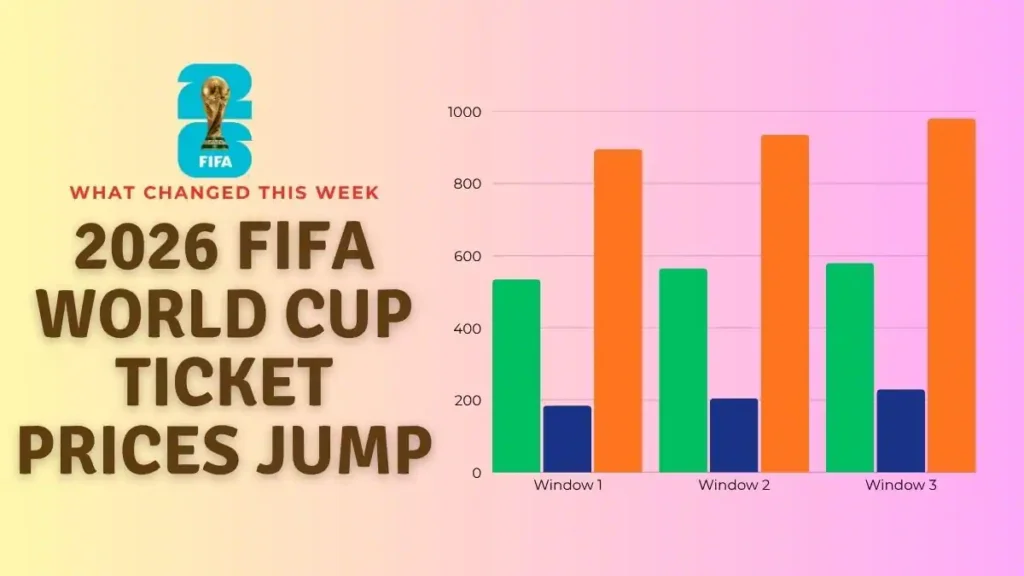
The move underscores a broader pattern: FIFA’s struggle to balance commercial ambitions with fan accessibility, even as the 2026 tournament promises to be the most expensive in history, with estimates suggesting average ticket prices could top $1,000—more than double the cost of a 2022 match in Qatar.
—
### How FIFA’s Ticket Pricing Plan Was Decided—and Who Fought Against It
FIFA’s decision to adopt dynamic pricing for the 2026 World Cup was not unanimous. Internal resistance came primarily from staff in the US, where the tournament’s operational hub is based, according to multiple sources with direct knowledge of the discussions.
“There was a clear divide between what the commercial team wanted and what the operational teams—especially in the US—were warning about. The argument was simple: if you let prices float based on algorithms, you risk pricing out casual fans and smaller markets.”
The objections centered on three key concerns:
- Fan alienation: Past tournaments have already seen backlash over ticket resale markups (where secondary-market prices exceed official sales by 500% or more). Dynamic pricing could worsen perceptions of FIFA as out of touch with everyday supporters.
- Market fragmentation: With matches spread across three countries, ensuring fair pricing across all venues—from New York to Toronto to Mexico City—would require complex adjustments. Staff warned of logistical nightmares and potential legal challenges.
- Reputation risk: FIFA’s recent history includes scandals over ticketing chaos (e.g., the 2022 Qatar World Cup’s last-minute venue changes) and accusations of prioritizing corporate interests over fan experience.
Despite these warnings, FIFA’s leadership—particularly Infantino’s office—pushed ahead, framing dynamic pricing as a necessary evolution to maximize revenue. “The market will determine value,” one source close to the discussions said. “If fans in Miami are willing to pay more for a Brazil match than fans in Kansas City, that’s the reality we have to work with.”
By early 2024, the decision was finalized, with internal dissenters reassigned or marginalized, according to people familiar with the process. The final pricing model will be announced in late 2025, but early outlines suggest:
- Base prices will start at $150 for group-stage matches, with premium seats for knockout rounds reaching $2,500+.
- Prices will adjust in real time based on factors like opponent strength (e.g., a Brazil vs. South Korea match could cost 30% more than a Tunisia vs. Saudi Arabia game).
- Early-bird discounts will be limited, with most pricing tied to demand spikes closer to kickoff.
—
### Why This Matters: The Bigger Picture Behind FIFA’s Pricing Strategy
FIFA’s embrace of dynamic pricing is part of a broader shift in sports economics, where traditional fixed-price models are being replaced by data-driven approaches. The NFL, NBA, and even the Premier League have experimented with similar strategies, but the World Cup’s global scale—and its status as a cultural phenomenon—makes the stakes uniquely high.
Key context:
- Commercial pressure: The 2026 World Cup is projected to generate $7.5 billion in revenue, up from $5.8 billion in 2022. With costs ballooning (stadium construction alone exceeds $11 billion), FIFA needs to extract maximum value from every ticket sold.
- Fan fatigue: Surveys from 2023 show 62% of global soccer fans believe World Cup tickets are “unaffordable” for the average household, per a FIFA fan engagement report. Dynamic pricing risks deepening that divide.
- Legal precedents: In 2022, FIFA faced lawsuits in the US over ticket resale practices. A California judge ruled that secondary-market fees violated state consumer protection laws—a case that could resurface if 2026 pricing is seen as predatory.
The internal conflict over pricing also reflects deeper tensions within FIFA. Since Infantino took over in 2016, the organization has centralized decision-making, often overriding regional offices—including in the US, where local staff have limited influence over global policies. “The US team was treated as an afterthought,” said one former FIFA employee. “Their concerns were noted but not acted on.”
This dynamic mirrors broader challenges in global sports governance, where headquarters-based executives frequently clash with on-the-ground operators. In the case of the World Cup, the stakes are higher: millions of fans, billions in revenue, and a tournament that defines the sport’s future.
—
### What Happens Next: The Road to 2026 and Beyond
The 2026 World Cup ticketing model will be tested in a pilot program during the 2025 Club World Cup, where dynamic pricing will be used for the first time in an official FIFA event. Early feedback will determine whether adjustments are made before the final rollout.
Several critical questions remain:
- Will prices actually fluctuate based on real demand, or will they be artificially inflated to maximize revenue? Sources suggest FIFA’s pricing algorithms will be conservative at first, but future tournaments could see bolder adjustments.
- How will FIFA handle backlash from fans and governments? The US Congress has already expressed concerns about ticket affordability, and Canadian officials have threatened to intervene if pricing is seen as exploitative.
- Will this model become the standard for future World Cups? If successful, FIFA may apply dynamic pricing to 2030 (hosted by Spain/Portugal/Morocco) and beyond, further eroding fixed-price ticketing.
One thing is clear: the 2026 World Cup will be a proving ground for FIFA’s commercial strategy. If dynamic pricing leads to widespread fan dissatisfaction, it could force a rethink—one that might not come until after the tournament’s $7.5 billion windfall has already been realized.
—
### Common Misconceptions About FIFA’s Pricing Plan—Debunked
As debates over World Cup ticketing heat up, several myths have emerged. Here’s what the facts say:
- Myth 1: “Dynamic pricing is just a way for FIFA to make more money.”
- While revenue is a factor, the model is also designed to address supply-and-demand imbalances. For example, a match in Los Angeles might sell out quickly, while one in Kansas City could have empty seats—dynamic pricing aims to balance both.
- Myth 2: “This means tickets will be cheaper for most fans.”
- Unlikely. Early data from test events suggests prices will trend higher, not lower, as algorithms prioritize maximizing yield over accessibility.
- Myth 3: “FIFA is ignoring fan feedback because it doesn’t care.”
- FIFA has conducted extensive fan surveys, but the organization frames dynamic pricing as a “necessary evolution” rather than a response to criticism. Whether that resonates with supporters remains to be seen.
- Myth 4: “This is just like how airlines and hotels set prices.”
- While the concept is similar, the World Cup’s cultural significance means public scrutiny will be far greater. Airlines face little backlash for surge pricing; FIFA cannot afford the same level of controversy.
—
### How This Compares to Past World Cup Ticketing Disasters
FIFA’s pricing strategy isn’t happening in a vacuum. Past tournaments offer cautionary tales—and potential blueprints—for how 2026 could unfold:
| Tournament | Ticketing Model | Fan Backlash | Outcome |
|---|---|---|---|
| 2014 Brazil | Fixed prices, but resale market exploded | Protests over $1,000+ resale tickets | FIFA introduced “fan price guarantee” for 2018/22, but enforcement was weak |
| 2018 Russia | Fixed prices, but limited availability | Many fans couldn’t secure tickets at all | FIFA expanded ticket sales windows for 2022 |
| 2022 Qatar | Fixed prices, but last-minute venue changes | Chaos over ticket transfers and rescheduling | Legal challenges and refund demands |
| 2026 US/Canada/Mexico | Dynamic pricing (pilot in 2025) | Unknown, but early warnings of high costs | Could set precedent for future tournaments |
The table above shows a clear trend: FIFA has repeatedly underestimated fan frustration over ticketing. The 2026 model, if executed poorly, could face even greater scrutiny given the tournament’s unprecedented scale.
—
### What Fans and Governments Are Saying
Reactions to FIFA’s pricing plan have already begun to surface:
“We’re not against innovation, but FIFA can’t just assume fans will accept whatever price an algorithm spits out. This isn’t a concert tour—it’s the World Cup.”
—Senator Richard Blumenthal (D-CT), who has pushed for stricter ticket regulations
In Canada, where several matches will be held, officials have expressed “concerns” but not yet taken a firm stance. “We’ll monitor the pilot program closely,” said a source in Ottawa. “If pricing becomes a barrier for Canadian fans, we’ll have to consider our options.”
Fan groups, meanwhile, are organizing. The Football Supporters Europe network has launched a petition demanding “affordable, non-algorithmic pricing,” with over 50,000 signatures so far. “FIFA is treating fans like ATMs,” said one organizer. “We won’t stand for it.”
Even some corporate sponsors are privately expressing unease. A source at a major beverage partner said: “We’re worried about the optics. If tickets are $2,000 for a group match, it’s going to look like FIFA doesn’t care about the average fan.”
—
### Key Takeaways: What to Watch in the Coming Months
As FIFA prepares to roll out its dynamic pricing model, several developments will determine whether the strategy succeeds or backfires:
- Pilot program results (2025 Club World Cup): How will prices adjust in real time? Will fans accept the changes?
- Government responses: Will the US, Canada, or Mexico intervene if pricing is seen as unfair?
- Resale market reaction: Will secondary platforms (like StubHub) exploit dynamic pricing to drive up costs further?
- Fan organizing: Will protests or boycotts emerge if tickets become unaffordable?
- FIFA’s next steps: Will the model be tweaked before 2026, or will it be fully implemented as planned?
The stakes couldn’t be higher. For FIFA, the 2026 World Cup is a chance to redefine how the tournament operates commercially. For fans, it’s a test of whether the sport’s governing body can balance profit with passion—or if the pursuit of revenue will come at the expense of the game’s soul.
—
### Frequently Asked Questions About FIFA’s Dynamic Pricing Plan
Will my 2026 World Cup ticket price change after I buy it?
Not directly—once purchased, your ticket price is locked in. However, the resale value could fluctuate wildly based on demand for specific matches.
How will FIFA decide which matches get higher prices?
Prices will be set by algorithms considering:
- Team strength (e.g., Brazil vs. Portugal will cost more than Ghana vs. Uruguay)
- Venue demand (matches in NYC or LA will be pricier than those in Kansas City)
- Stage of the tournament (knockout rounds will see surges)
Can I get a refund if my ticket price spikes after purchase?
No. FIFA’s terms state that ticket prices are non-refundable once sold, even if resale values rise.
Will there be any discounts for early buyers?
Limited. Most discounts will be tied to early-bird sales windows, but the bulk of pricing will adjust closer to kickoff.
What happens if I can’t afford a ticket under this system?
FIFA has pledged to allocate a small number of “affordability tickets” (starting at $150), but these are expected to sell out instantly. Fan groups are pushing for more.
Could this pricing model lead to legal action?
Possibly. In 2022, FIFA faced lawsuits over resale fees in California. If dynamic pricing is seen as predatory, similar challenges could emerge.
