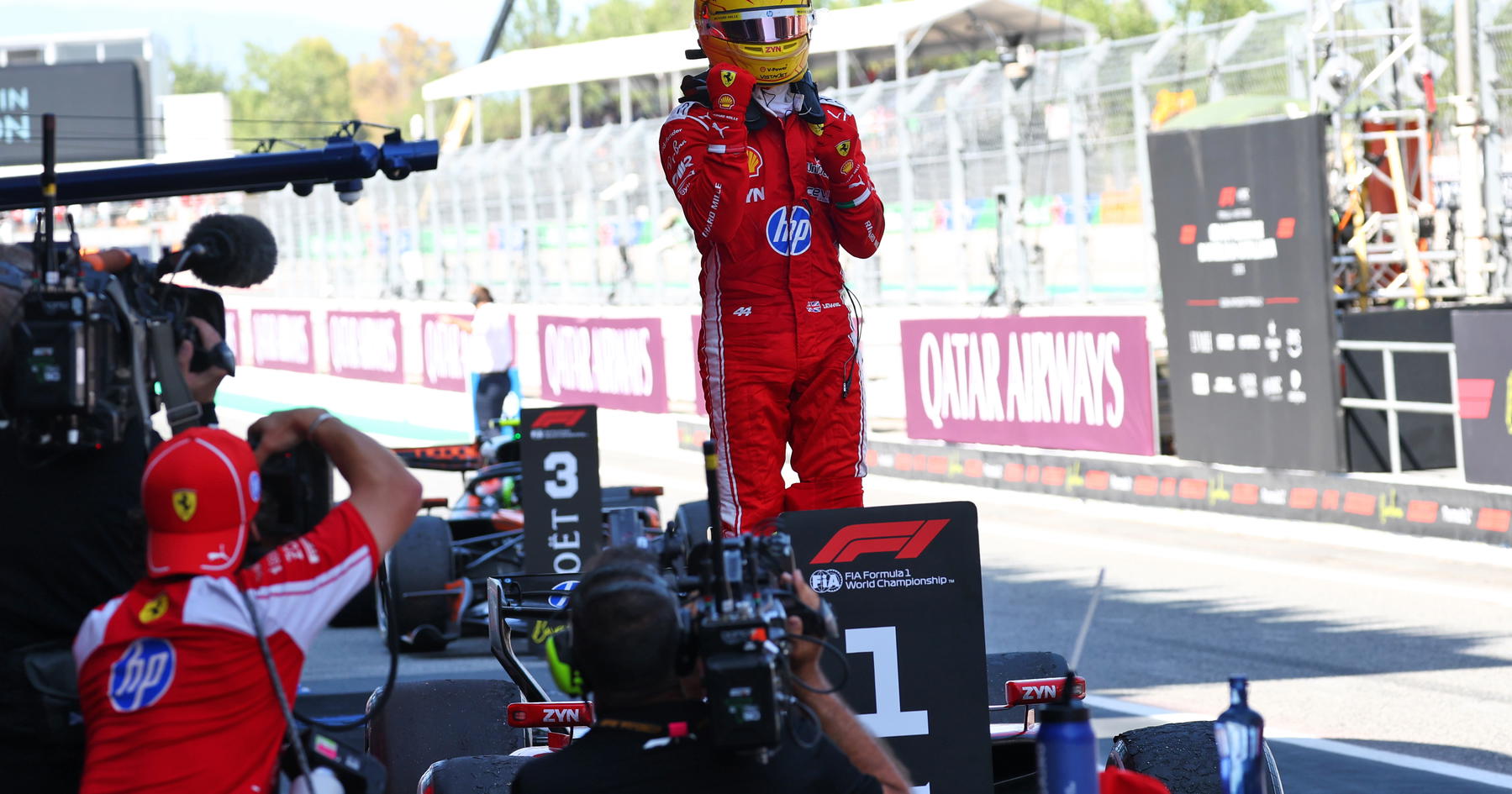
Adjusted 2026 F1 Barcelona-Catalunya Grand Prix Results After Post-Race Penalty
Franco Colapinto’s finishing position in the 2026 F1 Barcelona-Catalunya Grand Prix has been revised following a post-race penalty issued by the FIA stewards. According to reports from racingnews365.com, the penalty alters the final classification of the event, shifting the points distribution for both the driver and constructor standings.
The adjustment comes after a post-race investigation into an incident involving Colapinto. In Formula 1, post-race penalties are typically applied as time additions to the driver’s total race time, which can drop a competitor several places in the final standings if the gap to the trailing cars is narrow. This specific ruling changes the official results for the Barcelona round, impacting the championship trajectory for the teams involved.
What caused Franco Colapinto’s post-race penalty in Barcelona?
The FIA stewards issued the penalty to Franco Colapinto following a review of on-track conduct during the Grand Prix. While the stewards’ official documents detail the specific breach of the International Sporting Code, the resulting time penalty was applied to the final race clock rather than being served in the pits during the event.
Post-race penalties generally occur when stewards lack sufficient time to make a decision before the checkered flag or when the incident requires a more thorough review of telemetry and multi-angle video footage. According to racingnews365.com, the penalty hit Colapinto after the race had concluded, meaning his initial crossing of the finish line did not reflect his official final position.
Common triggers for these penalties include:
- Causing a collision: When a driver is deemed “predominantly to blame” for a contact incident.
- Track limits: Exceeding the white lines consistently without a prior penalty.
- Incorrect pit exit/entry: Crossing the line at the pit exit or entering the pits in an unsafe manner.
- Ignoring blue flags: Failing to allow faster cars to lap them within the mandated timeframe.
How the FIA calculates post-race time penalties
When a penalty is applied after the race, the FIA does not move the car physically but adds a time increment to the driver’s total elapsed time. This is a purely mathematical adjustment that can have drastic effects on the final podium or points-scoring positions.
The most common time penalties are five seconds and ten seconds. If a driver finishes 2.0 seconds ahead of the car behind them and receives a five-second penalty, they effectively finish 3.0 seconds behind that car in the official standings. This “virtual” shift can move a driver from a points-paying position (top 10) to outside the points entirely.
| Penalty Type | Standard Application | Impact on Results |
|---|---|---|
| 5-Second Penalty | Added to total race time | Can drop 1-3 positions depending on gaps |
| 10-Second Penalty | Added to total race time | Significant drop; often removes driver from points |
| Drive-Through | Converted to 20-30s penalty post-race | Severe drop in classification |
The stewards use the official timing screens to apply these changes. Once the “Provisional Classification” is updated to the “Final Classification,” the results are locked unless a team successfully lodges a Right of Review. This process requires the team to present “significant and relevant new evidence” that was unavailable to the stewards at the time of the original decision.
Impact on the 2026 Formula 1 Driver and Constructor Standings
The adjustment to the 2026 F1 Barcelona-Catalunya Grand Prix results after post-race penalty – racingnews365.com reports that the points shift affects the broader championship battle. In a sport where a single point can determine a team’s million-dollar payout at the end of the season, these post-race shifts are critical.
For Franco Colapinto, the penalty represents a loss of momentum. For the drivers who gained positions as a result, it provides a “free” boost in the standings without having to overtake on track. This creates a dynamic where teams often monitor the gaps to the car in front, hoping for a steward’s intervention that could gift them a higher finish.
Points redistribution and classification changes
The F1 points system is top-heavy, with 25 points for the winner and only one point for 10th place. If Colapinto’s penalty dropped him from 8th (4 points) to 11th (0 points), those points are redistributed to the drivers who moved up. This can shift the balance of power in the mid-field, where teams fight for every fraction of a point to secure their standing in the Constructor’s Championship.
“Post-race penalties are often the most frustrating part of a driver’s weekend because the physical effort of the race is decoupled from the official reward,” says a common sentiment among F1 analysts when discussing steward consistency.
The role of the Circuit de Barcelona-Catalunya in steward decisions
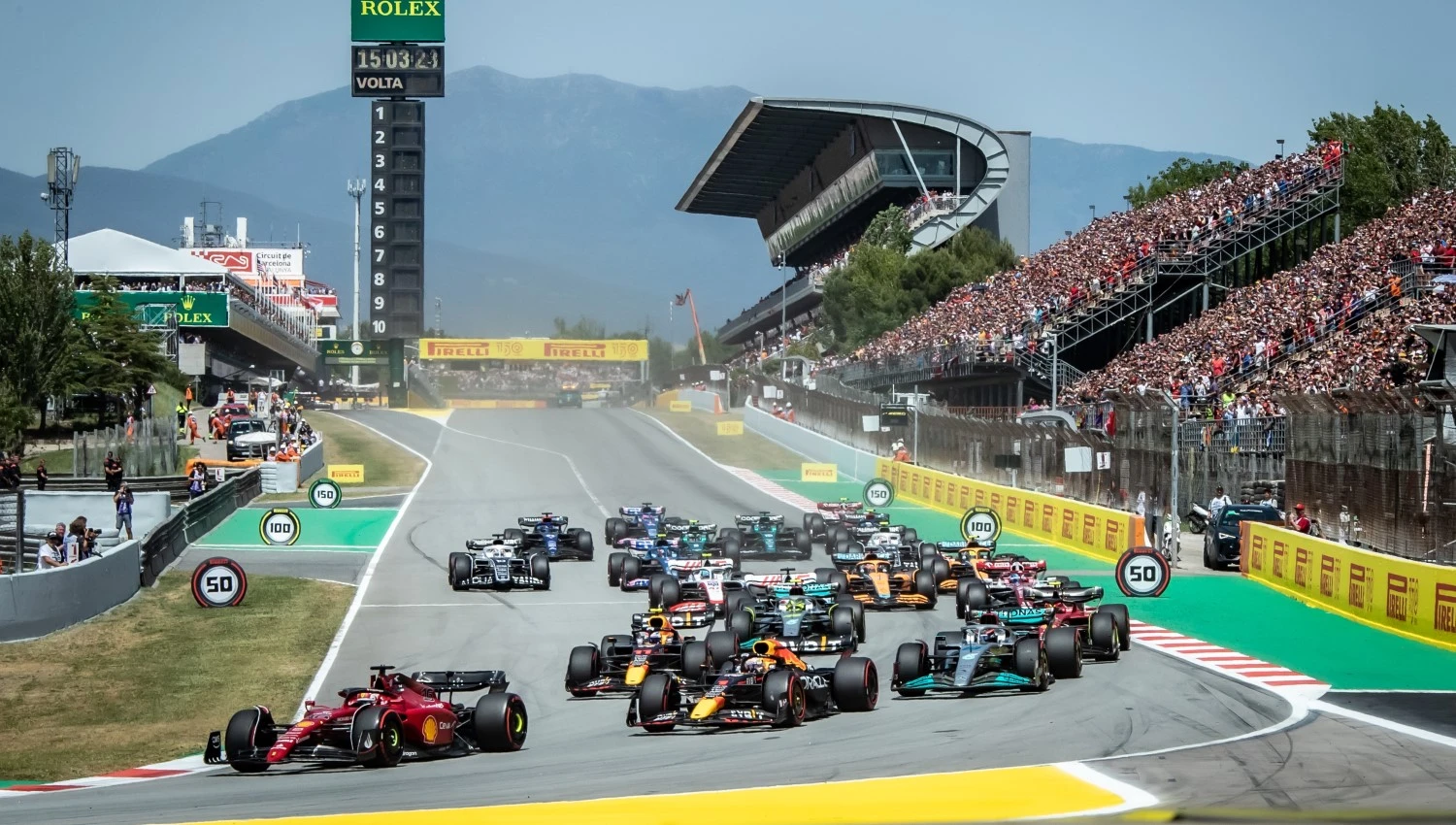
The Circuit de Barcelona-Catalunya is known for its high-speed corners and heavy braking zones, which frequently lead to “racing incidents.” The track’s layout, particularly the first corner and the final chicane, is a hotspot for collisions that lead to the kind of investigations seen in Colapinto’s case.

Because the track is often used for pre-season testing, stewards have a deep understanding of the “ideal line.” This makes them more likely to penalize drivers who force others off track or gain an unfair advantage by cutting corners. The technical nature of the Barcelona circuit means that small errors in judgment at high speeds often result in significant contact, leading to the high volume of post-race reviews associated with this venue.
Key factors that influence stewards at Barcelona include:
- Apex Control: Whether a driver left enough room for the opponent on the inside of the turn.
- Braking Points: If a driver “dived” into a corner too late, making a collision inevitable.
- Track Limit Violations: The strict enforcement of the white lines to prevent lap-time gains.
Historical precedents for post-race penalties in Formula 1
Post-race adjustments are not new, but they have become more common as the FIA increases its reliance on high-definition telemetry and VAR-style video reviews. Historically, penalties were often handled during the race via “stop-go” orders. Today, the time-addition method is preferred to maintain the flow of the broadcast and the race.
A notable parallel can be found in previous seasons where championship leaders have lost wins or podiums hours after the champagne had been sprayed. These instances often lead to debates about “steward consistency,” where different sets of stewards may interpret the same incident differently across different race weekends.
Comparing the 2026 Barcelona incident to prior years shows a trend toward stricter enforcement of “forcing a driver off track.” In the past, these might have been dismissed as racing incidents. Now, the FIA tends to favor the driver who held the racing line, penalizing the attacker if the move was not “clean.” This shift puts more pressure on young drivers like Colapinto to execute overtakes with surgical precision.
Common misconceptions about FIA steward rulings
Many fans believe that a post-race penalty is a sign that the stewards “missed” the incident during the race. In reality, the stewards are usually aware of the event but choose to wait for all data to be uploaded. F1 cars generate gigabytes of data per lap; analyzing the exact steering angle and brake pressure of two colliding cars takes time that cannot be spent during a live 90-minute broadcast.
Another misconception is that a driver can “appeal” a penalty to get their position back. Under current FIA rules, most in-race and post-race time penalties are not subject to a standard appeal. The only recourse is the Right of Review, which is rarely granted unless the team can prove the stewards ignored a piece of evidence that was clearly available.
Relevant points regarding steward decisions:
- Not a “Mistake”: A post-race penalty is a deliberate regulatory application, not a correction of a mistake.
- Fixed Time: Time penalties are non-negotiable once issued.
- Telemetry-Based: Decisions are based on hard data (G-force, throttle percentage) rather than just visual perception.
For those looking to understand more about how these rules are formed, a related explainer on FIA Sporting Regulations can provide a deeper dive into the legal framework of the sport.
FAQ: Understanding the Adjusted 2026 Barcelona GP Results
Why was Franco Colapinto penalized after the race?
According to reports from racingnews365.com, the FIA stewards issued a post-race penalty following an investigation into an on-track incident. Post-race penalties are typically applied when stewards require more time to review telemetry and video evidence than is available during the live event.
How does a post-race penalty change the standings?
The FIA adds a specific amount of time (usually 5 or 10 seconds) to the driver’s total race time. If the gap between that driver and the ones behind them is smaller than the penalty, the driver drops positions in the final classification.

Can the driver appeal the adjusted results?
Standard time penalties are generally not appealable. However, a team can request a “Right of Review” if they discover new, significant evidence that was not available to the stewards at the time of the decision.
Does this penalty affect the Constructor’s Championship?
Yes. Because the penalty changes the final finishing positions, the points awarded to the driver’s team are also adjusted. This can result in a loss of points for the penalized driver’s team and a gain for the teams whose drivers moved up in the standings.
Is this common at the Circuit de Barcelona-Catalunya?
Barcelona’s layout often leads to high-speed collisions and track-limit disputes, making it a frequent site for steward interventions. The technical nature of the track means stewards closely monitor apexes and braking zones, often leading to post-race reviews.
