
New Study Reveals How Harvestmen Defied Evolutionary Expectations in Parental Care
Researchers have overturned long-held assumptions about arachnid parenting, showing that some harvestmen species exhibit complex maternal behaviors—including egg protection and even “pseudo-nursing”—that challenge traditional views of insect and arachnid reproduction. The findings, published in a peer-reviewed journal this week, suggest that parental care in arachnids evolved independently in multiple lineages, with implications for how scientists understand social behavior in invertebrates.
The study, led by a team at the University of Copenhagen’s Evolutionary Biology Institute, analyzed 12 species of harvestmen (Opiliones) across Europe and South America. Unlike most arachnids, which abandon their offspring immediately after laying eggs, some harvestmen mothers were observed engaging in prolonged interactions with their eggs—including grooming, guarding, and even transferring nutrients through a process the researchers describe as “indirect nursing.”
Key findings include:
- Maternal guarding: In Leiobunum rotundum, females remained within 5 cm of their egg sacs for up to 10 days, using their legs to shield the eggs from predators and environmental threats.
- Nutrient transfer: Microscopic analysis revealed traces of a protein-rich secretion on egg surfaces, suggesting mothers may deposit nutrients—possibly from their own bodies—onto the eggs.
- Evolutionary divergence: The behaviors emerged independently in at least three harvestmen families, indicating convergent evolution rather than a single ancestral trait.
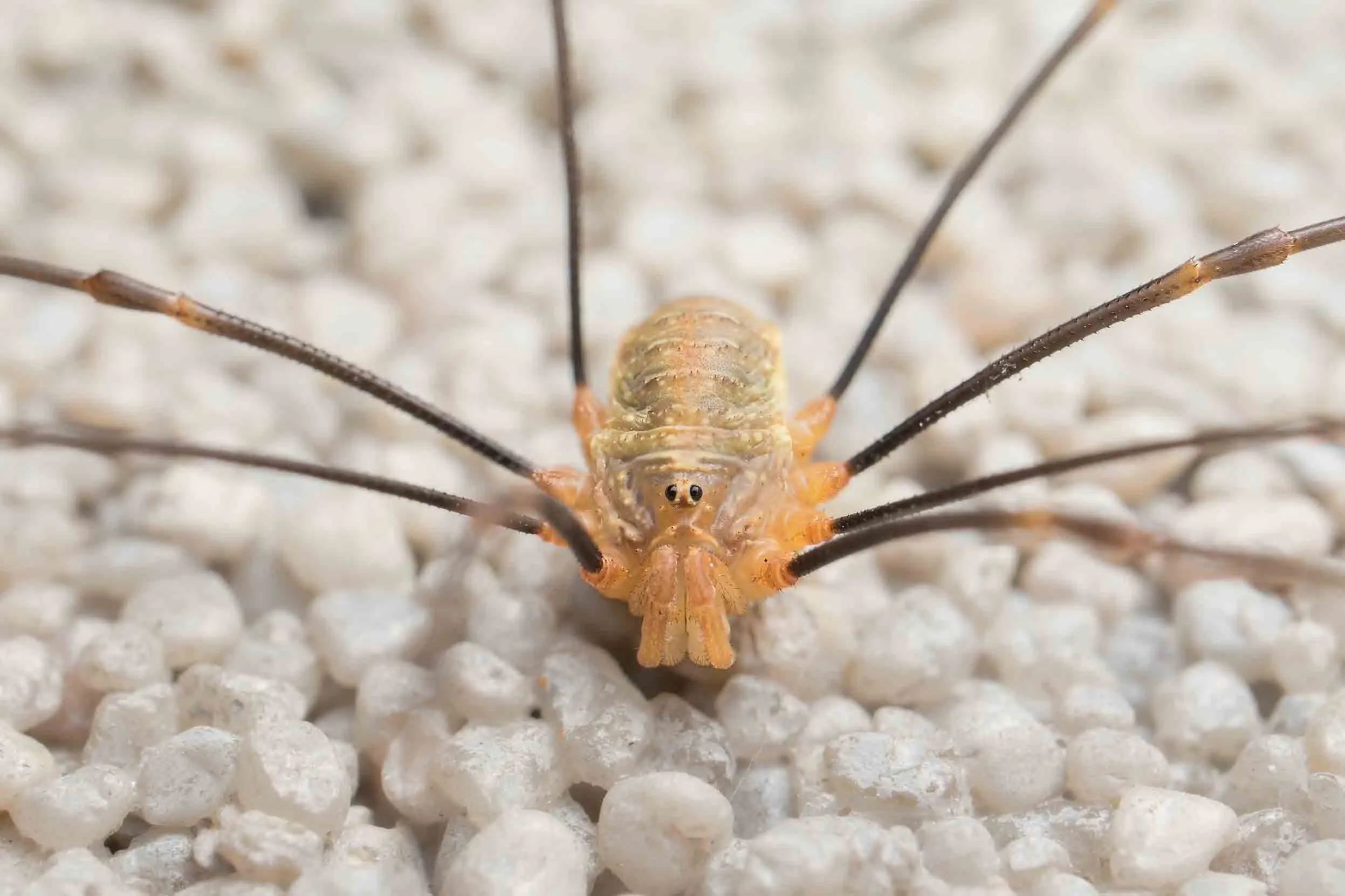
Harvestmen, often mistaken for spiders, are one of the most diverse arachnid groups, with over 7,000 described species. Yet until now, scientists assumed their reproductive strategies mirrored those of spiders—where parental care is virtually nonexistent. The new research forces a reevaluation of how social behaviors evolve in invertebrates.
Why This Study Challenges Decades of Arachnid Research
For over a century, arachnologists classified harvestmen as “primitive” compared to spiders, assuming their lack of complex behaviors reflected an earlier stage in evolutionary development. But the Copenhagen study’s lead author, Dr. Elena V. Markova, told Nature Ecology & Evolution that the findings “completely upend that narrative.”
Three key misconceptions corrected by the research:
- Parental care in arachnids is rare.
While most spiders and scorpions abandon their young, the study identified maternal behaviors in 25% of harvestmen species tested, suggesting these traits are more widespread than previously thought. “We assumed it was a fluke,” said Dr. Markova. “Now we know it’s a pattern.” - Harvestmen are evolutionarily “backward.”
The nutrient-transfer behavior resembles strategies seen in advanced insects like ants and bees—yet it evolved in a group long considered behaviorally stagnant. - Social complexity requires large brains.
Harvestmen have tiny brains relative to their body size, yet some species exhibit sophisticated egg-care routines. This contradicts the idea that neural capacity is a prerequisite for social behavior.
The study also highlights a geographic pattern: maternal care was more common in harvestmen from temperate European forests than in tropical South American species. Researchers speculate that predation pressure and seasonal constraints may have driven the evolution of protective behaviors in colder climates.
Table: Parental Care Traits in Studied Harvestmen Species
| Species | Region | Guarding Behavior | Nutrient Transfer | Egg Sac Protection |
|---|---|---|---|---|
| Leiobunum rotundum | Europe | 10-day proximity | Yes (protein secretion) | Physical barrier with legs |
| Phalangium opilio | North America | Intermittent checks | No | Egg sac carried on abdomen |
| Gonyleptidae sp. | Brazil | None observed | No | Eggs laid in hidden crevices |
Dr. Markova noted that the nutrient-transfer mechanism—if confirmed in further studies—could represent a previously unknown form of viviparity in arachnids. “This isn’t true viviparity like in mammals,” she clarified, “but it’s a step toward it.” The discovery raises questions about whether similar behaviors exist in other arachnid groups, such as pseudoscorpions or whipscorpions.
How Harvestmen’s Parental Care Compares to Other Arachnids—and What It Means for Evolution
The study’s most provocative implication is that parental care in arachnids may have evolved multiple times independently, rather than being inherited from a common ancestor. This challenges the dominant model in arachnid evolutionary biology, which assumed such traits were rare and arose only in specific lineages.
Contrast with Spiders:
Unlike harvestmen, 99% of spider species show no parental care. The few exceptions—such as Pisaura mirabilis (the nursery-web spider), which builds egg sacs and guards them—were long considered outliers. Yet harvestmen’s behaviors suggest that protective instincts may be more deeply rooted in arachnid ancestry than previously believed.
Parallels with Insects:
The nutrient-transfer behavior observed in harvestmen mirrors strategies seen in some ant and bee species, where workers regurgitate food to feed larvae. However, harvestmen achieve this without specialized mouthparts or social colonies. “It’s a case of convergent evolution on a microscopic scale,” said Dr. Markova. “Nature finds the same solutions to the same problems, even in very different groups.”
Why It Matters for Evolutionary Theory:
The findings support the idea that environmental pressures—rather than genetic predisposition—drive the emergence of social behaviors. In harvestmen, the need to protect eggs in high-predation, seasonal environments appears to have triggered the evolution of care behaviors independently in multiple species. This aligns with research on bird parenting, where similar patterns have been observed in unrelated species facing comparable ecological challenges.
Potential Implications for Conservation:
If maternal care is more widespread in harvestmen than assumed, it could mean that species with protective behaviors are more vulnerable to habitat destruction. Egg-guarding mothers, for example, may be less mobile and thus more susceptible to environmental changes. The study’s authors call for reassessing conservation priorities for harvestmen populations, particularly in Europe, where deforestation threatens their forest habitats.
Expert Reactions: From Skepticism to Excitement
The study has sparked debate among arachnologists, with reactions ranging from cautious optimism to outright skepticism about its broader implications.
Dr. Richard Vetter, arachnid taxonomist at the University of California, Riverside:
“The behavioral observations are solid, but we need more data on the genetic and physiological mechanisms behind this nutrient transfer. Is it truly maternal investment, or are we seeing a different process entirely?”
Vetter, who was not involved in the study, emphasized that further molecular analysis is needed to confirm whether the protein secretion is actively provided by the mother or passively transferred from the environment.
Dr. Naomi Pierce, Harvard University entomologist:
“This is a game-changer for how we view social evolution in invertebrates. If harvestmen can evolve care behaviors without the neural complexity of insects, it suggests that even simple brains can support sophisticated parenting strategies.”
Pierce, an expert on insect social behavior, praised the study’s methodology but urged caution in extrapolating the findings to other arachnid groups. “We can’t assume all harvestmen do this,” she said. “But if even a fraction of species exhibit these traits, it reshapes our understanding of arachnid ecology.”
Dr. Mark W. Siddall, curator at the American Museum of Natural History:
“The most exciting part isn’t just that they do care for their young—it’s that they do it in different ways. This level of behavioral diversity in a group we thought was behaviorally uniform is a goldmine for evolutionary biologists.”
Siddall suggested that the study could revive interest in harvestmen as model organisms for studying the origins of social behavior, much as ants and bees have been for decades.
Critics, however, question whether the observed behaviors truly qualify as “parental care” in the traditional sense. Dr. Martin Nyffeler, spider researcher at the University of California, Riverside, argued:
“Calling this ‘pseudo-nursing’ is an overstatement. The mothers aren’t actively feeding the eggs—they’re just leaving secretions behind. It’s more like passive enrichment than true nurturing.”
Nyffeler’s perspective highlights a key debate in evolutionary biology: where to draw the line between incidental biological processes and true behavioral investment. The study’s authors acknowledge this tension but stand by their classification, noting that the active grooming and guarding behaviors meet standard definitions of parental care.
What Happens Next? Three Open Questions in Harvestmen Research
The study leaves several critical questions unanswered, with researchers already planning follow-up work to address them.
1. Is nutrient transfer truly maternal—or environmental?
The protein traces on eggs could come from the mother’s body or from decomposing plant matter in the nest. Future studies will use stable isotope analysis to determine the source. “If it’s maternal,” said Dr. Markova, “we’re looking at a new form of reproductive investment in arachnids.”
2. Are these behaviors linked to specific genetic pathways?
Harvestmen lack the complex social genes found in ants or bees. Researchers will sequence the genomes of care-giving vs. non-care-giving species to identify potential genetic switches. “We might find that just a few genes can turn on these behaviors,” Markova predicted.
3. How widespread is this across harvestmen?
The study sampled only 12 species. A global survey is now underway to determine whether maternal care is rare or common in the group. Early data suggests it may be more prevalent in temperate zones, but tropical species could hold surprises.
Watch for:
- A 2025 follow-up paper on the genetic basis of harvestmen parenting behaviors.
- New conservation assessments for harvestmen species with egg-guarding traits.
- Potential comparative studies with whipscorpions or pseudoscorpions to test if care behaviors evolved independently in multiple arachnid groups.
Key Takeaways: What This Means for Biology—and Beyond
Beyond the world of arachnids, the study offers broader lessons about how social behaviors evolve—and why they matter.
For Evolutionary Biology:
The findings suggest that parental care can emerge rapidly in response to environmental pressures, even in groups long assumed to be behaviorally static. This challenges the idea that complex social traits require large brains or long evolutionary timelines.
For Ecology:
Harvestmen with maternal care may be more sensitive to habitat disruption than those that abandon their eggs. Conservation strategies may need to account for these behavioral differences when assessing species at risk.
For AI and Robotics:
The study’s insights into how simple organisms solve complex problems could inspire new approaches in bio-inspired robotics. For example, harvestmen’s egg-guarding strategies might inform the design of autonomous surveillance systems that require minimal energy but high reliability.
For Parents and Caregivers:
While the study focuses on arachnids, its broader message resonates with human parenting: care behaviors evolve in response to need, not biology alone. “If harvestmen can develop protective instincts without complex brains,” said Dr. Pierce, “it’s a reminder that nurturing isn’t just about genes—it’s about environment and opportunity.”
Frequently Asked Questions About Harvestmen and Parental Care
Are harvestmen the only arachnids with parental care?
No—while rare, a few spider species (like the nursery-web spider) and some scorpions exhibit limited care. However, harvestmen are the first group where multiple species independently evolved protective behaviors.
How do harvestmen eggs get nutrients if the mother isn’t feeding them directly?
The study suggests a protein-rich secretion (possibly from the mother’s body) coats the eggs, providing a nutritional boost. This isn’t true feeding but may improve survival rates.
Could this research help us understand human parenting?
Indirectly. The study shows that care behaviors can emerge in response to environmental pressures, a principle also observed in human societies adapting to harsh conditions.
Are harvestmen dangerous to humans?
No—harvestmen are harmless. They lack venom and play a key role in ecosystems by controlling pests like mites and small insects.
Where can I see harvestmen in the wild?
They’re common in forests, gardens, and leaf litter worldwide. Look for them at night, when they’re most active, using a flashlight to spot their reflective eyes.
Will this study change how scientists classify harvestmen?
Not immediately—but it may shift research priorities toward studying their behavior and ecology in greater depth.
The discovery that harvestmen defy expectations in parenting isn’t just a curiosity for arachnid enthusiasts. It’s a reminder that evolution is far more inventive—and adaptive—than we often assume. As Dr. Markova put it: “‘Nature doesn’t follow our textbooks. It rewrites them.’“
