BBC News Presenter Maryam Moshiri Reveals Incurable Blood Cancer Diagnosis
BBC journalist Maryam Moshiri has disclosed that she was diagnosed with polycythaemia vera, an incurable blood cancer, which she managed while anchoring international coverage.
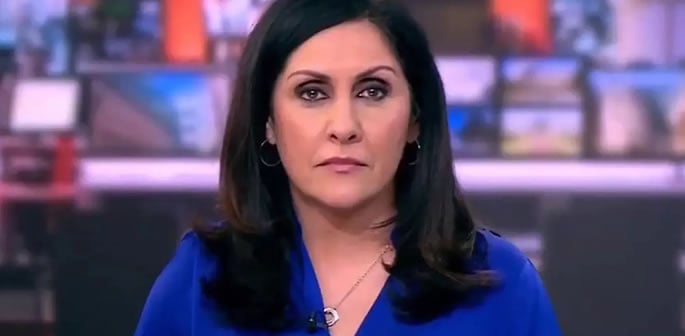
BBC News presenter Maryam Moshiri has publicly disclosed that she was diagnosed with an incurable blood cancer called polycythaemia vera in November 2024, after quietly managing the condition for two years while anchoring high-profile international coverage for the public broadcaster. The 49-year-old journalist, who has worked at the BBC since 2003, chose to share her medical journey to raise public awareness of the disease through her backing of Blood Cancer UK’s 'Here for This' campaign.
The disclosure reveals a profound juxtaposition between Moshiri's high-visibility global reporting assignments — spanning international conflicts, papal transitions, and state coronations — and a private medical reality defined by grueling treatments, plummeting iron levels, and profound physical exhaustion. While managing the rare bone marrow condition, Moshiri continued to anchor continuous live broadcasts across multiple continents.
Related video and Instagram post



Medical Mechanics and Diagnosis of Polycythaemia Vera
Polycythaemia vera is a rare blood cancer originating in the bone marrow that causes the body to produce an excess of red blood cells. According to International Business Times, this surplus alters the consistency of the blood, making it thicker than normal and impairing its ability to circulate efficiently. The primary medical hazards associated with this hyper-viscosity include elevated risks of dangerous blood clots that can trigger strokes, heart attacks, and deep vein thrombosis (DVT). Furthermore, medical literature noted by Desiblitz indicates that PV can occasionally progress into other severe blood conditions, such as myelofibrosis or, more rarely, acute myeloid leukaemia (AML).
For Moshiri, the discovery was entirely unexpected because the condition initially presented no noticeable warning signs. She credited her general practitioner with fastidious attention to routine blood work that immediately flagged the abnormalities. Moshiri told the BBC, as reported across multiple outlets, that her consultant confirmed the incurable nature of the disease, establishing a lifelong requirement for medical management.
| Treatment Phase | Intervention Type | Physical Impact |
|---|---|---|
| Initial (First 5 Months) | Venesections (7 to 8 sessions, ~twice monthly) | Depleted iron levels, severe exhaustion, hair loss, and body itching |
| Ongoing/Subsequent | NHS Interferon Immunotherapy | Stabilized red blood cell production, reduced venesection frequency |
Rigorous Global Assignments Amid Gruelling Treatment
The physical toll of Moshiri's early treatment regimen was severe. To counteract the excess red blood cells, she underwent hour-long venesections, a procedure where nearly a pint of blood is extracted through a vein in the arm, approximately seven or eight times across a five-month span. According to Yahoo News and HELLO!, this aggressive blood removal caused her iron levels to plummet, inducing intense fatigue, widespread itching, and hair loss.
Despite these symptoms, Moshiri maintained a demanding international travel and broadcasting schedule. AOL and Desiblitz report divergent and complementary details regarding her deployment across high-stakes geopolitical and historical events. While AOL highlights her reporting from King Charles's coronation, the papal conclave, Eurovision, and the Iran war, Desiblitz specifies her live anchoring from Qatar during the US-Israel war with Iran, covering papal selection events at the Vatican, and travelling to Greenland to cover Vice-President JD Vance’s visit. AOL and Yahoo note that Moshiri spent two weeks in Rome managing long working days to cover the death of Pope Francis while actively experiencing chronic treatment fatigue.
Describing the psychological mechanism that carried her through these broadcasts, Moshiri told The Times, as cited by AOL:
She later transitioned to receiving interferon immunotherapy through the National Health Service (NHS), an adjustment that significantly reduced her reliance on venesections."When you’re doing live news, you have this rush of adrenaline, and you just have to get on with it."
Maryam Moshiri, Presenter, via AOL
Family Impact and Awareness Advocacy
Behind the public-facing resilience, the diagnosis placed heavy demands on Moshiri's domestic life with her husband Jonathan and their three children: Iris, 13, Vivienne, 11, and nine-year-old Caspian. Moshiri recounted to AOL and Yahoo that the debilitating fatigue, which she likened to someone completely removing her internal battery regardless of how much sleep she managed, frequently precluded ordinary family interactions, such as declining her son's requests to play football in the garden.
It took considerable time before Moshiri felt prepared to inform her children about her condition to avoid causing undue anxiety, though she praised their understanding when she explained that she was too tired to engage. By stepping forward publicly, she aims to dismantle the silence surrounding blood cancers, which rank as the UK's fifth most common cancer and third biggest cancer killer, with over 310,000 individuals living with or in remission from the disease according to Blood Cancer UK figures cited by AOL.
Helen Rowntree, chief executive of Blood Cancer UK, commended Moshiri's transparency for cutting through public obscurity regarding the illness. Moshiri emphasized that finding a tailored medical regimen is essential for maintaining a relatively healthy lifestyle despite the lifelong prognosis.
Looking ahead, Moshiri acknowledges the long-term uncertainty she faces regarding her future health, noting that she does not know how she will feel in six months, one year, or two years given the permanent risk of strokes, heart attacks, or deep vein thrombosis associated with polycythaemia vera. Amid these ongoing health considerations, she remains hopeful that continued scientific advancements in blood cancer treatments will yield even more effective therapies beyond her current medications.
Archypedia is dedicated to independent, evidence-backed reporting. This briefing was synthesized from primary source reporting, corroborated across independent newsrooms, and verified against our Editorial Standards.
Transparency record
Evidence behind this report
This report synthesizes 5 distinct sources. Open the source ledger below to compare the underlying coverage.
Prepared under the Archypedia Editorial Policy by the Iris Kane editorial desk profile. AI-assisted tools may support drafting and verification; public accountability remains with Archypedia. Report an error.