
ECB rates announcement live: Hike expected as Irish households to face higher costs
The European Central Bank (ECB) raised its benchmark interest rate to 2.25% on June 11 to combat rising inflation linked to conflict in the Middle East. According to reports from RTE and The Guardian, this marks the first interest rate increase since 2023, a move that directly increases borrowing costs for millions of Eurozone citizens, specifically impacting Irish households facing higher mortgage and loan repayments.
Why did the ECB raise interest rates to 2.25%?
The European Central Bank implemented the rate hike to curb inflation that has been stoked by geopolitical instability. According to The New York Times, the war in the Middle East has acted as a primary driver for rising prices across Europe. When conflict disrupts global trade or energy supplies, the cost of importing essential goods rises, leading to “cost-push” inflation.
RTE reports specifically that inflation stemming from the war involving Iran has “bitten” into the Eurozone economy, forcing the ECB to pivot away from its previous stance. The central bank’s primary mandate is price stability, typically defined as keeping inflation near 2%. When inflation exceeds this target due to external shocks—such as energy price spikes caused by Middle East volatility—the ECB raises rates to dampen spending and cool the economy.
The decision on June 11 reflects a strategic shift. By increasing the cost of borrowing, the ECB aims to reduce the amount of money circulating in the economy. This generally slows down consumer spending and business investment, which in turn puts downward pressure on prices.
How will the June 11 rate decision impact Irish households?
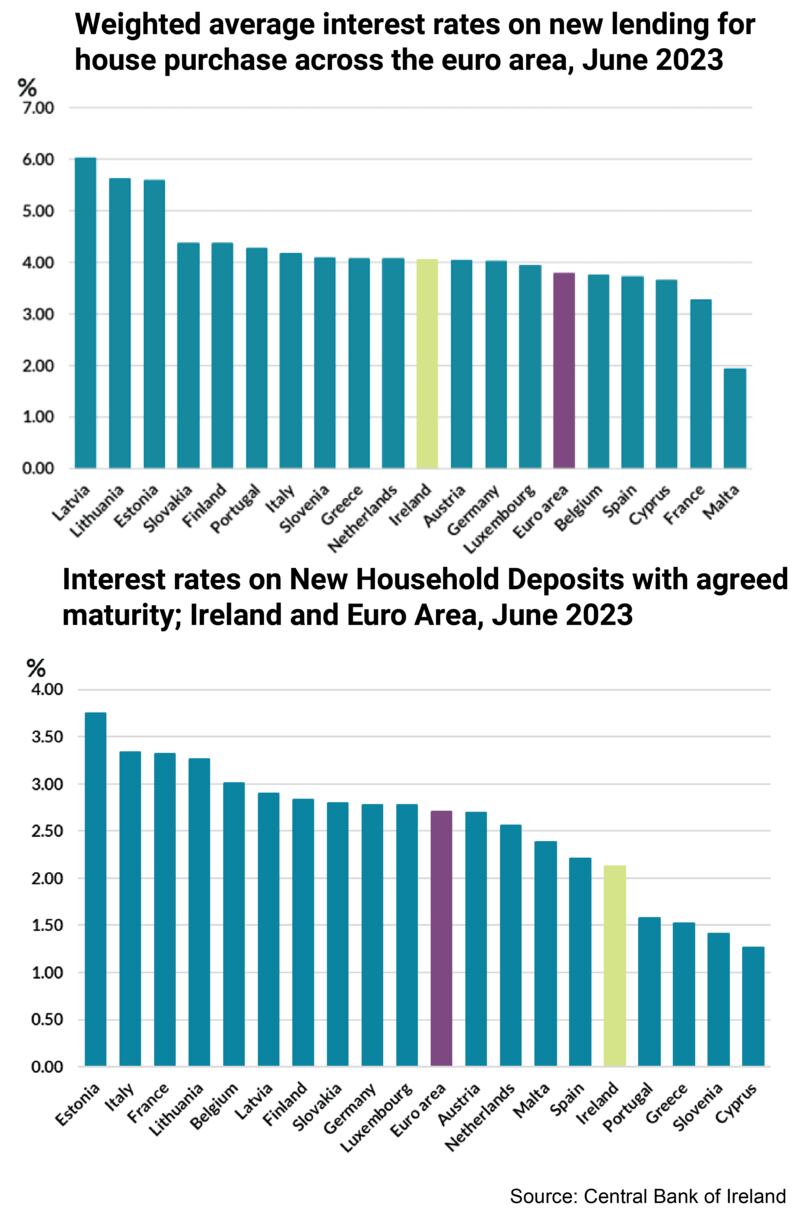
Irish consumers are particularly vulnerable to ECB policy shifts due to the structure of the domestic mortgage market. As noted by The Irish Times, Irish households are expected to face higher costs as a direct result of this announcement. Because many Irish homeowners hold variable-rate or tracker mortgages, the increase to 2.25% transmits quickly from the central bank to the monthly bank statement.
The impact manifests in several concrete ways:
- Increased Mortgage Repayments: Homeowners on tracker mortgages will see an almost immediate rise in their monthly payments. Those on variable rates will likely see increases as commercial banks adjust their margins.
- Higher Cost of Personal Loans: New loans and existing floating-rate credit lines become more expensive, reducing the disposable income of households.
- Reduced Purchasing Power: While the rate hike aims to lower inflation in the long run, the immediate effect is a “double squeeze” where households pay more for basic goods while simultaneously paying more to service their debts.
“Eurozone hit by first interest rate rise since 2023 as ECB battles inflation from Middle East war,” reports The Guardian, highlighting the broad regional struggle to maintain price stability amid global unrest.
What is the connection between the Middle East conflict and Eurozone inflation?
The link between geopolitical conflict and interest rates is primarily found in the energy and commodity markets. According to The New York Times, war in the Middle East stokes inflation by creating uncertainty around oil and gas supplies. Since Europe relies heavily on imported energy, any disruption in the Persian Gulf or threats to shipping lanes in the Red Sea leads to higher pump prices and heating costs.
This creates a cycle that the ECB must manage:
- Supply Shock: Conflict in the Middle East reduces oil supply or increases shipping insurance costs.
- Price Spike: Energy costs rise, increasing the cost of producing and transporting almost every physical good.
- Inflationary Pressure: Businesses pass these costs to consumers, raising the general price level.
- Monetary Response: The ECB raises rates to 2.25% to prevent these temporary price spikes from becoming permanent “embedded” inflation.
This specific hike is a response to the “Iran war inflation” cited by RTE, suggesting that the risk of wider regional escalation has made the ECB more aggressive in its monetary tightening.
How does this move compare to previous ECB trends?
The June 11 decision represents a significant break in trend. According to The Guardian, this is the first interest rate rise the Eurozone has seen since 2023. For the past year, markets had been speculating on when the ECB might stop hiking or even begin cutting rates to support economic growth.
The following table outlines the shift in the ECB’s trajectory based on the reported data:
| Period | Rate Trend | Primary Driver | Impact on Households |
|---|---|---|---|
| 2023 – Early 2024 | Stability/Pause | Post-pandemic recovery / Initial energy shocks | Predictable repayments |
| June 11 Decision | Hike to 2.25% | Middle East War / Iran-linked inflation | Increased monthly costs |
Morningstar’s analysis of the June 11 decision indicated that expectations were leaning toward a hike, as the central bank could no longer ignore the inflationary pressures coming from the East. The contrast between the stability seen in 2023 and the sudden hike in 2024 suggests that geopolitical risks have now overtaken domestic economic indicators as the primary driver of ECB policy.
Who are the primary stakeholders affected by this rate hike?
While the ECB’s decision is a macro-economic tool, its effects are felt at a micro-economic level across different sectors:
Irish Homeowners and Renters
As highlighted by The Irish Times, the primary burden falls on those with debt. Homeowners with tracker mortgages are the most exposed. Renters may also feel the impact indirectly, as landlords with high-interest mortgages may attempt to pass increased borrowing costs onto tenants through rent hikes.
Eurozone Businesses
Companies seeking to expand via loans will find capital more expensive. This is particularly challenging for Small and Medium Enterprises (SMEs) that rely on floating-rate credit lines for operational liquidity.
The ECB Governing Council
The policymakers at the ECB are balancing a “narrow path.” If they raise rates too high, they risk triggering a recession. If they leave rates too low, inflation from the Middle East conflict could spiral out of control, eroding the value of the Euro.
Common misconceptions about ECB rate hikes
There is often confusion regarding how a central bank’s decision affects a private citizen’s bank account. It is a common misconception that the ECB directly sets the interest rate on a person’s mortgage. In reality, the ECB sets the base rate (the rate at which commercial banks borrow from the central bank). Commercial banks then add their own margin to this rate when lending to consumers.
Another misconception is that rate hikes are designed to make banks more profitable. While banks may see higher margins, the ECB’s goal is the opposite of profit-seeking; it is a corrective measure to reduce overall demand in the economy to stop prices from rising. According to the framework discussed in Morningstar’s expectations for June 11, the hike is a defensive move against inflation, not a proactive move for financial sector gain.
For more information on how these changes affect personal finance, readers may find a related explainer on variable vs. fixed mortgage rates useful.
What to monitor in the coming months
The decision on June 11 is likely not the end of the cycle. Market analysts and news outlets are now focusing on three key indicators to predict the next move:
- Energy Price Indices: If oil prices continue to climb due to Middle East tensions, the ECB may be forced to raise rates beyond 2.25%.
- CPI (Consumer Price Index) Data: The ECB will closely watch if the cost of groceries and services continues to rise despite the hike.
- Geopolitical De-escalation: A ceasefire or diplomatic resolution in the Middle East could lower the “war premium” on commodities, potentially allowing the ECB to pause future hikes.
The current environment is one of high volatility. As The Guardian and The New York Times both emphasize, the European economy is currently a hostage to events occurring thousands of miles away, making the ECB’s job significantly more complex than during previous inflationary cycles.
Frequently Asked Questions
What is the current ECB interest rate after the June 11 announcement?
According to RTE, the ECB has raised the interest rate to 2.25%.
Why is the Middle East war causing interest rates to rise in Europe?
The New York Times reports that the conflict stokes inflation by disrupting energy supplies and increasing the cost of commodities. To combat this inflation and maintain price stability, the ECB raises interest rates to cool economic demand.
Will my mortgage payment increase immediately?
For those on tracker mortgages, increases typically happen very quickly following an ECB announcement. Those on variable rates will depend on when their specific lender chooses to implement the change. The Irish Times notes that Irish households should prepare for higher costs.
When was the last time the ECB raised rates before this?
According to The Guardian, this is the first interest rate rise since 2023.
Is this rate hike only affecting Ireland?
No. This is a Eurozone-wide decision affecting all countries that use the Euro. However, the impact varies by country depending on how many citizens have variable-rate debt. Irish households are highlighted as being particularly exposed.
