
As Ebola Spreads, Scientists Race to Find Vaccines and Treatments – The New York Times: A Deep Dive into the Global Fight Against Ebolavirus
The global health community is currently on high alert as new outbreaks signal a precarious moment in the fight against viral hemorrhagic fevers. The urgency is palpable: As Ebola spreads, scientists race to find vaccines and treatments – The New York Times and other global reports have highlighted the critical need for rapid intervention to prevent localized outbreaks from evolving into international crises. While the world has made significant strides in combating the Zaire ebolavirus, the emergence and persistence of other strains, particularly the Bundibugyo ebolavirus, have revealed dangerous gaps in our current medical arsenal.
The battle is no longer just about reacting to an existing epidemic; it is a proactive scientific sprint. With the involvement of international coalitions, biotech giants and specialized research institutes, the goal is to develop a versatile suite of vaccines and therapeutics that can be deployed the moment a “spillover” event occurs. This effort represents a shift in global health security, moving from a model of crisis management to one of permanent readiness.
The Emerging Threat: Understanding the Bundibugyo Strain
To understand why the current scientific race is so intense, one must first understand the complexity of the Ebola genus. Ebola is not a single disease but a group of several distinct viruses. While the Zaire ebolavirus is the most well-known due to its high fatality rate and the scale of previous outbreaks in West Africa, other species like the Bundibugyo ebolavirus present unique challenges.
The Bundibugyo strain, first identified in Uganda, often exhibits different clinical patterns and, crucially, different genetic markers than the Zaire strain. This means that a vaccine designed for one may not provide cross-protection against the other. This lack of “universal” immunity is what makes the current spread so concerning to epidemiologists.
Why Bundibugyo Is a Particular Concern
- Genetic Divergence: The surface proteins of the Bundibugyo virus differ significantly from the Zaire strain, rendering some existing antibodies less effective.
- Zoonotic Reservoirs: Like other ebolaviruses, it is believed to reside in fruit bats, making the risk of sporadic spillover into human populations a constant threat.
- Diagnostic Lag: Because it is less common than other strains, early detection can be delayed, allowing the virus to spread undetected within a community.
“The danger of a multi-strain threat is that it forces scientists to play a game of catch-up. We cannot rely on a single ‘silver bullet’ vaccine; we need a platform that can be rapidly adapted to whichever strain emerges next.”
The Scientific Frontline: Fast-Tracking Vaccine Candidates
In response to the growing threat, the Coalition for Epidemic Preparedness Innovations (CEPI) has taken a leading role in coordinating the global response. CEPI’s strategy is based on the concept of “prototype pathogens”—developing vaccines for a few representative viruses within a family to provide a blueprint for others.
Currently, there is a concerted effort to fast-track several vaccine candidates specifically targeting the Bundibugyo ebolavirus. This acceleration is not merely about speed, but about utilizing new technological platforms that allow for faster iteration and testing.
Key Players in the Vaccine Race
Several organizations are at the forefront of this effort, each bringing a different technological approach to the table:
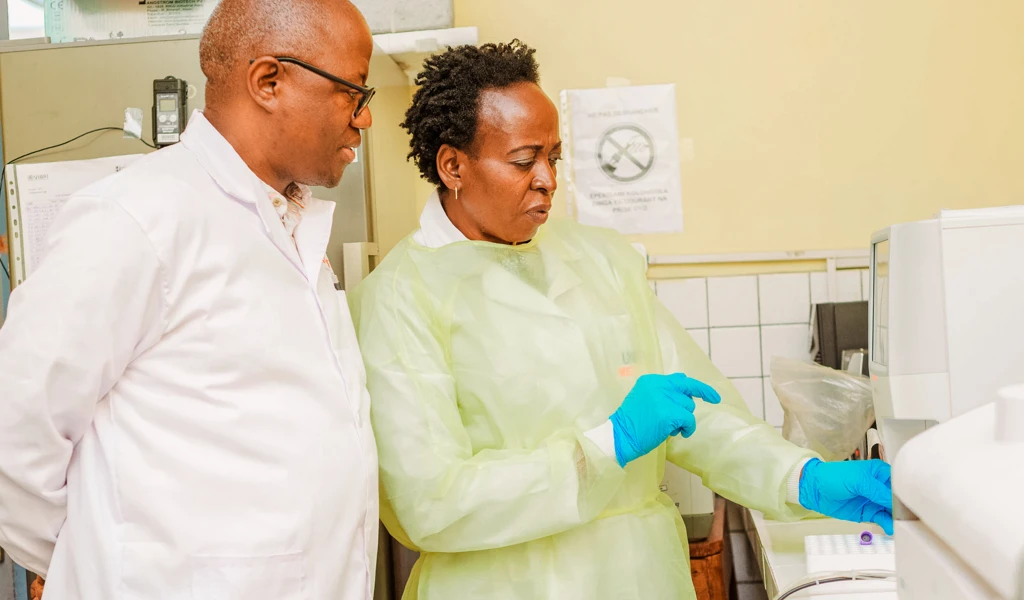
- IAVI (International Vaccine Institute): IAVI is working to advance candidates that focus on inducing a robust and durable immune response. With funding from CEPI, they are refining the molecular structure of the vaccine to ensure it triggers the right antibodies to neutralize the Bundibugyo virus.
- Moderna: Leveraging the success of mRNA technology during the COVID-19 pandemic, Moderna is exploring how to rapidly synthesize Ebola vaccine candidates. The beauty of mRNA is that the genetic sequence of the virus can be updated in a matter of days, allowing for a highly responsive defense strategy.
- Academic and Governmental Labs: Various national health institutes are conducting preclinical trials to determine the safety and efficacy of viral-vector vaccines, which use a harmless virus to deliver Ebola proteins to the immune system.
The financial commitment to this cause is substantial. Reports indicate that Moderna and other research groups have received approximately $60 million to accelerate the development of these vaccines. This funding is critical for moving candidates from the laboratory into Phase I and Phase II human clinical trials.
| Organization | Primary Approach | Current Goal |
|---|---|---|
| CEPI | Funding & Coordination | Fast-tracking multiple candidates |
| IAVI | Protein-based/Vector | Advancing Bundibugyo-specific candidates |
| Moderna | mRNA Platform | Rapid synthesis and deployment |
The Logistics of a Race Against Time
Developing a vaccine is only half the battle. The “race” mentioned in As Ebola spreads, scientists race to find vaccines and treatments – The New York Times also encompasses the logistical nightmare of deploying these tools in the heart of an outbreak.
The “Cold Chain” Challenge
Many of the most promising vaccines, especially mRNA versions, require ultra-low temperature storage. In the rural regions of Central and West Africa, where Ebola often emerges, the infrastructure for a “cold chain” (refrigerated transport and storage) is often non-existent. This has led scientists to research “thermostable” vaccines—versions that can remain potent at room temperature.
The Ethics of Ring Vaccination
When a vaccine is in the experimental stage, scientists often use “ring vaccination.” This involves identifying a patient with Ebola, finding all their contacts, and vaccinating that “ring” of people to create a buffer zone of immunity. While effective, this requires immense trust between the local population and international health workers, often in areas plagued by political instability.
For more on how global health infrastructure is evolving, see our related explainer on pandemic preparedness.
Beyond Vaccines: The Search for Effective Treatments
While vaccines prevent infection, treatments (therapeutics) save those already sick. For decades, Ebola treatment was primarily “supportive care”—keeping the patient hydrated and treating secondary infections while hoping their own immune system could fight off the virus. However, the landscape is changing.

Monoclonal Antibodies: The New Gold Standard
The most significant breakthrough in Ebola treatment has been the development of monoclonal antibodies. These are lab-made proteins that mimic the immune system’s ability to fight off the virus. By binding to the Ebola glycoprotein, these antibodies prevent the virus from entering human cells.
The challenge now is creating “broad-spectrum” antibodies. Most current treatments work well for the Zaire strain but are less effective against the Bundibugyo or Sudan strains. Scientists are now attempting to identify “conserved epitopes”—parts of the virus that remain the same across all strains—to create a single treatment that works regardless of the variety of Ebola involved.
The Role of Antivirals
In addition to antibodies, researchers are testing small-molecule antivirals that can inhibit the virus’s ability to replicate inside the cell. These are often easier to manufacture and distribute than antibodies, making them a vital component of a comprehensive treatment strategy.
Historical Context: Lessons from the Past
The current urgency is informed by the trauma of the 2014-2016 West African Ebola outbreak, which claimed over 11,000 lives. That crisis taught the world three critical lessons:
- Speed is Everything: Waiting for a vaccine to be fully approved before deploying it during an emergency can cost thousands of lives. This led to the creation of “emergency use” protocols.
- Community Engagement is Mandatory: Medical interventions fail if the local community distrusts the providers. Cultural sensitivity in burial practices and treatment centers is as important as the medicine itself.
- Global Funding Must Be Pre-emptive: You cannot wait for an outbreak to start fundraising. The $60 million investment in current candidates is a result of the realization that “preparedness” must be funded during times of peace, not just during war with a virus.
Common Misconceptions About Ebola
In the wake of news reports stating that As Ebola spreads, scientists race to find vaccines and treatments – The New York Times, several myths often resurface. It is important to clarify these for the public:
- Myth: Ebola is airborne.
Fact: Ebola is transmitted through direct contact with infected blood, secretions, organs, or other bodily fluids. It is not like the flu or COVID-19; it does not spread through casual breathing of the same air. - Myth: A vaccine for Zaire Ebola protects you from all Ebola.
Fact: As discussed, different strains (Zaire, Bundibugyo, Sudan) have different genetic structures. Protection is often strain-specific. - Myth: Ebola is a “death sentence.”
Fact: With early detection and modern supportive care—and especially with the use of monoclonal antibodies—survival rates have increased dramatically.
The Geopolitical Implications of Viral Outbreaks
The race for an Ebola vaccine is not just a medical endeavor; it is a geopolitical one. The ability of a nation to protect its citizens and prevent the spread of a deadly pathogen is a core component of national security.
the “vaccine equity” debate that dominated the COVID-19 era looms large here. There is a significant concern that if a vaccine is developed by Western companies with Western funding, the populations in the regions where the virus is actually spreading may not have affordable or timely access to it. This has led to calls for “regional manufacturing hubs” in Africa, allowing the continent to produce its own vaccines rather than relying on imports.
For a deeper look at the intersection of health and politics, read our analysis on global vaccine equity.
Summary of Current Efforts
- Target: Specifically focusing on the Bundibugyo strain to fill the immunity gap.
- Funding: Tens of millions of dollars flowing into mRNA and protein-based research.
- Goal: Transitioning from reactive treatment to a “prototype” vaccine library.
- Challenge: Overcoming cold-chain logistics and ensuring regional access.
Frequently Asked Questions
What is the Bundibugyo ebolavirus?
The Bundibugyo ebolavirus is one of several species within the Ebolavirus genus. It was first identified in the Bundibugyo district of Uganda. While similar to the Zaire strain, it is genetically distinct, meaning vaccines designed for other strains may not be fully effective against it.

Why can’t we just use the existing Ebola vaccine?
Existing vaccines, such as Ervebo, were specifically developed to target the Zaire ebolavirus. Because the Bundibugyo strain has different surface proteins, the immune system’s “memory” created by the Zaire vaccine may not recognize or attack the Bundibugyo virus effectively.
How does mRNA technology help in the fight against Ebola?
mRNA technology allows scientists to “code” a vaccine using a genetic sequence rather than growing the virus in a lab. This makes the development process incredibly fast. If a new strain of Ebola emerges, scientists can simply update the mRNA sequence and produce a new candidate in a fraction of the time required for traditional vaccines.
What is the role of CEPI in this process?
The Coalition for Epidemic Preparedness Innovations (CEPI) acts as a coordinator and funder. They identify which viruses pose the greatest threat and provide the financial resources to biotech companies and research institutes to develop vaccines before an outbreak becomes a pandemic.
Is there a cure for Ebola?
While there is no “cure” in the sense of a pill that instantly kills the virus, there are highly effective treatments. Monoclonal antibodies can neutralize the virus in the bloodstream, and advanced supportive care can significantly increase the chances of survival if administered early.
The current trajectory of research suggests a future where ebolaviruses are no longer a source of global panic but are instead manageable threats. The “race” currently underway is a testament to the lessons learned from past tragedies and a commitment to a world where no single outbreak can threaten global stability. The focus remains on agility, funding, and the relentless pursuit of a universal defense against one of the world’s most lethal pathogens.
