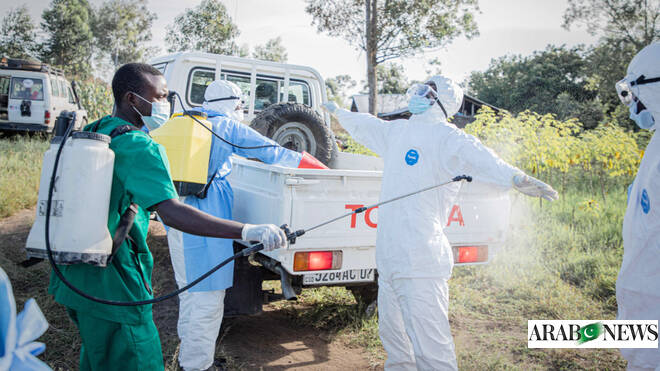
Ebola spreading into new areas in northeast DR Congo, WHO says – Arab News PK
The World Health Organization reported on June 3, 2026, that Ebola is spreading into new areas of northeast Democratic Republic Congo. According to the WHO Director-General, the Bundibugyo outbreak is expanding, prompting urgent international concern over containment efforts and community resistance in the region.
The expansion of the virus into previously unaffected zones in the northeast has triggered an immediate escalation in response protocols. Official reports from the WHO indicate that the virus is no longer contained within the initial hotspots, moving across provincial lines in a region already destabilized by conflict and poor infrastructure. This development, highlighted in reports including “Ebola spreading into new areas in northeast DR Congo, WHO says – Arab News PK,” suggests a breakdown in early containment strategies.
How is Ebola spreading into new areas of northeast DR Congo?
The spread is driven by a combination of high human mobility, dense forest geography, and a systemic lack of trust in medical interventions. According to Al Jazeera, the alarm stems from the virus appearing in communities that were previously considered low-risk or outside the immediate transmission chain of the Bundibugyo outbreak.
Medical teams on the ground report that the virus moves through direct contact with infected bodily fluids. However, the speed of the current spread is exacerbated by the region’s social dynamics. Bloomberg reports that “fear and denial” are acting as catalysts for the virus. When families hide sick relatives to avoid the perceived stigma or the forced isolation of treatment centers, they inadvertently facilitate the spread of the virus within the household and the wider village.
The geography of northeast DR Congo also plays a critical role. The region consists of fragmented villages connected by narrow paths and river crossings. This makes the tracking of “patient zero” in new clusters nearly impossible for epidemiologists. According to the WHO, the ability to perform contact tracing is the primary defense against the virus, yet the current environment is making this process inefficient.
Key factors driving the current expansion:
- Community Mistrust: A refusal to report symptoms due to fear of government or international intervention.
- High Mobility: Movement of people between Bundibugyo and neighboring northeast territories for trade and family visits.
- Environmental Challenges: Difficult terrain that slows the deployment of rapid response teams.
- Healthcare Gaps: A shortage of localized clinics capable of early diagnosis, leading to late-stage presentations.
What did the WHO Director-General state during the June 3 briefing?
During a media briefing on June 3, 2026, the WHO Director-General emphasized that the Bundibugyo outbreak has reached a critical juncture. The Director-General stated that the appearance of cases in new areas is a clear signal that the virus is outpacing current containment measures. The briefing focused on the necessity of integrating medical responses with community-led engagement.
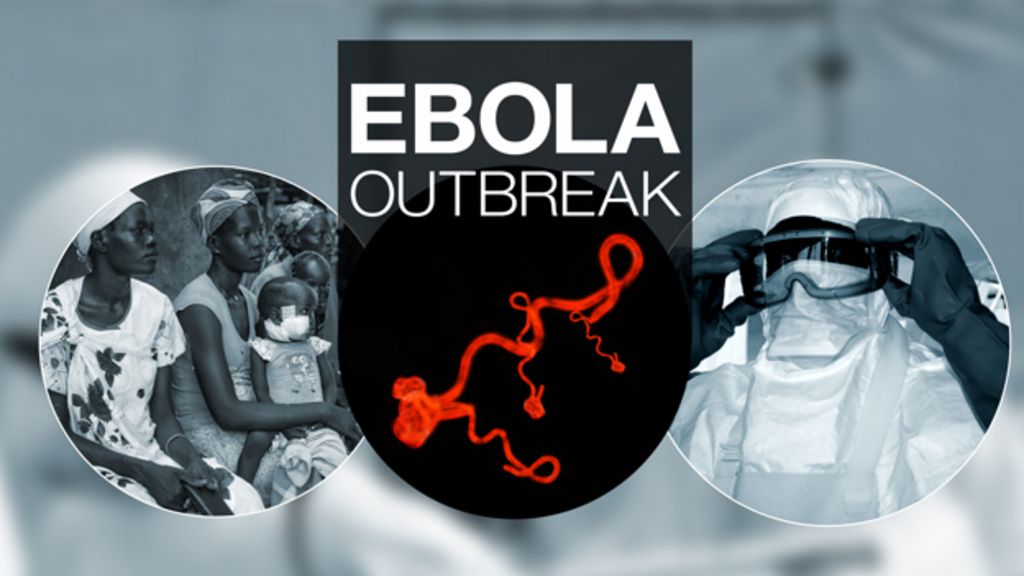
“The spread of the virus into new territories is not merely a medical failure but a social challenge,” the WHO Director-General noted during the June 3 opening remarks.
The WHO Director-General called for an immediate increase in the deployment of ring vaccination strategies. This involves vaccinating a “ring” of people around a confirmed case to create a buffer of immunity. However, the Director-General admitted that the effectiveness of this tool is entirely dependent on the willingness of the local population to accept the vaccine.
The briefing also addressed the logistics of the response. The WHO is coordinating with the DR Congo Ministry of Health to establish more isolation units closer to the new outbreak zones to reduce the distance patients must travel, which in turn reduces the risk of transmission during transport.
Why are fear and denial hindering the Ebola response?
Bloomberg reports that the medical response in Central Africa is facing a “tough fix” because the virus is fighting a war of perception. In many northeast DR Congo communities, Ebola is not viewed as a biological pathogen but as a political tool or a foreign imposition. This denial is not based on a lack of intelligence but on a history of distrust toward external authorities.
According to Bloomberg’s analysis, the “denial” manifests in several ways:
- Alternative Explanations: Attributing deaths to other endemic diseases or spiritual causes rather than Ebola.
- Resistance to Burial Protocols: Refusing the “safe and dignified burials” mandated by the WHO, as these protocols often prevent families from touching the body, which is a central cultural rite.
- Avoidance of Treatment Centers: Viewing isolation wards as places where people go to die rather than to be cured.
This psychological barrier creates a dangerous cycle. When a patient is hidden, the virus spreads to caregivers. When those caregivers die, the community views the death as proof that the “treatment” or the “disease” is a conspiracy, further deepening the denial. This creates a vacuum where the virus can move undetected for days or weeks.
What role are churches playing in the containment efforts?
Because of the deep mistrust of government and international health bodies, the World Council of Churches (WCC) has stepped in to bridge the gap. The WCC has reaffirmed the role of local churches as the most trusted institutions in the northeast DR Congo region.
According to the WCC, religious leaders are often the first people villagers turn to when a family member falls ill. By training pastors and priests in basic Ebola prevention and the importance of early reporting, the WCC aims to turn the pulpit into a platform for public health.
The WCC’s strategy focuses on “faith-based mobilization.” This involves:
- De-stigmatization: Using scripture and religious teaching to explain that seeking medical help is an act of love for one’s neighbor.
- Safe Rituals: Working with the WHO to adapt burial rites so they are medically safe but spiritually satisfying.
- Direct Referrals: Encouraging church members to report symptoms to health workers in exchange for support from the church community.
This approach contrasts with the purely clinical approach of the WHO. While the WHO provides the vaccines and the beds, the WCC provides the social permission for the population to use them.
Comparison of Response Strategies: Clinical vs. Community
The current crisis highlights a tension between two different methods of disease control. The following table compares the clinical approach led by the WHO and the community-based approach supported by the WCC and local leaders.
| Feature | Clinical Approach (WHO) | Community Approach (WCC/Local) |
|---|---|---|
| Primary Goal | Breaking the chain of transmission | Building trust and acceptance |
| Key Tool | Vaccines and Isolation Units | Pastoral care and local leadership |
| Main Challenge | Logistics and resource deployment | Overcoming cultural denial/fear |
| Success Metric | Reduction in new case numbers | Increase in voluntary reporting |
| View of Patient | A biological source of infection | A suffering member of the community |
How does the Bundibugyo outbreak compare to previous Ebola events?
The current situation in northeast DR Congo differs from previous outbreaks in its intersection with chronic regional instability. While the 2018-2020 North Kivu outbreak was also marked by violence, the current Bundibugyo expansion is occurring in a climate of profound “health fatigue.”
According to reports from Al Jazeera, the population has been subjected to repeated cycles of disease and conflict. This has led to a level of cynicism that was less prevalent in earlier outbreaks. In previous years, the novelty of the international response sometimes garnered cooperation; now, the presence of “men in white suits” is often viewed with suspicion rather than hope.
Furthermore, the current outbreak is testing the efficacy of newer vaccines. While the medical technology has improved, the delivery system—the “last mile” of healthcare—remains broken. The spread into new areas proves that a vaccine is only effective if the patient is willing to enter the clinic.
For those tracking the broader health landscape, a related explainer on zoonotic diseases provides context on how these viruses jump from animals to humans in the Congo Basin.
What are the potential long-term implications of this spread?
If the virus continues to move into new areas of the northeast, the risk of a cross-border spillover increases. The DR Congo shares porous borders with several countries, and the movement of refugees and traders makes containment a regional, rather than a national, issue.
Economically, the spread of Ebola leads to “ghost towns.” When a village is declared a red zone, trade stops, markets close, and food security plummets. Bloomberg notes that the economic devastation often outweighs the medical toll in the eyes of the local population, which further incentivizes the hiding of cases to avoid lockdowns.
From a public health perspective, the failure to contain the Bundibugyo outbreak could lead to the virus becoming endemic in certain pockets of the northeast. This would mean that instead of a series of outbreaks, the region would face a constant, low-level presence of the virus, requiring permanent surveillance and vaccination infrastructure that the DR Congo currently cannot afford.
Common misconceptions about the current Ebola spread
There are several prevalent myths circulating in the affected regions and in international discourse that complicate the response.
Misconception 1: The vaccine is a tool for population control.
As reported by Bloomberg, some communities believe the vaccine is a government plot. In reality, the vaccines used in the Bundibugyo response have undergone rigorous testing and are designed specifically to trigger an immune response to the Zaire ebolavirus.
Misconception 2: Ebola is only spread through one specific animal.
While fruit bats are often cited as the natural reservoir, the virus can be transmitted via various wildlife. The spread into new areas is now primarily human-to-human, meaning animal contact is no longer the main driver of the current expansion.
Misconception 3: Isolation centers are “death traps.”
Fear of the isolation unit is a major driver of denial. However, WHO data indicates that patients who receive early supportive care (hydration and symptom management) have a significantly higher survival rate than those treated at home without medical supervision.
Frequently Asked Questions
What is the current status of the Ebola outbreak in northeast DR Congo?
According to the WHO and reports from Arab News PK, the virus is spreading into new areas of the northeast, moving beyond the initial Bundibugyo outbreak zone. The situation is currently considered critical due to the expansion of the transmission chain.
Why is the WHO concerned about the Bundibugyo outbreak?
The WHO is concerned because the virus is outpacing containment efforts. The Director-General highlighted on June 3, 2026, that the spread into new territories suggests that contact tracing and vaccination rings are not keeping up with the rate of infection.

How does community denial affect the medical response?
Bloomberg reports that denial leads to the hiding of patients and the refusal of safe burial practices. This allows the virus to spread undetected within families and communities, making it nearly impossible for health workers to locate and isolate new cases.
Are churches helping to stop the spread of Ebola?
Yes. The World Council of Churches (WCC) is working with local religious leaders to build trust. By using the influence of pastors and priests, they are encouraging people to report symptoms and accept vaccines, acting as a bridge between the community and the WHO.
What are the symptoms of Ebola to watch for in these areas?
While official medical advice should be sought, the WHO typically identifies early symptoms as fever, fatigue, muscle pain, headache, and sore throat, followed by vomiting, diarrhea, and in some cases, internal and external bleeding.
The situation in the northeast DR Congo remains fluid. The success of the containment effort now depends less on the availability of medicine and more on the ability of international agencies to earn the trust of the people living in the Bundibugyo region and beyond. For further reading on global health security, see our analysis of pandemic preparedness.
