The Most Remote Spot in the World is So Remote That the Nearest Humans are Often Not on Earth at All – Space Daily
In the vast expanse of the Pacific Ocean, there exists a coordinate so isolated that it challenges our fundamental understanding of distance and proximity. This location, known scientifically as the oceanic pole of inaccessibility, represents the furthest point on the planet from any landmass. The isolation is so profound that for anyone positioned at these coordinates, the closest other human beings are typically not fellow inhabitants of the globe, but astronauts orbiting several hundred kilometers above in the International Space Station (ISS).
The phenomenon surrounding the most remote spot in the world is so remote that the nearest humans are often not on Earth at all – Space Daily highlights a fascinating intersection of geography, orbital mechanics, and planetary science. It transforms our perception of “remote,” shifting the definition from a measure of terrestrial mileage to a comparison between the depths of the ocean and the heights of low Earth orbit.
Defining the Oceanic Pole of Inaccessibility
To understand why this location is so unique, one must first understand the concept of the “pole of inaccessibility.” While most people think of the North and South Poles as the most remote places on Earth, those locations are actually quite accessible via modern aviation and shipping. The true pole of inaccessibility is calculated not by latitude or longitude, but by the maximum distance from the nearest piece of land.
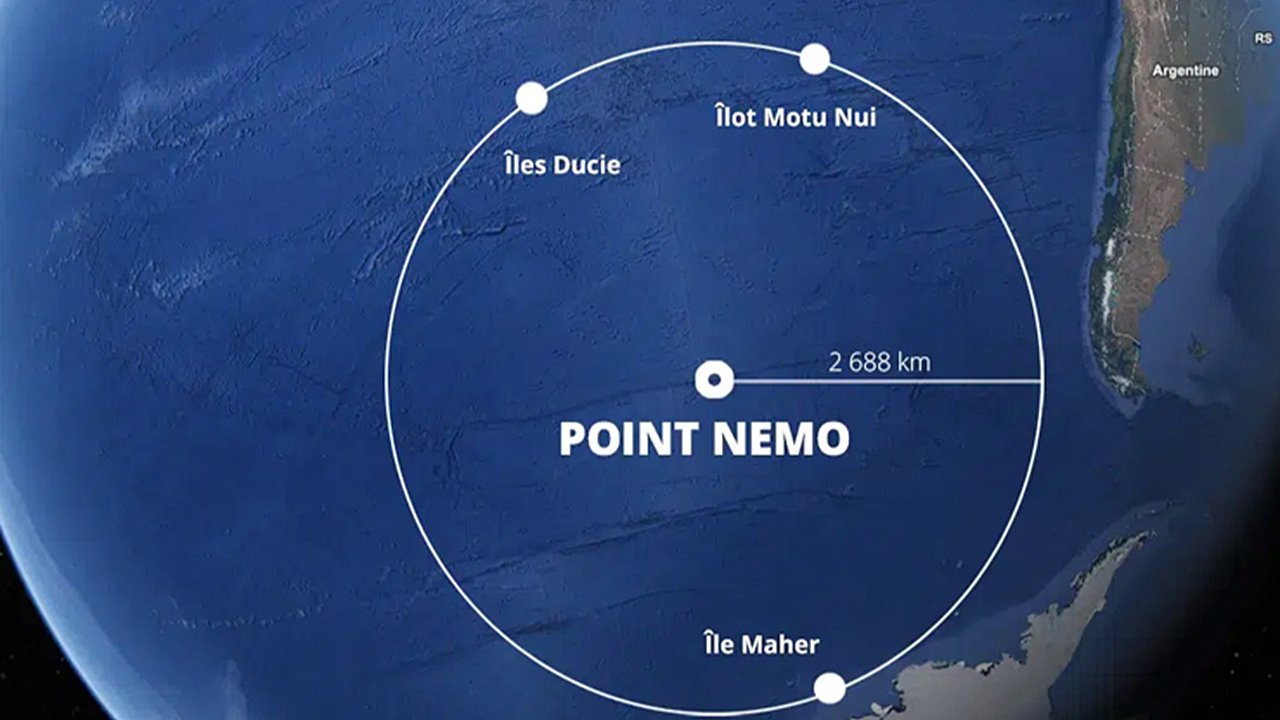
Point Nemo, as this spot is colloquially known, is the result of complex geospatial calculations. It is the point in the ocean that is most distant from any coast, island, or rock. Because it is situated in the South Pacific, far from the shores of South America to the east and Australasia to the west, it sits in a massive void of blue water.
The calculation of Point Nemo involves identifying the point that maximizes the distance to the three nearest islands. In this case, those landmasses are typically identified as Ducie Island (part of the Pitcairn Islands), Motu Nui (near Easter Island), and Maher Island (off the coast of Antarctica). The distance to any of these points is staggering, creating a zone of solitude that is virtually unmatched anywhere else on the planet’s surface.
The isolation of Point Nemo is not merely a geographical curiosity; it is a physical manifestation of the Earth’s scale, reminding us that despite our interconnected digital world, there are still regions of absolute silence.
The Orbital Paradox: Why Space is Closer Than Land
The most jarring aspect of this location is the paradox of proximity. When a vessel or a lone explorer reaches the coordinates of Point Nemo, they are thousands of kilometers away from the nearest human settlement. However, the International Space Station (ISS) maintains a low Earth orbit, typically circling the planet at an altitude of approximately 400 kilometers.
Because the distance to the nearest land is significantly greater than the altitude of the ISS, the astronauts aboard the station are, quite literally, the closest humans to anyone at the pole of inaccessibility. Depending on the station’s current orbital position, the gap between a person at Point Nemo and the astronauts above is a fraction of the distance required to reach the nearest island.
Comparative Proximity Analysis
To visualize this disparity, consider the following comparison of distances from the pole of inaccessibility:
| Destination | Approximate Distance | Medium of Travel |
|---|---|---|
| International Space Station (ISS) | ~400 km (Vertical) | Orbital Path |
| Nearest Inhabited Island | ~2,600+ km (Horizontal) | Maritime/Aviation |
This spatial reality means that for a brief window of time every orbit, the humans closest to the most isolated person on Earth are those floating in a vacuum, traveling at speeds of thousands of miles per hour overhead. This realization re-frames the most remote spot in the world is so remote that the nearest humans are often not on Earth at all – Space Daily as a tangible reality of modern exploration.
The Spacecraft Cemetery: A Final Resting Place
The extreme isolation of Point Nemo makes it more than just a geographical anomaly; it serves a critical industrial and safety purpose for global space agencies. Because there is virtually no human activity, no shipping lanes, and very little biological life in the surrounding waters, the area has been designated as a “spacecraft cemetery.”
When a satellite reaches the end of its operational life, or when a space station is decommissioned, engineers aim for a “controlled re-entry.” The goal is to ensure that the falling debris—which can include heavy metals and radioactive materials—does not land on populated areas. Point Nemo is the ideal target for these decommissioned assets.
Why Point Nemo is Chosen for Debris
- Minimal Human Risk: The probability of a person or vessel being at these exact coordinates during a re-entry event is nearly zero.
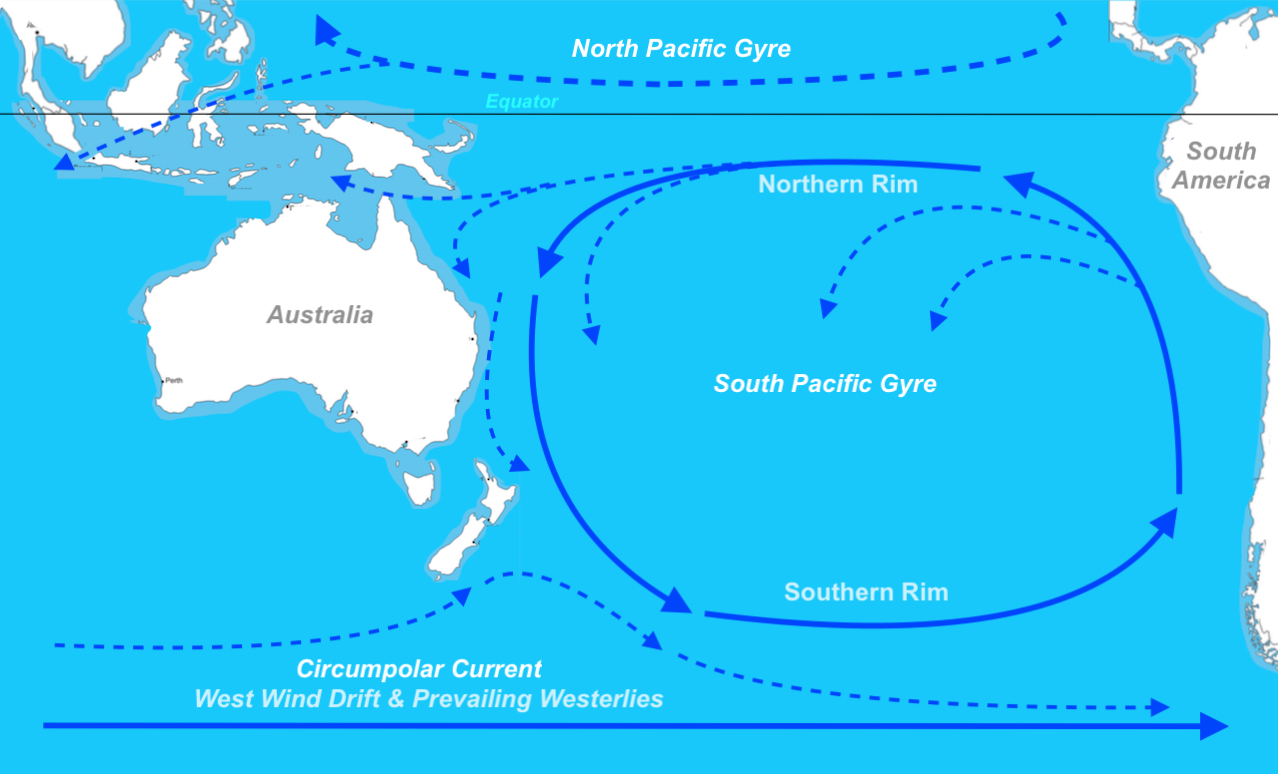
- Low Biological Impact: The region is part of the South Pacific Gyre, an ocean current system that prevents nutrient-rich water from entering the area, resulting in a “biological desert.”
- Vast Buffer Zone: Even if a re-entry is slightly off-target, the surrounding thousands of kilometers of open ocean provide a massive safety margin.
Over the decades, hundreds of spacecraft have been steered toward this void. The most famous example is the Mir space station, the predecessor to the ISS, which was decommissioned and crashed into the waters near Point Nemo in 2001. Eventually, the ISS itself is slated for a similar fate, ensuring that its legacy ends in the most remote place on the planet.
The Biological Void of the South Pacific Gyre
Beyond the human and technological aspects, Point Nemo is an ecological curiosity. Most parts of the ocean teem with life, but the area surrounding the pole of inaccessibility is remarkably sterile. What we have is due to its location within the South Pacific Gyre.
Ocean gyres are large systems of circulating currents. The South Pacific Gyre effectively “walls off” Point Nemo from the rest of the ocean. This prevents the influx of nutrient-rich cold water from the depths (a process known as upwelling) and blocks the arrival of organic matter from coastal regions. Without these nutrients, the base of the food chain—phytoplankton—cannot thrive. Without phytoplankton, there are no fish, and without fish, there are no larger predators.
For a scientist, this makes the region a pristine laboratory for studying the “baseline” of the ocean, free from the influence of continental runoff or heavy biological interference. However, for a traveler, it means that the waters are hauntingly empty, reinforcing the feeling of total isolation.
Common Misconceptions About Global Remoteness
When discussing the most remote spot in the world is so remote that the nearest humans are often not on Earth at all – Space Daily, several common myths often surface. Clarifying these helps provide a more accurate understanding of planetary geography.
Myth 1: The North or South Poles are the most remote
While the poles are extreme in terms of temperature and light, they are not “remote” in terms of distance from land. Antarctica is a massive continent; the South Pole is actually relatively close to land. Point Nemo is defined by the absence of land in every direction.
Myth 2: Point Nemo is a “black hole” or mystical portal
Pop culture and internet creepypastas often associate Point Nemo with mysterious sounds (such as the “Bloop”) or supernatural events. In reality, the “Bloop” was identified by scientists as the sound of a massive icequake—ice breaking off from Antarctic glaciers—rather than a sea monster or an alien outpost.
Myth 3: It is impossible to reach
While it is incredibly difficult and expensive to travel to Point Nemo, it is not impossible. Specialized research vessels and high-end expedition ships can reach the coordinates, though few ever do because there is literally nothing there to see but water.
The Psychological Impact of Absolute Isolation
The concept of Point Nemo evokes a powerful psychological response. In an era of constant connectivity, where GPS can pinpoint our location within centimeters and satellites provide instant communication, the existence of a place where you are closer to an astronaut than to another human is humbling.
This “absolute remoteness” serves as a reminder of the scale of our planet. It highlights the fragility of human presence; we occupy a thin sliver of the Earth’s surface, while the vast majority of the globe remains a wild, uninhabited void. For those who study the philosophy of space and geography, Point Nemo is a terrestrial version of the “Great Void” found in deep space—a place where the silence is absolute and the distance is a physical weight.
The intersection of the ISS and Point Nemo also symbolizes the progression of human civilization. We have reached a point where our technological reach (the ability to orbit the Earth) has outpaced our physical habitation of the planet’s surface. We are now “closer” to our orbital outposts than we are to some of our own oceans.
Frequently Asked Questions
What exactly is Point Nemo?
Point Nemo is the oceanic pole of inaccessibility. It is the location in the ocean that is the furthest distance from any landmass on Earth. It is located in the South Pacific Ocean.
Why are astronauts the closest humans to Point Nemo?
The distance from Point Nemo to the nearest island is over 2,600 kilometers. Since the International Space Station (ISS) orbits at an altitude of roughly 400 kilometers, the astronauts on the station are significantly closer to a person at Point Nemo than any other human on the Earth’s surface.
What happens to the satellites crashed at Point Nemo?
They are steered there during a controlled re-entry. Most of the spacecraft burn up in the atmosphere due to friction, but the heavier components—such as titanium tanks or engine parts—survive the descent and sink to the bottom of the ocean, where they remain in the “spacecraft cemetery.”
Is there any life at the most remote spot in the world?
Very little. Because it is located in the center of the South Pacific Gyre, the area lacks the nutrients necessary to support a robust ecosystem, making it one of the most biologically inactive regions of the global ocean.
How is the “Pole of Inaccessibility” calculated?
It is calculated using spherical geometry to find the point on the ocean’s surface that maximizes the distance to the nearest three points of land. This ensures that no matter which direction you travel, you are as far as possible from any shore.
The enduring fascination with the most remote spot in the world is so remote that the nearest humans are often not on Earth at all – Space Daily lies in its ability to blend the depths of our oceans with the heights of our ambitions. As we continue to expand our presence in space, the paradox of Point Nemo will only grow, serving as a permanent marker of the boundary between our terrestrial home and the cosmic frontier.
