
How Dhar Mann and Tribeca X Are Reshaping TV’s Future—And Why Creators Are the New Studio Powerhouses
When Dhar Mann takes the stage at Tribeca X on June 9, 2026, he won’t just be discussing the future of entertainment—he’ll be demonstrating it. The founder of Dhar Mann Studios, a production empire with distribution deals spanning FOX and Samsung TV Plus, is set to make a bold case: connected TV (CTV) isn’t just a supplement to traditional television; it’s the next frontier of storytelling, and creators like him are the architects of this shift. With 163 million followers across platforms and weekly viewership hitting 296 million, Mann’s appearance at the industry’s premier gathering signals a seismic shift in how content is made, distributed, and monetized—one where the lines between creator, studio, and network are blurring into something entirely new.
This isn’t just about one creator’s rise. It’s about the collapse of old media guardrails. Tribeca X, the annual festival blending film, television, and digital innovation, has become the proving ground for these ideas. By positioning Mann alongside executives from legacy brands like GAP, Adobe, and the NFL, the event underscores a fundamental question: If creators can command audiences, partnerships, and revenue streams once reserved for traditional studios, what does that mean for the future of TV?
For industry insiders, the stakes couldn’t be higher. The conversation isn’t just about whether CTV can replace traditional television—it’s about whether the entire ecosystem of content creation, distribution, and consumption is due for a rewrite. And with Mann’s session titled The New Studio: How Dhar Mann Is Redefining Entertainment & How Creators Partner with Brands, the message is clear: the studio of tomorrow may look nothing like the studio of yesterday.
—
The Creator-Studio Hybrid: How Dhar Mann Studios Is Redrawing the Playbook
Dhar Mann Studios didn’t start as a traditional production company. It began as a creator channel that evolved into a full-fledged studio—one that now operates with the scale and strategic partnerships of a legacy media giant. Unlike traditional studios, which rely on linear TV distribution and advertising models, Mann’s operation thrives on direct audience relationships, custom brand collaborations, and a distribution network that includes both digital platforms and traditional broadcasters.
Key milestones in Mann’s ascent:
- 2025: Named Forbes’ #2 Top Creator and TIME100’s inaugural Creator honoree, with 163 million followers across platforms.
- 2026: Weekly views surpass 296 million, with three out of four viewers reporting that his content influences their emotions, perspectives, and behaviors.
- Strategic partnerships: Collaborations with FOX, Samsung TV Plus, GAP, Adobe, and the NFL demonstrate a model where creators and brands co-create content, bypassing traditional middlemen.
- Team expansion: Over 200 employees now work under Dhar Mann Studios, including the creator-services agency 5th Quarter, which helps other influencers scale their operations.
The studio’s success hinges on a few disruptive principles:
Direct audience relationships: Unlike traditional TV, where networks control distribution and advertisers dictate content, Mann’s model prioritizes fan engagement. His audience isn’t just passive viewers—they’re participants in a two-way conversation.
Uplifting content: Studies (including internal audience surveys) show that his stories drive measurable behavioral change in viewers, a metric far more valuable to brands than mere impressions.
Strategic partnerships: By collaborating directly with brands like GAP and Adobe, Mann turns sponsorships into co-created content—blurring the line between advertising, and entertainment.
This approach challenges the conventional wisdom that creators and studios operate in separate spheres. Mann’s model suggests that creators can—and should—function as studios, leveraging their built-in audiences to negotiate deals that traditional networks once dominated.
—
CTV vs. Traditional TV: The Battle for the Living Room
The rise of connected TV (CTV) has been one of the most significant shifts in media consumption over the past decade. With cord-cutting accelerating and streaming services fragmenting the market, CTV has emerged as the dominant platform for video consumption, accounting for over 60% of all digital video ad spending in 2025. But while CTV offers precision targeting and measurable engagement, it lacks the cultural cachet of traditional television—until now.
Mann’s appearance at Tribeca X signals a turning point: CTV isn’t just a delivery mechanism; it’s becoming the primary platform for premium content. His studio’s partnerships with FOX and Samsung TV Plus prove that creators can leverage CTV to reach audiences at scale while maintaining creative control—a stark contrast to the top-down model of traditional TV.
Why this matters:
- Creator-driven distribution: Mann’s deals with FOX and Samsung TV Plus show that creators can negotiate direct distribution terms, bypassing the need for traditional studio gatekeepers.
- Brand integration without disruption: By embedding brands into storytelling (e.g., GAP’s collaboration with Mann), sponsors gain authenticity without the intrusiveness of traditional ads.
- Data-driven storytelling: CTV’s analytics allow creators to refine content in real time, ensuring higher engagement and ROI for partners.
Yet, the transition isn’t seamless. Traditional TV networks still command massive audiences and cultural relevance, while CTV’s fragmentation risks diluting brand impact. Mann’s session at Tribeca X will likely explore how to bridge this gap—whether by convincing networks to adopt creator-led models or by proving that CTV can deliver the same emotional resonance as primetime TV.
—
Tribeca X 2026: Where Creators and Legacy Media Collide
Tribeca X has long been a platform for industry disruptors, but this year’s lineup—featuring Mann alongside figures like Cedric the Entertainer, Ted Danson, and Brooklyn Peltz Beckham—underscores a broader realignment in media. The festival’s theme of “The New Studio” reflects a growing acknowledgment that the traditional studio system is no longer the only path to success.
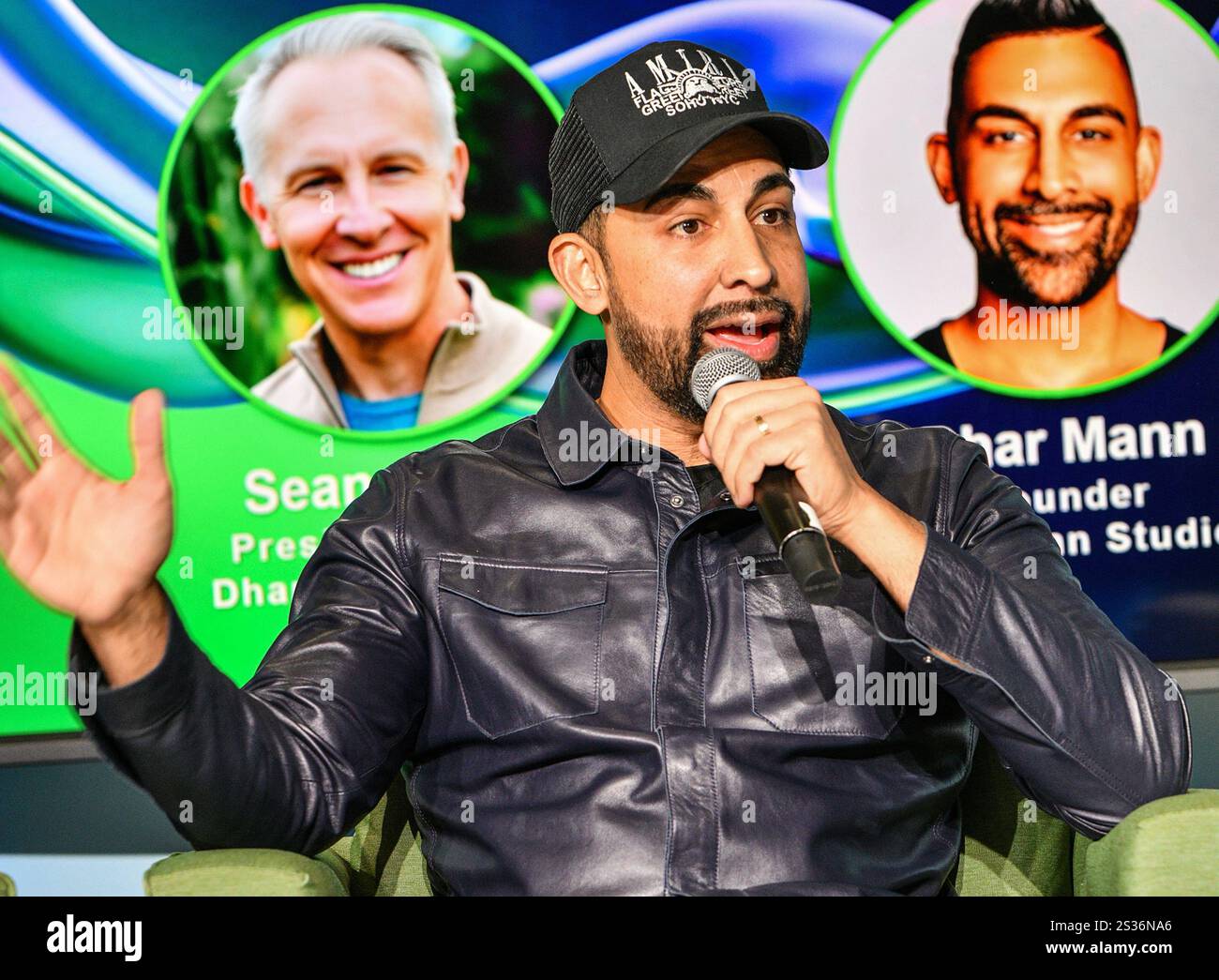
Mann’s session, moderated by The Wall Street Journal’s Katie Deighton, will likely delve into three critical areas:
- The studio of the future: How creators like Mann are building infrastructure that rivals traditional studios, from production pipelines to distribution deals.
- The role of CTV: Why connected TV is becoming the default platform for both creators and brands, and how it changes the economics of content.
- The creator-brand partnership: How direct collaborations (like those with GAP and Adobe) redefine sponsorships and monetization.
What makes this moment unique is the convergence of two worlds:
- Legacy media’s validation: Tribeca X’s inclusion of Mann signals that traditional industry gatekeepers are taking creators seriously—as partners, not just talent.
- The CTV advantage: Mann’s ability to leverage CTV’s data and targeting capabilities gives him an edge over networks still reliant on linear TV models.
- The cultural shift: Audiences increasingly trust creators over traditional media, making direct relationships more valuable than ever.
For brands and networks watching from the sidelines, the question is no longer if creators will reshape entertainment—but how they’ll adapt to survive in a creator-led landscape.
—
What’s at Stake: The Future of Content Ownership
The implications of Mann’s rise extend beyond entertainment. They touch on broader debates about content ownership, revenue sharing, and the role of technology in media.
For creators:
- More control over distribution and monetization.
- Direct relationships with audiences, reducing reliance on algorithms or platform policies.
- A shift from being “talent” to being studio leaders, with all the financial and creative upside that entails.
For brands:
- More authentic, integrated marketing opportunities.
- Access to highly engaged, niche audiences.
- A move away from traditional ad models toward co-created content.
For traditional media:
- A reckoning with the creator economy’s growth.
- Pressure to innovate in distribution and audience engagement.
- Potential partnerships with creators to fill content gaps in an era of cord-cutting.
The biggest risk? Traditional studios could become irrelevant if they fail to adapt. The biggest opportunity? A hybrid model where legacy media and creator-driven studios collaborate to dominate CTV’s growing share of the market.
—
Beyond the Headlines: What Mann’s Approach Means for the Industry
Mann’s story is more than a case study in creator success—it’s a blueprint for how entertainment is evolving. Here’s what his model suggests about the industry’s trajectory:
The end of the “talent vs. Studio” binary: Creators are no longer just performers; they’re producers, distributors, and marketers. Studios that refuse to engage with this shift risk obsolescence.
CTV as the great equalizer: The platform’s low barriers to entry allow creators to compete with networks on scale and reach. For the first time, a single creator can negotiate deals that once required a studio’s infrastructure.
The rise of the “brand studio”: Partnerships like Mann’s with GAP and Adobe prove that brands are willing to invest in content creation—if it aligns with their audiences’ values. This could redefine advertising as we know it.
Yet, challenges remain. The creator economy is still fragmented, with no clear path to long-term sustainability for most. And while CTV offers precision, it lacks the cultural unifying power of traditional TV—at least for now. Mann’s session at Tribeca X may offer clues about how to bridge that gap.
—
What to Watch For: The Next Phase of Creator-Led Media
Mann’s appearance at Tribeca X is just the beginning. Here’s what industry watchers should keep an eye on:

- More creator-studio hybrids: Expect to see other top creators follow Mann’s lead, forming their own production companies with distribution deals.
- CTV’s dominance: As ad spending shifts further to connected TV, traditional networks may need to rethink their strategies—or risk losing relevance.
- Brand-content collaborations: Look for more high-profile partnerships where creators and brands co-produce content, blurring the lines between entertainment and marketing.
- Regulatory and ethical debates: As creators gain more control over distribution, questions about data privacy, audience manipulation, and fair compensation will intensify.
One thing is certain: the media landscape is being rewritten in real time. And if Dhar Mann’s session at Tribeca X is any indication, the future belongs to those who can adapt.
—
Key Questions Answered
What is Dhar Mann Studios, and how is it different from traditional studios? Dhar Mann Studios is a creator-led production empire that operates like a traditional studio but with a focus on direct audience relationships, CTV distribution, and brand partnerships. Unlike legacy studios, it prioritizes uplifting content and measurable audience impact over traditional advertising models.
Why is CTV so important to Mann’s model? CTV allows Mann to target audiences with precision, measure engagement in real time, and bypass traditional distribution barriers. Its data-driven nature aligns with his goal of creating content that drives behavioral change—not just passive viewing.
How are brands benefiting from partnerships with creators like Mann? Brands gain access to highly engaged, niche audiences and more authentic marketing opportunities. By co-creating content with creators, they avoid the intrusiveness of traditional ads while still driving sales and brand loyalty.
What does Tribeca X’s inclusion of Mann signal about the industry? It signals that traditional media gatekeepers are recognizing creators as legitimate partners—not just talent. The festival’s focus on “The New Studio” reflects a broader acknowledgment that the future of entertainment lies in hybrid models where creators and legacy media collaborate.
Could this model replace traditional TV entirely? Unlikely in the short term, but CTV’s growth suggests a future where traditional TV and creator-driven content coexist—or where creators absorb the best of both worlds. The key will be whether networks can adapt or risk becoming irrelevant.
What challenges does this shift pose for traditional studios? The biggest challenges include losing creative talent to creator-led studios, struggling to compete on audience engagement, and adapting to new monetization models. Studios that fail to innovate may find themselves sidelined in a creator-driven landscape.
