
Dalkey’s WWII Eire Sign Restoration: A Tale of History, Community, and Rediscovery
In a quiet corner of south Dublin, the coastal town of Dalkey has recently become the focus of a historical revival. The long-lost second World War Eire sign, once a silent sentinel along the Irish coast, has been meticulously restored, reigniting interest in a piece of wartime history that had faded into obscurity. This effort, driven by local volunteers and historical enthusiasts, highlights the intersection of community engagement and the preservation of cultural heritage. But what led to the sign’s disappearance, and why has its rediscovery sparked such renewed attention?
The Forgotten Sign: A Relic of Wartime Strategy
During World War II, Ireland maintained a policy of neutrality, a stance that required careful navigation between the Allied and Axis powers. To communicate this neutrality to aircraft, the Irish government installed a network of 83 Eire signs along the coastline. These wooden markers, marked with the word “ÉIRE” in bold lettering, served as a visual signal to pilots that they were flying over neutral territory. The signs were critical for avoiding accidental incursions into Irish airspace, which could have escalated tensions during the war.
The Dalkey sign, designated as number 7 in the network, was one of these strategic markers. However, like many others, it vanished from public memory after the war ended. Nature took over, with seagrass and vegetation gradually burying the structure. By the time the sign was rediscovered in 2019, it had all but disappeared, leaving only faint traces of its existence.
The Rediscovery: A Clue in a 1950 Photo
The breakthrough in locating the Dalkey Eire sign came from an unexpected source: a 1950 Air Corps reconnaissance photograph. Local resident Orla de Cogan, a passionate historian and amateur archaeologist, stumbled upon the image while researching the area’s history. The photo revealed the chalky remains of the sign, confirming its location near Hawk Cliff in Dalkey. This discovery set off a chain of events that would eventually lead to its restoration.
According to the primary sources, the sign’s location was identified as the seventh among the 83 in the network. This designation, combined with the photo’s evidence, provided a clear roadmap for the restoration project. The task, however, was not without challenges. The site had been largely overtaken by vegetation, and the original structure had deteriorated significantly over the decades.
Community Efforts: The Heart of the Restoration
The restoration of the Dalkey Eire sign was a collaborative effort involving local volunteers, historical societies, and the Dalkey TidyTowns group. These individuals, many of whom had no prior experience in historical preservation, came together to uncover and restore the sign. Their work was driven by a shared commitment to preserving the town’s heritage and ensuring that such historical landmarks were not lost to time.
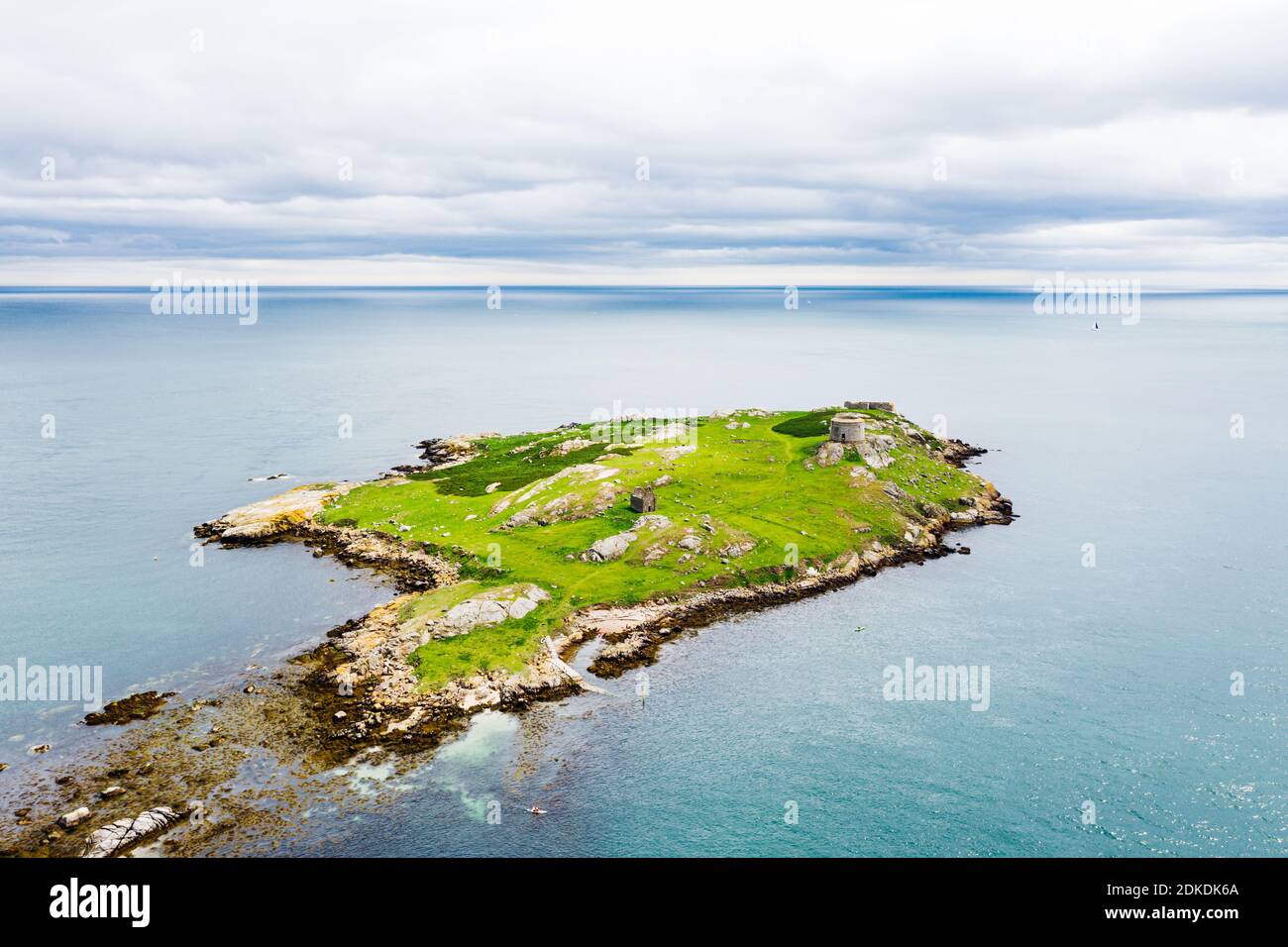
The project, which began in 2019, required careful planning and execution. Volunteers used the 1950 photo as a reference to locate the sign’s original position. Once identified, they cleared the site of vegetation and reconstructed the wooden structure based on historical records and photographs. The restored sign, now a prominent feature of the cliffside, stands as a testament to the power of community-driven initiatives.
Why This Matters: History, Identity, and Local Pride
The restoration of the Dalkey Eire sign is more than just a historical endeavor—it is a reflection of the town’s identity and its connection to the broader narrative of Ireland’s role in World War II. For residents of Dalkey, the sign represents a tangible link to the past, a reminder of the challenges faced by the country during a period of global conflict.
Historians and local leaders have emphasized the importance of such projects in fostering a sense of place and continuity. “This sign is not just a relic of the past; it’s a symbol of our community’s resilience and dedication to preserving our history,” said a spokesperson for the Dalkey TidyTowns group. The project has also sparked renewed interest in other historical sites in the area, encouraging further exploration and preservation efforts.
Broader Implications: Preserving the Past for the Future
The restoration of the Dalkey Eire sign raises important questions about the value of historical preservation in the modern era. As urban development and environmental changes continue to reshape landscapes, the need to protect and maintain historical landmarks becomes increasingly urgent. The Dalkey project serves as a model for how communities can take an active role in safeguarding their heritage.
Moreover, the sign’s restoration highlights the importance of archival research and the role of historical documents in uncovering lost pieces of the past. The 1950 photo that led to the discovery of the sign underscores the value of preserving records, even those that may seem insignificant at the time of their creation. In an age where digital data is often ephemeral, such physical artifacts remain invaluable.
FAQ: Answers to Common Questions

What were the Eire signs, and why were they created?
The Eire signs were wooden markers installed along Ireland’s coastline during World War II. They were used to signal
