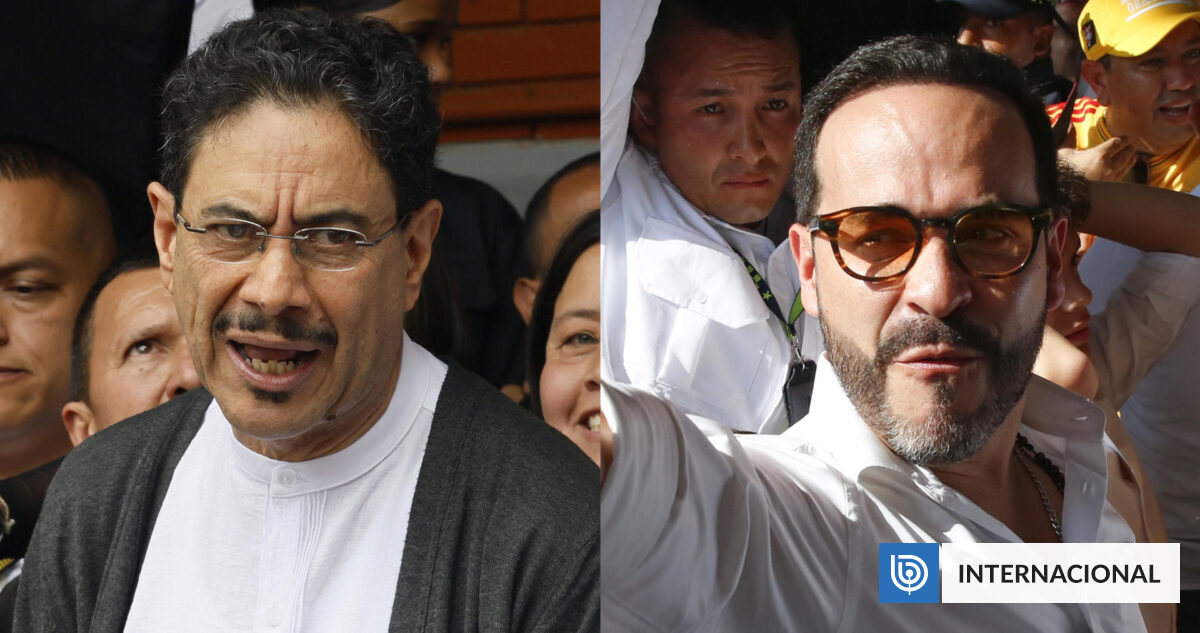
Colombia’s presidential runoff has taken a dramatic turn as the two frontrunners, Gustavo Petro’s former finance minister Rodrigo Cepeda and former defense minister Federico Gutiérrez, escalate their rhetoric ahead of Sunday’s vote. What began as a tightly contested race has now become a high-stakes political spectacle, with both candidates framing the election as a defining ideological clash.
A direct challenge to debate
The tension peaked this week when Cepeda, running under the Centro Democrático banner, publicly invited Gutiérrez—who leads the Liga de Gobernantes Anticorrupción coalition—to a face-to-face debate. “Let’s have a political and electoral debate, not just a series of insults,” Cepeda stated in a La Tercera interview, signaling a shift from the personal attacks that have dominated recent exchanges. Gutiérrez’s campaign, however, has remained silent on the offer, leaving the stage set for a runoff that local analysts describe as “one of the most polarized in recent memory.”
The invitation comes as polls show Gutiérrez leading narrowly, though the margin has fluctuated sharply in the past week. Political observers note that the runoff’s outcome will hinge not just on policy platforms but on how each candidate frames the election in the final days. “This isn’t just about who governs—it’s about whether Colombia moves left or right,” said political scientist Juan Pablo Lira in comments to Universidad de Chile, calling the right’s collapse in the first round a “hecatomb” that has forced a reckoning.
From insults to ideological warfare
The campaign’s tone has grown increasingly confrontational. Earlier this month, Gutiérrez accused Cepeda of ties to corrupt business elites, while Cepeda’s team countered by questioning Gutiérrez’s record on security. The exchanges have mirrored broader societal divisions, with social media amplifying both sides’ messaging. “The language here isn’t just political—it’s existential,” said BioBioChile’s analysis, noting how the runoff has become a proxy for Colombia’s economic and social future.

What makes this moment culturally significant is the way the election has mirrored global trends in populist politics, where personal attacks and media spectacle often overshadow policy debates. In Colombia, however, the stakes are uniquely high: Petro’s term has already reshaped the country’s relationship with its military and economic traditions, and his successor will either deepen those changes or reverse them.
What’s next: Sunday’s showdown
With no official debate scheduled, the next 72 hours will determine whether the campaign shifts toward policy or remains mired in mutual recriminations. Both candidates have ramped up rallies across key regions, and international observers—including the Organización de Estados Americanos—are monitoring the process for signs of irregularities. The result, expected by midnight Sunday, will not only decide Colombia’s presidency but also set the tone for Latin America’s political trajectory in the coming years.
