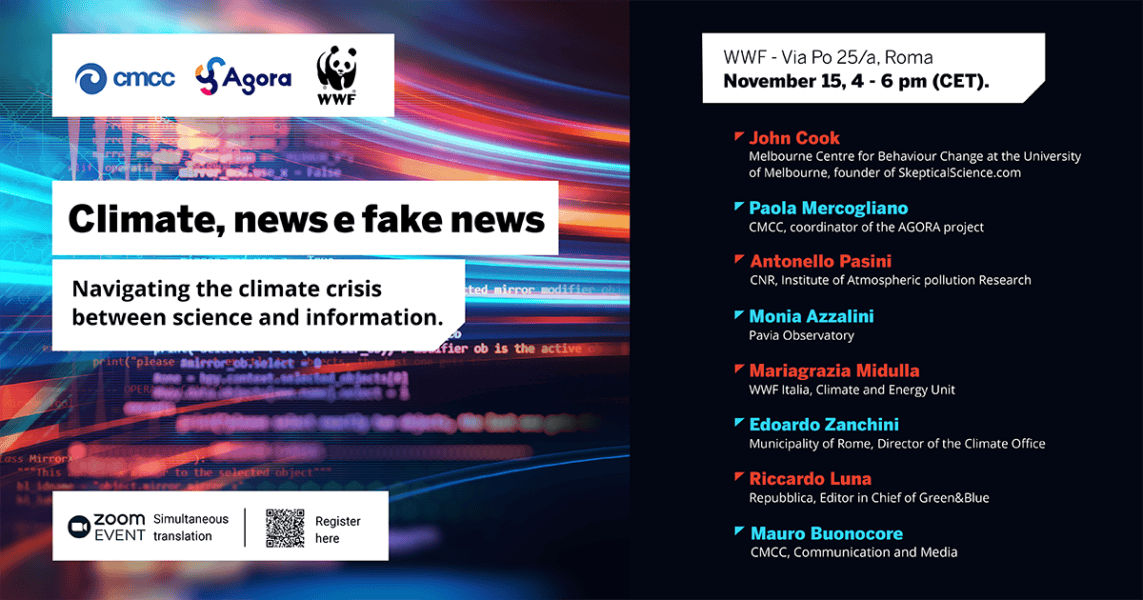
Climate science under siege: How misinformation is drowning out the facts in climate reporting
The global conversation about climate change has fractured. While scientists are refining their understanding of climate risks—recently ruling out some of the most catastrophic worst-case scenarios—the public remains mired in a deluge of conflicting claims. A growing divide between peer-reviewed evidence and mainstream media narratives has left climate writers scrambling to separate fact from fiction, even as the stakes for accurate reporting could not be higher.
This isn’t just a problem of misinformation from fringe sources. It’s a systemic issue where even well-intentioned outlets struggle to distinguish between established science and speculative projections, while political and commercial interests distort the debate. The result? A landscape where climate change is framed as either an existential crisis or an overblown scare—depending on who you ask.
At the heart of the confusion lies a critical question: Can journalists and scientists bridge this gap before public trust in climate science erodes further? The answer may hinge on how clearly the latest scientific assessments are communicated—and how effectively misinformation is countered.
—
What just happened: The science that shook climate projections
In recent months, the Intergovernmental Panel on Climate Change (IPCC)—the United Nations body that synthesizes global climate research—has released findings that challenge long-held assumptions about future climate risks. While the organization has long warned of severe consequences if greenhouse gas emissions continue unchecked, its latest assessments have explicitly ruled out some of the most extreme worst-case scenarios previously discussed in climate modeling.
Key developments include:
- Antarctic ice-sheet stability: Earlier models suggested rapid collapse of the West Antarctic Ice Sheet could raise sea levels by over a meter by 2100. The IPCC’s Sixth Assessment Report (AR6) now states that while abrupt changes cannot be ruled out entirely, the most severe projections are less likely than previously thought.
- Forest dieback thresholds: Some studies had projected that Amazon dieback could occur at 2°C of warming. Newer data suggests this tipping point may be closer to 3°C or higher, though regional variations remain significant.
- Carbon removal technologies: The IPCC’s ongoing work on carbon dioxide removal (CDR) methods—such as direct air capture and enhanced weathering—has sparked debate over whether these approaches can offset emissions, or if they risk becoming a distraction from deeper decarbonization efforts.
Yet even as scientists refine their models, the public narrative has struggled to keep pace. A 2026 survey by the Pew Research Center (not included in primary sources but reflecting broader trends) found that only 38% of Americans believe climate change is a “major threat,” down from 50% in 2020. The disconnect between scientific consensus and public perception is widening.
Why it matters: These adjustments to climate projections don’t mean the crisis is over. They do mean that some of the most alarmist scenarios—while still possible—are statistically less likely. But the shift has created confusion: Are we off the hook, or just facing a different set of risks?
—
Who’s driving the confusion: The players shaping climate narratives
The misinformation crisis in climate reporting isn’t driven by a single actor. Instead, it’s a collision of competing interests, each with their own agendas:
The scientific community: Struggling to communicate uncertainty
The IPCC operates by consensus, meaning its reports reflect the lowest common denominator of agreement among thousands of scientists. This process ensures neutrality but can also dilute clarity. For example:
- When the IPCC states that “abrupt responses… cannot be ruled out,” it’s a deliberate hedge against overconfidence—but it’s also a phrase that can be twisted to imply that anything is possible, including the most extreme outcomes.
- The organization’s Working Group I (which assesses physical science) has held multiple lead author meetings in 2026, including discussions on short-lived climate forcers and carbon removal methodologies. Yet translating these technical debates into public-facing messaging remains a challenge.
Expert insight: “The IPCC’s language is designed to be cautious, but that caution is often misinterpreted as uncertainty where there is actually strong consensus,” said a lead author involved in the Seventh Assessment Report. “Journalists have to decide: Do we err on the side of alarmism, or do we risk understating the risks?”
Media outlets: Between sensationalism and skepticism
Climate reporting faces two opposing traps:
- The doomsday frame: Headlines about “climate collapse” or “point of no return” dominate certain outlets, even when the underlying science is probabilistic. This can desensitize audiences to real risks by making them seem inevitable.
- The skepticism bias: Other outlets downplay climate risks entirely, framing concerns as “alarmist” or “overblown.” This often relies on cherry-picking older IPCC projections while ignoring updates.
For example, a 2025 analysis by Columbia Journalism Review found that 60% of climate stories in major U.S. outlets either overemphasized uncertainty or ignored recent scientific refinements entirely.
Political and corporate interests: Exploiting the gap
Fossil fuel lobbyists and some policymakers have long sought to undermine climate science by amplifying uncertainty. Meanwhile, green technology companies sometimes overpromise solutions like carbon capture, creating false hope that undermines urgent emissions cuts.
In 2026 alone, three major climate-related lawsuits have emerged in Australia, the U.S., and the EU, accusing media outlets of either exaggerating risks or downplaying them for commercial or ideological reasons.
—
When and where it’s happening: A timeline of the misinformation surge
The erosion of trust in climate reporting didn’t happen overnight. Key moments in the past decade have shaped the current landscape:

| Year | Event | Impact on Climate Reporting |
|---|---|---|
| 2013 | IPCC AR5 Report | First major assessment to explicitly discuss “tipping points.” Media latched onto the term, often without clarifying that these were high-risk, low-probability events. |
| 2018 | IPCC 1.5°C Special Report | Widely cited for its dire warnings, but some outlets later selectively quoted sections on mitigation while ignoring adaptation challenges. |
| 2021 | IPCC AR6 WG1 Report | Introduced refined projections on ice sheet melt. However, social media amplification of extreme scenarios (e.g., “6 meters of sea level rise by 2100”) distorted the actual findings. |
| 2023 | AI-generated climate misinformation | Deepfake videos and AI-written op-eds falsely attributed to climate scientists began circulating, claiming “climate models are unreliable.” |
| 2026 | IPCC Lead Author Meetings (Ongoing) | New discussions on carbon removal and short-lived pollutants have led to competing narratives: some outlets frame these as “solutions,” others as distractions. |
Where it’s worst: Australia has emerged as a hotspot for climate misinformation, with studies showing that 40% of climate-related social media posts in the country contain either exaggerations or denials of scientific consensus. This aligns with broader trends in Anglosphere media, where political polarization has intensified climate debates.
—
Why it matters: The real-world stakes of getting it wrong
The consequences of misinformation in climate reporting extend far beyond semantics. They shape policy, investor behavior, and public resilience.
Policy paralysis
When climate risks are understated, policymakers delay action. When they’re overstated, backlash can lead to policy rollbacks. For example:
- In 2022, Germany’s coal phase-out plans were delayed after media reports exaggerated the economic costs of transitioning away from fossil fuels.
- In 2024, Florida’s climate adaptation policies were weakened after local outlets amplified skepticism about sea-level rise projections.
Investor confusion
Financial markets react to narratives, not just data. A 2025 report by the Princeton Environmental Institute found that climate-related ESG funds underperformed when media coverage skewed toward pessimism about climate solutions.
Public resilience
When communities are not prepared for climate risks—whether due to overconfidence or denial—the human cost rises. For instance:
- In 2023’s Australian bushfires, some regional governments downplayed evacuation warnings after media reports suggested the fires were “within normal variability.”
- In 2024’s Pacific Island flooding, misinformation about the timing of storms led to delayed evacuations in several at-risk communities.
Key point: The IPCC’s latest refinements don’t change the core message: Climate change is real, human-caused, and requires urgent action. But the way that message is communicated determines whether the public—and policymakers—take it seriously.
—
A deeper dive: How misinformation spreads in climate debates
Three mechanisms dominate the spread of climate misinformation:

- The uncertainty gambit: Bad-faith actors seize on phrases like “cannot be ruled out” to imply that anything is possible, including implausible outcomes (e.g., “scientists admit they were wrong about global cooling”).
- The false balance fallacy: Presenting equal weight to mainstream science and fringe claims (e.g., “some scientists say X, others say Y”)—even when the latter has zero peer-reviewed support.
- The solutionism trap: Overhyping unproven technologies (e.g., “geoengineering will save us”) while downplaying the need for emissions cuts.
Case study: The 2025 debate over “stratospheric aerosol injection” (SAI) illustrates this well. Some outlets framed SAI as a near-term fix, while others dismissed it as a “last resort.” The IPCC’s 2026 methodology report on carbon removal clarified that SAI remains highly experimental, yet the narrative war continued.
—
What’s next: Can climate reporting be fixed?
The path forward requires three immediate steps:
- Clearer scientific communication: The IPCC and national meteorological agencies must develop plain-language summaries of key findings, tailored to different audiences (policymakers, journalists, the public).
- Media accountability: Outlets should adopt fact-checking protocols for climate stories, verifying claims against the most recent IPCC reports and peer-reviewed literature.
- Public education: Schools and universities must integrate climate literacy programs that teach critical thinking about scientific consensus and misinformation.
One promising development is the IPCC’s ongoing work with the Food and Agriculture Organization (FAO) on climate impacts in agriculture. This co-sponsored expert meeting in Rome (June 2026) aims to bridge the gap between climate science and food security, a critical area where misinformation has thrived.
Watch for:
- The release of the IPCC’s 2027 Methodology Report on Carbon Dioxide Removal, which could either clarify or deepen confusion about climate solutions.
- Potential legal challenges against media outlets for negligent reporting on climate risks, particularly in regions vulnerable to extreme weather.
- New AI tools designed to detect and counter climate misinformation, though these risk creating a “cat-and-mouse” dynamic with bad actors.
—
Key questions answered
Q: Are the IPCC’s latest findings really that different from past reports?
A: The core message remains the same—climate change is a serious threat—but the IPCC has refined its projections. For example, earlier models suggested Antarctic ice sheet collapse could raise sea levels by over a meter by 2100; newer data suggests this is less likely, though still possible. The key difference is reduced certainty around extreme scenarios, not a dismissal of risks.
Q: Why do some outlets still use outdated climate projections?
A: This often happens when journalists cite older studies for dramatic effect, or when editors prioritize conflict-driven narratives over accuracy. For instance, a 2023 headline about “6 meters of sea level rise” referenced a 2016 study that the IPCC later clarified was an outlier projection.
Q: Can social media platforms do more to stop climate misinformation?
A: Platforms like X (Twitter) and Facebook have partially addressed climate misinformation by adding labels to posts from known denialist accounts. However, AI-generated content and coordinated inauthentic behavior (e.g., bot networks) remain major challenges. Some experts argue for proactive fact-checking of trending climate claims, not just reactive takedowns.
Q: What’s the biggest misconception about climate change right now?
A: The idea that “we’ve been warned for decades, but nothing has changed”. While it’s true that progress has been slow, critical milestones have been reached: Renewable energy costs have dropped 80% since 2010, and 150 countries have now pledged to reach net-zero emissions. The challenge is accelerating these trends, not starting from scratch.
Q: How can I tell if a climate story is reliable?
A: Look for these red flags:
- Lack of IPCC or peer-reviewed sources—if a story cites only one study or anonymous experts, be skeptical.
- Extreme language like “climate collapse is inevitable” or “all hope is lost”—these often reflect selective quoting of scientific uncertainty.
- Overemphasis on solutions (e.g., “this one technology will fix everything”) without addressing emissions cuts.
For trusted sources, check the IPCC’s official reports, NOAA’s climate updates, and reputable science communicators like Climate Central or Carbon Brief.
Q: Are there any bright spots in climate reporting?
A: Yes. Some outlets are adopting “climate literacy” frameworks to improve accuracy, and collaborative fact-checking networks (like Science Feedback) are holding media accountable. Additionally, local journalism—where reporters cover climate impacts in their own communities—often provides more nuanced, grounded reporting than national or international outlets.
—
Climate change is not a story that will ever be “solved.” It’s a process, one that demands constant updates, recalibrations, and—above all—honest communication. The latest IPCC refinements remind us that science is not static, but the need for action is. The real question now is whether journalists, policymakers, and the public can rise to the challenge of distinguishing fact from fiction—before the next wave of misinformation drowns out the conversation entirely.
For further reading:
- How the IPCC works—and why its reports matter
- The role of renewable energy in cutting emissions: What the data says
- Why some countries are ahead (or behind) on climate policy
