
“China Will Always Be a Developing Country”: Beijing and the Global South – China Leadership Monitor
In the corridors of power in Geneva, New York, and Brussels, a singular, contentious phrase continues to trigger diplomatic friction and economic disputes: China’s insistence that it remains a “developing country.” To a casual observer, the claim seems paradoxical. China is the world’s second-largest economy, a pioneer in artificial intelligence, a global leader in green energy infrastructure, and the primary creditor to dozens of sovereign nations. Yet, in the eyes of the Chinese Communist Party (CCP), this label is not a description of current wealth, but a strategic political identity.
The debate surrounding the notion that “China Will Always Be a Developing Country”: Beijing and the Global South – China Leadership Monitor reflects a deeper geopolitical struggle. This proves not merely a semantic argument over economic classification; it is a calculated maneuver to maintain preferential trade terms, limit climate obligations, and, most importantly, cement a leadership role over the “Global South.” By positioning itself as a peer to emerging economies rather than a peer to the G7, Beijing is attempting to rewrite the rules of global governance.
The Strategic Utility of the “Developing” Label
For Beijing, the designation of “developing country” serves as a multipurpose tool for diplomatic and economic leverage. This status is not viewed as a temporary stage of growth to be outgrown, but as a permanent shield against the expectations typically placed on global superpowers.
The WTO and Trade Advantages
The World Trade Organization (WTO) allows members to self-designate as developing countries. This status grants them “Special and Differential Treatment” (S&DT), which includes longer transition periods to implement agreements, higher thresholds for subsidies, and more flexibility in protecting domestic industries. For China, maintaining this status means it can continue to protect certain state-owned enterprises and implement industrial policies that would be deemed illegal or unfair if applied by a “developed” nation like the United States or Germany.
Climate Finance and the CBDR Principle
In the realm of environmental policy, the “developing” label is central to the principle of “Common But Differentiated Responsibilities” (CBDR). This framework acknowledges that while all nations must fight climate change, developed nations—which industrialized first and contributed the most historical emissions—should bear a larger financial and technical burden.
By clinging to its developing status, China argues that it should not be required to provide the same level of climate financing to poorer nations as the U.S. Or the EU. Instead, it frames its contributions as voluntary acts of “South-South cooperation” rather than mandatory obligations of a developed power.
“The classification of China as a developing nation is the linchpin of its international strategy. It allows Beijing to exercise the power of a superpower while enjoying the privileges of an underdog.”
Beijing’s Bid for Leadership of the Global South
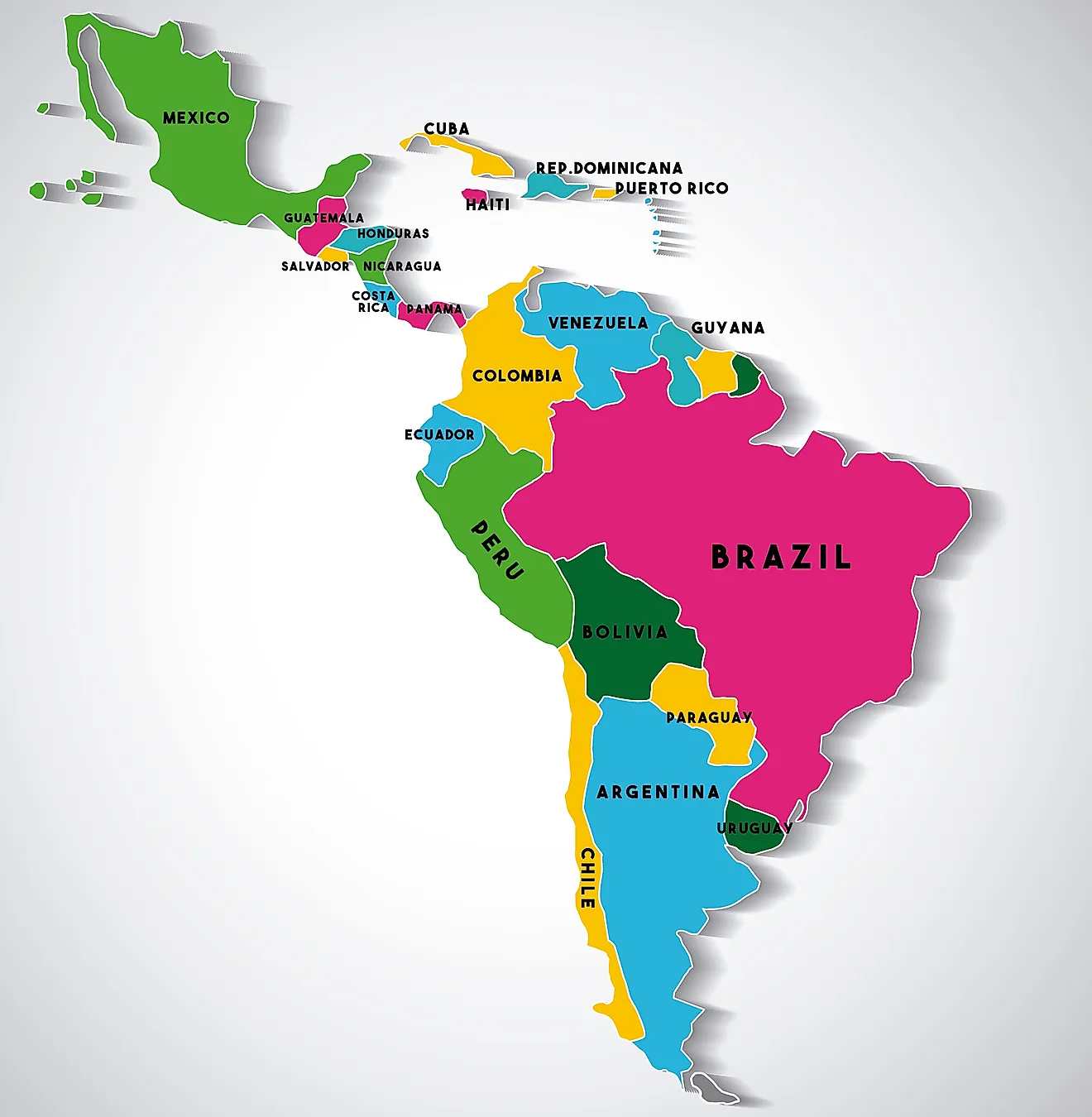
Beyond the technicalities of trade and climate, the insistence that China is a developing country is a cornerstone of its ideological outreach. The “Global South”—a broad term encompassing Africa, Latin America, and parts of Asia—is increasingly seen by Beijing as its primary constituency in a multipolar world.

By identifying as part of the Global South, China presents itself as a champion of the oppressed and the overlooked. It frames the current international order as a “Western-centric” system designed by the Global North to maintain hegemony. In this narrative, China is not an aspiring hegemon, but a revolutionary leader helping other developing nations achieve “true independence” from Western conditionalities.
The Belt and Road Initiative (BRI) as a Tool of Solidarity
The BRI is the physical manifestation of this strategy. Unlike Western aid, which often comes with requirements for democratic reforms, human rights benchmarks, or austerity measures, Chinese investment is marketed as “non-interventionalist.” Beijing argues that because it is also a developing country, it understands the needs of its partners better than the “lecture-heavy” approach of the IMF or the World Bank.
Key pillars of this leadership strategy include:
- Infrastructure-Led Growth: Building ports, railways, and dams to foster economic connectivity.
- Alternative Financial Institutions: Creating the Asian Infrastructure Investment Bank (AIIB) and the New Development Bank (NDB) to challenge the dominance of the Bretton Woods system.
- Diplomatic Bloc Building: Leveraging the BRICS+ expansion to create a counterweight to the G7.
| Feature | Western “Developed” Approach | China’s “Developing” Approach |
|---|---|---|
| Loan Conditions | Governance, Human Rights, Transparency | Infrastructure-focused, Non-interference |
| Trade Focus | Market Liberalization, Rule of Law | State-led Investment, Resource Security |
| Climate Role | Financial Donor, Regulatory Leader | Technology Provider, “South-South” Partner |
| Global Goal | Preservation of Liberal Order | Multipolarity, “Community with a Shared Future” |
The Western Pushback: “Cheating” the System
The United States, the European Union, and Japan have grown increasingly frustrated with Beijing’s refusal to upgrade its status. From their perspective, China is “gaming the system”—utilizing the perks of a developing nation while wielding the economic and military might of a superpower.
The U.S. Perspective
Washington argues that China’s status as a developing country is an anachronism. The U.S. Trade Representative has frequently pointed out that China’s GDP per capita may still be lower than that of the U.S., but its aggregate power is transformative. The U.S. Contends that China’s use of S&DT at the WTO allows it to engage in unfair trade practices, such as massive state subsidies for electric vehicles (EVs) and semiconductors, which undercut Western manufacturers.
The EU’s “Systemic Rival” Designation
The European Union has taken a similar path, labeling China as a “partner, competitor, and systemic rival.” Brussels argues that if China continues to claim developing status, it undermines the legitimacy of the very categories meant to help truly impoverished nations. When the world’s second-largest economy claims the same protections as a Least Developed Country (LDC) in Sub-Saharan Africa, the system loses its efficacy.
To counter this, the EU and U.S. Have moved toward “de-risking” and “friend-shoring,” attempting to build supply chains that are less dependent on a partner that refuses to accept the responsibilities of a developed economy.
Economic Reality vs. Political Identity
To understand why Beijing can plausibly (if disingenuously) claim developing status, one must look at the internal contradictions of the Chinese economy. While the coastlines of Guangdong and Shanghai mirror the wealth of New York or Tokyo, the interior provinces often resemble the developing world.
The Per Capita Gap
China’s GDP is staggering, but when divided by 1.4 billion people, the per capita income remains significantly lower than that of OECD nations. Beijing uses this statistic as its primary evidence. They argue that “developed” status should be based on the average standard of living for the entire population, not the aggregate power of the state.
The Rural-Urban Divide
The “developing” label also serves a domestic purpose. By framing China as still developing, the CCP can justify its continued use of state-led economic controls and its focus on “common prosperity” to reduce the massive wealth gap between urban elites and rural farmers. Admitting to being a “developed” nation would create a political expectation for the government to shift its focus entirely toward post-industrial social services and away from the heavy industrialization that has fueled its rise.
However, this internal justification clashes with China’s external behavior. A country that exports high-speed rail technology to the world and maintains a blue-water navy is not “developing” in any traditional geopolitical sense.
Implications for the Future of Global Governance
The insistence that “China Will Always Be a Developing Country”: Beijing and the Global South – China Leadership Monitor suggests a long-term strategy to decouple the concept of “power” from the concept of “responsibility.”
If China succeeds in maintaining this dual identity, it creates a new model of global leadership: the Hegemon of the Developing World. In this model, China provides the capital and the infrastructure for the Global South, but does so while claiming it is “one of them.” This allows Beijing to build a massive voting bloc in the United Nations and other international bodies, potentially shifting the global consensus on issues ranging from human rights to territorial disputes in the South China Sea.
Potential Flashpoints
- WTO Reform: If the WTO forces a reclassification of members based on objective economic data rather than self-designation, it could lead to a major diplomatic rupture or China’s withdrawal from certain agreements.
- Climate Summits (COP): As the world faces accelerating climate crises, the pressure on China to move from “contributor” to “obligated donor” will intensify.
- Debt Distress: As many Global South nations face debt crises—partly due to BRI loans—China’s claim of “South-South solidarity” will be tested. Will it offer the kind of debt relief typical of developed nations (via the Paris Club), or will it use the leverage to secure strategic assets?
For those following the related explainer on the Belt and Road Initiative, the “developing” label is the ideological glue that holds the BRI together. Without it, China is simply a creditor; with it, China is a comrade.
Frequently Asked Questions
Why does China insist it is a developing country?
China uses this label to maintain preferential trade terms at the WTO, reduce its mandatory financial obligations for global climate change initiatives, and present itself as a peer and leader to nations in the Global South to build a political coalition against Western influence.
Does the WTO allow countries to choose their own status?
Yes, currently the WTO allows members to “self-designate” as developing countries. This allows them to access “Special and Differential Treatment” (S&DT), which provides more flexibility in implementing trade rules and allows for higher levels of domestic subsidies.
How does this affect the “Global South”?
By claiming to be part of the Global South, China positions itself as a champion for emerging economies. This helps Beijing attract allies in Africa, Asia, and Latin America, offering an alternative to Western-led development models that often require political or social reforms.
Is China actually a developed country by economic standards?
It depends on the metric. In terms of total GDP, technological capability, and global influence, China is a superpower. However, in terms of GDP per capita and regional wealth distribution (rural vs. Urban), it still lags behind the wealthiest OECD nations, which is the data Beijing uses to justify its claim.
What is the Western response to China’s claim?
The U.S. And EU argue that China is “gaming the system” by enjoying the privileges of a developing nation while possessing the power of a developed one. They are pushing for WTO reforms to end self-designation and are implementing “de-risking” strategies to reduce economic dependence on China.
The tension over China’s identity is more than a bureaucratic dispute; it is a signal of a shifting global order. As Beijing continues to project power globally while claiming the status of a developing nation, the world is forced to decide whether the old definitions of “developed” and “developing” are still relevant, or if a new category of “superpower-developing state” has emerged to challenge the status quo.
