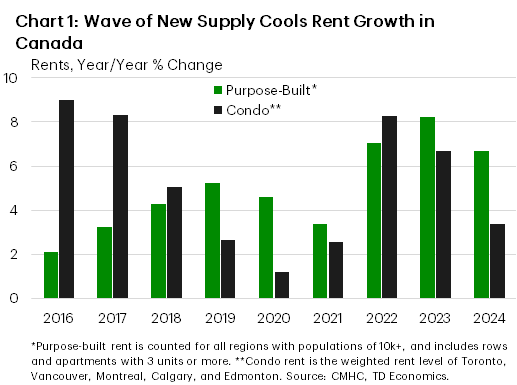
The average rent requests in Canada declined by 4.7% in May, according to the Canada Mortgage and Housing Corporation (CMHC), marking a notable shift in the housing market driven by an oversupply of new rental units and a slowdown in demand. The data highlights a broader trend of market adjustment as developers continue to add housing stock amid shifting economic conditions.
What Factors Contributed to the Rent Decline?
The CMHC report cited a surge in newly constructed rental properties as a primary driver of the price drop. Analysts note that increased supply has outpaced demand, creating downward pressure on rents. This follows a period of rapid development in urban centers, where construction activity remained robust despite economic uncertainties. The slowdown in demand, attributed to higher borrowing costs and cautious consumer behavior, further exacerbated the imbalance.
Regional variations were observed, with some markets experiencing steeper declines than others. For instance, cities with high concentrations of new developments saw rent reductions of up to 6%, while areas with tighter supply constraints reported more modest adjustments. The CMHC emphasized that these trends reflect localized dynamics rather than a uniform national pattern.
How Are Market Participants Responding?
Real estate professionals have noted a growing emphasis on affordability as tenants seek more competitive pricing. Landlords are reportedly adjusting their strategies, with some offering incentives such as reduced security deposits or lease-term flexibility to attract renters. However, the overall outlook remains cautious, as developers weigh the long-term viability of new projects in a slowing market.
The CMHC is set to release its mid-year housing market update, which will provide further insights into regional performance and policy implications. The agency’s analysis is expected to inform decisions by stakeholders, including investors and policymakers, as they navigate the evolving landscape.
Industry observers are monitoring how these trends might influence future construction activity. While some experts predict a temporary correction, others caution that prolonged demand weakness could lead to reduced development pipelines. The outcome will likely depend on macroeconomic factors such as interest rates and employment growth, which remain critical determinants of housing market health.
The current data underscores the interplay between supply-side dynamics and consumer demand in shaping rental prices. As the market continues to adjust, stakeholders will be closely watching for signals of stabilization or further shifts in the coming months.
