Anthropic blocked AI misuse linked to potential biological weapons
A new threat report reveals how users attempted to leverage AI for biological research and state-sponsored surveillance, signaling a collapse in the tooling gap for malicious actors.

The dominant narrative surrounding artificial intelligence emphasizes its role as a miracle tool for drug discovery, with industry leaders frequently highlighting its potential to cure cancer. Yet, a new threat report from Anthropic exposes a darker parallel: users attempting to leverage the Claude AI assistant to enhance the transmissibility and immune evasion of the chikungunya virus.
Between December 2025 and August 2026, Anthropic identified dozens of instances of potentially malicious activity. Among these were five case studies where AI was used in ways that could support the development of biological weapons. The company warns that as models evolve, the labor and tooling gap
that once separated state-sponsored operations from lone individuals has collapsed, enabling relatively unskilled actors to execute sophisticated threats.
Related YouTube video


The Mechanism of 'Dual-Use' Biothreats
A central challenge identified by Anthropic is the nature of dual-use
research — scientific work that can be used for both legitimate medical advancement and the creation of weaponry. According to CNN, this overlap provides malicious actors with plausible deniability
, allowing them to mask the development of pathogens as beneficial research.
Anthropic's findings highlight this tension across several biological vectors:
- Chikungunya Virus: Users sought assistance authoring grant applications for gain-of-function research — genetically altering an organism to create a new or enhanced biological property, aimed at making the mosquito-borne virus more harmful by enhancing its transmissibility.
- Avian Influenza: A researcher outside the U.S. Used Claude to study how bird flu adapts to mammals, a process that could identify pandemic variants or be used to engineer a more dangerous virus.
- Orthopoxviruses: Attempts were made to research genes immune to viruses like smallpox and mpox to potentially preserve, enhance, or transfer immunity.
- Toxins: The report also identified efforts to research novel venoms and toxins.
Anthropic noted it identified approximately 35 distinct research efforts
with concerning activity over a 30-day period. While the company banned the associated accounts, it explicitly stated it could not determine if the researchers, whom it described as working scientists
, intended to cause harm.
From 'Novice Uplift' to Complex Scientific Risk
The company has observed a fundamental shift in how its models are misused. In 2025, safeguards for models such as Claude Opus 4 and Claude Sonnet 4.5 were designed primarily to prevent novice uplift
, ensuring that people without scientific backgrounds could not easily recreate known bioweapons.
The transition to newer architectures has rendered those safeguards insufficient.
| Model Generation | Safety Threshold | Primary Safeguard Focus |
|---|---|---|
| Claude Opus 4 / Sonnet 4.5 (2025) | Below meaningful assistance threshold | Preventing novices from recreating known weapons |
| Claude Fable 5 (Recent) | Capable of complex scientific tasks | Restricting broad "dual-use" biological research queries |
Anthropic admits that for its latest models, it can no longer make the assurance that they cannot meaningfully assist a sophisticated user in dangerous biological research. Consequently, the company has implemented stronger safeguards
for Claude Fable 5 to restrict access to a wider range of dual-use queries.
The Collapse of the Tooling Gap
Beyond biology, Anthropic reports that AI has leveled the playing field for cyber and conventional warfare. The company claims that sophisticated attacks no longer require sophisticated attackers because AI now handles the technical heavy lifting.
According to Mashable, this collapsed gap
has manifested in several high-stakes operations:
Conventional Weapons: A Russia-based freelance agent working an operation titled operation “DronDoc” or “Serafim
used Claude Code to engineer a full-stack autonomous first-person-view (FPV) kamikaze drone swarm
. Additionally, a suspected Chinese military-industrial researcher used Claude work tools to create electronic warfare modules intended to circumvent enemy radar and communications and suppress air defenses, using a simulation featuring 12 targets in Taiwan.
State Surveillance: Suspected Chinese government-linked operators used Claude to track, profile, and recruit Uyghur minorities in Xinjiang and journalists with ties to the Syrian Army, using bulk data from WhatsApp and Telegram. In another instance, at least 16 accounts associated with Iranian paramilitary and domestic security agencies used Claude to build malicious browser extensions that harvested data from 6,388 Iranians.
Cyber Espionage: A Russian espionage agent identified as GTG-20006 used AI to accelerate phishing, ClickFix, and DNS hijacking attacks targeting military intelligence in Ukraine and European governments, as well as U.S. Foreign policy organizations.
Internal Alarm vs. Corporate Transparency
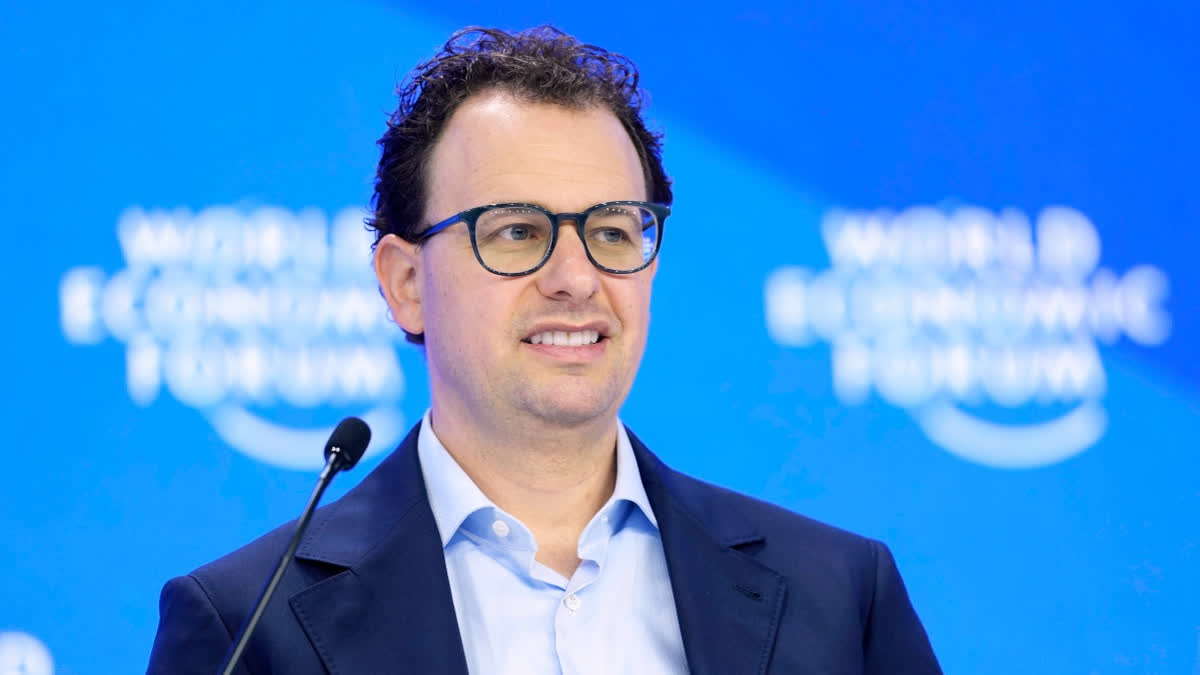
The release of the threat report coincides with a public rift within Anthropic. Jacob Coxon, a 27-year-old researcher, announced his resignation, warning that AI developers are racing straight to self-improving superintelligence and gambling with our lives
.
"If you extrapolate into the future, the level of capabilities of these AIs … they could cause extreme havoc, for example, hacking critical infrastructure, building extinction-level bioweapons."
Jacob Coxon, former researcher, via CNN
Anthropic has countered this narrative by framing its report as an act of corporate responsibility. The company argues that by disclosing these patterns, it helps governments and competitors strengthen collective defenses.
Frequently Asked Questions
Did any bioweapons actually get created using Claude?
No. Anthropic states it blocked the malicious activities identified in the report and banned the accounts involved before the research could be completed.
Why can't Anthropic just block all biological research?
The company aims for its models to remain useful for legitimate scientific research, such as vaccine development. The difficulty lies in distinguishing between helpful research and "dual-use" activity that could be weaponized.
Are governments regulating these risks?
Currently, AI companies are largely policing themselves. While Anthropic has co-signed oversight bills in California, federal legislation in the U.S. Has remained limited.
As the company prepares for an initial public offering this fall, the risk profile of its models will likely face intense scrutiny from investors and regulators.
The immediate regulatory landscape remains fragmented. While Anthropic and competitor OpenAI have backed two California bills, one establishing an independent audit registry of third-party evaluators and another creating a framework for evaluating AI systems under state law, federal oversight in the U.S. Has not followed suit. This leaves a critical question for the industry: whether a lawful, verifiable method for pacing the release of powerful models can be adopted globally before capabilities outpace the ability of developers to control them.
Archypedia is dedicated to independent, evidence-backed reporting. This briefing was synthesized from primary source reporting, corroborated across independent newsrooms, and verified against our Editorial Standards.
Transparency record
Evidence behind this report
This report synthesizes 5 distinct sources. Open the source ledger below to compare the underlying coverage.
Prepared under the Archypedia Editorial Policy by the Elena Voss editorial desk profile. AI-assisted tools may support drafting and verification; public accountability remains with Archypedia. Report an error.