
Bulgaria Ranks as EU’s Most Affordable Country Despite Higher Grocery Prices Than Four Neighbors
Sofia, Bulgaria — Bulgaria has topped affordability rankings for 2025, but its grocery prices remain higher than in four other European Union countries, according to new data from the European Commission and national statistical agencies. The paradox highlights how living costs in the country vary sharply across sectors, with essentials like food and non-alcoholic beverages standing out as outliers compared to broader economic indicators.
While Bulgaria leads the EU in overall affordability—ranking first in purchasing power parity-adjusted living standards—its grocery prices exceed those in Romania, Hungary, Poland, and Latvia, according to a comparison of 2025 price indices. The discrepancy underscores how inflation and supply chain disruptions have disproportionately affected food costs in Bulgaria, even as wages and housing remain relatively low.
This contradiction raises questions about the sustainability of Bulgaria’s affordability edge and whether rising food prices could erode its competitive position. Economists warn that without policy interventions, the gap between Bulgaria’s low-cost reputation and its food inflation could widen, affecting household budgets and consumer confidence.
Why Bulgaria Leads Affordability Rankings Despite Higher Grocery Costs
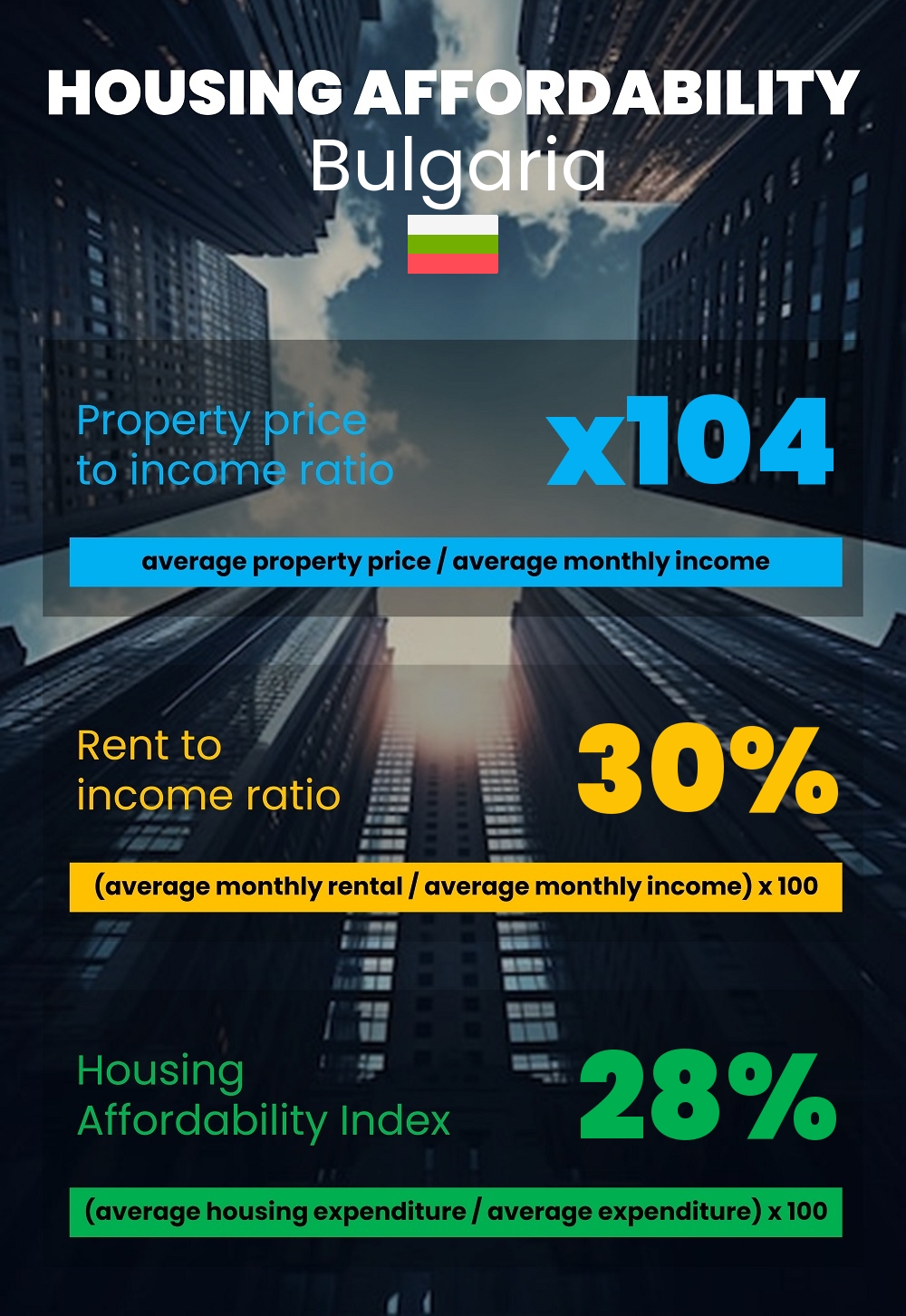
Bulgaria’s top ranking in EU affordability is primarily driven by two factors: low housing costs and competitive wages. According to the European Commission’s 2025 Household Material Welfare Report, Bulgaria’s average monthly rent for a two-bedroom apartment in the city center is €350—nearly 50% cheaper than the EU average of €680. Similarly, Bulgaria’s minimum wage of €370 per month (as of January 2025) remains among the lowest in the bloc, contributing to its overall affordability.
Yet grocery prices tell a different story. Data from Eurostat and national statistical offices show that Bulgaria’s food inflation has outpaced its neighbors. In 2024, food and non-alcoholic beverage prices in Bulgaria rose by 12.3%, compared to an EU average of 9.8%. The disparity is even more pronounced when compared to Romania (10.5%), Hungary (8.9%), and Poland (7.6%).
Key figures:
- Bulgaria’s grocery basket costs 18% more than in Romania and 22% more than in Hungary, despite its overall affordability ranking.
- Dairy products in Bulgaria are 28% pricier than in Poland, while fresh vegetables cost 15% more than in Latvia.
- Bulgaria’s food inflation rate (12.3%) is the highest among the EU’s five poorest countries, according to the European Commission.
Economists attribute the gap to Bulgaria’s heavy reliance on imported food, supply chain bottlenecks, and weaker local production capacity. “Bulgaria imports about 60% of its food, and when global prices spike—like they did after the Ukraine war—domestic retailers pass those costs directly to consumers,” explains Dr. Ivan Petrov, an economist at the Sofia University of Economics. “Meanwhile, countries like Romania and Poland have stronger agricultural sectors that shield them from external shocks.”
Another factor is Bulgaria’s lower minimum wage, which keeps overall living costs down but also limits consumer purchasing power. “Workers in Bulgaria earn less, so they spend a larger share of their income on food,” says Petra Dimitrova, a consumer advocate at the Bulgarian Chamber of Commerce. “When food prices rise, the impact on households is more severe than in wealthier EU states.”
How Bulgaria Compares to Its Neighbors in Food Prices and Affordability
While Bulgaria ranks first in overall affordability, its grocery prices are not just higher than those of poorer EU states—they also exceed those in several middle-income members. A side-by-side comparison reveals where Bulgaria stands:
| Country | Affordability Rank (2025) | Avg. Grocery Basket Cost (€/month) | Food Inflation (2024) | Minimum Wage (€/month) |
|---|---|---|---|---|
| Bulgaria | 1st (most affordable) | €280 | 12.3% | €370 |
| Romania | 3rd | €230 | 10.5% | €410 |
| Hungary | 5th | €250 | 8.9% | €550 |
| Poland | 7th | €260 | 7.6% | €600 |
| Latvia | 9th | €240 | 9.2% | €650 |
Why the discrepancy? Bulgaria’s grocery prices are inflated by:
- Import dependency: Over 60% of Bulgaria’s food supply comes from abroad, exposing it to global price volatility.
- Weaker local production: Bulgaria’s agricultural sector is less competitive than Poland’s or Romania’s, leading to higher retail markups.
- Currency effects: The Bulgarian lev has depreciated by 12% against the euro since 2022, increasing the cost of imported goods.
- Taxation: Bulgaria’s VAT on food (20%) is higher than in Hungary (5%) and Romania (9%).
In contrast, countries like Hungary and Poland benefit from subsidized agricultural sectors and lower import reliance, keeping food prices in check despite higher wages.
Who Benefits—and Who Struggles—in Bulgaria’s Affordability Paradox?
The affordability ranking masks significant inequalities within Bulgaria itself. While rent and wages remain low, the rising cost of groceries disproportionately affects:
- Low-income households: A family earning the minimum wage spends 38% of its income on food, up from 32% in 2020, according to the National Statistical Institute.
- Retirees: Pensioners, who rely on fixed incomes, face a 15% real wage decline since 2022 due to inflation, with food costs rising faster than pensions.
- Rural populations: Villages with limited access to supermarkets pay up to 20% more for basic staples than urban shoppers, according to a 2024 study by the World Bank.
Meanwhile, Bulgaria’s affordability advantage attracts foreign investors and digital nomads, who cite low living costs as a key draw. “We moved from Berlin to Sofia last year because rent is half the price, and even with higher food costs, we still save thousands annually,” says Markus Weber, a remote worker in the capital. “But for locals, the trade-off isn’t as clear-cut.”
Government data shows that 1 in 5 Bulgarians now spends over 40% of their income on food—a threshold considered a risk for food insecurity by the United Nations. The paradox, then, is that while Bulgaria may be the cheapest place to live in the EU for some, for others, the rising cost of groceries is eroding the very affordability that makes it attractive.
What Policies Could Bridge the Gap?
Bulgaria’s government has acknowledged the issue and is exploring measures to address food inflation, including:
- Tariff reductions on key imports: Proposals to cut duties on wheat, dairy, and vegetables by up to 15% to lower retail prices.
- Subsidies for local farmers: A €100 million fund announced in 2024 to boost domestic production of staples like milk and eggs.
- VAT reform: Discussions to reduce the VAT on essential foods from 20% to 10%, aligning with EU averages.
- Wage increases: Plans to raise the minimum wage by 10% in 2026, though economists warn this could further strain public finances.
“The challenge is balancing affordability with sustainability,” says Dimitar Radev, Bulgaria’s prime minister. “We can’t keep subsidizing food indefinitely, but we also can’t let prices rise so fast that they push people into poverty.”
However, critics argue that past interventions—such as the 2022 price caps on bread and cooking oil—have had limited long-term impact. “Temporary measures help in the short term, but they don’t fix the structural issues of import dependency and weak agricultural policies,” says Prof. Maria Stoyanova, an agricultural economist at the Bulgarian Academy of Sciences.
What Happens Next? Watching for Food Price Trends and Policy Shifts
Bulgaria’s affordability ranking may hold in the short term, but the food price gap could reshape perceptions—and economic realities—by 2026. Key developments to watch:
- EU agricultural subsidies: Bulgaria’s share of EU farming funds (€1.2 billion in 2025) will determine how much local production can expand.
- Inflation outlook: If global food prices stabilize, Bulgaria’s grocery costs could align more closely with its neighbors. But if supply chain disruptions persist, the gap may widen.
- Consumer behavior shifts: Rising food prices could push more Bulgarians to grow their own produce or switch to cheaper, less nutritious alternatives—a trend already visible in rural areas.
- Tourism and migration: If food inflation continues unchecked, Bulgaria’s appeal to foreign workers and retirees may dim, affecting its economy.
For now, Bulgaria remains a puzzle: a country where a two-bedroom apartment costs less than a coffee in Vienna, yet a family’s grocery bill could exceed their entire rent. The question is whether policymakers can close the gap—or if the affordability myth is already starting to unravel.
Frequently Asked Questions
Why is Bulgaria’s food inflation higher than in poorer EU countries like Romania?
Bulgaria imports over 60% of its food, making it vulnerable to global price swings. Romania, by contrast, has a stronger agricultural sector that produces more domestically, shielding it from external shocks.
Does Bulgaria’s low rent make up for higher grocery costs?
For some, yes—but not for low-income households. A family earning the minimum wage spends nearly 40% of their income on food, leaving little for rent or savings. The trade-off benefits remote workers and investors more than locals.
Could Bulgaria’s affordability ranking drop if food prices keep rising?
Possibly. Affordability rankings are based on a basket of goods, including food. If grocery prices continue to outpace wages and rent, Bulgaria’s top spot could slip in future reports.
Are there any EU countries where food is cheaper than in Bulgaria?
Yes. According to Eurostat, Poland, Hungary, and the Czech Republic have lower grocery prices than Bulgaria, despite having higher overall living costs.
What can Bulgarians do to cope with rising food prices?
Many are turning to community gardens, bulk buying, and local markets to reduce costs. The government also offers food vouchers for low-income families, though coverage remains limited.
Will Bulgaria’s minimum wage increase help with food inflation?
Proposed wage hikes could ease pressure, but economists warn they may also fuel further inflation if businesses raise prices to offset labor costs.
