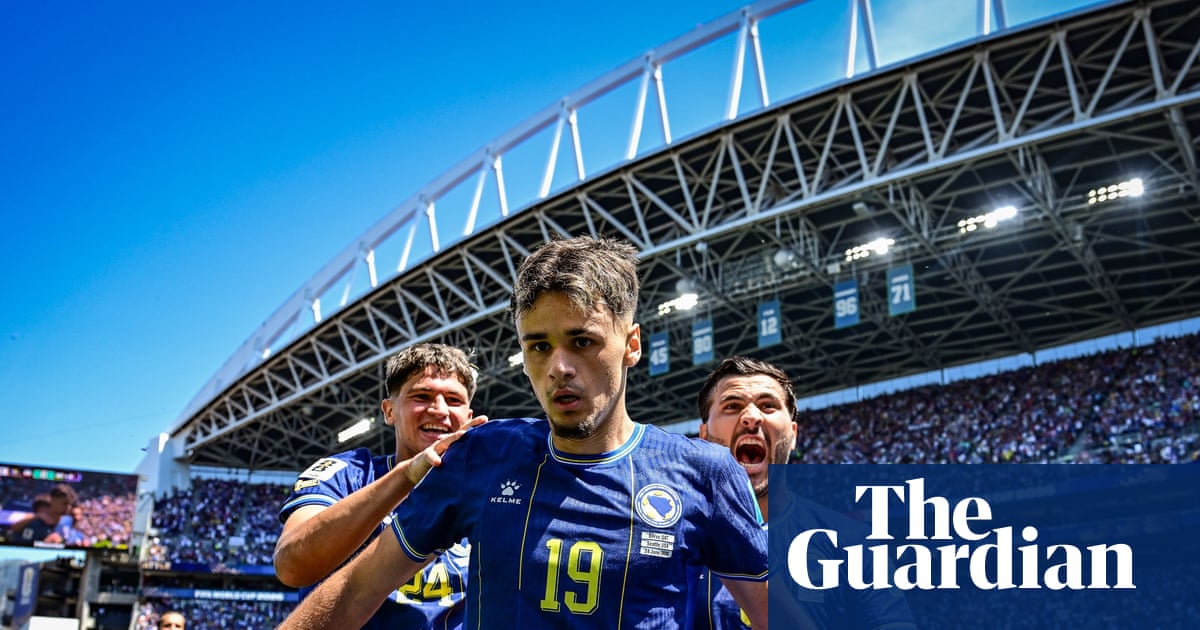
Bosnia and Herzegovina on Verge of Knockout Stage After Seeing Off Qatar
Bosnia and Herzegovina moved closer to securing a spot in the FIFA World Cup knockout stages after defeating Qatar in a critical Group B match. According to reports from The Guardian and The Seattle Times, the victory places the team on the brink of advancement, following a tactical shift toward offensive play mandated by coach Barbarez to ensure a result in a high-stakes encounter.
How Bosnia and Herzegovina Secured the Win Over Qatar
Bosnia and Herzegovina overcame Qatar in a Group B fixture that carried significant weight for their tournament progression. While the match remained tight, reports from MARCA and the BBC indicate that Bosnia and Herzegovina managed to “see off” the Qatari side, ensuring three vital points that shift the mathematical probability of their advancement in their favor.
The victory was not merely a result of defensive stability but a calculated risk in offensive positioning. According to the Business Recorder, coach Barbarez entered the match with a clear directive to attack. This aggressive posture was a departure from more conservative setups, driven by the understanding that this was a “must-win” game for the Bosnian squad.
Key elements of the match included:
- Tactical Aggression: An emphasized attacking plan designed to break down the Qatari defense.
- Group B Positioning: A result that places Bosnia and Herzegovina in a position where they are now “on the verge” of the knockout rounds, as reported by The Guardian.
- Pressure Management: The ability to maintain a lead or secure a win under the pressure of a must-win scenario.
Coach Barbarez’s Attacking Strategy in a Must-Win Match
The approach taken by the Bosnian coaching staff was a primary talking point leading up to and following the match. Coach Barbarez explicitly stated his intention to prioritize attack over a cautious approach. As noted by the Business Recorder, the decision to play offensively was a strategic necessity given the standings in Group B.
In international tournament play, teams often pivot to a defensive shell when facing opponents they perceive as equals or slightly inferior to protect a draw. However, Barbarez rejected this approach. The decision to attack served two purposes: it disrupted Qatar’s defensive rhythm and signaled a psychological shift in the Bosnian camp, moving from a mindset of survival to one of dominance.
“Bosnia plan to attack in must-win Qatar game,” coach Barbarez stated, according to the Business Recorder.
This tactical gamble paid off, as the team successfully navigated the match to secure the win. The shift in strategy highlights the volatility of Group B, where a single loss or draw can eliminate a team, making the “must-win” nature of the game a defining factor in the coach’s decision-making process.
What the Victory Means for Group B and the Knockout Stage
The implications of this win extend beyond the three points. The Guardian reports that Bosnia and Herzegovina are now on the verge of the knockout stage. In the current FIFA World Cup format, Group B’s composition means that this victory significantly narrows the paths by which Bosnia could be eliminated.
To understand the impact, it is necessary to look at the group dynamics. A win over Qatar not only improves Bosnia’s goal difference and point tally but also damages the hopes of their direct rivals in the group. By “seeing off” Qatar, Bosnia and Herzegovina have essentially seized control of their own destiny.
| Outcome Factor | Impact on Bosnia and Herzegovina | Impact on Qatar |
|---|---|---|
| Points Earned | Significant boost toward knockout qualification | Loss of critical points for advancement |
| Psychological Edge | Confidence gained from executing an attacking plan | Pressure increased for remaining fixtures |
| Tournament Status | “On the verge” of the knockout stage | Facing potential group stage exit |
The term “on the verge” suggests that while qualification is not yet mathematically guaranteed, the team is now in a position where a draw or a narrow loss in subsequent games might still be sufficient for them to advance, depending on other results in Group B.
The Path to Seattle: Bosnia’s 2026 World Cup Trajectory
The geographic and logistical implications of the 2026 World Cup add another layer to this victory. According to The Seattle Times, the win over Qatar means Bosnia and Herzegovina could potentially return to Seattle for future matches. This suggests that their current trajectory and seeding within the group could lead them to a knockout match hosted in the Pacific Northwest.
The 2026 tournament, hosted across the United States, Canada, and Mexico, involves a complex scheduling grid. For Bosnia and Herzegovina, the possibility of returning to a specific city like Seattle indicates a favorable path through the bracket. The Seattle Times highlights this as a potential outcome of their current success in Group B.
Returning to a previously played venue often provides a team with a psychological advantage, as players are already familiar with the pitch dimensions, local climate, and stadium atmosphere. For a team like Bosnia and Herzegovina, which is fighting for a deep run in the tournament, these marginal gains can be decisive in the knockout rounds.
For more information on tournament venues, see this related explainer on 2026 World Cup host cities.
Comparison of Media Coverage: From The Guardian to The Seattle Times
Different news outlets have framed the victory of Bosnia and Herzegovina over Qatar through varying lenses, reflecting their respective audiences and regional interests. Analyzing these reports reveals a consensus on the result but a difference in the “angle” of the story.
The Guardian focused heavily on the tournament standings, framing the story around the “verge of the knockout stage.” Their reporting emphasizes the stakes of the competition and the mathematical progress of the team. This is a traditional sports journalism approach, focusing on the bracket and the path to the trophy.
The Seattle Times took a more localized and logistical approach. While acknowledging the win, they highlighted the possibility of the team returning to Seattle. This framing connects a global event to a local audience, emphasizing the “return” aspect of the tournament’s travel schedule.
The Business Recorder centered its narrative on the managerial side of the game. By focusing on coach Barbarez’s decision to attack, they provided a tactical analysis of why the win happened, rather than just reporting that it did. Their coverage treats the match as a case study in risk management and strategic planning.
BBC and MARCA provided the most immediate, real-time data. Their coverage, characterized by “live” updates and lineups, served as the factual foundation for the other outlets. They focused on the “who, when, and where,” providing the essential scorelines and commentary that allowed analysts to later discuss the “why” and “what next.”
Common Misconceptions Regarding Group B Qualification
A common oversimplification in sports reporting is that a single win guarantees advancement. While The Guardian describes Bosnia and Herzegovina as being “on the verge,” it is important to clarify that “on the verge” is not the same as “qualified.”
Qualification in the FIFA World Cup depends on a combination of points, goal difference, and head-to-head records. If other teams in Group B secure unexpected wins, the situation could still shift. However, by defeating Qatar, Bosnia and Herzegovina have eliminated one of their primary obstacles and created a safety net for themselves.
Another misconception is that an “attacking plan” is always the safest bet in a must-win game. Many coaches prefer a “defense-first” approach to avoid a catastrophic loss. Barbarez’s decision to attack was a high-risk, high-reward strategy. Had Bosnia and Herzegovina conceded early while pushing forward, the narrative would have shifted from tactical brilliance to tactical recklessness.
For a deeper dive into how tie-breakers work in international tournaments, check out this related explainer on FIFA tie-breaking rules.
Key Performance Indicators for Bosnia and Herzegovina
To maintain their momentum and officially cross the threshold into the knockout stage, Bosnia and Herzegovina must focus on several key performance metrics in their remaining fixtures:

- Defensive Transition: While the attacking plan worked against Qatar, the team must ensure they can transition back to defense quickly to avoid counter-attacks in the next round.
- Goal Efficiency: Converting attacking pressure into goals will be critical if they face a team with a more disciplined low block than Qatar.
- Squad Rotation: Managing player fatigue is essential, especially if the team is slated for travel to cities like Seattle, as mentioned by The Seattle Times.
The victory over Qatar serves as a proof of concept for Barbarez’s vision. The team has demonstrated that they can dictate the tempo of a match and execute a specific game plan under extreme pressure. The challenge now is to replicate this consistency against different styles of play as they move closer to the knockout phase.
Frequently Asked Questions
Is Bosnia and Herzegovina officially through to the knockout stage?
Not yet, but they are “on the verge,” according to The Guardian. The win over Qatar has put them in a very strong position, but final qualification depends on the completion of all Group B matches and the resulting point totals.
What was the strategy used by Bosnia and Herzegovina to beat Qatar?
According to the Business Recorder, coach Barbarez implemented a plan to attack. This aggressive strategy was chosen specifically because the match was viewed as a “must-win” scenario, necessitating a more proactive approach than a defensive one.

Why is there mention of Seattle in relation to this match?
The Seattle Times reported that because of the victory and their current standing, Bosnia and Herzegovina could potentially return to Seattle for subsequent matches in the 2026 World Cup tournament.
Which group is Bosnia and Herzegovina in?
Bosnia and Herzegovina is competing in Group B of the FIFA World Cup, as reported by the BBC and other news outlets.
Who is the coach of the Bosnia and Herzegovina team?
The team is coached by Barbarez, who was credited by the Business Recorder for the attacking strategy employed in the game against Qatar.
