Live updates: Bitcoin traders don’t expect BTC to cross $75,000 as U.S.-Iran threats remain – CoinDesk
Bitcoin prices recently reached a two-week high following reports of a U.S.-Iran agreement to reopen the Strait of Hormuz. However, according to CoinDesk, many traders remain skeptical that BTC will cross the $75,000 mark while geopolitical threats persist and Donald Trump warns of potential further strikes against Iran.
Why is Bitcoin struggling to break the $75,000 barrier?
Bitcoin faces a psychological and technical ceiling at $75,000. According to reports from CoinDesk, traders are hesitant to push the price past this threshold because the underlying geopolitical instability between the U.S. and Iran creates a “risk-off” environment. In such environments, investors often avoid high-volatility assets in favor of safer havens.
The current market sentiment is a tug-of-war between positive diplomatic news and the threat of renewed conflict. While the asset has shown resilience, the lack of a definitive resolution to Middle East tensions prevents the aggressive buying needed to break $75,000. Traders are essentially waiting for a “clear path” that is not subject to sudden military escalations.
Key factors contributing to this price ceiling include:
- Geopolitical Hedging: Traders are keeping positions lean to avoid sudden crashes caused by breaking news of military action.
- Resistance Levels: $75,000 acts as a significant psychological barrier where many sell orders are likely clustered.
- Macroeconomic Uncertainty: The interplay between oil prices, influenced by the Strait of Hormuz, and global inflation affects overall liquidity for crypto assets.
How did the U.S.-Iran Hormuz deal impact Bitcoin prices?
Bitcoin experienced a sharp rally and hit a two-week high after news broke regarding a peace deal between the U.S. and Iran. As reported by Free Malaysia Today, the primary catalyst was the agreement to reopen the Strait of Hormuz, a critical maritime chokepoint for global oil shipments.
The reopening of the Strait reduced the immediate fear of a global energy crisis. When the threat of an oil blockade diminishes, global markets generally shift back to a “risk-on” posture. This transition typically benefits speculative assets like Bitcoin. The rally reflected a temporary relief wave, as investors bet that the diplomatic breakthrough would lead to a period of relative stability.
| Event | Market Impact | BTC Price Reaction |
|---|---|---|
| Strait of Hormuz Closure Threats | Increased Oil Volatility / Risk-Off | Price Suppression/Dips |
| US-Iran Peace Deal/Reopening | Decreased Energy Risk / Risk-On | Rally to Two-Week High |
| Trump Warnings of Further Strikes | Renewed Uncertainty / Caution | Stagnation below $75,000 |
What are the risks associated with Donald Trump’s warnings?
Despite the optimism surrounding the Hormuz deal, Bitcoin is not entirely out of danger. Moomoo reports that Donald Trump has warned of further strikes against Iran, which has reintroduced volatility into the markets. These warnings act as a counterweight to the peace deal, signaling that the diplomatic resolution may be fragile.

For Bitcoin traders, the risk is a “flash crash” scenario. If military strikes occur, the market could rapidly pivot back to a risk-off state. This creates a ceiling on the price because institutional buyers are unlikely to enter large-scale long positions while the threat of an escalation remains active. The market is currently pricing in a “fragile peace,” which limits the upside potential of BTC.
The volatility is further complicated by the following dynamics:
- Rapid News Cycles: Crypto markets react in seconds to headlines, making them hypersensitive to official statements from the U.S. administration.
- Liquidity Shifts: Sudden geopolitical shocks often lead to a temporary flight to the U.S. Dollar, pulling liquidity out of the crypto ecosystem.
- Speculative Positioning: A large number of traders are using leverage; a sudden drop triggered by military news could cause a cascade of liquidations.
What other factors are moving the crypto markets this week?
While the U.S.-Iran conflict is a primary driver, other variables are influencing price action. CryptoPotato identifies several major factors that may move the crypto markets in the coming week beyond the immediate geopolitical noise.
These factors include shifts in institutional adoption, regulatory updates, and broader economic data from the U.S. Federal Reserve. The interplay between these macro-economic trends and geopolitical events determines whether Bitcoin can maintain its current support levels or if it will succumb to the downward pressure created by the Iranian threats.
Analysts are specifically watching for:
- ETF Inflow/Outflow: The volume of capital entering or leaving Bitcoin Spot ETFs provides a glimpse into institutional confidence.
- Inflation Data: CPI reports influence the Federal Reserve’s interest rate decisions, which directly impacts the attractiveness of non-yielding assets like Bitcoin.
- Altcoin Correlation: The degree to which Ethereum and other major altcoins follow Bitcoin’s lead during these geopolitical shocks.
For more information on how these assets interact, see a related explainer on crypto market correlations.
Comparing market perspectives: Optimism vs. Caution
There is a clear contrast in how different outlets are framing the current Bitcoin situation. Free Malaysia Today emphasizes the “rally” and the “two-week high,” focusing on the positive momentum generated by the Hormuz deal. This perspective highlights the resilience of BTC as an asset that can bounce back quickly from geopolitical lows.
In contrast, CoinDesk and Moomoo provide a more cautious narrative. CoinDesk focuses on the $75,000 ceiling, suggesting that the rally is capped by lingering threats. Moomoo goes further by highlighting the “danger” and the possibility of further strikes. This divergence shows that while the short-term price action was positive, the medium-term outlook remains clouded by political instability.
“The market is currently operating in a state of conditional optimism—the price is rising because the immediate threat has subsided, but it cannot break new highs because the long-term threat remains unresolved.”
Common misconceptions about Bitcoin as a “Safe Haven”
A frequent misunderstanding in the current market is the belief that Bitcoin always acts as a “digital gold” or a safe haven during geopolitical crises. While this narrative is popular, the data from the U.S.-Iran situation suggests a more complex reality.
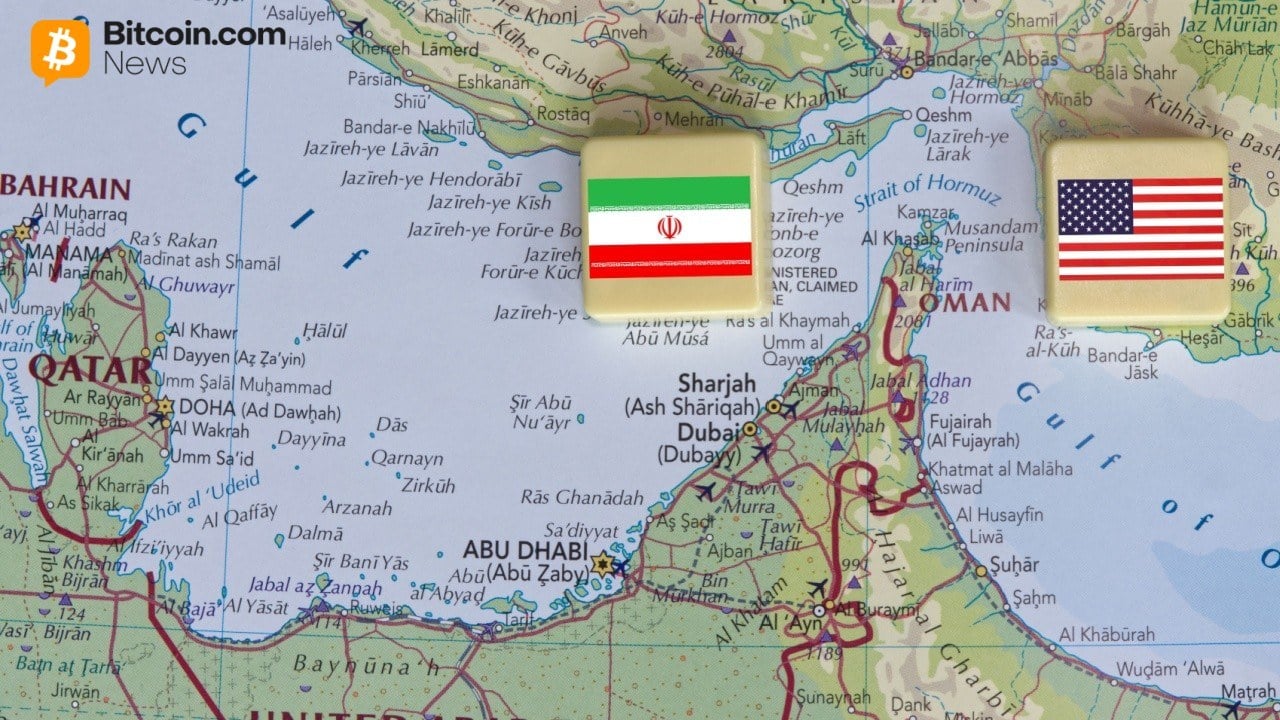
In many instances, Bitcoin behaves like a “risk-on” asset, meaning it falls when investors are scared and rises when they are confident. The recent rally upon the reopening of the Strait of Hormuz supports this; BTC rose not because there was a war, but because the threat of war decreased. If Bitcoin were a pure safe haven, it would theoretically rise during the height of the conflict, similar to how gold often behaves.
Correcting this misconception is vital for traders. Relying on the “safe haven” theory during a U.S.-Iran escalation could lead to unexpected losses if the market treats BTC as a high-risk asset during the initial shock of a military strike.
Timeline of events affecting BTC price action
The volatility of the past few weeks can be traced through a series of geopolitical and market shifts. The following timeline outlines the progression from tension to a fragile recovery.
| Phase | Event | BTC Market Sentiment |
|---|---|---|
| Tension Peak | Threats to close the Strait of Hormuz | Bearish / High Volatility |
| Diplomatic Shift | U.S.-Iran peace deal reached | Bullish / Rapid Recovery |
| Price Peak | BTC hits two-week high | Optimistic but Cautious |
| Current State | Trump warns of further strikes | Stagnant / Resistance at $75k |
Analyzing the impact of the Strait of Hormuz on global liquidity
To understand why a shipping lane in the Middle East affects a digital currency, one must look at the chain of global liquidity. The Strait of Hormuz is the world’s most important oil transit chokepoint. Any threat to this lane immediately spikes crude oil prices.
When oil prices spike, it leads to “cost-push inflation,” where the cost of transporting goods and producing energy rises globally. This often forces central banks to keep interest rates higher to combat inflation. Higher interest rates generally make “risk assets” like Bitcoin less attractive because the cost of borrowing increases and the yield on “safe” assets like U.S. Treasuries becomes more appealing.
Therefore, the “Hormuz deal” did more than just stop a war; it signaled a potential stabilization of energy costs. This stabilization allows investors to move capital back into the crypto market, explaining the rally reported by Free Malaysia Today. However, as long as the threat of further strikes exists, that liquidity remains “flighty” and ready to exit at the first sign of trouble.
For a deeper dive into how inflation affects digital assets, check out a related explainer on BTC and CPI data.
Frequently Asked Questions
Will Bitcoin cross $75,000 soon?
According to CoinDesk, many traders do not expect BTC to cross $75,000 as long as U.S.-Iran threats remain. The price is currently limited by geopolitical uncertainty and technical resistance at that level.
How does the Strait of Hormuz affect crypto?
The Strait is a critical oil transit point. Threats to close it increase oil prices and global economic instability, which typically pushes investors away from risky assets like Bitcoin. A deal to keep it open generally encourages a “risk-on” market sentiment, leading to price increases.
Why did Bitcoin hit a two-week high recently?
As reported by Free Malaysia Today, the rally was triggered by a peace deal between the U.S. and Iran and the subsequent agreement to reopen the Strait of Hormuz, reducing immediate fears of a global energy crisis.
Is Bitcoin a safe haven during the U.S.-Iran conflict?
While often called “digital gold,” Bitcoin’s recent behavior suggests it is acting more as a risk-on asset. It rallied when tensions eased rather than during the height of the threat, indicating that it may not always serve as a hedge during active military escalations.
What is the impact of Donald Trump’s warnings on BTC?
Warnings of further strikes against Iran, as noted by Moomoo, create a ceiling for the price. These threats introduce the possibility of a sudden market crash, making traders hesitant to push the price toward new highs.
