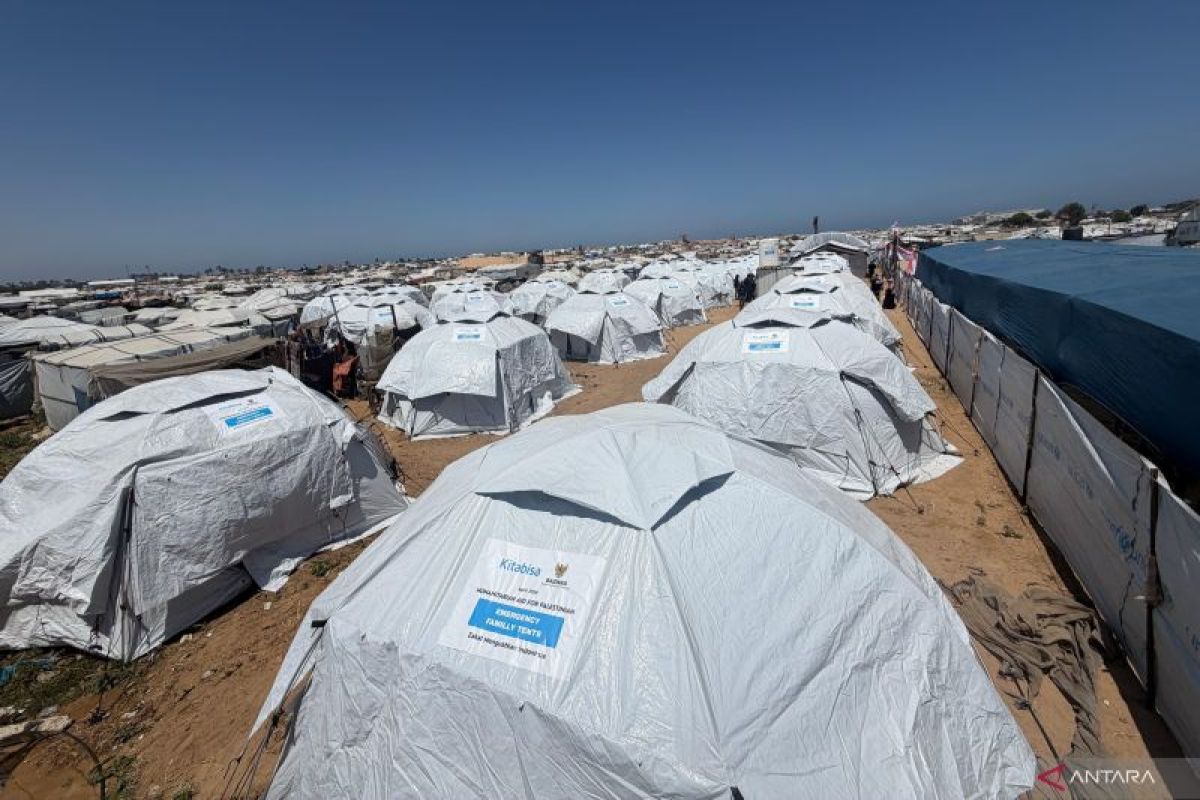
Baznas builds Indonesia-funded emergency village in Gaza – ANTARA News
In the midst of a prolonged humanitarian crisis in the Gaza Strip, a critical lifeline has emerged for displaced children in the north. In a targeted effort to restore a sense of normalcy and safeguard the future of the youth, Indonesia’s National Zakat Agency (Baznas) has established a comprehensive support system in Beit Lahia. This initiative, which includes the creation of emergency classrooms and essential welfare services, represents a significant humanitarian intervention designed to mitigate the educational and psychological collapse often associated with prolonged conflict.
The establishment of these facilities is not merely about providing a roof over students’ heads; It’s a strategic attempt to prevent a “lost generation” by ensuring that learning continues despite the surrounding instability. By combining educational infrastructure with medical care and basic survival necessities, the project functions as an emergency village, providing a centralized hub of support for families who have lost everything.
Establishing Educational Sanctuaries in North Gaza
The cornerstone of the recent intervention in Beit Lahia is the deployment of seven emergency classroom tents. These structures are specifically designed to provide a safe, dedicated space for children who have been displaced by the ongoing humanitarian crisis. In areas where traditional schools have been destroyed or rendered unusable, these makeshift classrooms serve as the only available bridge between total educational cessation and the continuation of primary studies.
According to Sodik Mudjahid, the Head of Baznas, the primary objective of this initiative is to guarantee that children in Gaza maintain access to safe learning environments. Mudjahid emphasized that the agency is committed to ensuring that education remains accessible even in the most dire emergency situations. The goal is to allow children to continue their studies, providing them with a cognitive and emotional escape from the difficulties of their current environment.
The physical setup of these classrooms is a critical detail. While they are “makeshift” in nature, they are equipped with fundamental furniture, including desks and chairs. While this may seem rudimentary, the impact on the learners is profound. Prior to the arrival of these materials, students were forced to write and study while sitting on the floor, leading to physical discomfort and a lack of focus. The introduction of basic school furniture has transformed the learning experience from a struggle for physical comfort into a focused educational pursuit.
“It was very difficult before. We had to write while sitting on the floor, and our backs hurt. We are very grateful for the desks and chairs,” said Zeina Al Motawaq, an eight-year-old elementary student benefiting from the new facilities.
Capacity and Educational Reach
The current infrastructure is designed to accommodate up to 100 children. While this is a modest number relative to the total displaced population, it provides a scalable model for how targeted, community-based educational hubs can be deployed in high-conflict zones. The focus is not just on rote learning but on creating a structured environment where children can regain a routine—a vital component of childhood development that is often stripped away during displacement.
| Component | Detail/Provision | Primary Objective |
|---|---|---|
| Classroom Infrastructure | 7 Emergency Tents | Safe learning spaces for displaced children |
| Student Capacity | Up to 100 children | Immediate educational relief in Beit Lahia |
| Equipment | Desks and Chairs | Ergonomic support and improved learning focus |
| Support Services | Psychosocial Support | Mental health and emotional stability |
Comprehensive Support: More Than Just Classrooms
While the educational tents are the most visible part of the project, the “emergency village” concept extends far beyond the classroom. Baznas has recognized that a child cannot learn if they are hungry, ill, or without shelter. The agency has integrated a suite of essential services to support the holistic needs of the displaced population in North Gaza.
The intervention encompasses several critical pillars of humanitarian aid:
- Medical Services: Provision of healthcare to address injuries and illnesses exacerbated by the lack of permanent infrastructure.
- Nutritional Support: Distribution of regular meals to combat food insecurity among displaced families.
- Water and Sanitation: Access to clean water, which is a primary challenge in the Beit Lahia region.
- Essential Supplies: Distribution of clothing and blankets to protect against the elements.
- Emergency Shelter: Provision of tents for families who have lost their homes.
By bundling these services, Baznas is addressing the “interconnectedness of vulnerability.” A child attending a classroom tent is more likely to succeed if their family has access to clean water and a warm blanket. This integrated approach transforms a simple school project into a comprehensive survival network.
The Role of Psychosocial Support
One of the most critical, yet often overlooked, aspects of the Baznas initiative is the provision of psychosocial support. Children living in conflict zones experience trauma that can hinder their cognitive abilities and emotional growth. By incorporating psychosocial care into the emergency classrooms, the program aims to help children process their experiences and rebuild their resilience. This support is essential for transitioning children from a state of survival back into a state of learning.
Integrating mental health support within the school environment allows educators and aid workers to identify children in extreme distress and provide them with the necessary interventions in a setting where they already feel safe. This holistic approach ensures that the “emergency village” treats the mind as well as the body.
The Power of Public Contribution: Funding the Mission
A defining characteristic of this project is its funding model. Unlike many international aid projects funded by government grants or multilateral loans, the emergency village in Gaza is primarily fueled by the Indonesian public. This reflects a deep-seated societal commitment within Indonesia to support the Palestinian people.
The funds were raised through the mechanism of zakat (obligatory almsgiving in Islam) and other voluntary donations managed by Baznas. This grassroots funding model ensures a high level of public ownership and transparency, as the donors are often individuals who feel a personal and spiritual connection to the cause. Sodik Mudjahid expressed profound gratitude to the Indonesian public, noting that their contributions were the catalyst that made the initiative possible.
The use of zakat for international humanitarian relief demonstrates the versatility of traditional religious financial instruments in addressing modern global crises. By channeling these funds toward education and healthcare in Gaza, Baznas is translating spiritual obligations into tangible, life-saving infrastructure.
For those interested in how such funds are managed, a related explainer on zakat distribution could provide further insight into the operational framework of national zakat agencies.
Strategic Support and National Commitment
The initiative has received high-level political backing, signaling that the effort is part of a broader national strategy by the Indonesian government to provide humanitarian assistance to the region. Baznas Head Sodik Mudjahid specifically credited President Prabowo Subianto for his support of the program.

This alignment between a national religious agency and the presidency ensures that the aid efforts are coordinated and receive the necessary diplomatic and logistical support to enter and operate within the complex environment of the Gaza Strip. The support from the highest levels of government provides the project with a layer of legitimacy and security, which is crucial when operating in high-risk zones like North Gaza.
The commitment of the Indonesian state, combined with the generosity of its citizens, positions Indonesia as a key non-state actor in the delivery of humanitarian aid to Gaza. This partnership between the state and the public sector creates a robust pipeline for aid that can respond quickly to emerging needs on the ground.
The Human Cost of Displacement and the Path to Recovery
To understand the significance of the Baznas emergency village, the conditions in Beit Lahia and the wider North Gaza area. Displacement is not merely a change of address; it is a total disruption of the social fabric. For children, the loss of a school is the loss of a primary social circle and a structured environment.
The psychological impact of sitting on the floor to study—as described by Zeina Al Motawaq—is a metaphor for the broader experience of displacement: a state of instability and a lack of basic dignity. When a child is given a desk and a chair, they are not just given furniture; they are given a signal that their education is valued and that they are seen as students, not just refugees.
Overcoming the Challenges of North Gaza
Operating in North Gaza presents immense logistical hurdles. The delivery of tents, furniture, and medical supplies requires navigating complex security protocols and damaged infrastructure. The fact that Baznas has successfully established seven classrooms and a support hub speaks to the persistence of the aid workers and the effectiveness of the coordination with local partners.
The “emergency village” model is designed to be flexible. Because the situation in Gaza is fluid, the use of tents and portable equipment allows the agency to adapt to changing security conditions while still maintaining a consistent presence for the children. This agility is essential for any humanitarian operation in an active conflict zone.
Understanding the Humanitarian Landscape in Beit Lahia
Beit Lahia, located in the northernmost part of the Gaza Strip, has faced some of the most intense challenges of the current crisis. The area has seen massive population shifts as people flee violence or seek shelter in whatever structures remain. This has put an enormous strain on the few remaining resources, making the arrival of external aid from organizations like Baznas particularly timely.

The focus on “emergency villages” rather than isolated aid drops is a shift toward sustainable relief. While food parcels are necessary for immediate survival, the creation of a hub that provides education, health, and shelter creates a center of gravity for the community. It allows displaced families to congregate in a place where multiple needs are met simultaneously, reducing the trauma of having to travel to different, potentially dangerous locations for different types of aid.
This approach also fosters a sense of community among the displaced. When 100 children gather in these tents, they are not just learning mathematics or language; they are rebuilding the peer networks that were shattered by the conflict. The classrooms become spaces of social healing as much as academic instruction.
For further context on the regional dynamics, readers may find a detailed analysis of Gaza’s humanitarian corridors useful to understand the logistics of aid delivery.
Frequently Asked Questions
What is the primary purpose of the Baznas project in Gaza?
The primary purpose is to support the education of children displaced by the humanitarian crisis in North Gaza. This is achieved by setting up emergency classroom tents equipped with desks and chairs, alongside the provision of psychosocial support to help children cope with the trauma of conflict.
Where exactly is this emergency village located?
The facilities are located in Beit Lahia, which is situated in the North Gaza region.
How is the project funded?
The project is funded through donations from the Indonesian public, managed by Baznas (Indonesia’s National Zakat Agency). It is a grassroots effort supported by zakat and voluntary contributions.
Does the project provide anything other than education?
Yes. The initiative is a comprehensive support hub that provides medical services, meals, clean water, clothing, blankets, and emergency tents for shelter, ensuring that the basic needs of the displaced population are met.
Who is overseeing the implementation of this aid?
The project is led by Baznas, under the leadership of Head Sodik Mudjahid, and has received strategic support from Indonesian President Prabowo Subianto.
How many children can the emergency classrooms accommodate?
The current setup of seven emergency classroom tents can accommodate up to 100 children.
