
Aviat Networks (AVNW): Long-Haul Expansion Adds Backbone Capacity Angle to the AI Networking Story
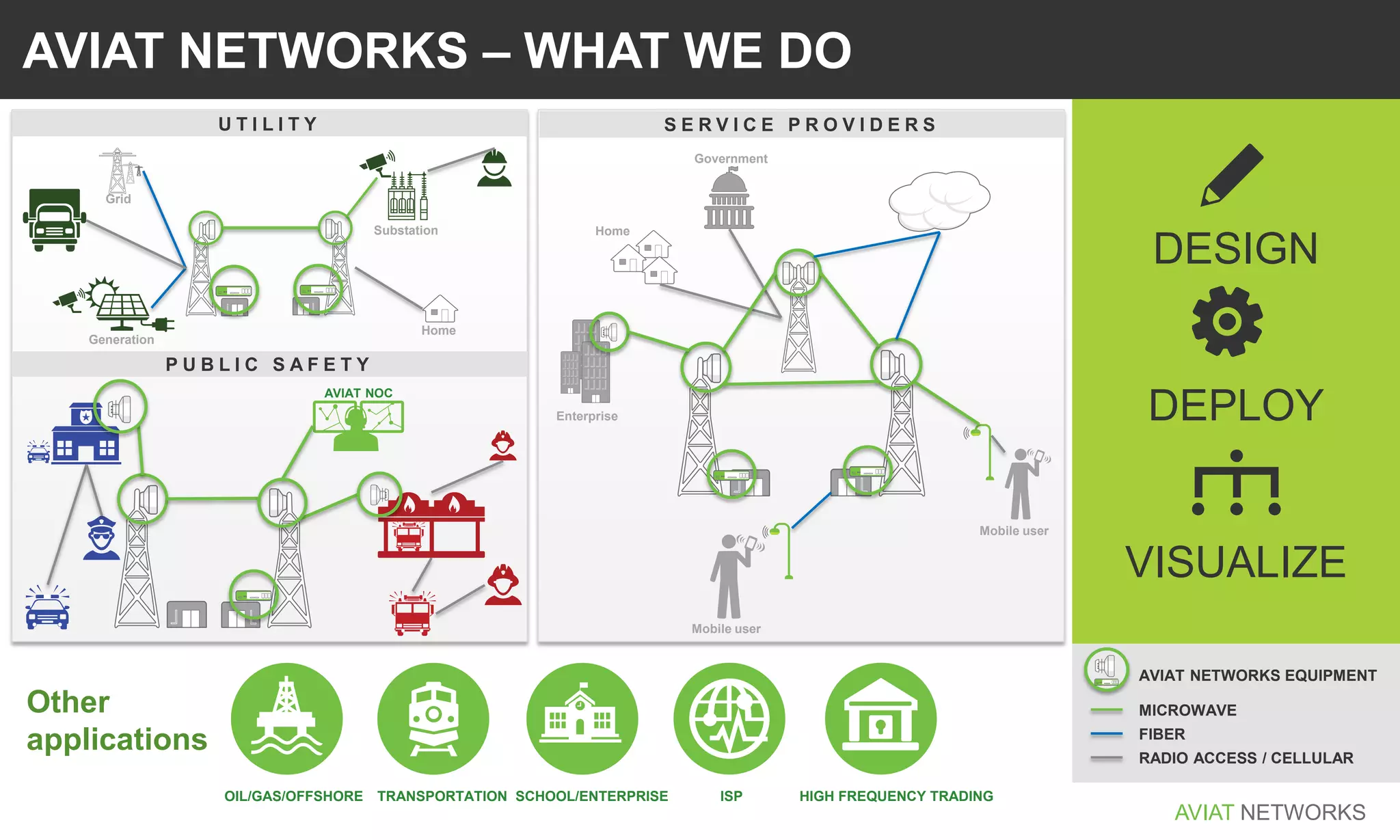
Aviat Networks (AVNW) is expanding its long-haul wireless transmission capabilities to increase backbone capacity for the growing demands of AI networking. According to reports via Yahoo Finance, this strategic shift positions the company to provide the critical high-capacity transport required to move massive AI datasets between data centers and edge computing locations, addressing a primary bottleneck in AI infrastructure.
How Aviat Networks is Scaling Backbone Capacity for AI
The expansion of Aviat Networks’ long-haul portfolio focuses on increasing the throughput and distance of wireless backhaul solutions. In the context of artificial intelligence, “backbone capacity” refers to the primary data arteries that connect disparate data centers or link regional hubs to a central core. While much of the current AI investment focuses on GPUs and internal data center switches, the movement of data between these sites is becoming a critical constraint.
According to industry analysis, the surge in generative AI has created a non-linear increase in data traffic. Large Language Models (LLMs) require the synchronization of massive weights and datasets across distributed clusters. Aviat Networks is targeting this need by deploying high-capacity microwave and millimetric wave technologies that can be deployed faster than traditional fiber-optic cabling.
Key technical objectives of the expansion include:
- Increased Spectral Efficiency: Utilizing advanced modulation to squeeze more bits per hertz of available spectrum.
- Reduced Latency: Providing a wireless alternative to fiber that can, in some specific geometries, offer lower latency due to the speed of light in air versus glass.
- Rapid Deployment: Enabling “backbone” connectivity in regions where trenching fiber is cost-prohibitive or geographically impossible.
Why Long-Haul Wireless Matters for the AI Networking Story
The “AI networking story” has historically been dominated by companies providing internal fabric—the cables and switches inside a single room. However, as AI moves toward “Edge AI” and distributed inference, the requirement for robust long-haul transport grows. Aviat Networks’ move into this space shifts the focus from the compute side of AI to the transport side.
According to technical specifications for long-haul transmission, wireless backbone solutions serve as a vital redundancy and primary path for data centers that cannot wait for the multi-year timelines associated with municipal fiber permits. For AI providers, a delay in backbone capacity translates directly into increased latency for the end-user and slower training times for distributed models.
“The bottleneck for AI is shifting from the chip to the pipe. Without the capacity to move data across the backbone, the most powerful GPUs remain underutilized.”
This shift is particularly evident in the rise of “Inference at the Edge,” where AI processing happens closer to the user. To keep these edge nodes updated with the latest model versions, a high-capacity backbone—such as the one Aviat is expanding—is required to push updates from the central training hub to the periphery.
Comparing Wireless Backbone vs. Fiber Optic Infrastructure
To understand the value proposition of Aviat Networks (AVNW), it is necessary to contrast wireless long-haul expansion with traditional fiber deployment. While fiber offers virtually unlimited bandwidth, the physical constraints of deployment create a gap that Aviat is filling.
| Feature | Fiber Optic (Traditional) | Aviat Long-Haul Wireless |
|---|---|---|
| Deployment Speed | Slow (Months/Years for trenching) | Fast (Days/Weeks for tower install) |
| Initial Capex | High (Construction heavy) | Moderate (Hardware heavy) |
| Latency | Low (but limited by refractive index) | Ultra-Low (Air is faster than glass) |
| Scalability | Very High (Once laid) | High (Via spectral upgrades) |
| Geographic Reach | Limited by physical paths | Line-of-Sight flexibility |
As noted in the Yahoo Finance reporting, this capacity angle allows Aviat to enter the AI conversation not as a chipmaker, but as a critical infrastructure provider. This diversification reduces the company’s reliance on traditional telecommunications cycles and ties its growth to the broader AI infrastructure build-out.
The Strategic Role of AVNW in the AI Ecosystem
Aviat Networks operates in a specialized niche of the networking stack. By focusing on long-haul expansion, the company is positioning itself as a “bridge” for the AI economy. The stakeholders involved in this ecosystem include hyperscalers (like AWS, Google, and Azure), telecommunications providers, and private enterprise AI adopters.
Impact on Hyperscalers
Hyperscalers require massive amounts of redundancy. If a primary fiber line is cut, an AI training cluster could lose synchronization, wasting millions of dollars in compute time. Aviat’s long-haul wireless provides a high-capacity “failover” that ensures backbone continuity.
Impact on Telecom Providers
Telecoms are currently upgrading their 4G/5G cores to handle AI-generated traffic. According to industry trends, the “midhaul” and “backhaul” segments of the network are the most strained. Aviat’s expanded capacity allows these providers to scale their networks without the prohibitive cost of digging new trenches across thousands of miles.
Impact on Edge Computing
Edge AI requires a “thick” pipe to the central cloud. Aviat’s long-haul solutions enable the creation of regional AI hubs that can process data locally while maintaining a high-speed link to the primary data center for model synchronization.
Addressing Common Misconceptions About Wireless Backhaul
A common misconception is that wireless transmission is inherently “slower” or “less reliable” than fiber. While this was true for early microwave systems, modern long-haul expansion utilizes several technologies to close the gap.
- Adaptive Modulation: Modern systems can automatically adjust their modulation scheme based on weather conditions, ensuring the link stays up even during heavy rain or snow, though capacity may fluctuate slightly.
- Multi-Band Integration: By combining different frequency bands, Aviat can create “fat pipes” that rival the throughput of lower-tier fiber connections.
- Latency Advantages: In high-frequency trading and real-time AI inference, the speed of light in air (approximately 30% faster than in fiber optic glass) makes wireless long-haul the preferred choice for the most latency-sensitive applications.
Another misconception is that AI networking only happens inside the data center. While “East-West” traffic (server-to-server) is critical, “North-South” traffic (data center-to-user or data center-to-data center) is where the backbone capacity angle becomes a competitive advantage for companies like AVNW.
Market Implications and Financial Outlook
The pivot toward AI networking creates a new revenue catalyst for Aviat Networks. Previously, the company’s growth was tied largely to the 5G rollout cycles of major carriers. By attaching its value proposition to the AI story, AVNW opens itself to a broader set of buyers, including non-traditional telco customers like cloud service providers and large-scale industrial AI users.
According to market data, the AI networking market is expected to grow at a compound annual growth rate (CAGR) significantly higher than traditional networking. If Aviat can successfully capture a percentage of the “backbone” spend, it could see a shift in its valuation multiples, moving from a “legacy hardware” perception to an “AI infrastructure” perception.
Investors and analysts are focusing on several key metrics to determine the success of this expansion:
- Order Backlog: Whether new contracts are coming from AI-driven data center projects.
- Average Revenue Per User (ARPU): Whether long-haul AI solutions command a premium over standard telco backhaul.
- Market Penetration: The rate at which wireless backbone solutions are being adopted as primary—rather than just redundant—links for AI traffic.
For more information on how this fits into the broader tech landscape, readers may find a related explainer on Edge Computing architecture useful to understand where the “edge” ends and the “backbone” begins.
Potential Risks to the Long-Haul Strategy
Despite the potential, several headwinds exist. The primary risk is the continued advancement of fiber deployment speeds and costs. If new technologies make fiber trenching significantly cheaper or faster, the “speed of deployment” advantage of wireless diminishes.
Additionally, regulatory hurdles regarding spectrum allocation remain a factor. Long-haul wireless depends on the availability of specific frequency bands. If governments restrict these bands or increase licensing costs, the margins for Aviat’s long-haul solutions could be squeezed.
There is also the risk of “over-reliance” on the AI hype cycle. If the demand for generative AI slows or if models become significantly more efficient (requiring less data movement), the urgency for backbone capacity expansion may decrease.
Frequently Asked Questions
What is the “backbone capacity angle” for Aviat Networks?
The backbone capacity angle refers to Aviat’s ability to provide high-speed, long-distance wireless links that move data between major network hubs. In the AI context, this is essential for transporting the massive amounts of data required to train and run large-scale AI models across different physical locations.
Why is wireless long-haul better than fiber for some AI applications?
Wireless long-haul is often faster to deploy than fiber, which requires physical digging and permits. Furthermore, because light travels faster through air than through the glass cores of fiber cables, wireless links can offer lower latency, which is critical for real-time AI inference and high-frequency data synchronization.
How does AVNW fit into the broader AI networking story?
While companies like Nvidia focus on the chips and Arista focuses on the switches inside the data center, Aviat Networks focuses on the “pipes” that connect those data centers. They provide the infrastructure that allows AI clusters to communicate over long distances, effectively acting as the circulatory system for distributed AI.
Is Aviat Networks only targeting telecommunications companies?
No. While telcos remain a core customer base, the expansion into long-haul AI networking targets hyperscalers, cloud providers, and large enterprises that are building their own distributed AI infrastructure and require rapid, high-capacity connectivity.
What are the main technical challenges of long-haul wireless?
The primary challenges include maintaining line-of-sight between towers, managing signal interference, and overcoming “rain fade” (where atmospheric conditions degrade the signal). Aviat addresses these using advanced modulation and multi-band technology.
As the AI industry matures, the focus will inevitably shift from the raw power of the processor to the efficiency of the network. The ability to move petabytes of data across a continent with minimal latency is no longer a luxury but a requirement. By expanding its long-haul capabilities, Aviat Networks is attempting to secure its place as a foundational provider in the physical layer of the AI revolution.
