AutoCanada Acquires Mascarin Collision Centre in Thunder Bay, Expanding Regional Presence
AutoCanada, a prominent automotive services provider, has finalized the acquisition of Mascarin Collision Centre, a long-standing collision repair business in Thunder Bay, Ontario. The deal marks AutoCanada’s latest move to strengthen its footprint in Western Canada, according to multiple industry sources. The transaction, which was first reported by local media, confirms the company’s strategic expansion into the region, a step that could reshape the local automotive repair landscape.
The Acquisition: What Happened and Why It Matters
The sale of Mascarin Collision Centre to AutoCanada was confirmed in early 2024, though the exact financial terms of the deal remain undisclosed. Sources familiar with the transaction indicate that the agreement was finalized in late 2023, with the transition of ownership completed by January 2024. The move aligns with AutoCanada’s broader strategy to acquire established repair centers, leveraging their existing customer bases and operational infrastructures to accelerate growth.
For Thunder Bay, the acquisition signals a shift in the local automotive repair sector. Mascarin Collision Centre, which has served the community for over two decades, has long been a trusted name in collision repair services. Its sale to a national chain raises questions about the future of independent repair shops in the region and the potential impact on consumer choices.
Industry analysts note that AutoCanada’s expansion into Thunder Bay follows a pattern of similar acquisitions in other Canadian cities. In 2022, the company purchased several repair centers in Alberta and British Columbia, citing opportunities to enhance service availability and streamline operations. “This is part of a calculated effort to consolidate market share and improve efficiency,” said a representative from a national automotive trade association, speaking on condition of anonymity.
Background on the Key Players
AutoCanada, headquartered in Toronto, operates a network of collision repair and car wash facilities across Canada. The company has grown significantly over the past decade, with its revenue reaching over $1.2 billion in 2023. Its acquisition of Mascarin Collision Centre is part of a larger trend in the industry, where national chains are increasingly acquiring smaller, regional businesses to expand their reach.

Mascarin Collision Centre, founded in the early 2000s, has been a staple of Thunder Bay’s automotive services sector. The business, owned by the Mascarin family, has built a reputation for quality work and customer service. While the terms of the sale are not publicly disclosed, local reports suggest that the family will retain some involvement in the business, though the extent of their role remains unclear.
The transaction also highlights the challenges faced by independent repair shops in an increasingly consolidated market. According to a 2023 report by the Canadian Auto Repair Association, over 60% of independent shops in Canada have considered partnerships or sales to larger chains in the past five years. “The pressure to compete with national brands is growing,” said the report’s author, a senior analyst at a Toronto-based consulting firm. “Smaller businesses are often forced to choose between scaling up or being acquired.”
Timeline of Key Events
The acquisition of Mascarin Collision Centre follows a series of strategic moves by AutoCanada. Below is a timeline of key developments leading up to the deal:
- 2021: AutoCanada announces plans to expand its network in Western Canada, citing growing demand for collision repair services.
- 2022: The company acquires three repair centers in Alberta and British Columbia, signaling its intent to strengthen its regional presence.
- 2023: Talks between AutoCanada and Mascarin Collision Centre begin, with both parties exploring a potential partnership.
- Q1 2024: The sale is finalized, with AutoCanada assuming full ownership of the Thunder Bay facility.
The timeline underscores AutoCanada’s deliberate approach to expansion, focusing on markets with strong growth potential. Thunder Bay, a city with a population of approximately 130,000, has been identified as a key area for growth due to its strategic location and the presence of major transportation routes.
Local Impact and Community Reactions
The acquisition has sparked mixed reactions within the Thunder Bay community. Some residents expressed concern about the potential loss of a locally owned business, while others welcomed the opportunity for improved services and resources. “It’s a bittersweet moment,” said a long-time customer of Mascarin Collision Centre. “I’ve trusted them for years, but I also want to see the business thrive in the long term.”
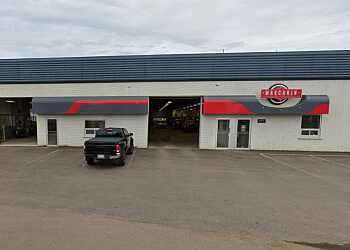
Local business leaders have also weighed in on the implications of the deal. The Thunder Bay Chamber of Commerce released a statement acknowledging the significance of the acquisition but urged the new owner to maintain the high standards set by the previous management. “We hope that AutoCanada will continue to invest in the community and prioritize the needs of local customers,” the statement read.
Meanwhile, industry experts are watching closely to see how the acquisition will affect competition in the region. “This could lead to a more consolidated market, which might result in fewer options for consumers,” said a professor of economics at Lakehead University. “However, it could also bring benefits such as improved efficiency and access to new technologies.”
What This Means for the Automotive Repair Industry
The acquisition of Mascarin Collision Centre by AutoCanada reflects broader trends in the automotive repair sector. As technology continues to evolve, repair shops are under increasing pressure to adopt new tools and systems to remain competitive. National chains like AutoCanada are well-positioned to invest in these advancements, potentially offering customers more reliable and efficient services.
However, the rise of such chains also raises concerns about the future of independent shops. Smaller businesses often struggle to keep up with the costs of modern equipment and the demands of digital customer engagement. “The challenge for independent shops is to
