
Armenia Election: Prime Minister Pashinyan Declares Victory Amid Intense Global Scrutiny
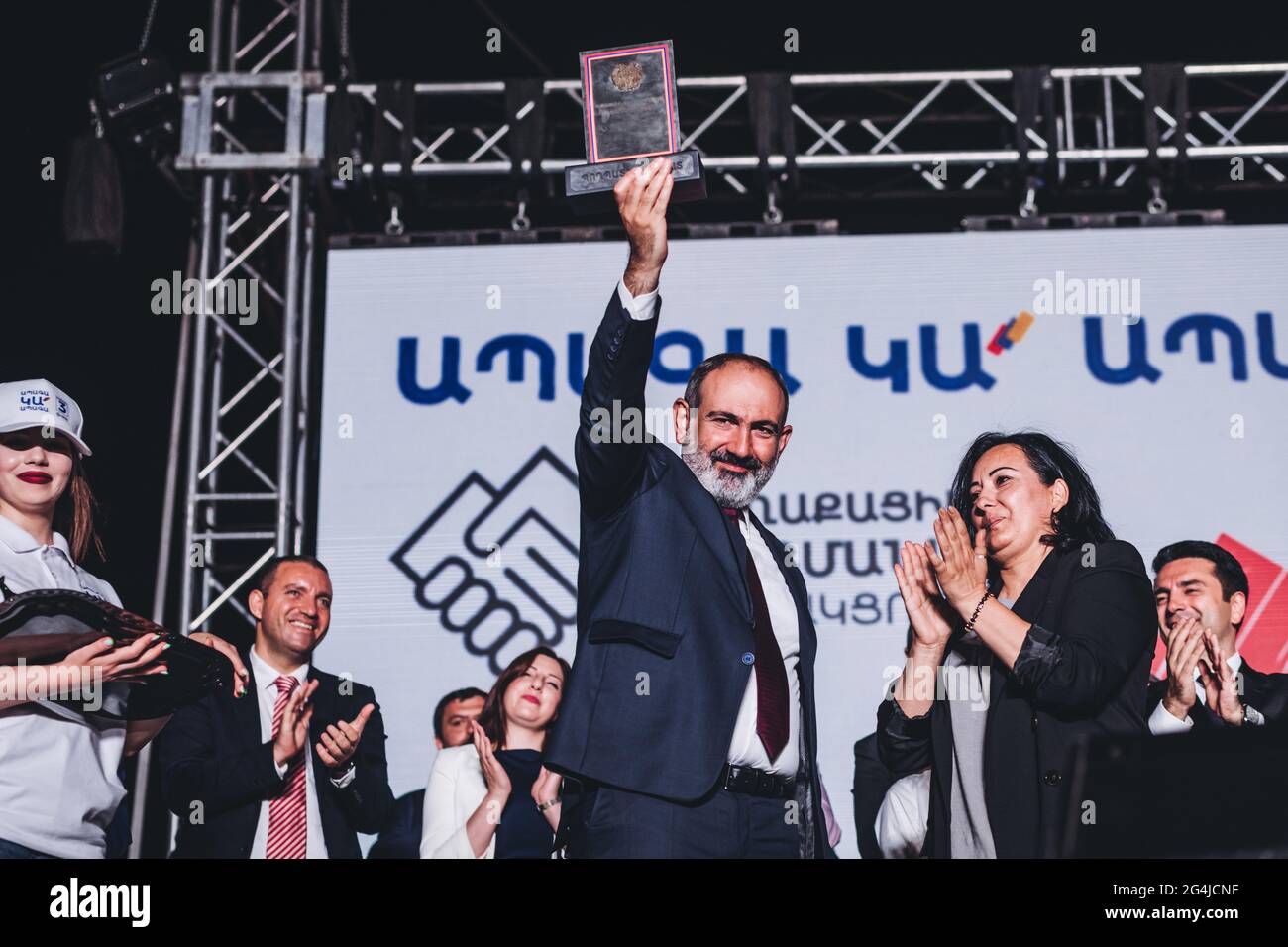
Prime Minister Nikol Pashinyan has declared victory in the Armenian elections, a result that arrives amid a high-stakes geopolitical struggle for influence in the South Caucasus. The election served as a critical juncture for the nation, occurring under significant pressure from Russia and close observation by the European Union, as the Armenian electorate weighed the country’s traditional security ties against a growing interest in Western integration.
The Outcome of the Armenian Election
Following the casting of ballots, Prime Minister Nikol Pashinyan announced his victory, signaling a continuation of his leadership at a time of immense internal and external volatility. The declaration of victory comes after a campaign period characterized by deep divisions over the country’s strategic direction and its relationship with neighboring powers.
The victory for Pashinyan is not merely a domestic political win but a signal to the international community regarding Armenia’s current trajectory. According to reports from dw.com, the Prime Minister’s victory is the central development in a process that has been watched closely by global powers, specifically Russia and the EU, both of whom view Armenia as a key piece in the broader geopolitical puzzle of Eurasia.
“It’s time to move forward”
This sentiment, highlighted by The Guardian, captures the mood of many Armenians who viewed the election as an opportunity to break from past cycles of instability and define a new path for the republic. The victory of the incumbent suggests a mandate to pursue this “forward” movement, though the definition of that direction remains a point of intense international contention.
Russia’s Response and the Warning Against ‘Pro-European Forces’
The election took place against a backdrop of explicit warnings from the Kremlin. According to CBC, Russia issued warnings against the election of “pro-European forces,” reflecting Moscow’s anxiety over losing its traditional sphere of influence in the region. Russia has long viewed Armenia as a strategic ally and a bulwark against Western encroachment in the Caucasus.
The Russian approach to this election was not limited to diplomatic warnings. Both the BBC and CTV News report that Russia “piled pressure” on the pro-West government leading up to the polls. This pressure was aimed specifically at preventing what CTV News described as a “drift toward the West.”
The nature of this pressure suggests that Moscow views the Armenian government’s current orientation not as a domestic policy choice, but as a security threat to Russian interests. The warning against “pro-European forces” indicates that the Kremlin sees a binary choice: either Armenia remains firmly within the Russian orbit or it risks a destabilizing shift toward European political and security frameworks.
Key Elements of Russian Influence during the Election
- Direct Warnings: Explicit cautioned against the rise of pro-EU candidates and policies (CBC).
- Strategic Pressure: Systematic efforts to discourage the government from pivoting toward Western alliances (BBC).
- Containment Strategy: A clear goal to halt the “drift toward the West” to maintain regional hegemony (CTV News).
The European Union’s Role as a Global Observer
While Russia utilized pressure and warnings, the European Union took the role of a close observer. The Guardian reports that the election was “closely watched” by the EU, reflecting Brussels’ interest in Armenia’s democratic processes and its potential for closer integration with Europe.
The EU’s interest is not merely procedural. For the European Union, a Pashinyan victory—or the success of pro-European sentiments—represents a potential expansion of Western democratic values and economic ties into a region traditionally dominated by Russian influence. The EU’s presence as an observer serves as a counterweight to Russian pressure, providing a degree of international legitimacy to the electoral process.
The tension between these two external forces—the EU’s observational support and Russia’s active pressure—placed the Armenian voter in a difficult position. The election became a proxy for the larger struggle between the liberal-democratic model promoted by the West and the security-centric, sphere-of-influence model promoted by the Kremlin.
Analyzing the ‘Drift Toward the West’
The phrase “drift toward the West,” as used by CTV News, describes a complex shift in Armenia’s foreign policy. This drift involves more than just diplomatic rhetoric; it encompasses a desire for diversified security partnerships and a move toward European standards of governance and trade.
For the Pashinyan government, moving “forward” likely involves reducing the total dependence on a single security guarantor. The pressure described by the BBC suggests that Russia views any diversification of Armenia’s foreign policy as a betrayal or a strategic loss. This dynamic creates a volatile environment where domestic electoral choices have immediate and potentially severe international consequences.
The “pro-European forces” mentioned by CBC are those who advocate for deeper ties with the EU, potentially including economic agreements, visa liberalization, and closer cooperation on human rights and rule of law. The Russian warning suggests that such a move is viewed by Moscow as an existential threat to its regional security architecture.
Comparative Media Framing of the Election
Different international news outlets highlighted different dimensions of the election, reflecting the multifaceted nature of the event. While all agreed on the central tension, the framing varied from focusing on the “pressure” to focusing on the “hope” for progress.
| Media Outlet | Primary Focus/Angle | Key Terminology Used |
|---|---|---|
| dw.com | The result and the declaration of victory. | “Pashinyan declares victory” |
| CBC | Russia’s warnings and ideological conflict. | “pro-European forces” |
| The Guardian | The domestic mood and international observation. | “time to move forward” |
| CTV News | Geopolitical movement and Russian containment. | “drift toward West” |
| BBC | The intensity of external political pressure. | “piles pressure” |
Implications of Pashinyan’s Victory
The victory of Prime Minister Pashinyan suggests that despite the pressure from Moscow, a significant portion of the Armenian electorate is willing to support a government that is perceived as being more open to the West. This outcome has several immediate implications for the region.

Impact on Russia-Armenia Relations
The relationship between Yerevan and Moscow is likely to remain strained. Given that Russia warned against “pro-European forces,” the victory of a government that has shown a “drift toward the West” may lead to further pressure or a cooling of diplomatic and military cooperation. The “pressure” reported by the BBC is unlikely to vanish; instead, it may evolve into different forms of economic or political leverage.
Impact on EU-Armenia Relations
For the European Union, this result is a signal that there is domestic appetite for Western-style governance and partnership. The EU may now feel more emboldened to offer increased support, whether through economic aid, trade agreements, or diplomatic backing, to help Armenia balance its relationship with Russia.
Domestic Stability and the ‘Move Forward’ Mandate
Internally, Pashinyan’s victory provides him with a renewed mandate. However, the phrase “time to move forward” implies that the public expects tangible progress. The challenge for the administration will be to translate this electoral victory into stability and prosperity while navigating the narrow corridor between Russian demands and European aspirations.
Common Misconceptions Regarding the Election
A common oversimplification of this election is that it was a simple binary choice between Russia and the West. In reality, the situation is far more nuanced. Many Armenians value their security ties with Russia while simultaneously desiring the economic and democratic benefits of the European Union.
Another misconception is that the “pressure” from Russia was purely diplomatic. As reported by the BBC and CTV News, the pressure was systemic and aimed at preventing a strategic shift. This suggests that the election was not just about who would lead the government, but about whether Armenia could maintain its sovereignty in the face of an assertive superpower.
Finally, some may view the “pro-European” label as a purely ideological one. However, in the context of the South Caucasus, “pro-European” often serves as a shorthand for diversifying security dependencies and reducing the risk of being unilaterally decided by a single neighboring power.
The Geopolitical Stakes in the South Caucasus
Armenia’s election is a microcosm of a larger trend across the former Soviet space. From Eastern Europe to Central Asia, nations are increasingly attempting to balance their historical ties to Russia with a desire for integration into the global economy and Western political systems.
The “drift toward the West” mentioned by CTV News is a phenomenon that Russia has consistently fought. The use of “warnings” (CBC) and “pressure” (BBC) are standard tools in the Kremlin’s playbook to prevent the loss of strategic buffers. Armenia’s experience shows that these external pressures can coincide with a domestic desire to “move forward,” creating a high-tension environment during electoral cycles.
The fact that the election was “closely watched” by the EU indicates that the West is no longer a passive observer in these transitions but is actively monitoring and supporting the democratic processes that lead to these pivots. This creates a competitive environment where the Armenian government must skillfully manage two very different sets of expectations.
Frequently Asked Questions
Who declared victory in the Armenian election?
Prime Minister Nikol Pashinyan declared victory in the election, according to reports from dw.com.

What was Russia’s position during the election?
Russia was strongly opposed to the election of “pro-European forces,” as reported by CBC, and applied significant pressure on the government to prevent it from drifting toward the West, according to the BBC and CTV News.
How did the European Union react to the election?
The European Union closely watched the election process, as noted by The Guardian, signaling its interest in the democratic outcome and Armenia’s potential shift toward European alignment.
What does “drift toward the West” mean in this context?
As referenced by CTV News, this refers to Armenia’s increasing tendency to seek closer political, economic, and security ties with Western nations and the EU, reducing its exclusive reliance on Russia.
What was the general sentiment among Armenian voters?
According to The Guardian, there was a prevailing sentiment that “it’s time to move forward,” suggesting a desire for progress and a departure from previous political instabilities.
As the new government takes shape, the world will be watching to see how Prime Minister Pashinyan handles the inherent contradiction of his position: leading a nation that wishes to move forward while remaining under the intense pressure of a superpower that warns against any move toward the West. The victory is a beginning, but the actual “drift” toward the West will likely be a slow, contested, and precarious journey.
