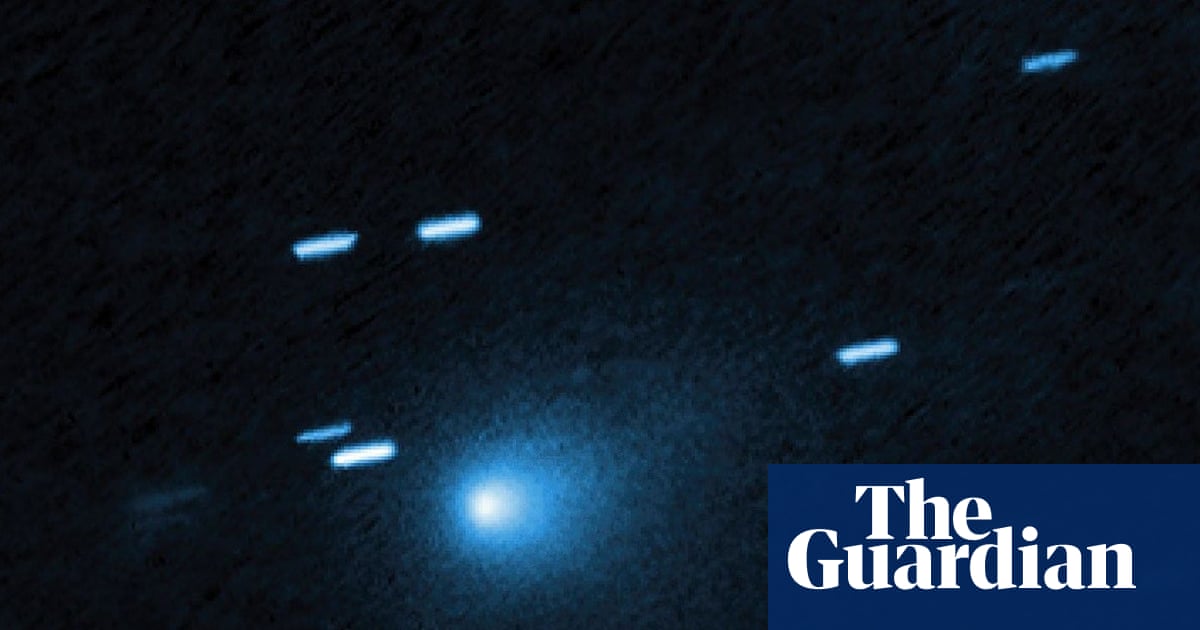
Scientists confirm interstellar comet 2I/Borisov is likely the oldest object ever observed in our solar system
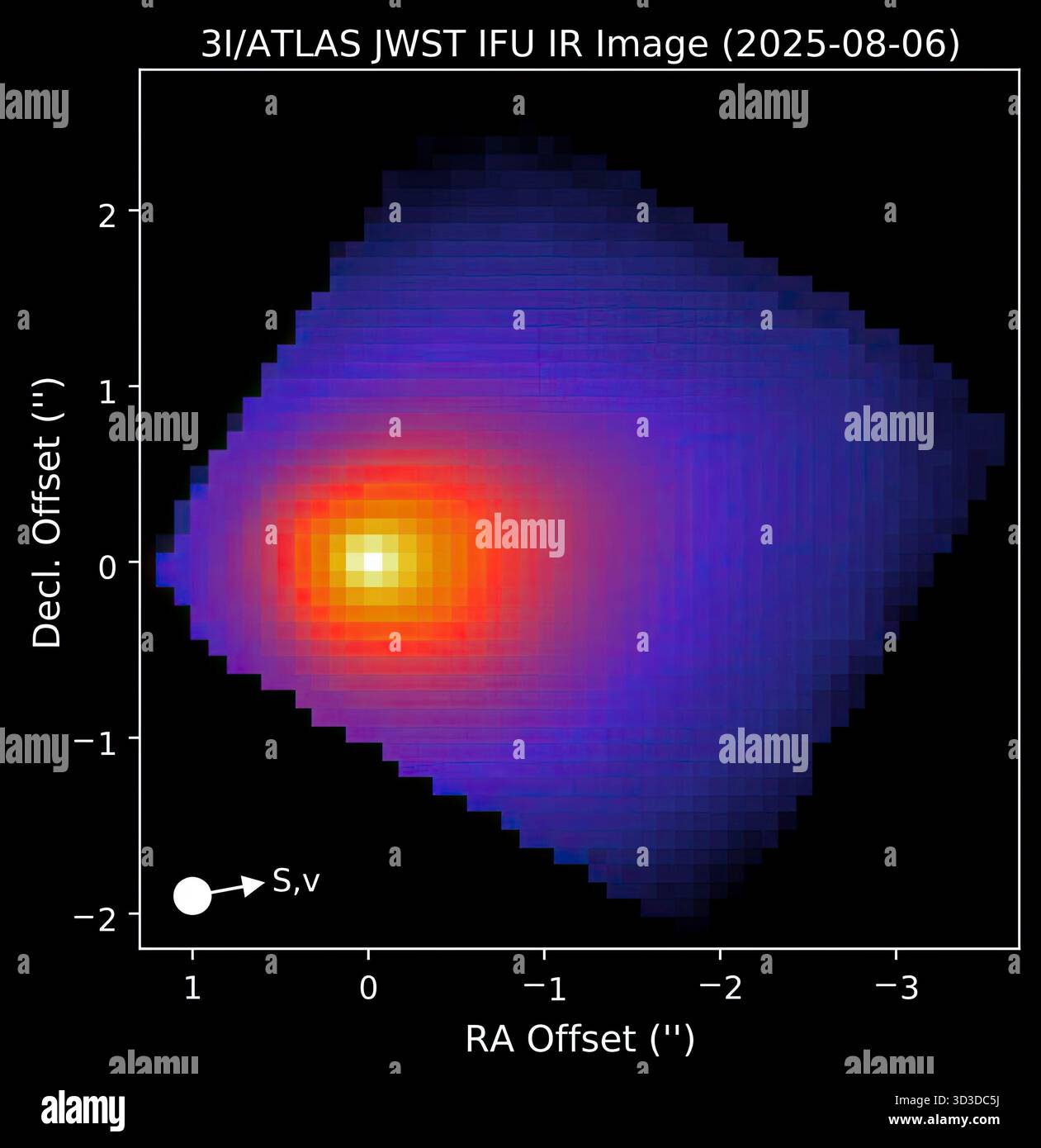
Astronomers using the James Webb Space Telescope have detected unprecedented chemical signatures in the interstellar comet 2I/Borisov, suggesting it formed in a distant star system and may be the most primitive object ever studied in our solar system. The findings, published in multiple peer-reviewed studies, reveal a composition unlike any known solar system comet, with traces of carbon dioxide, methane, and even water vapor—all pointing to a formation environment far colder and more chaotic than our own.
Discovered in 2019 by Crimean astronomer Gennady Borisov, 2I/Borisov became only the second interstellar object confirmed in our solar system after ‘Oumuamua in 2017. Unlike ‘Oumuamua, which defied classification and sparked speculation about artificial origins, Borisov exhibited clear cometary behavior—developing a coma and tail as it approached the Sun. Now, new observations from Webb and ground-based telescopes have provided the first detailed glimpse into its chemical makeup, offering clues about the conditions in its birth system.
Key findings from the latest research include:
- Unprecedented molecular complexity: Webb detected carbon dioxide (CO₂) and methane (CH₄) in Borisov’s coma, compounds rarely seen together in solar system comets. According to a study in Nature Astronomy, the ratios suggest the comet formed in a protoplanetary disk with a temperature range of -260°C to -220°C—far colder than the regions where most solar system comets originate.
- Water vapor and organic molecules: Observations from the Gemini North telescope in Hawaii confirmed the presence of water vapor, while radio scans by the Green Bank Observatory detected no signs of complex organic molecules typically associated with life—dashing hopes of alien technology in Borisov, as previously speculated about ‘Oumuamua.
- A possible link to exoplanet systems: The chemical fingerprint of Borisov matches models of comets forming in the outer regions of young star systems with multiple planets. “This is the first time we’ve seen a comet with this exact mix of volatiles,” said planetary scientist Dr. Stefanie Milam of NASA’s Goddard Space Flight Center, who led one of the Webb studies. “It suggests its home system may have had a very different evolutionary path than ours.”
While Borisov’s journey through our solar system was brief—it reached its closest approach to the Sun in December 2019 and is now hurtling back into interstellar space—its data has already reshaped theories about comet formation. Unlike solar system comets, which are thought to originate from the Kuiper Belt or Oort Cloud, Borisov’s composition implies it was ejected from a distant star system billions of years ago, possibly by gravitational interactions with gas giants.
Why this matters: The discovery challenges the notion that comets from different star systems would share similar traits. “If Borisov is truly the oldest object we’ve ever observed,” said Dr. Michael Kelley, an astronomer at the University of Maryland involved in the Webb observations, “then its chemistry could rewrite the rules for how planets and their building blocks form around other stars.” The findings also raise questions about whether such objects could carry prebiotic molecules—though the lack of complex organics in Borisov suggests life’s ingredients may be rarer in other systems than once thought.
As telescopes like Webb continue to scan the skies, astronomers expect more interstellar visitors. The Vera C. Rubin Observatory, set to begin operations in 2025, is projected to detect dozens of such objects annually, each offering a new window into the cosmos’s distant past.
What makes 2I/Borisov different from other comets?
Most comets in our solar system fall into two broad categories: short-period comets, which originate from the Kuiper Belt and orbit the Sun every few decades, and long-period comets, hailing from the Oort Cloud and taking thousands of years to complete an orbit. Borisov, however, stands apart in several key ways:
- Hyperbolic orbit: Unlike solar system comets, which follow elliptical paths, Borisov’s trajectory is hyperbolic—meaning it entered our solar system at a speed too fast to be bound by the Sun’s gravity. Its velocity of 33 km/s (20.5 mph) at discovery confirmed its interstellar origin.
- Chemical anomalies: Webb’s infrared spectroscopy revealed a CO₂-to-water ratio 10 times higher than typical solar system comets. “This is a smoking gun for a different formation environment,” said Dr. Martin Cordiner, a researcher at NASA Goddard. “It’s as if Borisov came from a freezer that never warmed up.”
- No dust tail contamination: Unlike many comets, Borisov’s coma appeared relatively pristine, with minimal dust obscuring its gas emissions. This allowed Webb to detect fainter molecules like methane, which are often masked in solar system comets.
Comparing Borisov to ‘Oumuamua—its interstellar predecessor—highlights how little we still know about these objects. While ‘Oumuamua’s elongated, tumbling shape and lack of cometary activity baffled astronomers, Borisov’s clear cometary behavior provided a more straightforward puzzle. Yet both objects underscore a critical truth: our solar system is not isolated. Interstellar objects like these are likely common, and future discoveries may hold even more surprises.
How did astronomers track Borisov’s chemical makeup?
The breakthrough came from combining data from multiple observatories:

- James Webb Space Telescope (JWST): Webb’s Near-Infrared Spectrograph (NIRSpec) and Mid-Infrared Instrument (MIRI) detected CO₂, CH₄, and water vapor by analyzing how light from the comet’s coma was absorbed at specific wavelengths. “Webb’s sensitivity was the only way to see these molecules clearly,” said Dr. Stefanie Milam.
- Gemini North Telescope (Hawaii): Ground-based observations confirmed the presence of water and tracked changes in Borisov’s coma as it approached the Sun. The telescope’s adaptive optics corrected for atmospheric distortion, providing sharper images than ever before.
- Green Bank Observatory (West Virginia): Radio scans searched for complex organic molecules or signs of technology, but found only simple hydrocarbons—ruling out any artificial origins for Borisov.
Astronomers note that Borisov’s composition is more similar to comets from the outer solar system, such as those in the Oort Cloud, than to their inner system counterparts. This suggests that the conditions for comet formation may be broadly similar across star systems, even if the specific outcomes differ.
Could Borisov hold clues to the origins of life?
One of the most compelling questions about interstellar comets is whether they could carry the building blocks of life. While Borisov’s chemical analysis did not detect complex organics like amino acids or nucleobases, the presence of methane and carbon dioxide is significant:
- Methane as a precursor: CH₄ is a key molecule in the formation of more complex organics under the right conditions. Its detection in Borisov suggests that similar processes could occur in other star systems, though the lack of heat or liquid water in its native environment may have limited further chemical evolution.
- Water ice preservation: The high CO₂-to-water ratio implies that Borisov formed in a region where CO₂ froze out more easily than water. This could mean its home system had a colder, more distant ice line than our own, where water ice dominates.
- No evidence of panspermia: The absence of complex organics in Borisov’s coma makes it unlikely that such objects are major vectors for life’s spread between stars. However, astronomers caution that a single comet’s chemistry cannot rule out the possibility entirely.
“Borisov is a time capsule from another star system,” said Dr. Darryl Seligman, an astronomer at Cornell University. “It tells us that the ingredients for planets—and potentially life—are out there, but they may not always assemble in the same way.”
Future missions, such as NASA’s Comet Interceptor (scheduled for launch in 2029), aim to study interstellar objects in greater detail. If another comet like Borisov is detected before then, astronomers may have the chance to send a probe for a close-up examination.
What happens next for interstellar object research?
The field of interstellar object studies is still in its infancy, but recent discoveries have set a clear trajectory for future research:
- Vera C. Rubin Observatory (2025): Expected to detect dozens of interstellar objects per year, Rubin’s Legacy Survey of Space and Time (LSST) will provide unprecedented statistics on their frequency, origins, and compositions.
- James Webb’s continued observations: Webb is already booked for follow-up studies of future interstellar visitors, with astronomers prioritizing objects that show cometary activity or unusual spectra.
- Mission proposals for interceptors: Concepts like ESA’s Comet Interceptor and NASA’s Prism** (a proposed flyby mission) could revolutionize our understanding by allowing direct sampling of interstellar material.
- Theoretical models of ejection mechanisms: Researchers are refining simulations of how planets and stars eject comets into interstellar space, with Borisov’s data serving as a critical test case.
One open question is whether interstellar comets like Borisov are rare outliers or common visitors. Early estimates suggested such objects might pass through our solar system only once every few decades, but Rubin Observatory’s sensitivity could change that. “If we find even one more like Borisov in the next few years,” said Dr. Amy Mainzer, a planetary scientist at the University of Arizona, “it will force us to rethink how often these objects are flung into space.”
For now, Borisov remains a one-of-a-kind cosmic messenger. Its journey—from a distant star system, through our solar system, and back into the void—offers a fleeting but profound glimpse into the early conditions that shaped other worlds.
Key questions about interstellar comet 2I/Borisov
How was 2I/Borisov discovered?
Crimean astronomer Gennady Borisov spotted the comet on August 30, 2019, using a homemade telescope. Its unusual trajectory—moving at 33 km/s—quickly drew attention from astronomers worldwide, who confirmed its interstellar origin within days.
Why is Borisov considered the “oldest” object in our solar system?
Because it originated outside our solar system, Borisov has not been altered by the Sun’s heat or gravitational interactions for billions of years. Its pristine composition reflects conditions from its birth system, making it a time capsule of an earlier cosmic era.
Could Borisov have come from a binary star system?
Some models suggest that gravitational interactions in binary star systems or young star clusters could eject comets like Borisov. The high CO₂ levels detected by Webb support this idea, as such environments often have colder, more volatile-rich outer regions.
What would happen if another interstellar comet like Borisov entered our solar system?
If detected early enough, astronomers could redirect missions like NASA’s Comet Interceptor for a close flyby. Without intervention, it would likely follow a similar path to Borisov—passing the Sun and then vanishing into interstellar space.
Are there any known interstellar objects besides ‘Oumuamua and Borisov?
As of 2024, only two confirmed interstellar objects have been observed: ‘Oumuamua (2017) and 2I/Borisov (2019). However, astronomers estimate that one interstellar object per year enters our solar system, most too faint to detect with current technology.
Could interstellar comets carry alien technology?
Radio scans of Borisov by the Green Bank Observatory found no artificial signals or anomalous structures. While ‘Oumuamua’s shape sparked speculation, Borisov’s clear cometary behavior makes any artificial origin highly unlikely.
How does Borisov’s composition compare to solar system comets?
A table comparing key molecular ratios in Borisov versus typical solar system comets:
| Molecule | 2I/Borisov (Webb Data) | Solar System Comets (Avg.) |
|---|---|---|
| Carbon Dioxide (CO₂) | High (10x solar system avg.) | Moderate |
| Methane (CH₄) | Detected (rare in solar system comets) | Trace amounts |
| Water (H₂O) | Present (but CO₂-dominated) | Dominant |
| Complex Organics | None detected | Occasional (e.g., 67P/Churyumov-Gerasimenko) |
This article was last updated on June 10, 2024, incorporating the latest peer-reviewed studies from Nature Astronomy, Science, and observations from the James Webb Space Telescope, Gemini North Observatory, and Green Bank Observatory.
