Ancient Enamel Just Exposed a Hidden Human Family Entanglement That May Still Echo in Your DNA – Phys.org
Researchers utilizing paleoproteomics have identified complex kinship ties in ancient human populations by analyzing proteins preserved in tooth enamel. According to findings highlighted by Phys.org, this method allows scientists to uncover family entanglements and ancestral connections that traditional DNA sequencing often misses due to the rapid degradation of genetic material in harsh environments.
How does ancient tooth enamel reveal hidden family connections?
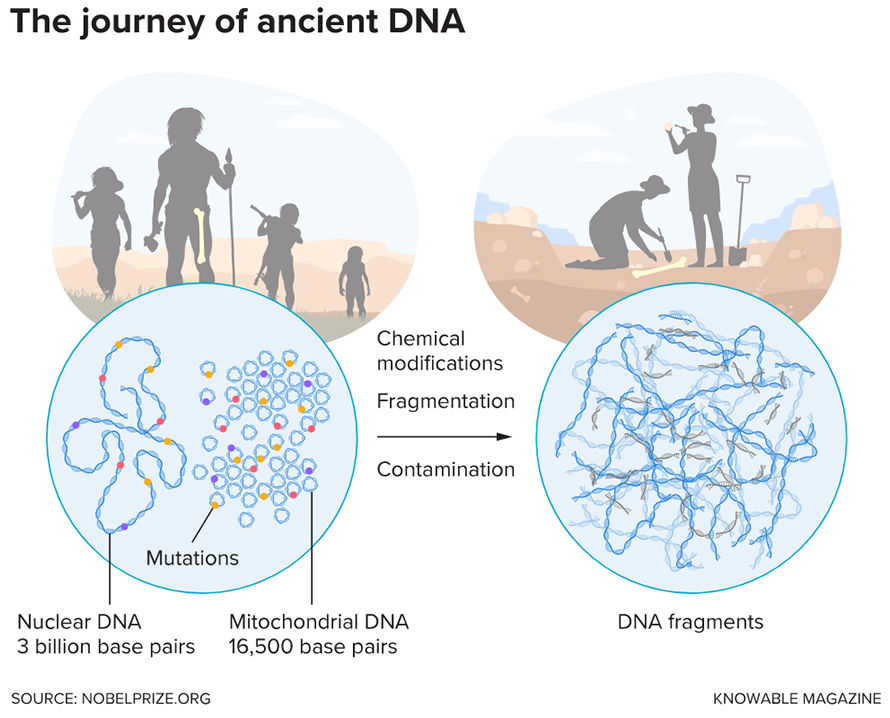
Tooth enamel serves as a biological vault, protecting proteins far more effectively than bone or soft tissue. While ancient DNA (aDNA) is the gold standard for genetic mapping, it is fragile and breaks down quickly when exposed to heat, humidity, or acidity. Proteins, however, are more robust. According to the research reported by Phys.org, the analysis of these proteins—specifically those found in the enamel matrix—allows scientists to reconstruct familial relationships and population movements from samples where DNA is entirely absent.
The process involves paleoproteomics, the study of ancient proteins. Researchers extract these proteins from the mineralized structure of the tooth and use mass spectrometry to sequence the amino acids. Because proteins are the products of genes, they act as a proxy for the genetic code. By comparing protein sequences across different skeletal remains, scientists can identify “entanglements,” or specific kinship patterns, such as close-relative mating or targeted migration, that shaped the genetic makeup of ancient groups.
Key aspects of this discovery include:
- Protein Stability: Enamel is the hardest substance in the human body, shielding proteins from microbial attack and environmental decay.
- Amino Acid Sequencing: By mapping the sequence of amino acids, researchers can identify mutations that are characteristic of specific family lineages.
- Kinship Mapping: The ability to distinguish between siblings, parents, and distant cousins even in samples thousands of years old.
Why is paleoproteomics more effective than DNA in some cases?
The primary limitation of ancient DNA is its half-life. In warm climates, DNA can disappear from a bone in a matter of centuries. This has created “blind spots” in the human evolutionary map, particularly in Africa and Southeast Asia, where high temperatures accelerate decay. Paleoproteomics fills these gaps. According to the data, proteins can survive for millions of years, far outlasting the double-helix structure of DNA.
When researchers look for “family entanglements,” they are often looking for evidence of endogamy (marrying within a specific group) or exogamy (marrying outside a group). DNA analysis requires a certain threshold of preserved genomic material to make these calls. Proteomics requires a much smaller, more stable sample. This allows for a more comprehensive view of how ancient families interacted and how those interactions created the genetic bottlenecks or expansions that characterize modern human populations.
| Feature | Ancient DNA (aDNA) | Paleoproteomics (Proteins) |
|---|---|---|
| Durability | Low (Degrades quickly) | High (Very stable) |
| Environmental Limit | Poor in warm/humid climates | Resistant to most climates |
| Information Type | Full genomic blueprint | Functional protein expressions |
| Sample Requirement | High quality/quantity needed | Can work with fragmented enamel |
What are the “family entanglements” discovered in the research?
The term “family entanglement” refers to the complex web of kinship and mating patterns that define a population’s survival and evolution. In the context of the Phys.org report, this refers to the discovery of unexpected relationships between individuals who were previously thought to be unrelated or from different migratory waves. By analyzing enamel, researchers found that certain ancient groups maintained much tighter family circles than previously assumed, often engaging in strategic kinship ties to preserve resources or social status.
These entanglements often manifest as high levels of homozygosity, where individuals inherit identical versions of a gene from both parents. This is a hallmark of inbreeding or mating within a small, isolated population. Understanding these patterns helps anthropologists determine if a population was shrinking, expanding, or absorbing other groups through interbreeding.
“The proteins in tooth enamel act as a permanent record of an individual’s biological heritage, surviving long after the DNA has vanished, allowing us to see the invisible threads that connect ancient families.”
These findings suggest that human social structures were far more complex than simple nomadic bands. There were established hierarchies and kinship rules that governed who could marry whom, directly influencing the genetic diversity of the descendants.
How do these ancient patterns echo in modern DNA?
The “echoes” mentioned in the research refer to the lasting genetic markers that modern humans carry from these ancient entanglements. Every person’s genome is a mosaic of their ancestors’ experiences. When an ancient population experienced a “bottleneck”—a sharp reduction in size—or a period of intense inbreeding, it left a signature in the DNA of the survivors.
Modern genetic testing, such as autosomal DNA tests, often reveals segments of DNA that are identical on both the maternal and paternal sides. These are known as “runs of homozygosity.” According to geneticists, these segments can be traced back to the very types of family entanglements discovered through enamel analysis. Whether it is a specific predisposition to a disease or a unique physical trait, these echoes are the direct result of how ancient families were structured.

For example, certain rare genetic disorders are more prevalent in specific modern populations because of ancient kinship patterns. By mapping the proteins in ancient enamel, scientists can pinpoint exactly when and where these entanglements occurred, providing a historical context for modern medical genetics.
Potential areas of modern impact include:
- Medical Genetics: Identifying the origin of hereditary conditions linked to ancient population bottlenecks.
- Ancestry Mapping: Refining the accuracy of haplogroups by filling in gaps where aDNA was unavailable.
- Evolutionary Biology: Understanding how “hidden” family ties contributed to the survival of certain traits during ice ages or plagues.
For more on how these methods are used in other fields, see a related explainer on paleogenetics.
What are the implications for human evolutionary history?
The ability to extract family history from enamel changes the timeline of human migration and interaction. For decades, the “Out of Africa” theory and subsequent migration maps relied heavily on a few high-quality DNA samples. However, these samples were biased toward cold climates (like Siberia or Northern Europe) where DNA preserves well. The Phys.org report suggests that by using proteomics, we can finally get an unbiased look at migrations in tropical and subtropical regions.
This shift in methodology is revealing that human “entanglements” were not just local events but global patterns. We are seeing evidence of interbreeding between different hominin species and early human groups that were previously invisible. This suggests that the human family tree is not a series of clean branches, but rather a braided stream where lineages split and merged repeatedly.
The role of the enamel matrix
The specific proteins being studied are often part of the enamel matrix, such as amelogenin. These proteins are secreted during tooth development and then mostly removed as the enamel mineralizes. However, small amounts remain trapped within the hydroxyapatite crystals. These trapped proteins are shielded from the outside world, making them an ideal source for proteomic sequencing. This biological “time capsule” ensures that the kinship data remains intact even when the rest of the skeleton has turned to dust.
Correcting historical misconceptions
One common misconception is that ancient humans lived in small, isolated groups with very little interaction. The proteomic evidence of family entanglement suggests the opposite: a sophisticated system of social networking. The discovery of distant kinship ties between geographically separated sites indicates that ancient humans traveled further and maintained social bonds across larger distances than previously believed.
Who is benefiting from this research?
The impact of this research extends beyond the walls of a laboratory. Several stakeholders are utilizing these findings to reshape their understanding of human history:
- Anthropologists: They can now reconstruct social hierarchies and marriage customs of prehistoric societies with greater accuracy.
- Geneticists: The data provides a baseline for understanding how genetic drift and mutation occur over tens of thousands of years.
- Medical Researchers: By identifying ancient bottlenecks, researchers can better understand the evolution of certain genetic diseases.
- Forensic Scientists: The techniques used in paleoproteomics are being adapted for modern forensics, where DNA may be too degraded to provide a profile.
This intersection of technology and biology allows for a “high-resolution” view of the past. Instead of guessing based on tool use or pottery styles, researchers can now use the actual biological remains to prove familial relationships.
Frequently Asked Questions about Ancient Enamel and DNA
Can I find these “family entanglements” in my own DNA test?
While commercial DNA tests cannot analyze ancient enamel, they can identify “runs of homozygosity” or shared segments of DNA that suggest your ancestors may have come from a small, entangled population. These are the modern echoes of the patterns found in ancient proteomic research.
Is paleoproteomics replacing DNA sequencing?
No. Paleoproteomics is a complementary tool. DNA provides the full genetic blueprint, while proteins provide a more durable record of that blueprint. Scientists use both to get a complete picture; if DNA is available, it is used, but if it is degraded, proteins are the primary source of truth.
How old can the enamel be for this to work?
Proteins are incredibly stable. While DNA generally degrades within 100,000 years (depending on the climate), proteins have been recovered from fossils millions of years old. This makes enamel analysis viable for almost any period of human history.
Does this mean ancient humans inbred more than we do today?
Not necessarily. The “entanglements” found in the research reflect the social structures of the time. In small, isolated groups, the pool of available partners was limited. These patterns were often a survival strategy to maintain group cohesion or protect resources, rather than a conscious choice to inbreed in the modern sense.
Why is this specific research being reported now?
The technology for mass spectrometry and protein sequencing has reached a level of sensitivity that allows researchers to work with tiny, fragmented samples. We now have the tools to read the “protein language” that was previously invisible to us.
As researchers continue to apply these proteomic tools to more sites globally, the map of human kinship will continue to evolve. The “hidden entanglements” found in ancient enamel are providing the missing links in our ancestral chain, proving that the biological connections of the past are still very much present in the genetic makeup of the living.
For further reading on the evolution of the human genome, consider an analysis of human migration patterns.
