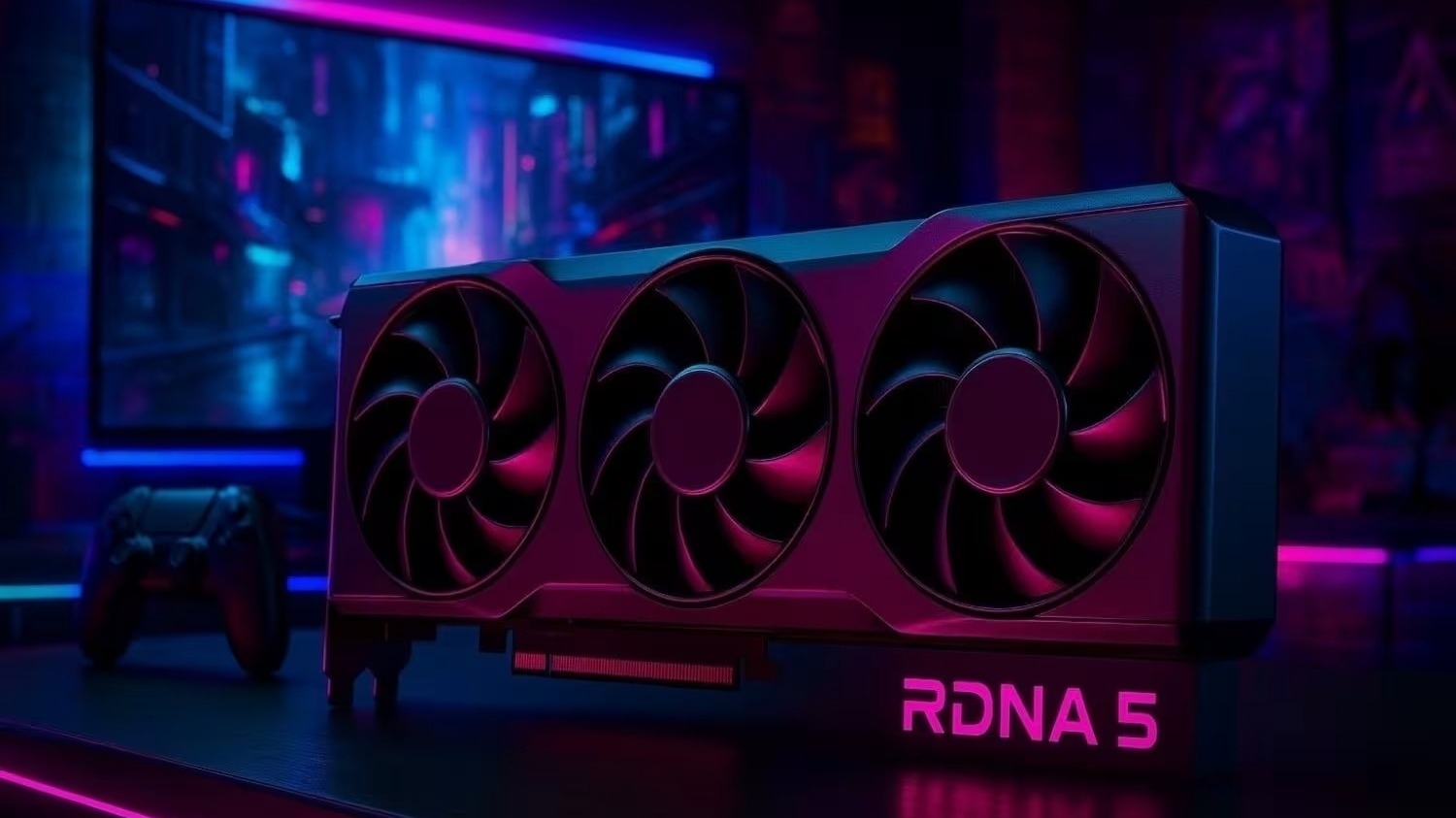
AMD’s RDNA 5 Radeon GPUs Will Launch in Mid-2027, Per New Leak
According to reports from TweakTown, OC3D, and IGN India, AMD’s RDNA 5 Radeon GPUs will launch in mid-2027. This timeline indicates that AMD is planning a significant architectural shift for its fifth-generation graphics cards, positioning them as a major leap following the expected release of the RDNA 4 series.
What are the details of the RDNA 5 leak?
Recent leaks detailed by TweakTown and corroborated by OC3D and IGN India suggest that AMD has targeted mid-2027 for the debut of its RDNA 5 architecture. While AMD has not officially confirmed these dates, the reports indicate a strategic roadmap that separates the upcoming RDNA 4 GPUs from the more ambitious RDNA 5 project.
The reports suggest that RDNA 5 isn’t just a routine update. Instead, it represents a “clean sheet” design approach. According to the leaked information, AMD is treating RDNA 5 as the primary vehicle to reclaim the high-end enthusiast market, a segment where NVIDIA currently holds a dominant lead with its RTX 40-series and upcoming Blackwell architectures.
Key points regarding the RDNA 5 timeline include:
- Target Release: Mid-2027.
- Strategic Positioning: A major architectural overhaul rather than an incremental update.
- Market Focus: High-end performance and enthusiast-grade gaming.
- Preceding Tech: RDNA 4 is expected to bridge the gap between current RDNA 3 cards and the 2027 launch.
How does RDNA 5 differ from the upcoming RDNA 4?
Industry analysis based on the TweakTown and OC3D reports suggests a clear distinction in goals between the fourth and fifth generations of Radeon GPUs. RDNA 4 is reportedly designed to refine existing technology and improve efficiency, particularly in the mid-range market. In contrast, RDNA 5 is described as the architecture that will introduce fundamental changes to how AMD handles graphics processing.
According to the leaked details, RDNA 4 may focus on improving ray tracing performance and power efficiency without attempting to outclass NVIDIA’s top-tier flagship cards. This allows AMD to stabilize its mid-range offering while dedicating the bulk of its engineering resources to the RDNA 5 project. By targeting mid-2027, AMD gives itself a longer development window to ensure RDNA 5 can compete directly with the next-next generation of competitor hardware.
| Feature/Goal | RDNA 4 (Expected) | RDNA 5 (Reported Leak) |
|---|---|---|
| Release Window | 2024/2025 | Mid-2027 |
| Primary Focus | Mid-range efficiency & Value | Enthusiast performance & Innovation |
| Architecture Type | Incremental/Refined | Clean-sheet/Major Overhaul |
| Market Strategy | Volume sales & Market share | Technological leadership & Flagship power |
Why does a mid-2027 launch date matter for gamers?
The mid-2027 window for AMD’s RDNA 5 Radeon GPUs will launch in mid-2027, per new leak – TweakTown, creates a specific waiting game for consumers. For those seeking the absolute peak of performance, this leak suggests that the “true” next-gen leap is still several years away. This means that users currently holding RDNA 2 or RDNA 3 hardware may find the RDNA 4 series to be a practical upgrade for 1440p gaming, but those chasing 4K ultra-performance may look toward 2027.

This timeline also impacts the competitive landscape. NVIDIA typically follows a two-year release cycle. If AMD pushes its major architectural shift to 2027, it may be aligning its release with a specific node transition at TSMC (Taiwan Semiconductor Manufacturing Company). Moving to a smaller, more efficient process node is often the catalyst for the “clean sheet” designs mentioned in the leaks.
Furthermore, the delay of a flagship-tier architecture until 2027 suggests AMD is prioritizing stability and AI integration. As reported by IGN India, the pressure to integrate AI-driven upscaling and frame generation—similar to NVIDIA’s DLSS—is immense. A longer development cycle for RDNA 5 could allow AMD to build dedicated AI hardware into the silicon rather than relying on software-based solutions like FSR (FidelityFX Super Resolution).
What are the industry implications of this roadmap?
The reported shift in AMD’s strategy suggests a move away from trying to fight a “war of attrition” in the ultra-high-end market every single year. By focusing RDNA 4 on the mid-range and pushing RDNA 5 to 2027, AMD can capture the largest segment of the gaming population while preparing a “knockout blow” for the enthusiast market later.
This approach mirrors strategies seen in the CPU market, where AMD’s Zen architecture often undergoes a period of refinement (like Zen 3 to Zen 4) before a massive shift in design. According to the logic presented in the TweakTown and OC3D reports, AMD is avoiding the risk of releasing a “half-step” flagship that fails to beat NVIDIA, which could damage the brand’s prestige in the enthusiast community.
There are also economic factors at play. The cost of developing a new GPU architecture is staggering. By stretching the roadmap, AMD can better manage its R&D budget and ensure that RDNA 5 is compatible with the next generation of gaming consoles, which often share DNA with Radeon GPUs.
Potential challenges for AMD by 2027
- NVIDIA’s Momentum: If NVIDIA continues to iterate rapidly, a 2027 launch might leave AMD playing catch-up for too long.
- Intel’s Entry: Intel’s Arc GPUs are still in their early stages. By 2027, Intel may have a mature third or fourth generation of GPUs that could disrupt the mid-range space AMD intends to occupy with RDNA 4.
- Software Ecosystems: Hardware is only half the battle. AMD must ensure that by 2027, its software suite is as robust as the competition’s to make the RDNA 5 hardware viable.
Comparing the leaked timeline to previous Radeon cycles
Historically, AMD has attempted to maintain a consistent release cadence. However, the leap from GCN (Graphics Core Next) to RDNA was a massive pivot that took significant time and planning. The reported move toward a 2027 launch for RDNA 5 suggests that AMD views the current RDNA era as needing a similar “reset” to maintain competitiveness.

If the TweakTown and OC3D leaks are accurate, the gap between RDNA 3 (2022) and RDNA 5 (2027) will be five years. While RDNA 4 will exist in the middle, the lack of a “major” architecture change in that window is unusual for the industry. This implies that RDNA 5 is intended to be a generational leap that makes previous iterations obsolete, rather than a gradual climb.
This strategy can be compared to the “Tick-Tock” model previously used by Intel, where one generation focused on shrinking the process (Tick) and the next focused on a new architecture (Tock). RDNA 4 appears to be the “Tick” (refinement), and RDNA 5 is the “Tock” (innovation).
How this affects current GPU buying decisions
For consumers, the news that AMD’s RDNA 5 Radeon GPUs will launch in mid-2027, per new leak – TweakTown, provides a clearer picture of the value proposition of current and upcoming hardware. Those who need a GPU today should not wait for RDNA 5, as a three-year wait is impractical for most users.
Instead, the roadmap suggests two distinct paths:
- The Value Path: Wait for the RDNA 4 series. Based on the reports, these cards will likely offer the best “bang for your buck” in the mid-range, focusing on 1440p performance and improved ray tracing.
- The Power Path: If you currently own a high-end card (like an RX 7900 XTX or RTX 4090), the RDNA 4 series may not offer a sufficient upgrade. In this case, the RDNA 5 architecture in 2027 is the target for a meaningful performance jump.
It is also worth considering the related explainer on GPU architecture cycles to understand how these leaks fit into broader industry trends. Most hardware leaps are driven by the physical limits of silicon, and the 2027 date likely aligns with the availability of new manufacturing processes that allow for higher transistor density and lower power draw.
Common misconceptions about the RDNA 5 leak
One common misconception is that AMD is “giving up” on the high-end market until 2027. This is not supported by the reports. Rather, the reports from TweakTown and others suggest a recalibration. AMD is not abandoning the enthusiast; they are simply changing how they approach them. By not rushing a flagship RDNA 4, they avoid releasing a product that might be outperformed by NVIDIA’s next cycle.
Another misconception is that RDNA 4 will be “bad” because it isn’t a major overhaul. In reality, refined architectures often provide the best stability and driver support because they aren’t introducing experimental features. RDNA 4 could potentially be the most stable and efficient series AMD has ever produced, even if it isn’t the most powerful.
Frequently Asked Questions
When will AMD RDNA 5 GPUs be released?
According to leaks reported by TweakTown, OC3D, and IGN India, AMD’s RDNA 5 Radeon GPUs are targeted for a launch in mid-2027.
Is RDNA 4 being skipped?
No. The reports indicate that RDNA 4 will still be released, but it will focus on the mid-range market and incremental improvements, while RDNA 5 will handle the major architectural leap for enthusiasts.

Will RDNA 5 be better than NVIDIA’s current GPUs?
While specific benchmarks aren’t available, the “clean sheet” design mentioned in the leaks suggests AMD intends for RDNA 5 to compete directly with NVIDIA’s top-tier flagship offerings of that era.
Should I buy a GPU now or wait for RDNA 5?
Because RDNA 5 is not expected until mid-2027, most users should not wait. Those seeking a mid-range upgrade may want to wait for RDNA 4, but those needing immediate performance should look at current RDNA 3 or NVIDIA RTX 40-series options.
What is a “clean sheet” architecture?
A clean-sheet design means engineers start from scratch rather than modifying an existing design. This typically allows for massive gains in efficiency, performance, and new features that wouldn’t fit into an older framework.
The trajectory of the GPU market remains volatile, but the reported mid-2027 date for RDNA 5 suggests a calculated move by AMD to prioritize long-term technological leadership over short-term flagship releases. As the industry moves closer to that date, further details on the specific performance targets and AI capabilities of RDNA 5 are expected to emerge.
