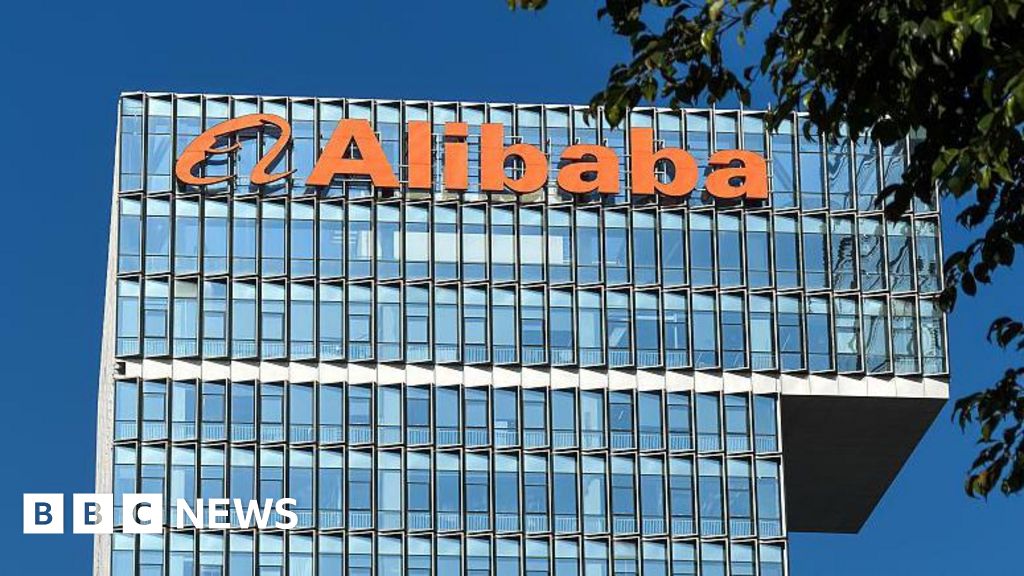
Alibaba Files Legal Challenge Against US Government Over Defense Blacklist Placement
Alibaba Group, the world’s largest cross-border e-commerce platform, has filed a lawsuit against the US government seeking to overturn its inclusion on an entity list that restricts transactions with companies linked to China’s military and surveillance sectors. The legal action, announced in federal court, marks a direct challenge to a policy that has already disrupted the company’s access to US technology and financial services. According to court documents, Alibaba argues the designation violates due process and lacks sufficient evidence to justify the restrictions.
Alibaba’s move comes as tensions between Washington and Beijing over technology transfers and national security continue to escalate. The company, which operates platforms like Taobao, Tmall, and AliExpress—serving over 1.2 billion global users—has faced mounting pressure from US regulators over concerns its data practices and supply chains could pose risks to American interests.
The lawsuit, filed in the US District Court for the District of Columbia, targets the Department of Defense and the Commerce Department, which oversee the entity list. Legal experts say the case could set a precedent for how US agencies enforce restrictions on Chinese tech firms, with broader implications for global trade and supply chains.
This article examines the legal battle’s origins, the stakes for Alibaba and US-China relations, and what the lawsuit means for businesses caught in the crossfire.
—
What Is the US Defense Blacklist, and Why Does Alibaba’s Inclusion Matter?
The US maintains a restricted entity list under the International Traffic in Arms Regulations (ITAR) and other export control laws, targeting companies deemed to support China’s military modernization or human rights abuses. Alibaba was added to the list in September 2023 after a review by the Pentagon’s Defense Security Cooperation Agency (DSCA), which concluded the company had “engaged in activities that are contrary to US national security or foreign policy interests.”
According to a Commerce Department filing, the designation prohibits US companies from supplying Alibaba with sensitive technologies, including semiconductors, encryption tools, and cloud computing services. The move follows a broader crackdown on Chinese firms, including Huawei and SMIC, which have faced similar restrictions over alleged ties to the People’s Liberation Army (PLA).
For Alibaba, the blacklist threatens its $150 billion annual revenue stream, particularly its cloud computing arm, Alibaba Cloud, which relies on US-made hardware and software. Analysts estimate the restrictions could cost the company up to $5 billion in lost sales and partnerships over the next two years.
Key points:
- The US defense blacklist blocks transactions with companies linked to military or surveillance activities.
- Alibaba’s inclusion restricts access to US tech, supply chains, and financial services.
- Revenue losses for Alibaba could reach $5 billion annually if restrictions remain in place.
—
How Did Alibaba End Up on the Blacklist? A Timeline of Events
The road to Alibaba’s blacklist designation began in 2020, when the US government first scrutinized Chinese tech firms for alleged data security risks. Here’s how the conflict unfolded:
| Date | Event | Key Details |
|---|---|---|
| March 2020 | US Commerce Department adds 28 Chinese entities to “military-end use” list | Includes Huawei, SMIC, and other firms accused of supporting PLA research. |
| September 2022 | US Senate passes Uyghur Forced Labor Prevention Act | Bans imports from Xinjiang-linked supply chains, indirectly affecting Alibaba’s logistics partners. |
| January 2023 | Alibaba Cloud suspends US government contracts | Cites “unpredictable regulatory environment” as a factor in pulling back from US cloud deals. |
| September 2023 | Pentagon’s DSCA adds Alibaba to defense blacklist | Cites “activities contrary to US national security,” including alleged sales to PLA-affiliated entities. |
| November 2023 | Alibaba files lawsuit in US District Court | Challenges the designation as arbitrary and lacking due process. |
Alibaba’s legal team argues the government failed to provide specific evidence linking the company to military activities. In a statement, the firm said, “We have never sold, nor have we ever been asked to sell, any products or services to the Chinese military or any other government entity.” The company points to its $1.5 billion annual investment in cybersecurity and compliance programs as proof of its commitment to transparency.
—
Why Is This Lawsuit a Turning Point in US-China Tech Wars?
Alibaba’s lawsuit is more than a corporate dispute—it’s a test of how far the US will go in enforcing its tech export controls. Legal scholars say the case could redefine the boundaries of due process for foreign firms operating in the US market.
“This is a high-stakes moment,” said Sarah Hsu, a trade law professor at Georgetown University. “The US has been aggressive in blacklisting Chinese firms, but Alibaba is different—it’s a consumer-facing giant with deep ties to American businesses. If the court rules against Alibaba, it sends a message that no Chinese company is safe from arbitrary restrictions.”
Meanwhile, China has condemned the blacklist as “unjustified and discriminatory.” The Chinese Ministry of Commerce stated in a recent press briefing that the US move “seriously violates market principles and harms the legitimate rights of Chinese companies.” Beijing has not yet responded to Alibaba’s lawsuit, but analysts expect retaliation, such as restrictions on US firms operating in China.
Broader implications:
- Could trigger reciprocal blacklists from China, targeting US tech firms like Apple or Google.
- May force Alibaba to relocate critical infrastructure (e.g., cloud servers) outside the US.
- Sets a precedent for how US agencies define “national security risks” in tech.
—
What Are the Immediate Consequences for Alibaba and Its Users?
Since the blacklist was imposed, Alibaba has already faced tangible disruptions:
- Supply chain breakdowns: US semiconductor suppliers like Intel and Nvidia have paused shipments to Alibaba Cloud, forcing the company to seek alternatives from Taiwan and South Korea.
- Financial services freeze: JPMorgan Chase and Goldman Sachs have restricted transactions involving Alibaba’s subsidiaries, citing compliance risks.
- User experience: Some Alibaba platforms have reported slower load times due to rerouted data traffic away from US-based servers.
For small businesses using Alibaba’s platforms, the fallout is more indirect but still significant. “We source 60% of our inventory from Alibaba,” said Mark Chen, owner of a US-based e-commerce store. “If their supply chains get disrupted, our costs will go up—and we’ll have to pass those on to customers.”
Alibaba has begun diversifying its tech stack, signing deals with Chinese chipmaker SMIC and cloud providers like Huawei’s Huawei Cloud. However, transitioning away from US infrastructure will take years and could cost billions.
—
How Could the Lawsuit Play Out, and What Are the Risks?
The legal battle will likely unfold in three phases:
- Discovery phase (6–12 months): Alibaba’s legal team will demand documents from the Pentagon and Commerce Department to challenge the evidence used to justify the blacklist. Sources familiar with the case say the government’s files may include intercepted communications or third-party reports linking Alibaba to PLA procurement.
- Judicial review (12–18 months): A federal judge will determine whether the blacklist violates Alibaba’s constitutional rights. If the court rules in Alibaba’s favor, the designation could be overturned—but the government may appeal.
- Political fallout (ongoing): The outcome will influence future US-China tech policies. A loss for Alibaba could embolden regulators to expand blacklists, while a win might prompt China to escalate its own restrictions on US firms.
Legal experts warn that even if Alibaba wins, the case may not fully resolve the underlying tensions. “The US is unlikely to drop its security concerns,” said James Mann, a national security lawyer at the Brookings Institution. “But if the court finds the process flawed, it could force the government to be more transparent in future designations.”
For now, Alibaba is betting that the legal system will side with due process. In its court filing, the company argues that the blacklist “lacks any factual basis” and was imposed without adequate notice or opportunity to respond.
—
What This Means for Other Chinese Tech Firms—and US Businesses
Alibaba is not alone. Over 1,000 Chinese companies are now on US restricted lists, including Huawei, TikTok’s parent company ByteDance, and even state-owned banks like ICBC. The trend has accelerated under President Biden’s administration, which has treated tech access as a national security priority.
For US businesses, the risks are twofold:
- Supply chain risks: Companies relying on Chinese-manufactured goods (e.g., electronics, pharmaceuticals) may face shortages if US-China trade tensions worsen.
- Market access: Chinese regulators have already restricted US firms like Tesla and Boeing from certain sectors, signaling potential retaliation.
“This is a classic case of mutual assured destruction,” said Eliot Cohen, a former US deputy secretary of defense. “Both sides are tightening screws, and the losers are the companies and consumers stuck in the middle.”
One silver lining: some analysts believe the lawsuit could push both governments toward clearer, more predictable rules. “The legal process might force the US to define what ‘national security risk’ actually means,” said Lisa Sachs, director of the Columbia University’s Center on Sustainable Investment. “Right now, it’s a black box.”
—
What to Watch for Next: Key Developments in the Coming Months
As the lawsuit progresses, several factors will shape its outcome:
- Government response: Will the US provide more details about the evidence used to blacklist Alibaba, or will it rely on classified claims?
- Chinese retaliation: Could Beijing impose new restrictions on US companies like Apple or Microsoft in response?
- Market reactions: Will investors punish Alibaba’s stock further, or will a legal victory spark a rebound?
- Regulatory shifts: Could the US Congress pass new laws to clarify how tech firms are scrutinized under national security laws?
One thing is certain: the case will test the limits of US regulatory power in an era of heightened geopolitical rivalry. For Alibaba, the stakes are existential—its ability to operate globally may hinge on a courtroom battle thousands of miles away.
—
Frequently Asked Questions About Alibaba’s Lawsuit and the US Defense Blacklist
Q: What is the US defense blacklist, and how does it differ from other sanctions?
A: The defense blacklist, managed by the Department of Defense, targets companies deemed to support military or surveillance activities. Unlike broader sanctions (e.g., those imposed by the Treasury Department), it specifically restricts access to US-made technology and supply chains. Other tools include the Commerce Department’s Entity List, which bans exports to certain firms, and the Office of Foreign Assets Control (OFAC) sanctions, which freeze assets.
Q: Has any other Chinese company successfully challenged a US blacklist designation?
A: Few have succeeded. Huawei has fought multiple lawsuits but lost key cases, including a 2020 ruling that upheld its ban from US tech. SMIC, China’s largest semiconductor maker, is currently appealing its own blacklist designation. Alibaba’s case is notable because it involves a consumer-facing company, not a military contractor.
Q: Will Alibaba’s lawsuit affect my ability to shop on its platforms?
A: Unlikely in the short term. Alibaba’s consumer-facing platforms (Taobao, AliExpress) are less affected than its B2B and cloud services. However, if the blacklist leads to supply chain disruptions, some products may become harder to source or more expensive. The company has already begun diversifying its logistics partners to mitigate risks.
Q: Could this lawsuit lead to a broader US-China trade war?
A: The risk is real. China has already signaled it may retaliate by restricting US firms’ access to its market. Historically, tech conflicts (e.g., the 2018–2020 trade war) have escalated into broader economic measures. However, both sides may prefer legal solutions over full-scale trade wars, given the high costs for consumers and businesses.
Q: What happens if Alibaba loses the lawsuit?
A: The company would likely face continued restrictions on US technology and financial services. It could accelerate plans to relocate critical infrastructure (e.g., data centers) to China or other countries. Long-term, the case could set a precedent for how US agencies enforce blacklists, potentially making it easier to target other Chinese firms.
Q: Are there any US companies that have benefited from the blacklist?
A: Yes. US tech firms like AWS, Microsoft Azure, and Google Cloud have seen increased demand from Chinese companies forced to seek alternatives to Alibaba Cloud. Additionally, US semiconductor makers (e.g., Intel, AMD) have gained market share as Chinese firms struggle to source chips.
Q: How does China’s response to the blacklist compare to past US actions?
A: China has historically responded to US restrictions with its own measures. For example, after the US banned Huawei in 2019, China restricted US firms like ExxonMobil from new energy projects. In this case, Beijing could impose export controls on US-made goods (e.g., aircraft parts, agricultural products) or restrict access to Chinese rare earth minerals, which are critical for US tech manufacturing.
