Africa CDC and WHO Unveil Comprehensive Ebola Preparedness and Response Plan for the Continent
On June 5, 2026, the Africa Centres for Disease Control and Prevention (Africa CDC) and the World Health Organization (WHO) announced the launch of a groundbreaking continental preparedness and response plan to address the ongoing Ebola outbreak. The initiative, funded with $518 million, aims to strengthen outbreak response measures across the continent for six months, from June to November 2026. The plan, which includes 11 pillars, marks a critical step in mitigating the spread of the virus and enhancing regional coordination.
What Happened: A Continental Strategy for Ebola Response
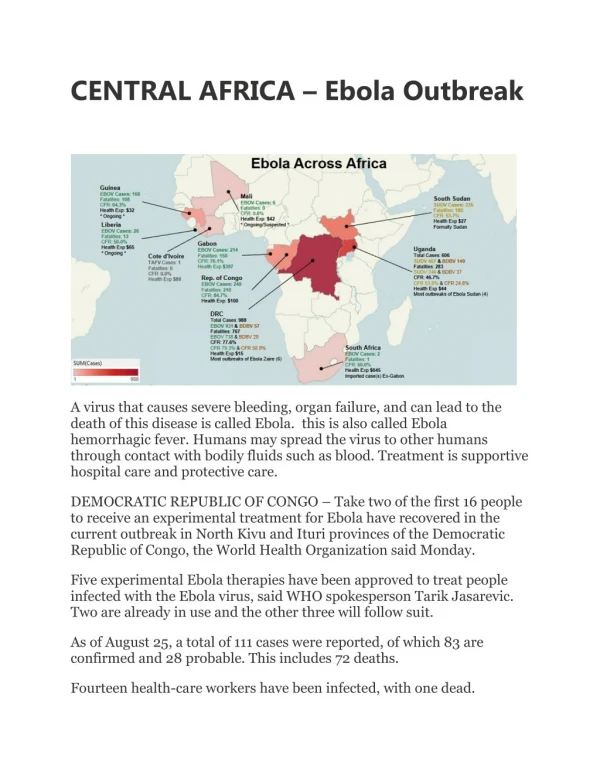
The joint plan was unveiled during a press briefing hosted by Africa CDC and WHO, focusing on the Bundibugyo Virus Disease, a lesser-known but highly infectious strain of the Ebola family. The initiative comes amid concerns over the resurgence of cases in Central Africa, where nearly 500 confirmed cases have been reported in recent months. The six-month strategy is designed to complement national response plans while addressing systemic challenges in surveillance, containment, and public health infrastructure.

The 11 pillars of the plan encompass a wide range of interventions, including strengthening laboratory networks, deploying mobile health units, and enhancing community engagement. These measures are intended to not only curb the current outbreak but also build long-term resilience against future epidemics. The $518 million funding, sourced from a combination of international donors and regional partners, will support activities such as vaccine distribution, training for healthcare workers, and public awareness campaigns.
Who Is Involved: Key Stakeholders and Regional Collaboration
The Africa CDC and WHO are the primary architects of the plan, but their efforts rely on the cooperation of national governments, local health authorities, and international organizations. The initiative specifically targets countries in Central Africa, where the Bundibugyo Virus has been most active. However, its framework is designed to be adaptable for other regions facing similar health crises.
Regional collaboration has been a cornerstone of the plan. The Africa CDC, established in 2016 to enhance disease surveillance and outbreak response, has worked closely with the WHO to align strategies with global health standards. This partnership underscores the importance of cross-border cooperation in addressing transnational health threats. Local health workers and community leaders are also integral to the plan’s success, as their insights are critical for tailoring interventions to specific cultural and logistical contexts.
Timeline and Context: A Developing Crisis
The decision to launch the plan follows a series of Ebola outbreaks in Central Africa, with the Bundibugyo Virus emerging as a growing concern. While case numbers in the Democratic Republic of Congo (DRC) have reportedly declined, the situation remains fragile, with the virus persisting in remote areas and posing risks of cross-border transmission. The $518 million plan is part of a broader effort to prevent a resurgence of cases and ensure sustained control measures.
This initiative builds on previous efforts to combat Ebola, including the 2014-2016 West African epidemic, which highlighted the need for rapid, coordinated responses. The current plan emphasizes proactive measures, such as early detection and rapid response teams, to prevent outbreaks from escalating. It also addresses gaps in healthcare infrastructure, which have been exacerbated by underfunded public health systems and limited access to medical resources in rural areas.
Why It Matters: Implications for Public Health and Global Security
The significance of the Africa CDC and WHO plan extends beyond the immediate containment of the Ebola outbreak. By investing in preparedness, the initiative aims to reduce the economic and social impact of future epidemics. Outbreaks like Ebola can disrupt trade, destabilize communities, and strain healthcare systems, making proactive measures essential for long-term stability.
The plan also has implications for global health security. As the world grapples with emerging infectious diseases, the collaboration between Africa CDC and WHO serves as a model for international partnerships. The focus on regional leadership and local expertise aligns with broader calls for equitable global health governance, ensuring that affected countries have the tools and resources to manage crises independently.
Challenges and Opportunities
Despite its ambitious goals, the plan faces several challenges. Logistical hurdles, such as transporting medical supplies to remote areas, could delay implementation. Political instability in some regions may also complicate coordination efforts. Additionally, ensuring community trust and participation is critical, as misinformation and vaccine hesitancy have historically undermined public health campaigns.
However, the plan presents opportunities for innovation and capacity building. The use of digital tools for disease surveillance,
