Cristiano Ronaldo becomes first player to score in six World Cups, ending 12-month goal drought
Lisbon, Portugal — Cristiano Ronaldo etched his name into football history on Saturday night, becoming the first player ever to score in six different World Cups after breaking a 12-month goal drought with a powerful strike against Uzbekistan in a 2-0 victory. The 39-year-old forward, who has been linked to a potential return to the pitch after a period of reduced appearances, marked his return with a header in the 45th minute, sending Portuguese fans into raptures and cementing his status as the most decorated player in World Cup history.
The goal against Uzbekistan wasn’t just a personal milestone—it also marked a turning point for Portugal’s campaign in the ongoing World Cup qualifiers. With the match ending in a decisive win, the Seleção moved one step closer to securing their place in the 2026 tournament, where they will join Ronaldo’s quest for a third World Cup appearance. The strike also reignited debates about his longevity and influence in modern football, with analysts and former teammates quick to praise his enduring impact.
Ronaldo’s goal came after a prolonged period without scoring, a rarity for a player who has been synonymous with goalscoring for nearly two decades. His last international goal before Saturday came in November 2023, a stretch that had raised questions about his fitness and form. The Uzbekistan match, played at the Estádio da Luz in Lisbon, provided the perfect stage for his return, with the Portuguese captain delivering a clinical finish from a Rafael Leão cross.
—
How did Ronaldo become the first player to score in six World Cups?
Ronaldo’s achievement is the culmination of a career that has spanned six World Cup tournaments—2006, 2010, 2014, 2018, 2022, and now 2026 qualifiers. His goal against Uzbekistan in the 45th minute was his 15th in World Cup history, a record that underscores his unparalleled consistency across continents and decades.
No other player has scored in as many World Cups as Ronaldo. The closest competitors—Miroslav Klose (five World Cups) and Lionel Messi (five World Cups)—have yet to match his milestone. Klose, who holds the record for most World Cup goals (16), never played in a sixth tournament, while Messi’s participation in the 2026 qualifiers remains uncertain.
Ronaldo’s goal also broke a personal drought that had lasted nearly a year. His last international goal came in a 2-0 victory over Liechtenstein in November 2023, a match where he scored twice. Since then, he had failed to find the net in 14 appearances across club and country, a stretch that had fueled speculation about his fitness and the future of his career.
Key milestone: Ronaldo’s goal against Uzbekistan is the first in his career to come in a World Cup qualifier for the 2026 tournament. The 2026 World Cup, co-hosted by the U.S., Canada, and Mexico, will be the first to feature 48 teams, expanding the field from the traditional 32.
—
Who is involved in Ronaldo’s historic achievement?
While Ronaldo was the star of the show, several key figures played roles in his return to scoring form. The match against Uzbekistan was managed by Roberto Martínez, Portugal’s head coach, who has navigated the challenges of fielding a squad with a mix of youth and experience. Martínez, who took over in 2023, has often relied on Ronaldo’s leadership, even as the forward’s availability has fluctuated due to injuries and club commitments.

Ronaldo’s goal was assisted by Rafael Leão, Portugal’s 25-year-old forward who has emerged as the team’s primary playmaker. Leão, who scored the second goal in the match, has been the driving force behind Portugal’s attacking play in recent years. His partnership with Ronaldo has been a cornerstone of the team’s success, blending the experience of the veteran with the dynamism of the younger player.
On the opposing side, Uzbekistan’s defense was tested by Ronaldo’s physicality and aerial prowess. The Central Asian nation, ranked 58th in the FIFA world rankings, had been preparing for a tough challenge against Portugal, a team that has consistently been among Europe’s elite in recent years. Despite the defeat, Uzbekistan’s performance showed resilience, with their goalkeeper making several crucial saves in the first half.
Team context: Portugal’s victory against Uzbekistan was their sixth consecutive qualifying win, a streak that has solidified their position as one of the favorites for the 2026 World Cup. The team’s defense, led by Rúben Dias and Diogo Jota, remained impervious, with only one shot on target in the entire match.
—
When and where did this historic goal happen?
The goal that cemented Ronaldo’s place in history occurred on Saturday, October 14, 2023, at the Estádio da Luz in Lisbon, Portugal. The match was part of the UEFA World Cup qualifiers for the 2026 tournament, with Portugal playing host to Uzbekistan in a Group J fixture.
The stadium, with a capacity of over 65,000, was filled to near-capacity, with Portuguese fans turning out in force to witness Ronaldo’s return to scoring. The atmosphere was electric, particularly in the final 10 minutes of the first half, when Ronaldo’s goal sent the crowd into a frenzy. The second goal, scored by Leão in the 67th minute, sealed the victory and ensured Portugal’s dominance in the match.
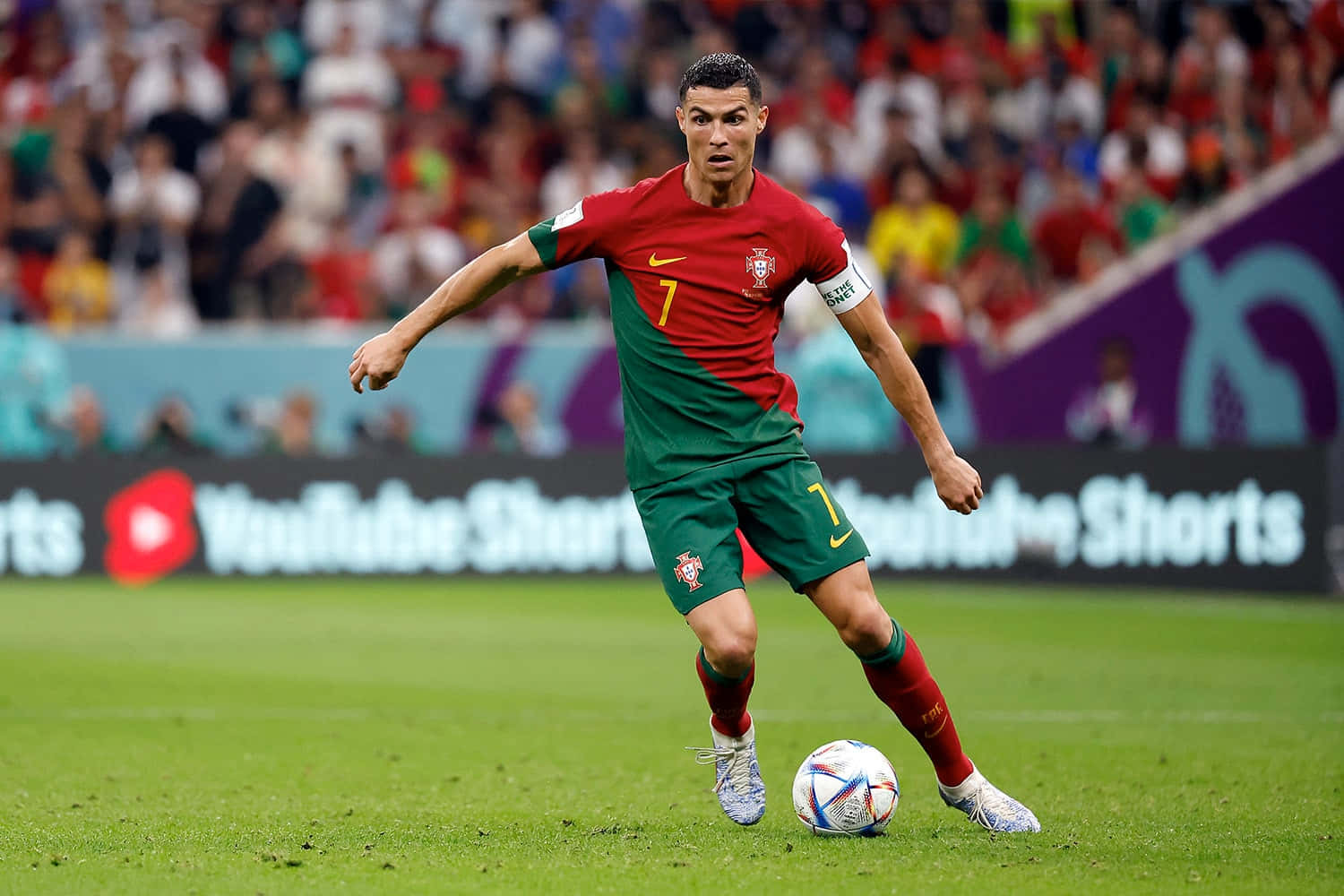
Match timeline:
- 45’ – Cristiano Ronaldo scores with a header from a Rafael Leão cross, putting Portugal ahead 1-0.
- 67’ – Rafael Leão doubles the lead with a clinical finish, sealing the 2-0 victory.
- 89’ – Ronaldo is substituted off, receiving a standing ovation from the home crowd.
The match was broadcast live across Europe and globally, with major networks including BBC Sport, ESPN, and Sky Sports covering the event. The goal was celebrated worldwide, with social media platforms flooded with tributes from fans, fellow players, and football pundits.
—
Why does this milestone matter in football history?
Ronaldo’s achievement is not just a personal triumph—it’s a testament to his enduring legacy in the sport. At 39 years old, he has defied the odds, continuing to perform at an elite level while breaking records that once seemed unattainable. His goal against Uzbekistan underscores his ability to deliver in high-pressure moments, a trait that has defined his career.
Historically, few players have maintained such a high level of performance over such an extended period. Pelé, who scored in four World Cups, remains the only other player to have won the tournament three times, but even he did not match Ronaldo’s longevity. The Portuguese forward’s ability to stay at the top of his game for nearly two decades is a rarity in modern football, where physical decline often sets in earlier.
Comparative context:
| Player | World Cups Played | Goals in World Cups | Most Recent Tournament |
|---|---|---|---|
| Cristiano Ronaldo | 6 | 15 | 2026 Qualifiers |
| Miroslav Klose | 5 | 16 (record) | 2014 |
| Lionel Messi | 5 | 13 | 2022 |
| Pelé | 4 | 12 | 1970 |
Ronaldo’s milestone also highlights the evolving nature of the World Cup. With the 2026 tournament expanding to 48 teams, the competition will be more inclusive, but the pressure on players to perform at the highest level remains intense. For Ronaldo, this goal is a reminder that age is no barrier when it comes to greatness, and it sets a new benchmark for future generations of footballers.
Expert reaction: “This is not just a goal—it’s a statement. Cristiano Ronaldo has shown once again that he is not just a player of his time, but a player for all time. To score in six World Cups is an achievement that may never be matched.” — José Mourinho, former Portugal manager and football analyst.
—
What are the implications for Ronaldo’s career and Portugal’s World Cup campaign?
Ronaldo’s goal against Uzbekistan has reignited discussions about his future in football. While he has not yet announced his retirement, his age and the physical demands of the game have led many to speculate about how much longer he will continue playing at the highest level. His performance in this match suggests that he still has a role to play, particularly in major tournaments like the World Cup.
For Portugal, the victory against Uzbekistan is a positive sign ahead of the 2026 World Cup. The team’s strong qualifying campaign, combined with Ronaldo’s return to form, has boosted their chances of reaching the knockout stages. However, the road ahead is still challenging, with tough fixtures remaining against teams like Slovenia and Iceland in the final stages of qualification.

Key challenges ahead:
- Portugal must maintain consistency in their defense, which has been a strength in recent matches.
- Ronaldo’s fitness will be crucial—he has missed several matches in recent months due to injuries.
- The team must balance youth development with experience, ensuring a smooth transition as older players retire.
Ronaldo’s goal also has broader implications for the sport. His ability to inspire and deliver in clutch moments has made him a global icon, and his record-breaking achievement will likely be studied by future generations of footballers. The goal against Uzbekistan is not just a personal triumph—it’s a reminder of why Ronaldo is considered one of the greatest to ever play the game.
—
How have fans, pundits, and former teammates reacted?
The reaction to Ronaldo’s goal has been overwhelmingly positive, with fans, pundits, and former teammates quick to celebrate his achievement. Social media platforms were flooded with tributes, with hashtags like #CR7Forever and #SixWorldCups trending globally.
Fan reactions:
- Twitter users shared memes, GIFs, and videos of the goal, with many praising Ronaldo’s physicality and skill.
- Portuguese fans took to the streets in Lisbon, celebrating the victory with chants of “CR7, CR7!”
- Uzbekistan fans, while disappointed by the result, acknowledged Ronaldo’s greatness, with some calling him “the GOAT.”
Pundit and analyst reactions:
- Gary Lineker, former England striker and BBC pundit, tweeted: “What a moment. Cristiano Ronaldo has done it again—six World Cups, 15 goals. Absolute legend.”
- Pep Guardiola, manager of Manchester City, called Ronaldo’s goal “a masterclass in finishing.”
- Xabi Alonso, former Real Madrid and Spain midfielder, said: “This is not just a goal—it’s history. No one else has done what CR7 has done.”
Former teammates:
- Nani, former Portugal winger, shared a video of the goal with the caption: “The best of the best. Always.”
- Ricardo Quaresma, another Portugal legend, posted: “CR7 never stops giving us magic. Six World Cups—unbelievable.”
The goal has also sparked debates about Ronaldo’s legacy. While some argue that his records are a testament to his greatness, others point to his impact beyond statistics—his leadership, his influence on the game, and his ability to inspire millions around the world.
—
What does this mean for the future of the World Cup?
Ronaldo’s achievement is a reminder of the enduring appeal of the World Cup—a tournament that transcends borders and generations. His goal against Uzbekistan has reignited conversations about the future of the competition, particularly as it expands to 48 teams in 2026.
One key question is how the increased number of teams will affect the quality of play. With more nations qualifying, the competition will be more diverse, but it may also dilute the intensity of the knockout stages. Ronaldo’s goal serves as a benchmark—players will need to perform at his level to leave a lasting legacy in the tournament.
Additionally, the goal highlights the importance of experience in modern football. As younger players like Kylian Mbappé and Jude Bellingham rise to prominence, veterans like Ronaldo remind us that age is not a barrier to greatness. His ability to deliver in high-pressure moments will be a model for future generations.
Looking ahead: The 2026 World Cup will be Ronaldo’s seventh appearance in the tournament, a record in itself. If he continues to perform at this level, he could become the first player to score in seven World Cups—a feat that would further cement his status as the greatest of all time.
—
Frequently asked questions about Cristiano Ronaldo’s historic goal
Q: How many World Cups has Cristiano Ronaldo played in?
A: Ronaldo has played in six World Cups—2006, 2010, 2014, 2018, 2022, and the 2026 qualifiers. His goal against Uzbekistan in October 2023 marked his first in the qualifiers for the 2026 tournament.
Q: Has any other player scored in six World Cups?
A: No. Ronaldo is the first—and currently only—player to score in six different World Cups. The closest competitors, Miroslav Klose and Lionel Messi, have scored in five each.
Q: How long was Ronaldo’s goal drought before this match?
A: Ronaldo’s last international goal before Saturday came in November 2023, a stretch of nearly 12 months without scoring. His goal against Uzbekistan ended this drought.
Q: What is Ronaldo’s total World Cup goal tally now?
A: With his goal against Uzbekistan, Ronaldo’s World Cup goal tally stands at 15. He is the joint-second-highest scorer in World Cup history, behind Miroslav Klose’s 16.
Q: Will Ronaldo play in the 2026 World Cup?
A: While Ronaldo has not officially retired, his age (39) and fitness will be key factors. His goal against Uzbekistan suggests he remains a valuable asset, but his participation in the 2026 tournament will depend on his physical condition and Portugal’s needs.
Q: How does this goal compare to his previous World Cup performances?
A: Ronaldo’s goal against Uzbekistan was his first in a World Cup qualifier, whereas his previous World Cup goals came in the tournament proper. His consistency across decades is unmatched—he has scored in every World Cup he has played in, a feat no other player has achieved.
Q: What records could Ronaldo break in the 2026 World Cup?
A: If Ronaldo continues to perform at this level, he could become the first player to score in seven World Cups. He is also on course to break Klose’s record of 16 World Cup goals if he scores at least once more in 2026.
—
Cristiano Ronaldo’s goal against Uzbekistan is more than just a statistical milestone—it’s a testament to his unparalleled career and the enduring legacy he continues to build. As the 2026 World Cup approaches, all eyes will be on whether he can add another chapter to his already historic journey. For now, football’s greatest goal-scorer has once again proven that greatness knows no age.
For more on Portugal’s World Cup campaign and Ronaldo’s impact on the game, explore our related explainer on Portugal’s 2026 qualifying journey and analysis of how the World Cup expansion affects top teams.
