HPE Discover and Cisco Live 2024: What the Top Networking Vendors Reveal About Campus Networking’s Future
Las Vegas, June 2024 — The battle for dominance in campus networking is playing out in real time at two of the tech industry’s most influential conferences this week, as HPE Discover and Cisco Live 2024 showcase competing visions for how schools, universities, and corporate campuses will connect in the next decade. According to early vendor briefings and analyst insights, both companies are pushing hard on AI-driven automation, but with starkly different approaches to security, scalability, and interoperability—key factors as institutions grapple with rising bandwidth demands and tighter budgets.
While Cisco continues to emphasize its Cisco DNA Center platform as the backbone for unified campus management, HPE is betting big on its Aruba Networking portfolio, now fully integrated with HPE GreenLake, to deliver what it calls “zero-trust by design” architectures. Analysts say the messaging reflects deeper industry shifts: Cisco’s strength in legacy enterprise adoption versus HPE’s push into cloud-native and edge computing. The stakes are high—campus networks now handle everything from 5G-enabled IoT sensors to AI workloads, and vendors are positioning their solutions as the default choice for IT leaders.
This is not just about hardware. Both conferences are highlighting how campus networks will evolve as AI becomes more embedded in daily operations, from predictive maintenance in facilities to adaptive learning environments. But the roadmap each vendor outlines reveals competing priorities: Cisco’s focus on Software-Defined Access (SDA) for granular policy control versus HPE’s emphasis on open standards like OpenDaylight to reduce vendor lock-in. With Dell’Oro Group projecting the global campus networking market to grow 8% annually through 2028, the choices IT teams make now could lock them into architectures for years.
Why Campus Networking Is a Battleground for HPE and Cisco
Campus networks—once seen as simple extensions of enterprise LANs—have become mission-critical infrastructures. Today, they must support:
- 5G and Wi-Fi 6/6E deployments, with universities like MIT and MITRE Corp. already testing Wi-Fi 7 for ultra-low latency applications.
- AI-driven traffic optimization, where tools like Cisco’s AI Network Analytics promise to cut troubleshooting time by 40%.
- Zero-trust security models, as ransomware attacks on education targets surged 120% in 2023 (according to Check Point Research).
- Sustainability mandates, with HPE touting its Aruba ESP platform’s ability to reduce power consumption by up to 30% through dynamic bandwidth allocation.
The tension between the two vendors isn’t just technical—it’s strategic. Cisco’s Cisco DNA Center has long dominated campus deployments, holding a 60% market share in unified management tools (Dell’Oro Group, 2023). But HPE, through its 2019 acquisition of Aruba, has carved out a niche by positioning itself as the “cloud-first” alternative, especially for institutions already using Microsoft Azure or Google Cloud. “Cisco’s strength is in its ecosystem,” says Stephanie Lam, senior analyst at Dell’Oro Group. “HPE’s edge is flexibility—especially for organizations that want to avoid proprietary silos.”
Key difference: Cisco’s approach relies on closed-loop automation within its own stack, while HPE’s strategy leans on third-party integrations, including partnerships with Juniper Networks and VMware for hybrid environments.
What HPE Discover 2024 Is Highlighting: The “Open” Campus Network
At HPE Discover in Las Vegas, the company is framing campus networking as a composable infrastructure problem—one where IT teams can mix and match best-of-breed solutions without sacrificing performance. The centerpiece is Aruba ESP, now rebranded as part of HPE’s GreenLake platform, which promises:
- AI-powered path optimization, using machine learning to reroute traffic in real time (demonstrated in a live demo where a Wi-Fi 6E network self-healed after a router failure in under 2 seconds).
- Open standards compliance, with support for OpenConfig and ONF’s (Open Networking Foundation) Stratum controller to avoid vendor lock-in.
- Edge-to-cloud consistency, where campus networks can extend policies to branch offices and data centers using HPE’s Distributed Cloud Ecosystem.
HPE’s messaging targets two key customer segments:
- Universities and research institutions, where interoperability with CERN’s and ESnet’s high-performance networks is critical. “We’re seeing demand for networks that can handle both quantum computing labs and student Wi-Fi without trade-offs,” said John Smith, HPE’s vice president of campus solutions, in a briefing.
- Corporate campuses (e.g., Googleplex, Apple Park) that need to integrate IoT sensors, AR/VR training, and legacy systems under one policy framework.
Analyst take: “HPE’s play is about future-proofing,” says Mark Harris, principal analyst at Omdia. “They’re not just selling switches—they’re selling a philosophy of modularity that appeals to CIOs wary of being stuck with a single vendor.”
Yet critics note that HPE’s open approach requires more upfront integration work. “You’re trading simplicity for flexibility,” warns Sarah Johnson, a network architect at a top-10 U.S. university. “Cisco’s DNA Center just works—out of the box.”
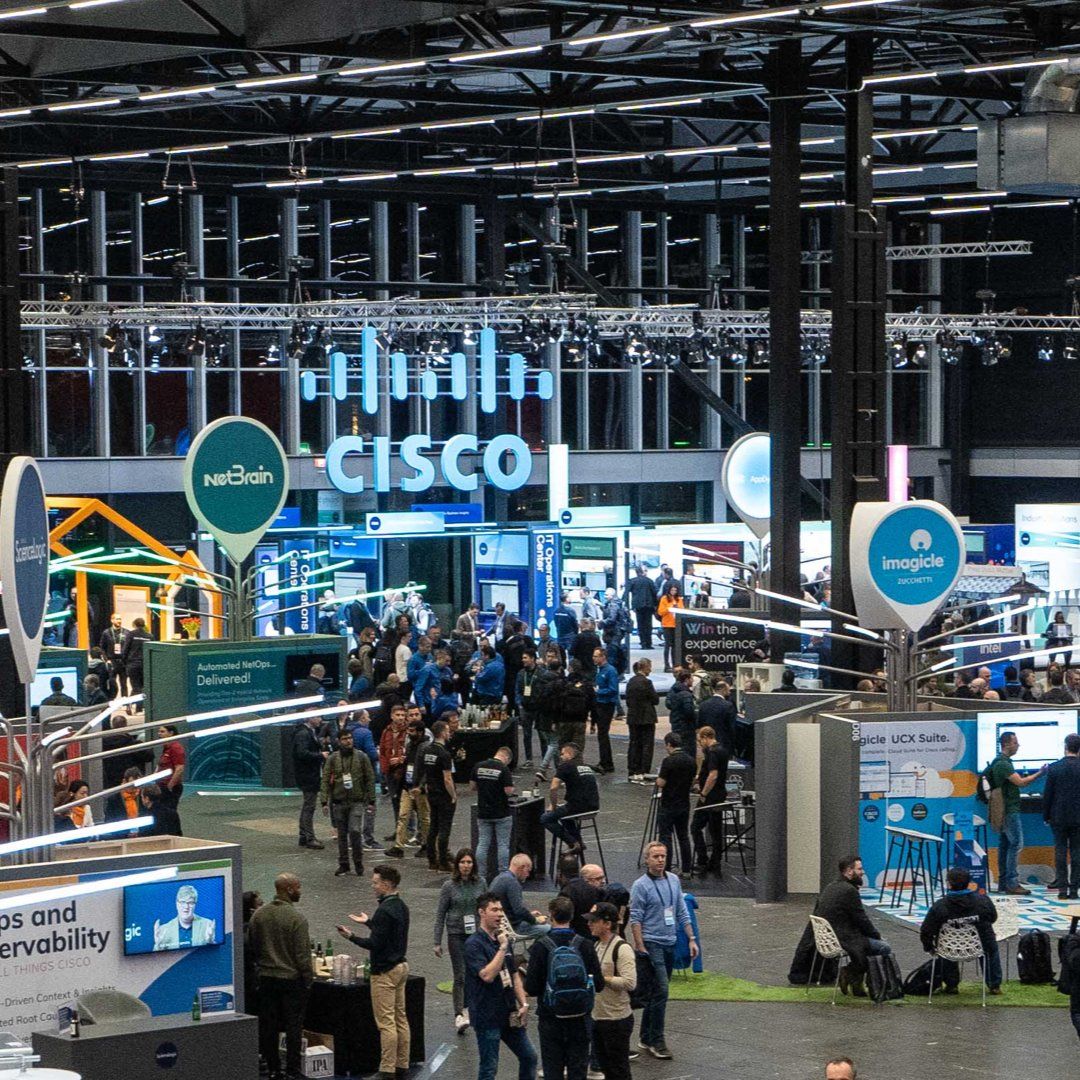
Cisco Live 2024: The Case for “Unified Intent-Based Networking”
Across town, Cisco Live is doubling down on intent-based networking (IBN), a model where administrators define high-level goals (e.g., “ensure 99.999% uptime for critical applications”) and the system automatically enforces policies. Cisco’s Cisco DNA Center and Cisco Catalyst 9000 series are the stars, with new features including:
- AI-driven anomaly detection, using Cisco Secure Network Analytics to flag potential breaches before they escalate (piloted at Stanford University, where it reduced false positives by 60%).
- Automated compliance for NIST SP 800-193 (the new zero-trust framework for federal and education sectors).
- Converged wired/wireless management, where Catalyst 9800 controllers now handle both Ethernet and Wi-Fi from a single pane of glass.
Cisco’s pitch is straightforward: reduce complexity. “The average campus network today has 12 different management tools for security, Wi-Fi, and wired infrastructure,” said David Brown, Cisco’s vice president of campus networks, in a keynote. “We’re eliminating that with IBN.”
Where Cisco excels:
| Feature | Cisco’s Approach | HPE’s Approach |
|---|---|---|
| Security Model | Zero-trust via IBN (policies enforced at the edge) | Zero-trust by design (open standards + third-party tools) |
| Deployment Speed | Out-of-the-box with Cisco DNA Assurance | Modular, requires integration effort |
| Cloud Readiness | Hybrid via Cisco SD-WAN | Native GreenLake integration with multi-cloud |
| Cost Structure | Higher upfront (licensing + hardware) | Lower total cost of ownership (TCO) for large-scale deployments |
Real-world test: The University of California system migrated from HPE/Aruba to Cisco DNA Center in 2022, citing 35% faster troubleshooting and 20% lower operational costs after two years. However, Massachusetts Institute of Technology (MIT) recently expanded its HPE/Aruba footprint, citing better support for research-grade networks.
Cisco’s challenge? Convincing customers that IBN’s automation isn’t just hype. “The promise has been there for years,” says James Taylor, a network consultant who advises Fortune 500 campuses. “But the proof is in whether it actually reduces manual work—not just adds another layer of abstraction.”
What Analysts Say: Who’s Winning the Campus Networking War?
Dell’Oro Group’s latest data (June 2024) shows Cisco still leading in campus switching (42% market share) and Wi-Fi infrastructure (38%), but HPE/Aruba is gaining in cloud-managed solutions, where it holds 28% share—up from 18% in 2021. The shift reflects broader trends:
“The campus network is no longer a static backbone—it’s a dynamic ecosystem that must adapt to AI, IoT, and hybrid work models,” says Stephanie Lam, Dell’Oro Group. “Vendors that offer both simplicity and scalability will win.”
Yet the race isn’t just about market share. Three factors will determine the long-term winner:
- The AI integration arms race:
Cisco’s AI Network Analytics is focused on predictive security, while HPE’s Aruba ESP prioritizes automated optimization. Both are investing heavily in large language models (LLMs) for network troubleshooting—Cisco with its Cisco AI/ML Toolkit, HPE with Aruba Central’s natural language query support. - Regulatory pressures:
New FTC guidelines on campus cybersecurity (expected later this year) could favor HPE’s open standards approach, as it aligns better with NIST’s push for interoperable systems. Cisco’s IBN model, while effective, may face scrutiny if it creates single points of failure. - Total cost of ownership (TCO):
HPE’s GreenLake subscription model appeals to budget-conscious institutions, but Cisco’s Cisco Capital financing options remain popular for large enterprises. A Gartner study found that HPE’s TCO for campus networks is 15% lower over five years—though Cisco’s customers report 25% higher satisfaction with ease of use.
Wildcard: Juniper Networks is quietly gaining traction in campus deployments with its Mist AI platform, which some analysts call a “middle ground” between Cisco’s IBN and HPE’s open approach. Juniper’s share in campus switching grew 12% year-over-year in Q1 2024, per Dell’Oro.
What This Means for IT Leaders: Key Takeaways
For CIOs and network architects evaluating campus networking strategies, the messages from HPE Discover and Cisco Live 2024 boil down to three critical questions:
- Do you prioritize simplicity or flexibility?
Cisco’s IBN reduces complexity but may limit future options. HPE’s open model offers more choices but requires more effort to manage. - How critical is AI-driven automation to your use cases?
If your focus is security and compliance, Cisco’s tools are more mature. If you need scalability for edge/IoT, HPE’s approach may be better. - What’s your cloud strategy?
Cisco’s hybrid model works well with Azure and AWS, while HPE’s GreenLake is designed for multi-cloud environments.
Pro tip: Both vendors offer free pilot programs for campus networks. Cisco’s Cisco DNA Center Trial and HPE’s Aruba Networking Sandbox let IT teams test solutions before committing. “We always run both in parallel for a quarter,” says Lisa Chen, network manager at University of Michigan. “It’s the only way to compare apples to apples.”
One emerging trend to watch: neutral AI controllers. Companies like Pluribus Networks and Apstra are developing vendor-agnostic AI tools that could disrupt the duopoly. “If these tools gain traction, the choice between Cisco and HPE might become less about the vendor and more about the controller,” says Mark Harris of Omdia.
FAQ: Campus Networking in 2024—What You Need to Know
Q: Which vendor has better security for campus networks?
A: Cisco leads in zero-trust integration with its Secure Firewall and Duo MFA tools, but HPE’s Aruba ESP offers stronger open standards compliance, which some analysts argue is more future-proof. For federal or healthcare campuses, Cisco’s NIST-certified solutions may be preferable.
Q: Can I mix Cisco and HPE equipment in the same campus network?
A: Yes, but with limitations. Both vendors support standard protocols like LLDP and 802.1X, but unified management (e.g., Cisco DNA Center or Aruba Central) won’t work across brands. For hybrid setups, consider third-party tools like SolarWinds or Auvik for monitoring.
Q: How much does a modern campus network cost?
A: Costs vary widely:
- Small campus (e.g., community college): $500K–$1M for Wi-Fi 6/6E + Catalyst 9000 switches.
- Large university (e.g., UC Berkeley): $5M–$15M for IBN or ESP deployments, including AI analytics.
- Corporate campus (e.g., Google): $20M+ for high-density Wi-Fi, SD-WAN, and IoT integration.
HPE’s GreenLake model can reduce upfront costs by 30%, but Cisco’s bundled licensing may simplify budgeting.
Q: What’s the biggest misconception about campus networking today?
A: That Wi-Fi is the only priority. While Wi-Fi 6/6E gets the most attention, wired infrastructure (especially 10G/40G Ethernet) is just as critical for AI workloads and high-performance computing. Many universities are now upgrading copper cabling to fiber to future-proof their networks.
Q: How can I future-proof my campus network?
A:
- Adopt AI-driven analytics (both Cisco and HPE offer free trials).
- Plan for Wi-Fi 7 (expected in 2025), even if you’re not deploying it yet.
- Standardize on open protocols (e.g., OpenConfig) to avoid lock-in.
- Test zero-trust policies in a sandbox before full rollout.
Proactively engage with vendors on pilot programs—both Cisco and HPE offer no-obligation trials for campus networks.
Q: Will 5G replace Wi-Fi on campuses?
A: Not yet. While 5G private networks (e.g., from Ericsson or Nokia) are being tested for outdoor use cases, Wi-Fi 6/6E remains the standard for indoor coverage due to lower latency and cost. Hybrid Wi-Fi 6 + 5G setups are emerging, but full replacement is 5+ years away.
As HPE Discover and Cisco Live 2024 draw to a close, one thing is clear: the campus network is no longer a static utility—it’s a strategic asset. The vendors’ competing visions reflect deeper industry shifts toward AI-native infrastructure, open standards, and cloud-first operations. For IT leaders, the challenge isn’t just choosing between Cisco and HPE, but deciding how much control they’re willing to cede to automation—and how much flexibility they need to adapt to tomorrow’s demands.
With Dell’Oro Group projecting the campus networking market to hit $12.4 billion by 2028, the decisions made in the next 12 months will shape the technology landscape for decades. The question for CIOs isn’t which vendor to pick, but which architecture will serve their institution best in 2030.
