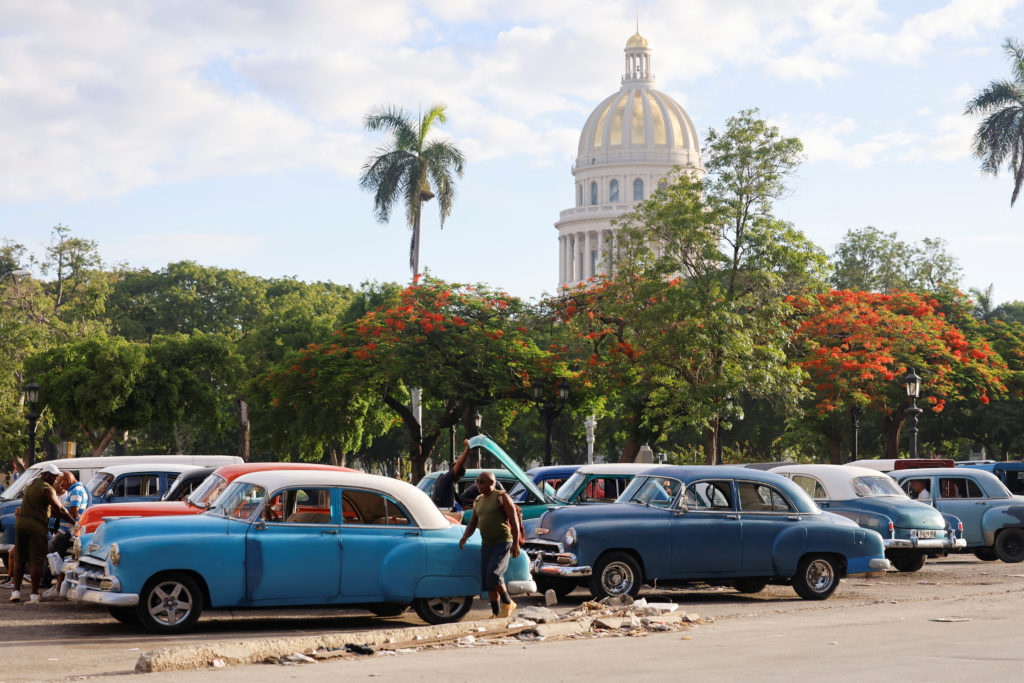
Cuba Passes Sweeping Free-Market Reforms in Biggest Economic Shift Since Revolution – PBS
Cuba’s Communist Party and national lawmakers have approved sweeping free-market reforms to privatize significant portions of the state-run economy, marking the most substantial policy shift since the 1959 revolution. According to reports from PBS, CBC, and Al Jazeera, these unprecedented measures aim to stave off total economic collapse by opening the island’s rigid socialist system to private enterprise.
What are the specific details of Cuba’s new economic reforms?
The Cuban government has authorized the privatization of a “vast swath” of the economy, according to CBC. While the state has historically maintained absolute control over means of production, the new legislation allows for a transition toward private ownership and management in sectors previously reserved for the government.
According to Al Jazeera, the Communist Party’s approval of these measures represents an “unprecedented move.” The reforms shift the economic engine away from total state reliance and toward a hybrid model. Key elements of this shift include:
- Privatization of State Assets: Transitioning government-owned businesses and services into private hands.
- Market Liberalization: Reducing state restrictions on how goods and services are priced and traded.
- Expanded Private Enterprise: Allowing citizens to start and operate businesses in industries that were previously illegal or strictly regulated.
These changes are not merely incremental. The scale of the privatization indicates a fundamental departure from the centrally planned economy that has defined the island for over six decades.
Why is Cuba shifting toward a free-market economy now?
The primary driver for this shift is a desperate need to avoid a complete systemic failure. CBS News reports that the Cuban government approved these free-market reforms specifically in an effort to “stave off economic collapse.”
Cuba has faced a compounding series of economic crises. Long-standing U.S. sanctions, the loss of key allies, and the devastating impact of the COVID-19 pandemic on tourism—a primary source of foreign currency—have left the state unable to provide basic necessities for its population. The state-run distribution system has struggled to maintain food security and electricity stability, leading to widespread shortages.
“Cuba approves unprecedented free-market reforms in effort to stave off economic collapse.” — CBS News
By allowing private actors to manage production and distribution, the government hopes to increase efficiency, attract foreign investment, and reduce the state’s burden of providing every basic service to the citizenry.
How does the “China Model” apply to Cuba’s reforms?
Analysts and observers have drawn direct parallels between Cuba’s current trajectory and the economic opening seen in China under Deng Xiaoping. France 24 reports that some Cubans welcome these reforms, describing the shift as being “like China.”
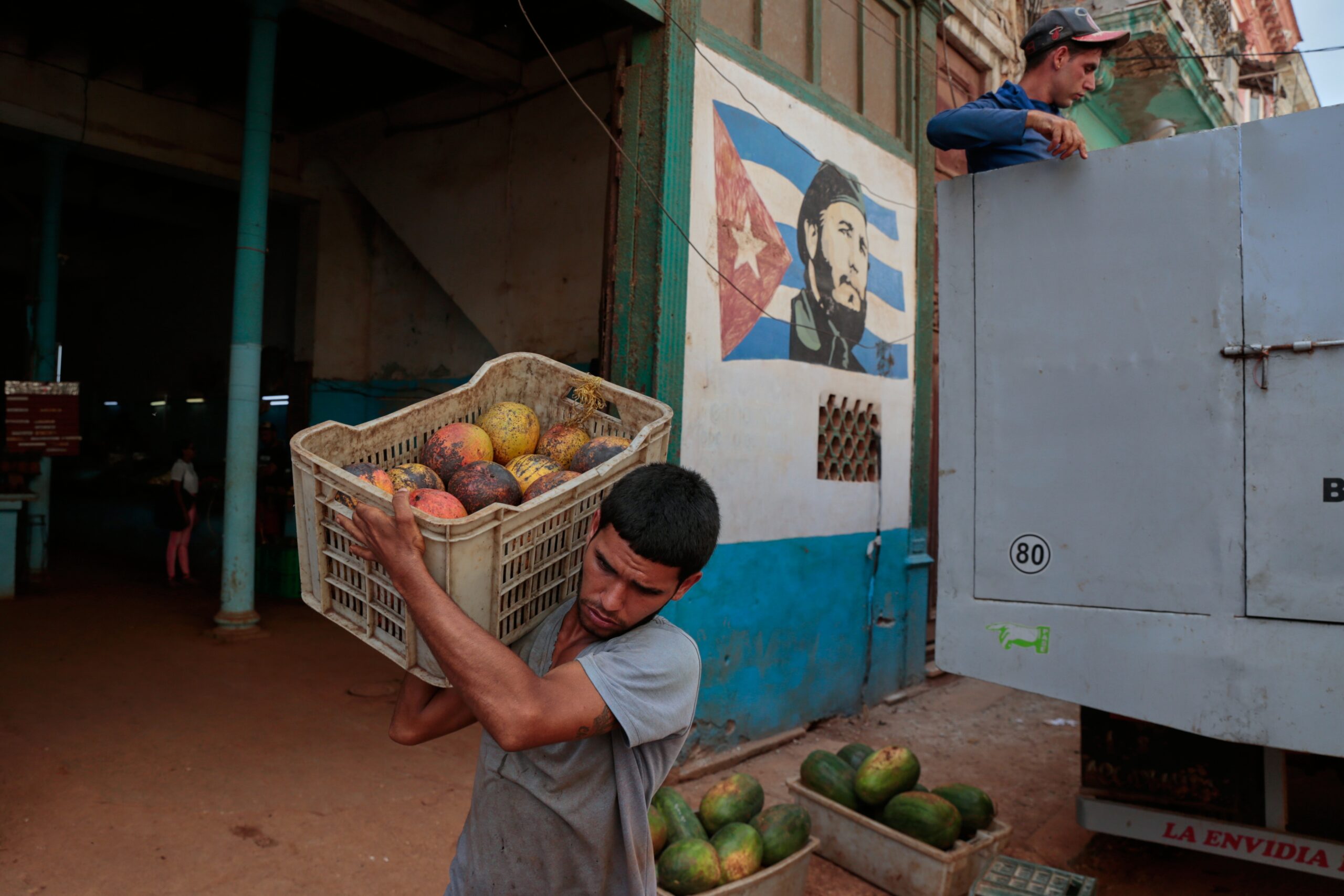
The “China Model” refers to a political-economic strategy where a single-party communist state maintains absolute political control while simultaneously implementing aggressive capitalist market reforms. In this framework, the government does not relinquish power but instead uses market mechanisms to generate wealth, which is then used to stabilize the regime and grow the national GDP.
The following table compares the traditional Cuban socialist model with the emerging reform model described in recent reports:
| Feature | Traditional State Model | New Reform Model |
|---|---|---|
| Ownership | State-owned enterprises | Mixed; increasing privatization |
| Price Control | Centrally planned by government | Market-driven pricing |
| Business Entry | Strictly limited/Illegal for most | Expanded private entrepreneurship |
| Political Power | Communist Party control | Communist Party control (Maintained) |
This strategy suggests that the Cuban leadership views economic liberalization not as a step toward democracy, but as a survival mechanism to preserve the existing political order.
Who supports the reforms and who remains skeptical?
The reaction to the reforms is deeply polarized, splitting largely along geographic and political lines. France 24 reports that many residents within Cuba welcome the changes. For the average citizen, the ability to start a business or buy goods at market prices represents a tangible improvement in quality of life and a way to escape the chronic shortages of the state-run ration system.
However, the perspective from outside the island is markedly different. According to France 24, Cuban exiles remain skeptical of the government’s intentions. These critics often argue that the reforms are “cosmetic” or a strategic ploy to maintain power rather than a genuine move toward liberty.
The skepticism from the exile community generally centers on three points:
- Political Control: The belief that economic freedom without political freedom is unsustainable.
- Selective Privatization: Concerns that the government will only privatize assets to “cronies” or party elites, creating a new class of state-aligned oligarchs.
- Reversibility: A fear that the government will roll back these reforms if the immediate crisis eases or if private wealth begins to threaten party authority.
What is the historical context of Cuba’s economic system?
To understand why these reforms are described as the “biggest economic shift since the revolution,” one must look at the foundation of the Cuban state. Following the 1959 revolution, the government led by Fidel Castro nationalized the vast majority of private property, including land, factories, and foreign-owned businesses.
For decades, the economy functioned on a command-and-control basis. The state decided what was produced, how much it cost, and who received it. This system was heavily subsidized by the Soviet Union until 1991. When the USSR collapsed, Cuba entered the “Special Period,” a time of extreme austerity and famine that forced the government to allow very limited, temporary market activities.
The current reforms, as reported by PBS and CBC, go significantly further than the temporary measures of the 1990s. Instead of allowing a few “exceptions” to the rule, the government is now rewriting the rules of the economy itself by approving the privatization of a “vast swath” of the system.
For more on the geopolitical tensions affecting the region, see a related explainer on U.S.-Cuba relations.
What are the potential risks and rewards of these reforms?
The transition from a state-run economy to a market-oriented one is rarely seamless. The Cuban government faces several critical risks during this implementation phase.
Potential Risks
- Inflation: Removing price controls often leads to a sharp spike in the cost of living, which could further alienate the poor.
- Inequality: Privatization can create a wealth gap between those with the capital to start businesses and those who rely on dwindling state salaries.
- Social Unrest: If the reforms do not produce immediate results in food and medicine availability, the population may grow more frustrated.
Potential Rewards
- Efficiency: Private owners typically have a stronger incentive to reduce waste and increase production than state bureaucrats.
- Foreign Investment: Clearer privatization laws make the island more attractive to international investors.
- Reduced Dependence: A diversified economy is less vulnerable to the collapse of a single foreign benefactor.
The success of these reforms depends on whether the Communist Party can balance the need for economic efficiency with its desire to maintain total political dominance.
Common Misconceptions About Cuba’s Economic Shift
Because this news is unfolding rapidly, several oversimplifications have emerged in public discourse. It is important to distinguish between economic liberalization and political democratization.

Misconception: Cuba is becoming a democracy.
There is no evidence in the reports from Al Jazeera or France 24 that these economic reforms include political liberalization. The Communist Party remains the sole legal political entity. The shift is economic, not systemic in terms of governance.
Misconception: All state businesses are being sold.
While the CBC reports that a “vast swath” is being privatized, the government is unlikely to sell off “strategic” assets—such as intelligence services, major military installations, or key energy infrastructure—that are essential for regime security.
Misconception: These reforms are a result of U.S. pressure.
While U.S. sanctions contribute to the economic hardship, the decision to reform comes from within the Cuban Communist Party. The reports indicate this is an internal effort to “stave off collapse” rather than a negotiated concession to a foreign power.
Frequently Asked Questions
Does this mean Cuba is no longer a communist country?
Politically, Cuba remains a communist state. The reforms approved by the Communist Party, as noted by Al Jazeera, target the economic system rather than the political system. This is similar to the model used in China, where market capitalism exists under a one-party communist government.
Why are Cuban exiles skeptical of these reforms?
According to France 24, exiles fear the changes are superficial. They argue that without political freedom and the rule of law, privatization may only benefit those close to the government, rather than creating a fair and open market for all Cubans.
What is the main goal of these reforms?
According to CBS News, the primary goal is to prevent the total collapse of the Cuban economy. By privatizing state assets and allowing free-market activity, the government hopes to fix shortages of food, medicine, and basic services.
How does this differ from previous reforms in Cuba?
While Cuba has tried small-scale openings in the past (such as during the “Special Period” in the 1990s), PBS and CBC describe these current measures as “sweeping” and “unprecedented,” involving the privatization of a much larger portion of the economy than ever before.
Will this lead to more foreign investment in Cuba?
In theory, yes. Privatization and free-market reforms generally make a country more attractive to foreign investors by providing clearer ownership rights and removing state-mandated price controls. However, U.S. sanctions remain a significant barrier to investment from the United States.
For further analysis on how this affects global trade, you may find a related explainer on Caribbean economic trends useful.
