UC Santa Cruz Team Develops Record-Breaking Detection System for Next-Generation Particle Accelerators
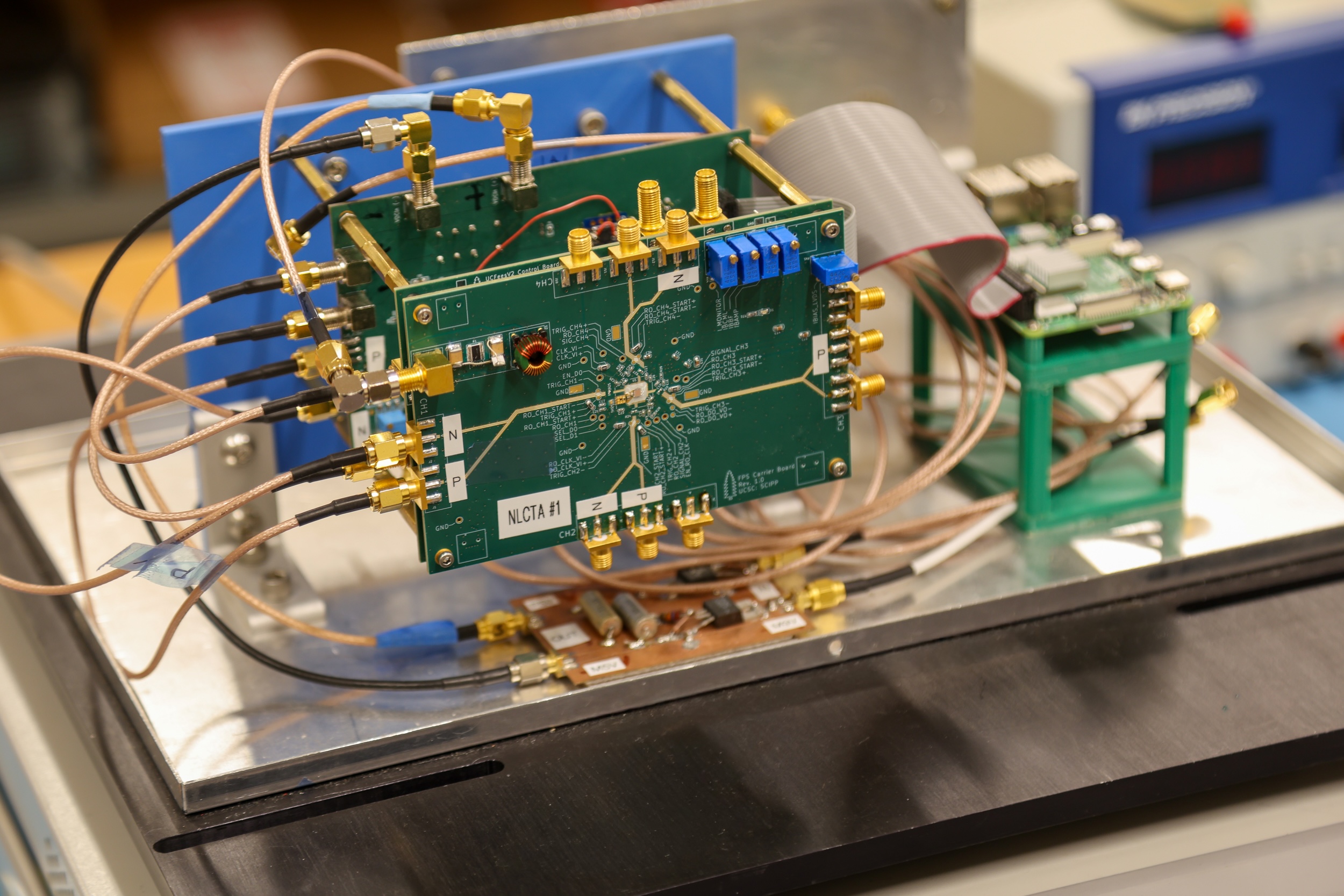
A research team at the University of California, Santa Cruz, has engineered a detection system for next-generation particle accelerators that achieves record-breaking performance in data processing and particle identification. According to university reports, the system solves a critical bottleneck in high-energy physics by managing the massive data volumes produced during high-luminosity particle collisions, allowing scientists to identify rare subatomic events with unprecedented precision.
How the UC Santa Cruz Detection System Solves the Data Bottleneck
Modern particle accelerators generate data at rates that exceed the storage and processing capacities of current computing infrastructure. When particles collide at near-light speeds, they create a cascade of secondary particles. To find evidence of new physics—such as dark matter candidates or Higgs boson decays—detectors must filter through billions of events per second to find a handful of significant signals.
The UC Santa Cruz team addressed this “data deluge” by redesigning the detection architecture to handle higher luminosity. Luminosity refers to the number of potential collisions per unit area per unit time. As next-generation accelerators increase luminosity to gather more data, they also increase “pile-up,” where multiple collisions occur simultaneously in a single bunch crossing. This creates a chaotic environment that obscures the signals researchers are looking for.
According to the research team, the new system utilizes advanced signal-processing algorithms and high-speed hardware to distinguish between these overlapping events. By improving the spatial and temporal resolution of the detector, the system can effectively “slice” the collisions in time, assigning particles to their correct interaction point with higher accuracy than previous iterations.
- Reduced Noise: The system filters out background radiation more efficiently, increasing the signal-to-noise ratio.
- Increased Throughput: Data is processed in real-time, reducing the amount of “dead time” where the detector is unable to record new events.
- Precision Timing: The hardware can timestamp particle arrivals with picosecond accuracy, a requirement for next-generation collider experiments.
The Architecture of Next-Generation Particle Detection
The performance gains achieved by the UC Santa Cruz team stem from a fundamental shift in how detector data is acquired and triggered. In traditional systems, a “trigger” acts as a gatekeeper, deciding in nanoseconds whether an event is worth saving to disk. If the trigger is too loose, the system crashes under the data load; if it is too tight, rare physics events are permanently lost.
The new system implements a more sophisticated trigger logic. By integrating faster Field Programmable Gate Arrays (FPGAs) and optimized firmware, the system performs complex pattern recognition at the hardware level. This allows the detector to identify specific “signatures” of interesting particles—such as high-momentum muons or missing transverse energy—almost instantaneously.
The hardware layer is complemented by a refined sensor array. These sensors are designed to withstand the extreme radiation environments found in the heart of a particle accelerator. Radiation damage typically degrades sensor performance over time, leading to “leaky” pixels and increased noise. The UC Santa Cruz team utilized materials and geometries that maintain high efficiency even after prolonged exposure to high-energy hadrons.
“The ability to maintain high detection efficiency while simultaneously reducing the data rate is the primary challenge of next-generation accelerators,” the research indicates.
Why This Performance Matters for High-Energy Physics
The development of this system is not merely a technical achievement in electronics; it is a prerequisite for the next era of fundamental physics. The Standard Model of particle physics explains much of the universe, but it fails to account for gravity, dark energy, or the nature of dark matter. To probe these mysteries, scientists need “rare event” detection.
Rare events are, by definition, infrequent. To find them, accelerators must run at higher intensities for longer periods. However, increasing the intensity without a corresponding increase in detection performance leads to “saturation,” where the detector becomes blinded by the sheer volume of common particles. By building the best-performing detection system for these environments, the UC Santa Cruz team enables the search for particles that may only appear once in every trillion collisions.
This capability is particularly relevant for the High-Luminosity Large Hadron Collider (HL-LHC) and proposed future circular colliders. These machines aim to produce a massive increase in the number of Higgs bosons, allowing physicists to measure the particle’s properties with enough precision to see if it deviates from Standard Model predictions. Any such deviation would be a “smoking gun” for new physics.
Key areas of impact include:
- Dark Matter Searches: Detecting “invisible” particles by precisely measuring the imbalance of momentum in a collision.
- Supersymmetry (SUSY): Looking for heavier partners of known particles that require extreme energy and luminosity to produce.
- Precision Higgs Physics: Measuring the coupling of the Higgs boson to second-generation fermions.
Comparing Current Detection Limits with New UC Santa Cruz Benchmarks
To understand the leap in performance, it is necessary to compare the requirements of current-generation detectors with the benchmarks set by the UC Santa Cruz system. The primary metric of success is the ability to maintain “efficiency” (the percentage of real events captured) while minimizing “fake rates” (the percentage of noise mistaken for a signal).
| Metric | Current Generation Systems | UC Santa Cruz Next-Gen System |
|---|---|---|
| Collision Pile-up | Moderate (approx. 20–60 events) | High (140–200+ events) |
| Timing Resolution | Nanosecond scale | Picosecond scale |
| Data Throughput | Terabits per second | Petabits per second (processed) |
| Radiation Tolerance | Standard Silicon | Radiation-hardened architectures |
| Trigger Logic | Fixed-threshold algorithms | Dynamic, pattern-recognition FPGAs |
As shown in the data, the shift from nanosecond to picosecond timing is critical. In a high-pile-up environment, particles from different collisions may arrive at the detector at almost the same time. Picosecond resolution allows the system to distinguish between collisions that are separated by only a few millimeters in the beam pipe, effectively cleaning the data before it ever reaches the storage servers.
The Role of UC Santa Cruz in Global Accelerator Projects
The University of California, Santa Cruz, has long been a hub for high-energy physics, often collaborating with international laboratories such as CERN in Switzerland and Fermilab in the United States. This specific project highlights the university’s role in providing the “eyes” of the accelerator. While the accelerator itself provides the energy, the detector determines what the scientists actually see.
The development process involved an iterative cycle of simulation and hardware testing. The team used Monte Carlo simulations to model billions of hypothetical collisions, testing how their detection algorithms would behave under extreme conditions. These simulations were then validated using test beams—actual particle streams directed at prototype sensors—to ensure that the theoretical performance matched real-world results.
This collaborative approach ensures that the technology is compatible with the global standards of the physics community. By creating a system that is “best-performing,” the UC Santa Cruz team provides a blueprint that other research institutions can adapt for their own specific detector subsystems, such as the inner trackers or the calorimeters.
For those interested in how these systems integrate into larger frameworks, a related explainer on particle detector components provides a detailed breakdown of the different layers required to capture a full collision event.
Potential Applications Outside of Fundamental Physics
While the primary goal of the UC Santa Cruz system is to explore the subatomic world, the technologies developed for next-generation accelerators often migrate into other sectors. The requirement for extreme speed, radiation hardness, and massive data throughput has direct parallels in several industrial and medical fields.
Medical Imaging and Radiotherapy
The picosecond timing and high-resolution sensing used in the detector can be applied to Time-of-Flight Positron Emission Tomography (TOF-PET) scans. In PET scans, detecting the exact arrival time of gamma rays allows for much sharper images of tumors and metabolic activity in the brain. The UC Santa Cruz team’s work in reducing “noise” in high-flux environments could lead to PET scanners that require lower doses of radioactive tracers while producing clearer images.
Nuclear Security and Non-Proliferation
Detecting shielded nuclear materials requires sensors that can identify specific gamma-ray signatures amidst a background of natural radiation. The pattern-recognition algorithms developed for the accelerator trigger could be adapted for rapid, automated scanning of cargo containers at borders, identifying illicit materials with fewer false positives.
High-Speed Industrial Inspection
In semiconductor manufacturing, X-ray inspection is used to find microscopic defects in chips. As chips become smaller and more complex, the data rates from these inspection systems are skyrocketing. The data acquisition (DAQ) architectures designed by the UC Santa Cruz team provide a model for processing massive streams of imaging data in real-time to identify defects without slowing down the production line.
Common Misconceptions About Particle Detection
Public understanding of particle accelerators often focuses on the “smashing” of particles, but the “detecting” is where the actual science happens. There are several common misconceptions regarding this process that the UC Santa Cruz project helps clarify.
Misconception 1: Detectors are like traditional cameras.
A camera takes a picture at a set frame rate. A particle detector is more like a series of ultra-fast electronic switches. It does not “take a photo” so much as it records a series of electrical pulses. The “image” is reconstructed later by computers. The UC Santa Cruz system improves this by making the “switches” faster and the “pulses” clearer.
Misconception 2: More data always means better science.
In physics, “more data” can actually be a hindrance if the noise increases proportionally. If you have a trillion events but cannot distinguish the signal from the background, the data is useless. The breakthrough here is not just collecting more data, but increasing the quality of the data being kept.
Misconception 3: This technology only benefits theoretical physicists.
As noted in the applications section, the engineering challenges of high-energy physics drive innovation in FPGA programming, silicon fabrication, and data science. These tools eventually filter down into consumer electronics, medical devices, and computing infrastructure.
FAQ: Understanding the UC Santa Cruz Detection System
What exactly is a “next-generation accelerator”?
Next-generation accelerators are facilities designed to operate at higher energies or higher luminosities than current machines. Examples include the High-Luminosity LHC (HL-LHC) or the proposed Future Circular Collider (FCC). These machines aim to produce a higher volume of particle collisions to find rare phenomena that current accelerators cannot detect.
Why is “luminosity” important in this context?
Luminosity is essentially the “brightness” of the particle beams. Higher luminosity means more collisions per second. While this increases the chance of seeing a rare particle, it also creates “pile-up,” where too many particles hit the detector at once. The UC Santa Cruz system is designed specifically to handle this high-luminosity environment without losing precision.
What makes this system “best-performing”?
The system is considered best-performing because it optimizes the trade-off between data reduction and signal retention. It can process a higher volume of events per second with lower latency and higher timing resolution (picoseconds) than previous systems, ensuring that rare events are not discarded by the trigger.
How does the system handle radiation damage?
The team used radiation-hardened materials and specific sensor geometries that prevent the buildup of charge traps in the silicon. This ensures that the detector remains sensitive and accurate even after years of being bombarded by high-energy particles.
Can this technology be used in current accelerators?
While designed for the next generation, the algorithms and FPGA architectures can often be back-ported to upgrade current detectors. This allows existing experiments to extend their lifespan and increase their sensitivity to new physics.
The ongoing refinement of these detection systems ensures that as accelerators grow in power, our ability to interpret the results grows in tandem. By solving the data bottleneck, the UC Santa Cruz team has provided the necessary infrastructure for the next decade of discovery in the quantum realm.
