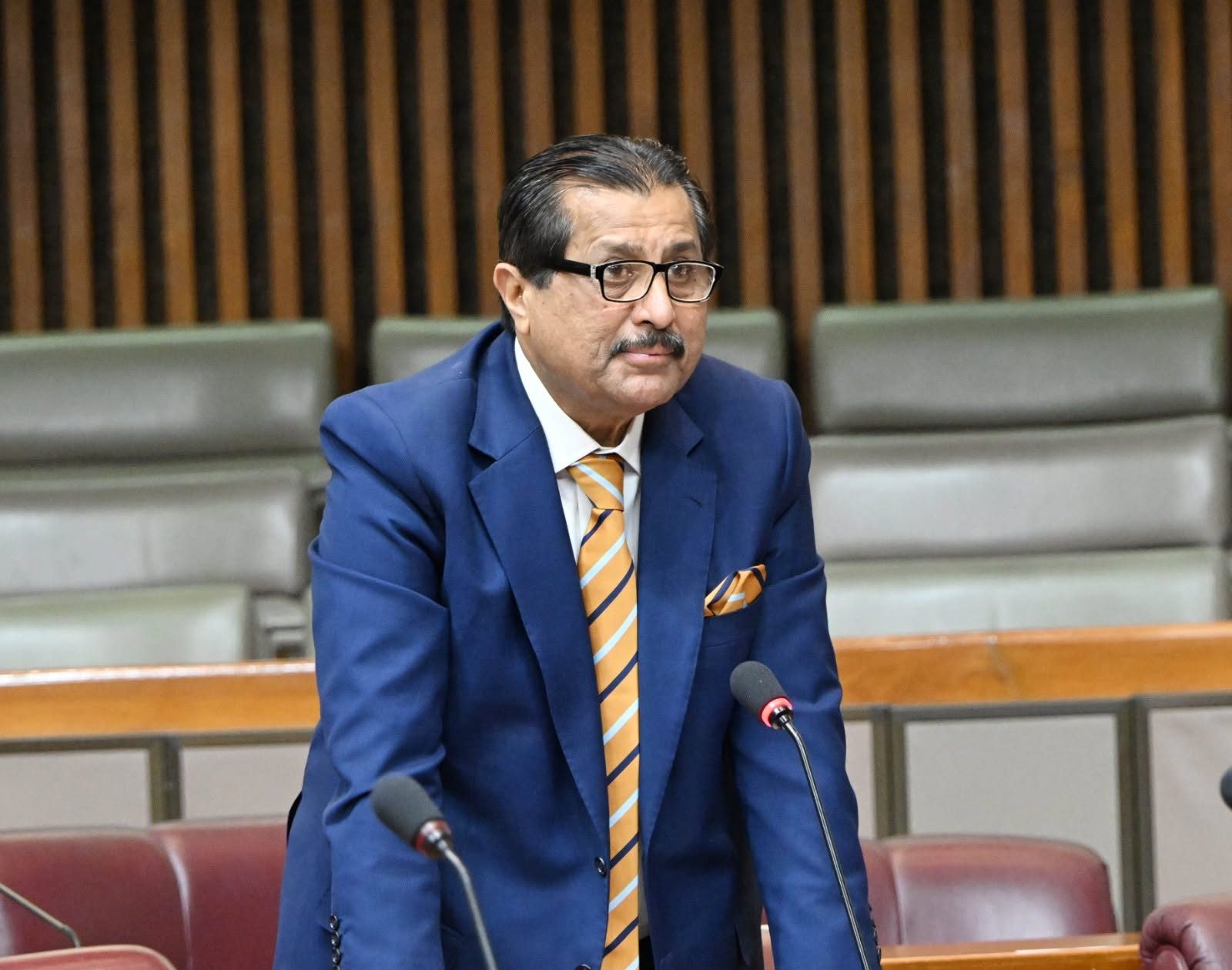
Mirza Ikhtiar Baig Terms Budget 2026-27 Balanced: Fiscal Deal and Tax Targets Spark Debate
Mirza Ikhtiar Baig has described the 2026-27 budget as balanced, according to the Associated Press of Pakistan. While the government maintains the fiscal plan is stable, a PPP lawmaker has labeled the Rs 6.9 trillion direct tax target as “very ambitious” and unlikely to be achieved, highlighting a rift over revenue projections.
Why is the 2026-27 budget being called balanced?
Mirza Ikhtiar Baig characterized the 2026-27 budget as balanced, signaling that the government believes it has aligned projected expenditures with anticipated revenues. According to the Associated Press of Pakistan, this assessment suggests a strategy aimed at fiscal discipline and the avoidance of excessive deficit spending.
In fiscal terms, a balanced budget occurs when the total estimated revenue equals the total planned spending. For the Pakistani government, achieving this balance typically requires a combination of increased tax collection, reduced subsidies, and controlled public spending. Baig’s endorsement of the budget indicates a belief that the current framework can sustain the state’s operational needs without incurring unsustainable new debt.
However, the “balanced” nature of the budget is subject to the accuracy of its revenue forecasts. If the government fails to collect the projected taxes, the balance shifts toward a deficit, necessitating further borrowing from international lenders or domestic banks.
Is the Rs 6.9 trillion direct tax target achievable?
Critics within the ruling coalition have expressed skepticism regarding the budget’s revenue goals. A Member of the National Assembly (MNA) from the Pakistan Peoples Party (PPP) described the Rs 6.9 trillion direct tax target as “very ambitious,” stating it is unlikely to be achieved, according to The Express Tribune.
The distinction between direct and indirect taxes is central to this debate. Direct taxes, such as income tax and corporate tax, are levied on the earnings of individuals and companies. Indirect taxes, such as sales tax and customs duties, are levied on goods and services. Relying heavily on direct taxes is often seen as a more equitable approach to revenue generation, as it targets higher earners rather than the general consuming public.
The PPP MNA’s concern suggests a gap between the government’s mathematical projections and the reality of tax compliance and enforcement in Pakistan. Historically, ambitious targets in Pakistani budgets have often fallen short due to several factors:
- Tax Evasion: Large sectors of the economy remain undocumented, making it difficult to capture potential direct tax revenue.
- Economic Slump: Reduced corporate profitability can lead to lower corporate tax yields.
- Administrative Hurdles: The capacity of the Federal Board of Revenue (FBR) to expand the tax net often lags behind the targets set in the budget.
“The Rs 6.9 trillion direct tax target is very ambitious and unlikely to be achieved,” stated the PPP MNA, as reported by The Express Tribune.
What are the terms of the PML-N and PPP fiscal agreement?
Despite public disagreements over tax targets, the Pakistan Muslim League-Nawaz (PML-N) and the PPP have reached a fiscal understanding. A cabinet source reported to Geo News that the two parties agreed on a fiscal deal that avoids formally altering two critical components of the state’s financial architecture: the National Finance Commission (NFC) and the Benazir Income Support Programme (BISP).
The decision to leave the NFC and BISP untouched is a strategic move to maintain political stability. The NFC award determines how tax revenues are shared between the federal government and the provinces. Any attempt to “touch” or renegotiate the NFC award often triggers intense provincial friction, as provinces rely on these transfers for their own budgets.
Similarly, the BISP is a cornerstone of the social safety net in Pakistan, providing cash transfers to the poorest citizens. Because BISP is a flagship program for the PPP, ensuring its funding remains intact was likely a non-negotiable point in the fiscal deal with the PML-N.
| Fiscal Element | Status in Deal | Significance |
|---|---|---|
| NFC Award | Unchanged | Prevents federal-provincial conflict over revenue sharing. |
| BISP Funding | Unchanged | Protects social safety nets and maintains PPP political priorities. |
| Direct Tax Target | Contested | Rs 6.9 trillion goal viewed as unrealistic by some coalition members. |
Why is the BMP concerned about new levies?
The Balochistan Mazdoor Party (BMP) has raised alarms over the government’s reliance on ambitious tax targets. According to the Islamabad Post, the BMP questions the feasibility of the direct tax goals and fears that the government will instead rely more heavily on levies.

Levies are essentially indirect taxes or fees imposed on specific goods, services, or activities. For regional parties like the BMP, a shift toward levies is viewed as a regressive move. Unlike direct taxes, which are progressive (increasing as income increases), levies often hit the poor and middle class hardest because they are applied uniformly to consumption.
The BMP’s concerns highlight a recurring theme in Pakistani budget cycles: the tension between the need for revenue and the risk of inflating the cost of living. If the Rs 6.9 trillion direct tax target is not met, the government may be forced to introduce new levies or increase existing ones to fill the gap, which could lead to increased inflation and public discontent, particularly in marginalized regions like Balochistan.
How do the NFC and BISP fit into the current fiscal strategy?
To understand why the PML-N and PPP agreement to leave the NFC and BISP untouched is significant, one must look at the broader economic pressures facing the state. Pakistan often operates under tight fiscal constraints, frequently negotiating with the International Monetary Fund (IMF) for stabilization loans.
The National Finance Commission (NFC) is the mechanism that ensures a distribution of resources. If the federal government were to reduce the provincial share to balance its own budget, it would risk a constitutional crisis. By agreeing not to touch the NFC, the coalition ensures that the provinces remain cooperative, even as the federal government pursues aggressive tax targets.
The Benazir Income Support Programme (BISP) serves as a buffer against the “budget blues” mentioned by Dawn. When budgets involve austerity measures or increased taxes, the resulting inflation can devastate the lowest income brackets. Maintaining BISP funding is not only a political necessity for the PPP but also an economic necessity to prevent a surge in extreme poverty during periods of fiscal tightening.
The interplay between these elements creates a complex balancing act: the government must satisfy international lenders by increasing revenue (the Rs 6.9 trillion target), satisfy provincial governments (the NFC), and protect the vulnerable (BISP), all while maintaining a “balanced” appearance as stated by Mirza Ikhtiar Baig.
Comparing Perspectives on the 2026-27 Budget
The reactions to the 2026-27 budget reveal a sharp divide between the government’s official stance and the views of its own political partners and regional critics. While the official narrative emphasizes stability, the internal and regional narratives emphasize risk.
The Associated Press of Pakistan reports a sense of equilibrium through Mirza Ikhtiar Baig’s comments. In contrast, reports from The Express Tribune and the Islamabad Post suggest a precarious situation where the budget’s success depends on a tax target that may be a mathematical fiction rather than a practical reality.
This contrast is typical of “budget blues,” a term used by Dawn to describe the period of anxiety and political maneuvering that accompanies the annual financial plan. The “blues” stem from the knowledge that the budget is often a document of aspiration rather than a guaranteed roadmap. The gap between the projected Rs 6.9 trillion in direct taxes and the actual collection will likely be the primary metric by which the success of the 2026-27 fiscal year is judged.
Key Points of Contention in the 2026-27 Budget
- The Revenue Gap: The discrepancy between the “balanced” claim by Baig and the “unlikely” target cited by the PPP MNA.
- Tax Type: The push for direct taxes versus the fear of regressive levies cited by the BMP.
- Political Compromise: The agreement to protect BISP and NFC to prevent a coalition collapse.
- Economic Pressure: The overarching need to maintain fiscal discipline amidst broader economic instability.
For those following the economic trajectory of the region, the focus now shifts to the implementation phase. The government’s ability to expand the tax base without triggering widespread inflation or political unrest will determine if the budget remains “balanced” in practice or merely on paper.
Frequently Asked Questions
Who is Mirza Ikhtiar Baig and what is his view on the budget?
Mirza Ikhtiar Baig is a political figure who, according to the Associated Press of Pakistan, has termed the 2026-27 budget as “balanced,” suggesting that the government’s projected spending is in line with its expected revenues.
What is the controversy surrounding the Rs 6.9 trillion tax target?
The controversy stems from the target’s perceived lack of realism. A PPP MNA, as reported by The Express Tribune, called the target “very ambitious” and “unlikely to be achieved,” suggesting that the government may struggle to collect that amount in direct taxes.

Why did the PML-N and PPP agree not to touch the NFC and BISP?
According to Geo News, this was part of a fiscal deal to maintain stability. The National Finance Commission (NFC) manages the distribution of funds between the federal and provincial governments, while the Benazir Income Support Programme (BISP) provides essential aid to the poor. Altering either could lead to political instability or social unrest.
What are “levies” and why is the BMP against them?
Levies are indirect taxes or fees on specific goods and services. The Balochistan Mazdoor Party (BMP) fears that if the government fails to meet its direct tax targets, it will resort to these levies, which disproportionately affect lower-income citizens, as reported by the Islamabad Post.
What does “budget blues” refer to in this context?
As referenced by Dawn, “budget blues” refers to the period of economic uncertainty and political friction that occurs when a government introduces a budget that involves difficult trade-offs, such as high tax targets and austerity measures.
