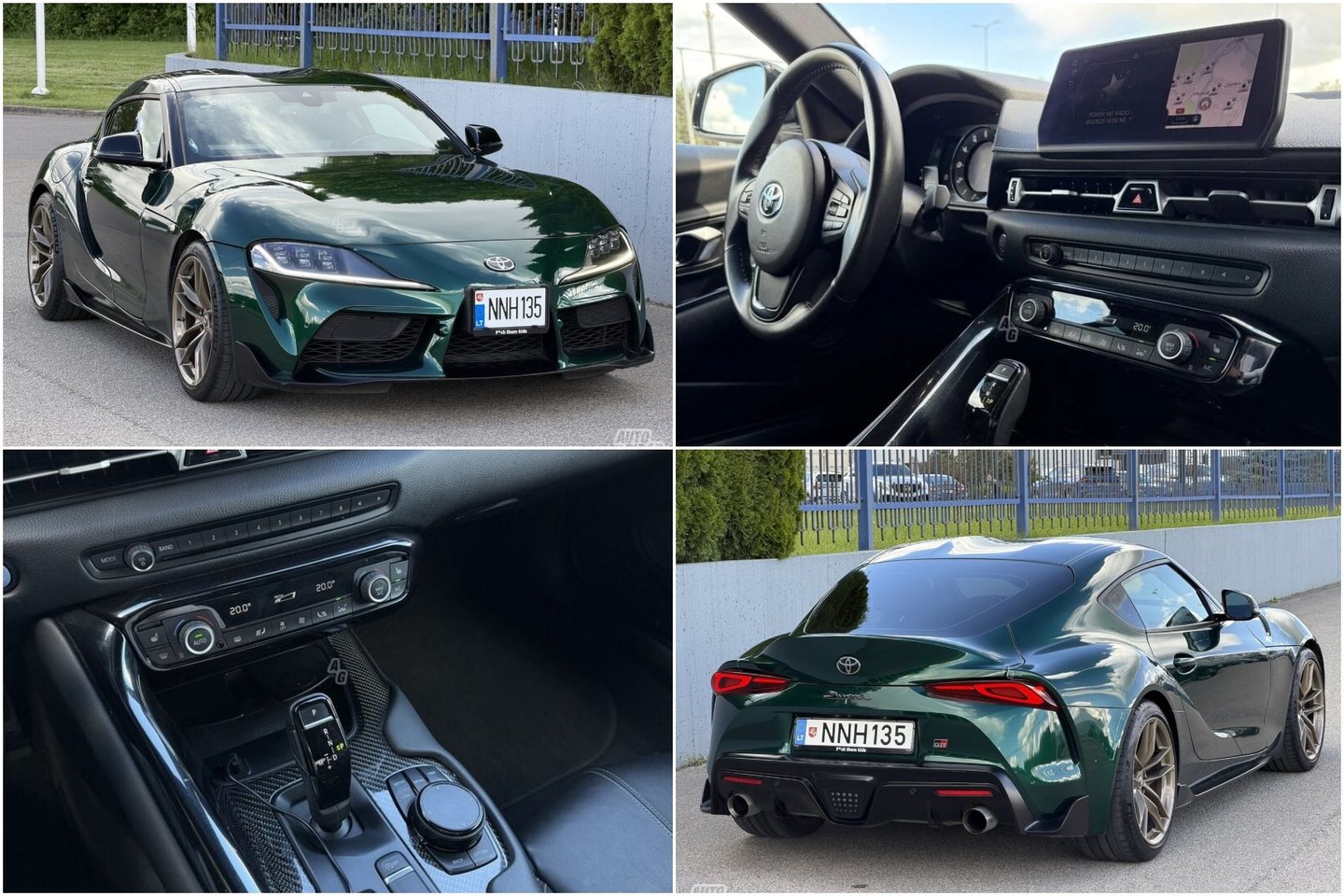
The Toyota GR Supra is a collaborative engineering project between Toyota and BMW that utilizes a BMW-sourced engine and platform integrated with Toyota’s specific chassis tuning and body design. According to local media reports, the vehicle is not a simple rebadging of the BMW Z4 but a distinct performance car developed through shared technical resources.
- Powertrain: Uses BMW’s B58 straight-six engine.
- Platform: Built on a shared architecture with the BMW Z4.
- Development: Toyota’s Gazoo Racing (GR) division handled the final chassis calibration and exterior styling.
How the Toyota-BMW Partnership Works
The GR Supra relies on a strategic partnership where Toyota leveraged BMW’s expertise in rear-wheel-drive platforms and high-performance inline-six engines. The core mechanical architecture, including the engine and transmission, is sourced from BMW. This approach allowed Toyota to bring a dedicated sports car to market more efficiently than developing a proprietary platform from scratch.
The heart of the vehicle is the B58 engine, a turbocharged straight-six known for its balance of power and efficiency. By using this established hardware, Toyota ensured the Supra met global emissions and performance standards while maintaining a high power-to-weight ratio.
Toyota’s Technical Modifications
While the internal components are BMW-derived, Toyota’s engineers focused on the “feel” and dynamics of the car to align it with the Gazoo Racing philosophy. According to report details, Toyota did not simply accept the BMW chassis as-is; they implemented specific modifications to the suspension and steering geometry.
These changes were designed to alter the vehicle’s handling characteristics, making the GR Supra feel more aggressive and focused than its German counterpart. The bodywork is entirely unique to Toyota, designed not only for aesthetics but to optimize aerodynamics and cooling for the high-performance engine.
Distinguishing the GR Supra from the BMW Z4
Critics often describe the GR Supra as a BMW in “Toyota clothing,” but technical differences exist between it and the BMW Z4. While they share a “skeleton,” the two cars target different driver experiences. The Z4 is positioned as a luxury roadster, whereas the GR Supra is engineered as a precision sports coupe.
The differences manifest in the weight distribution and the rigidity of the chassis. By opting for a fixed-roof coupe design, Toyota achieved a more rigid structure than the Z4’s open-top configuration, which directly impacts how the car handles high-speed cornering and braking.
