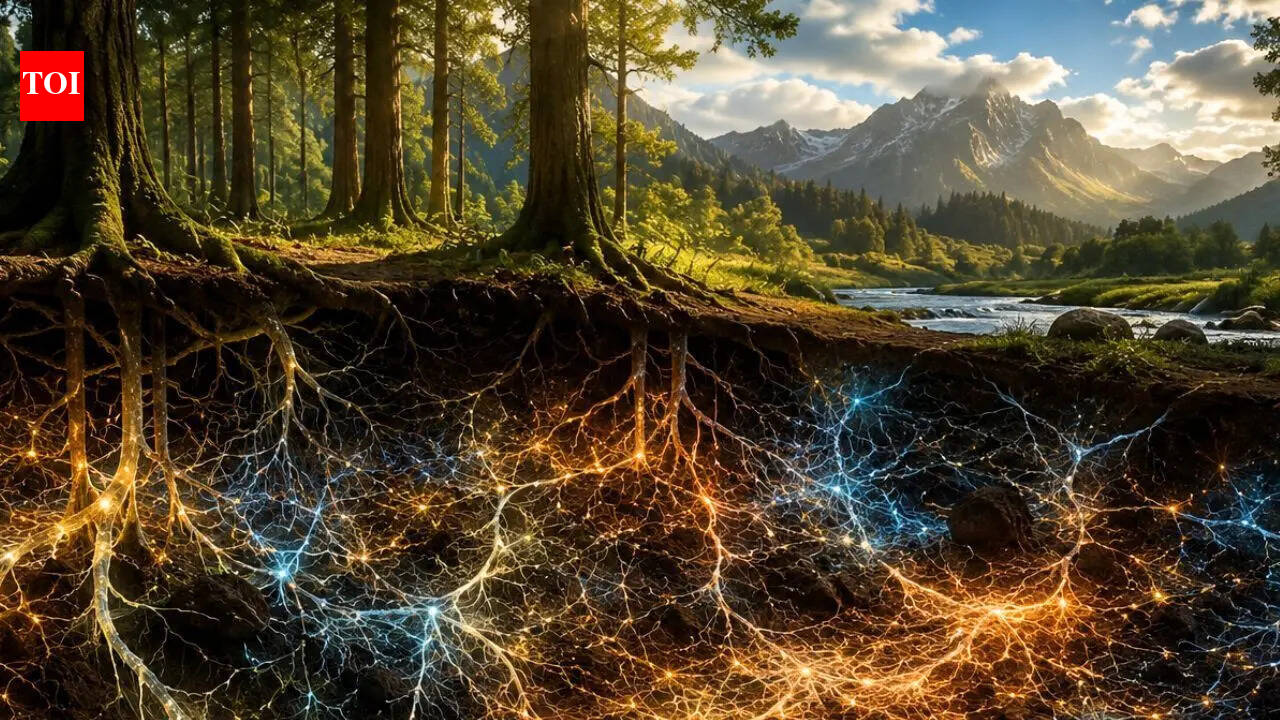
‘Real-life Project Hail Mary’: Scientists discover a hidden fungal network beneath Earth stretching 110 quadrillion km
Scientists have mapped a subterranean fungal network spanning more than 100 quadrillion kilometers, according to reports from The Guardian and Phys.org. This first global map of mycorrhizal fungi reveals a biological web so vast it could theoretically stretch to the sun a billion times, as noted by ScienceAlert.
How large is the subterranean fungal network?
The scale of the underground fungal web is difficult to conceptualize. According to The Guardian, the total length of these subterranean networks exceeds 100 quadrillion kilometers. To provide a concrete sense of this magnitude, ScienceAlert reports that this hidden web of fungus could reach the sun a billion times over.
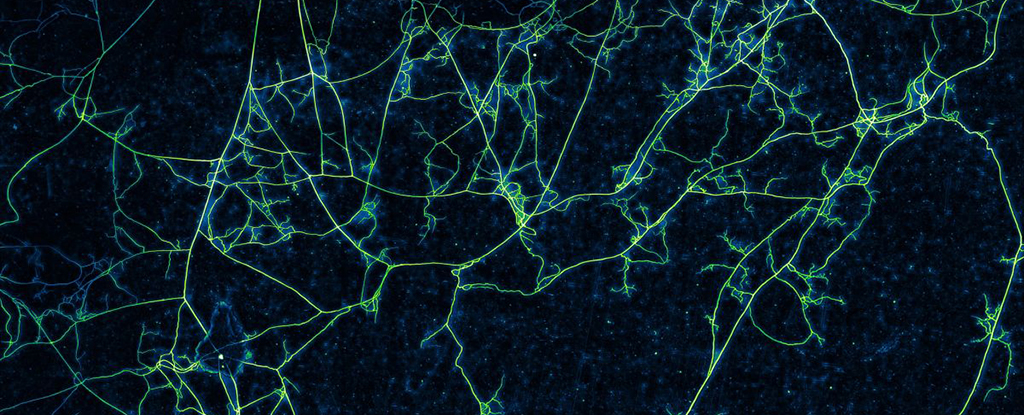
This network consists of mycorrhizal fungi, which are specialized fungi that form symbiotic relationships with plant roots. Rather than existing as isolated patches, these fungi create a continuous, interlocking system that spans continents and oceans. The New York Times reports that scientists have now successfully measured these vast underground webs, providing the first empirical look at the true scale of Earth’s biological infrastructure.
The sheer volume of these filaments, known as hyphae, means that a single handful of healthy soil can contain kilometers of fungal threads. When scaled globally, this results in the quadrillion-kilometer figure cited by researchers. This discovery shifts the understanding of the Earth’s crust from a collection of mineral and organic layers to a living, interconnected biological circuit.
| Metric | Estimated Value | Comparative Scale |
|---|---|---|
| Total Network Length | >100 Quadrillion km | Reach the sun a billion times (ScienceAlert) |
| Primary Component | Mycorrhizal Fungi | Symbiotic root-fungi networks |
| Mapping Scope | Global | First comprehensive global map (Phys.org) |
What is the “Real-life Project Hail Mary” connection?
The description of this discovery as a “‘Real-life Project Hail Mary’: Scientists discover a hidden fungal network beneath Earth stretching 110 q – The Times of India” draws a parallel to the science-fiction narrative popularized by Andy Weir. In the novel and film Project Hail Mary, the plot centers on the discovery of an alien biological entity (Astrophage) that operates on a planetary scale and possesses unique energy-transfer capabilities.
The comparison stems from the realization that Earth possesses a similar, albeit terrestrial, “planetary organism.” The mycorrhizal network functions as a biological communication and resource-distribution system, mirroring the high-concept biological networks often found in hard science fiction. According to the framing provided by The Times of India, the discovery suggests that the “alien” complexity we imagine in space may actually exist beneath our feet.
While the fictional Astrophage consumes stellar energy, the real-world fungal network manages the flow of carbon, phosphorus, and nitrogen. It acts as a biological internet, allowing trees and plants to “communicate” by sending chemical signals and nutrients to one another. This level of systemic coordination across an entire planet is what prompts the comparison to a coordinated, planetary-scale biological mission.
How did scientists create the first global map of fungal networks?
According to Phys.org, the creation of the first global map of mycorrhizal fungi represents a major leap in mycological research. Previously, scientists studied fungi in localized plots or specific forests. The new global map aggregates data from diverse ecosystems to reveal the true distribution and density of these networks across the planet.

The process involved analyzing soil samples and utilizing data modeling to estimate the biomass and reach of hyphal networks in different biomes. Researchers focused on two primary types of mycorrhizal fungi:
- Ectomycorrhizal fungi: These wrap around the root tips of plants, common in temperate and boreal forests.
- Arbuscular mycorrhizal fungi: These penetrate the cell walls of the roots, found in the majority of crop plants and tropical forests.
By mapping where these fungi thrive and how they overlap, scientists were able to calculate the total length of the network. The New York Times reports that this measurement process required new methodologies to account for the microscopic nature of the hyphae while extrapolating the data to a global scale.
“The first global map of mycorrhizal fungi reveals the true scale of underground networks across the planet,” according to reports from Phys.org.
Why does this fungal network matter for the environment?
The discovery is not merely a curiosity of scale; it has profound implications for climate science and ecology. The mycorrhizal network is a primary driver of the Earth’s carbon cycle. Because fungi transport carbon from plants into the soil, they act as one of the planet’s most significant carbon sinks.
According to the data synthesized from Phys.org and The Guardian, the network performs several critical functions:
Carbon Sequestration and Storage
Fungi store carbon in the form of glomalin, a sticky protein that helps bind soil particles together. By locking carbon underground, these networks prevent it from entering the atmosphere as carbon dioxide. The scale of the 100 quadrillion kilometer network suggests that the capacity for subterranean carbon storage is far higher than previously estimated.
Nutrient Redistribution
The network facilitates a “resource economy” between plants. Larger, older trees (often called “mother trees”) can send excess sugar and nutrients through the fungal web to smaller seedlings that are struggling in the shade. This interdependence increases the survival rate of entire forests.
Plant Communication
When a plant is attacked by pests, it can release chemical warnings into the fungal network. Other plants connected to the same web can detect these signals and preemptively trigger their own defense mechanisms. This creates a planetary-scale early warning system for botanical life.
For those interested in how this affects global warming, a related explainer on carbon sequestration would provide further context on how soil health impacts atmospheric CO2 levels.
What are the common misconceptions about the “Wood Wide Web”?
The term “Wood Wide Web” is often used to describe these networks, but it can lead to oversimplifications. It is a common misconception that the fungal network is a benevolent “social network” designed solely to help plants. In reality, the relationship is a trade.
According to the scientific context provided by The New York Times and Phys.org, the fungi do not provide nutrients for free. They demand a “tax” in the form of carbohydrates (sugars) produced by the plants through photosynthesis. If a plant cannot provide enough sugar, the fungus may cease providing phosphorus or nitrogen, or in some cases, may even switch to a parasitic relationship.
Another misconception is that the network is a single, monolithic organism. While the total length is staggering, the network is composed of millions of different species of fungi, all interacting in a complex, competitive, and sometimes cooperative environment. It is more like a global ecosystem of overlapping webs than a single, unified “brain.”
How does this discovery compare to previous biological findings?
For decades, the focus of planetary biology was on the visible biomass—the forests, the coral reefs, and the grasslands. This discovery, as reported by The Guardian and ScienceAlert, shifts the focus to the “invisible biomass.”
When comparing this to previous ecological models, the difference is stark. Most previous maps of biodiversity focused on species distribution above ground. The first global map of mycorrhizal fungi proves that the most extensive biological structure on Earth is one that we cannot see without specialized equipment.
The contrast in framing across different outlets is also notable. While The New York Times focuses on the measurement and scientific methodology, ScienceAlert emphasizes the astronomical scale (the “billion times to the sun” metric), and The Times of India frames it through the lens of popular culture and science fiction. Together, these perspectives highlight that the discovery is simultaneously a technical achievement, a mathematical marvel, and a conceptual shift in how we view our planet.
Key differences in reporting focus include:
- The Guardian: Emphasizes the 100 quadrillion km figure and the ecological necessity of the networks.
- Phys.org: Focuses on the technical milestone of the first global map.
- ScienceAlert: Highlights the astronomical comparisons to make the scale accessible.
- The New York Times: Details the act of measuring the “vast underground webs.”
Frequently Asked Questions
What exactly are mycorrhizal fungi?
Mycorrhizal fungi are fungi that form a symbiotic relationship with the roots of plants. The fungi provide the plant with essential nutrients like phosphorus and nitrogen, while the plant provides the fungi with sugars produced through photosynthesis. According to Phys.org, these networks are essential for the health of most land plants.

How did scientists calculate 100 quadrillion kilometers?
Researchers used a combination of soil sampling and global data modeling. By measuring the density of fungal hyphae in various soil types across different biomes and then extrapolating that data across the Earth’s landmass, they arrived at the total estimated length, as reported by The Guardian.
Does this mean the Earth is one single living organism?
Not in a literal biological sense. While the network is vast and interconnected, it consists of many different species of fungi and plants. However, the discovery suggests a level of planetary integration that mirrors the “Gaia hypothesis,” where the Earth’s biological systems work together to maintain a habitable environment.
Can this fungal network help fight climate change?
Yes. According to reports on the network’s role in carbon sequestration, these fungi lock carbon into the soil, preventing it from entering the atmosphere. Protecting these subterranean networks is now seen as a critical part of preserving the Earth’s natural carbon sinks.
Why is it compared to Project Hail Mary?
The comparison, noted by The Times of India, refers to the science-fiction novel where a planetary-scale biological entity is discovered. The real-life discovery of a 100-quadrillion-kilometer network reflects a similar scale of biological complexity and coordination.
The mapping of this hidden network reveals that the ground beneath our feet is not a dormant substrate but a highly active, communicative, and essential biological engine. As researchers continue to analyze the first global map of mycorrhizal fungi, the focus will likely shift toward how to protect these networks from industrial agriculture and deforestation to ensure the continued stability of the global carbon cycle.
