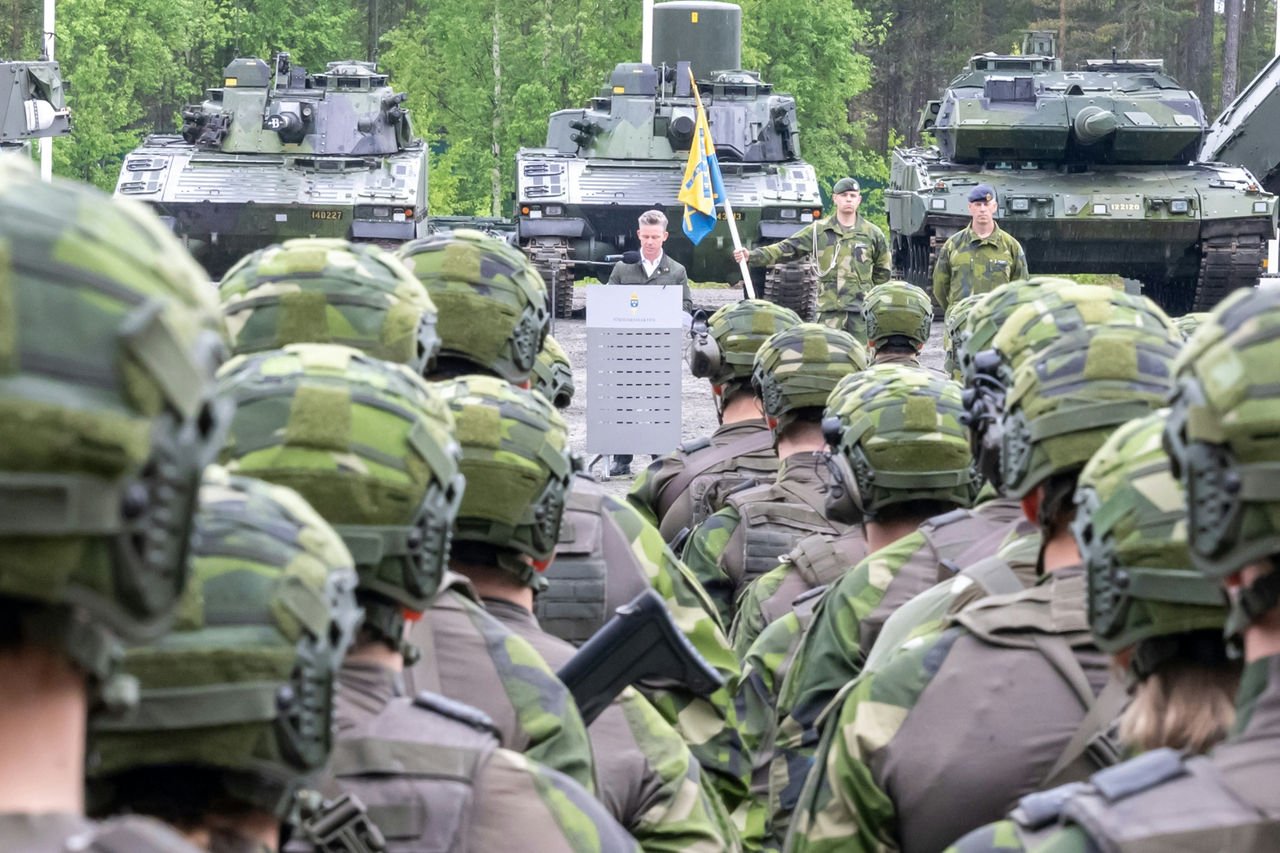
NATO enhances security in the Arctic and High North – Inbox.eu: Strategic Shift in the Polar Region
NATO is expanding its military footprint and strategic coordination in the Arctic and High North to counter increased Russian military activity and growing Chinese influence. According to official alliance documents and strategic assessments, the move involves enhanced surveillance, cold-weather readiness, and the integration of Finland and Sweden to secure critical maritime routes and seabed infrastructure.
Why is NATO increasing its presence in the High North?
The Arctic has transitioned from a zone of “low tension” to a theater of strategic competition. NATO officials state that the alliance must adapt to a security environment where Russia has reopened dozens of Soviet-era military bases and deployed advanced S-400 missile systems across its northern coastline. According to reports from the Arctic Council and various defense ministries, the melting of polar ice is opening the Northern Sea Route, which Russia claims as internal waters but the U.S. and its allies view as international straits.
China has further complicated the region’s security dynamics by declaring itself a “Near-Arctic State.” This designation, according to security analysts, allows Beijing to pursue the “Polar Silk Road,” a series of shipping lanes and infrastructure investments intended to shorten trade routes between Asia and Europe. NATO’s updated posture aims to deter these actors from altering the status quo through coercion or illegal territorial claims.
Key drivers for the security enhancement include:
- Resource Competition: The Arctic holds an estimated 13% of the world’s undiscovered oil and 30% of its undiscovered natural gas, according to the U.S. Geological Survey.
- Submarine Transit: The High North remains the primary transit point for nuclear-powered ballistic missile submarines (SSBNs), which are central to global nuclear deterrence.
- Critical Infrastructure: Undersea fiber-optic cables and energy pipelines crossing the Arctic floor are increasingly vulnerable to sabotage, as seen in previous incidents in the Baltic and North Seas.
How the accession of Finland and Sweden changes Arctic security
The entry of Finland and Sweden into NATO has fundamentally altered the geography of the High North. Previously, Norway was the only NATO member with a direct land border with Russia in the Arctic. Now, NATO controls nearly the entire Arctic coastline, with the exception of the Russian Federation. This “Nordic Bloc” allows for seamless intelligence sharing and coordinated troop movements across the Scandinavian Peninsula.
Finland brings specialized expertise in winter warfare and a heavily fortified border. Sweden adds sophisticated naval capabilities and advanced air force assets. According to NATO Secretary General Jens Stoltenberg, the integration of these two nations allows the alliance to move from a “tripwire” defense strategy to a comprehensive regional defense plan. This means NATO can now conduct large-scale exercises across a contiguous landmass, reducing the reliance on complex logistics from Central Europe.
The strategic impact of this expansion is outlined in the following comparison:
| Strategic Element | Pre-Finland/Sweden Accession | Post-Accession Reality |
|---|---|---|
| Border Control | Norway alone faced Russian Arctic borders. | Norway and Finland provide a unified NATO front. |
| Air Space | Fragmented air defense coordination. | Integrated Nordic air surveillance and intercept capability. |
| Logistics | Reliance on maritime corridors for reinforcement. | Expanded land-based logistics through Sweden and Finland. |
| Diplomatic Weight | Limited NATO voice in Arctic Council forums. | Dominance of NATO members among Arctic states. |
The strategic importance of the GIUK Gap
A central component of the effort as NATO enhances security in the Arctic and High North – Inbox.eu is the monitoring of the GIUK gap—the maritime area between Greenland, Iceland, and the United Kingdom. This region serves as the “choke point” for any Russian Northern Fleet vessel attempting to enter the North Atlantic.
According to naval commanders, controlling the GIUK gap is essential for protecting the sea lines of communication (SLOCs) that connect North America to Europe. If Russia can break through this gap undetected, it could potentially threaten NATO’s reinforcement fleets or target undersea cables that facilitate global financial transactions. To counter this, NATO is deploying more advanced sonar arrays and increasing the frequency of maritime patrols.
The alliance is also investing in “distributed lethality,” a strategy that involves spreading weapons systems across smaller, more numerous platforms. This makes it harder for an adversary to neutralize NATO’s presence in the High North with a single strike, ensuring a persistent deterrent effect.
Combatting “Grey Zone” threats and seabed warfare
Security in the Arctic is no longer just about tanks and jets. NATO is increasingly focused on “grey zone” warfare—activities that fall below the threshold of open conflict but are designed to destabilize an opponent. This includes cyberattacks on energy grids, disinformation campaigns, and the covert mapping of undersea infrastructure.
According to official reports from the Norwegian Intelligence Service, there is evidence of Russian “research” vessels operating near critical underwater cables. These vessels are suspected of deploying sensors or sabotage equipment. In response, NATO has increased its underwater surveillance capabilities and is coordinating with private industry to harden the resilience of these cables.

“The seabed is the new frontier of strategic competition. Protecting the data that flows beneath the Arctic ice is as critical as protecting the airspace above it.” — Analysis of recent NATO strategic directives.
To address these threats, NATO is implementing the following measures:
- Enhanced Acoustic Monitoring: Deploying new underwater sensor networks to detect “silent” submarines.
- Cyber Defense Integration: Linking Arctic energy infrastructure to NATO’s cyber-defense centers to prevent grid failures.
- Civil-Military Cooperation: Working with coast guards and environmental agencies to monitor “dark ships” (vessels that turn off their AIS tracking systems).
Cold-weather readiness and military modernization
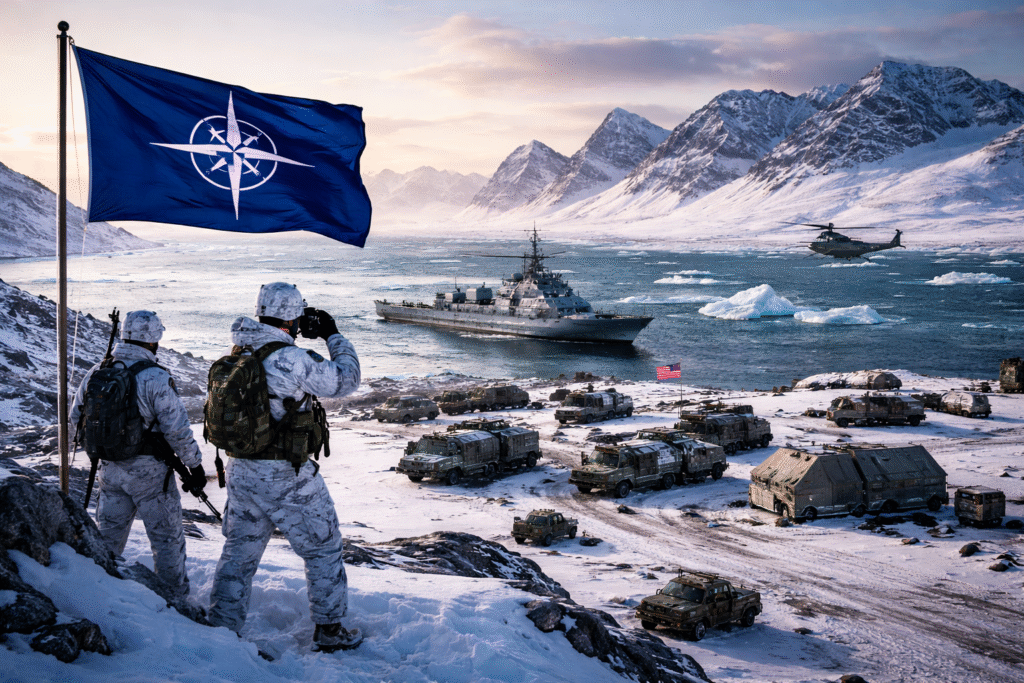
Operating in the Arctic requires specialized equipment and training that differs significantly from operations in temperate climates. NATO is currently updating its “Cold Weather Operations” (CWO) doctrine to ensure that troops from southern member states can operate effectively in sub-zero temperatures. This includes the procurement of specialized clothing, lubricants that do not freeze, and vehicles capable of traversing deep snow and tundra.
Norway’s “Cold Response” exercises serve as the primary training ground for these capabilities. According to military observers, these drills focus on “dispersed operations,” where small units operate independently over vast distances. This approach minimizes the target profile for long-range missiles while maintaining the ability to concentrate force quickly when needed.
The modernization effort also extends to air power. The introduction of F-35 stealth fighters in Norway and Finland provides NATO with the ability to conduct surveillance and precision strikes in the High North without being easily detected by Russian radar. These aircraft are equipped with advanced sensors that can penetrate Arctic weather patterns, providing a real-time operational picture to commanders in Brussels and Washington.
Key Technological Upgrades for the High North
- Satellite Communications: Deployment of Low Earth Orbit (LEO) satellites to overcome the “blind spots” typical of polar latitudes.
- Ice-Capable Vessels: Increased investment in icebreakers and reinforced hulls for naval ships to ensure year-round access.
- UAV Integration: Using long-endurance drones for persistent surveillance of the Barents and Kara Seas.
The role of the Arctic Council and diplomatic tensions
While NATO focuses on military deterrence, the diplomatic landscape is managed primarily through the Arctic Council. However, the Council’s effectiveness has plummeted since 2022. According to official statements, cooperation with Russia was paused following the invasion of Ukraine, though some technical work on environmental protection has continued.
The absence of a functioning diplomatic forum increases the risk of miscalculation. Without “hotlines” or regular communication between Arctic states, a routine military exercise could be misinterpreted as a prelude to an attack. NATO leaders have emphasized that while they are enhancing security, their goal is “defense, not provocation.”
However, Russia has countered by strengthening its ties with China, creating a “strategic partnership” in the Arctic. This partnership combines Russian territorial control and ice-breaking capacity with Chinese capital and technology. NATO views this axis as a long-term challenge to the rules-based international order in the North.
For more on the geopolitical implications of these alliances, see a related explainer on the Polar Silk Road.
Comparing current Arctic strategy to the Cold War
The current approach to Arctic security differs significantly from the Cold War era. During the 20th century, the Arctic was largely a passive barrier—a frozen wasteland that served as a buffer between the superpowers. The focus was almost exclusively on nuclear submarines and long-range bombers.
Today, the Arctic is an active operational space. The combination of climate change and technological advancement has made the region accessible and transparent. The “buffer” is gone, replaced by a highly contested maritime and terrestrial environment.
Current strategy emphasizes “integrated deterrence,” which combines military power with economic sanctions, diplomatic isolation, and cyber capabilities. Unlike the Cold War’s rigid lines of confrontation, modern Arctic security is fluid, involving a mix of state and non-state actors, including shipping companies and resource extraction firms.
Frequently Asked Questions
What is the “High North” in the context of NATO security?
The High North generally refers to the region above the Arctic Circle, including the Arctic Ocean and the northernmost parts of Norway, Russia, Canada, the United States (Alaska), and Denmark (Greenland). In NATO terms, it is a strategic flank that requires specialized defense due to its extreme climate and geopolitical sensitivity.
Why is the GIUK gap so important for NATO?
The GIUK gap (Greenland-Iceland-UK) is the primary maritime corridor that Russian submarines and surface ships must pass through to reach the open Atlantic. By monitoring this gap, NATO can detect and intercept threats before they reach the coastlines of North America or Western Europe.
How does climate change affect military strategy in the Arctic?
Rising temperatures are melting sea ice, which opens new shipping lanes and allows for easier access to underwater minerals and gas. This makes the region more economically valuable and easier to navigate for warships, necessitating an increase in patrols and surveillance to prevent illegal territorial seizures.
Do Finland and Sweden’s memberships increase the risk of conflict?
Russia claims that NATO’s expansion is a provocation. However, NATO and the Nordic countries argue that the move is a defensive response to Russian aggression. The alliance maintains that its presence is intended to prevent conflict by making the cost of aggression prohibitively high.
What are “dark ships” and why does NATO track them?
“Dark ships” are vessels that disable their Automatic Identification System (AIS) to hide their location and identity. In the Arctic, this is often done to engage in illegal fishing, smuggling, or covert intelligence gathering. NATO tracks these using satellite imagery and radar to maintain maritime domain awareness.
The ongoing effort as NATO enhances security in the Arctic and High North – Inbox.eu reflects a broader global shift toward “great power competition.” The region is no longer a sanctuary of peace but a critical piece of the global security puzzle. As ice continues to recede and military assets accumulate, the balance between deterrence and escalation will depend on the alliance’s ability to integrate its new Nordic members while maintaining clear communication with its adversaries.
